
Warehouse Roofing in St. George, UT
Warehouse Roofing Overview
The drip that matters in a warehouse lands on a pallet, not on a floor. A roof over racked stock has a quiet failure mode: water enters at a seam or a curb, travels along the deck and shows up in an aisle that was nowhere near the opening. In St. George, where the NOAA station normals give July a mean high of 101.9 degrees, the roof surface also decides the day's work, because a dark sheet gets too hot to handle by late morning.
We start at the receiving schedule and the roof access, then walk the drains, curbs, seams and edges that decide where water goes. The asset manager leaves with a scope tied to roof zones and the open questions behind it. A first commercial roof inspection records the assembly and separates a repairable area from a question that needs testing.
Where does water collect first on a warehouse roof?
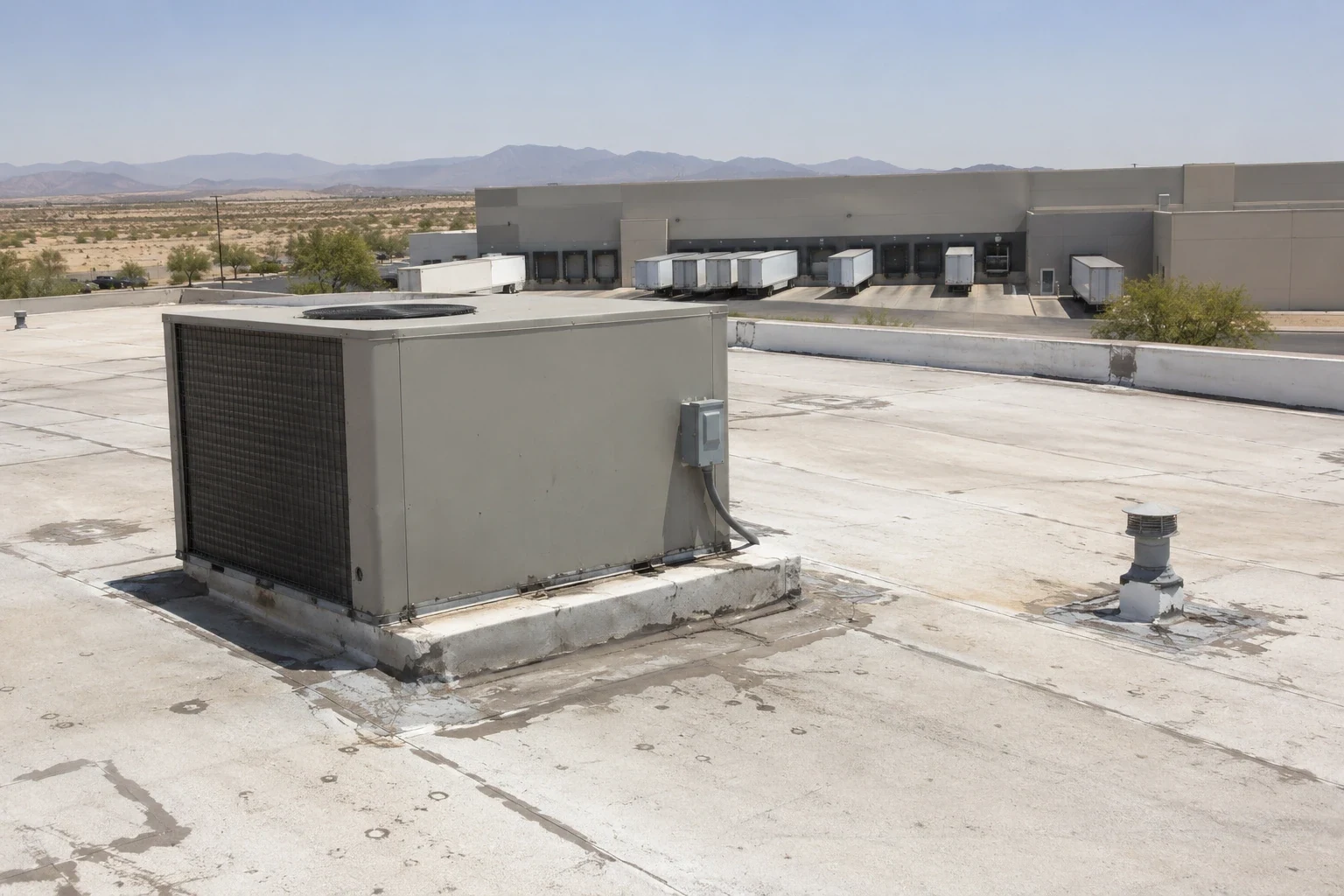
At the low points, and a large field has several. A blocked drain, compressed insulation or a settled bay can hold water for days after a storm, and the ceiling stain inside may sit far from the entry point. We trace the slope and inspect seams, penetrations and the path to each outlet before blaming any one spot.
Rainfall comes unevenly: the highest monthly normal is February's 1.38 inches, and June's is 0.16. A roof can go weeks without a test, and dust and wind-carried grit gather around drain bowls and scuppers during the dry stretch. We photograph bowls, strainers, scuppers, overflows and the membrane around each outlet, and drain and scupper repairs go into the same scope when a faulty connection feeds the ponding.
What does a large flat field hide?
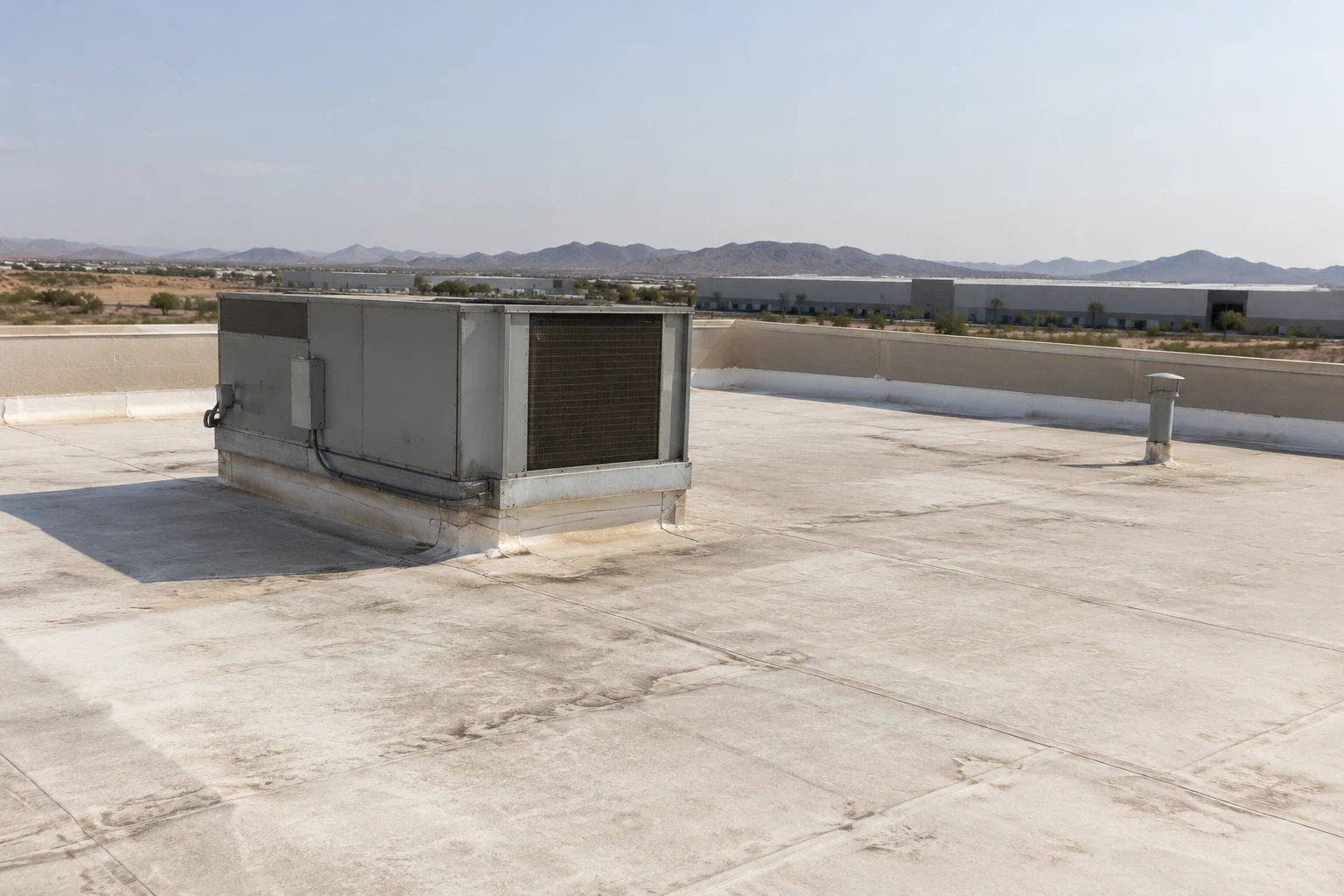
Penetrations and later additions. Warehouse roofs collect exhaust fans, skylights, conduit, roof hatches and supports for equipment that was never on the original drawings. Each one interrupts the field membrane, and a patch laid over dirt or an incompatible coating can release again within a season. We check lap edges, curb corners and the metal edge for separation, wrinkles and movement.
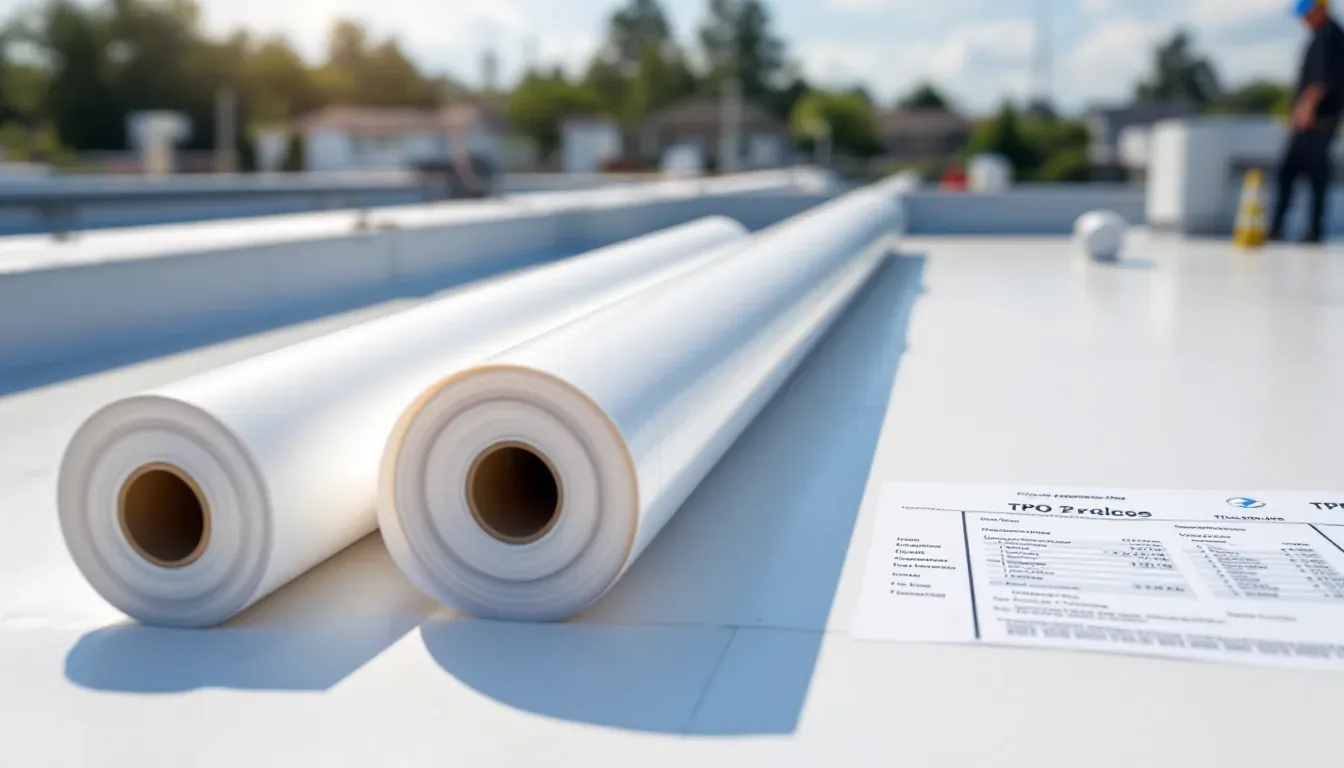
Where the sheet type is unclear, records and a field sample come before materials. TPO and EPDM use different seam methods, so a repair follows the sheet that is actually installed. Every work area goes on the roof plan, with equipment that must stay accessible marked, and photographs stay tied to the matching repair note.
How do we protect stored goods while we work?
By sequencing the roof around the building. A repair above active inventory has to account for receiving, picking and any sensitive stock below the work area. We settle the access path, staging spot and temporary protection with the facility manager before material moves onto the roof. If an aisle cannot close, the scope can use smaller work windows or separate roof zones, and that choice moves labor and schedule, so it is made before the crew reaches the bay.
Sprinkler piping, conduit and lighting sit tight under a warehouse deck, and a screw that is too long can reach them. When a deck opening is planned, we locate them from below first. Reroofing an occupied building by zone keeps operations running, and the stop conditions, such as an unexpected soft deck, are agreed with operations in advance.
What do summer weeks do to a warehouse roof?
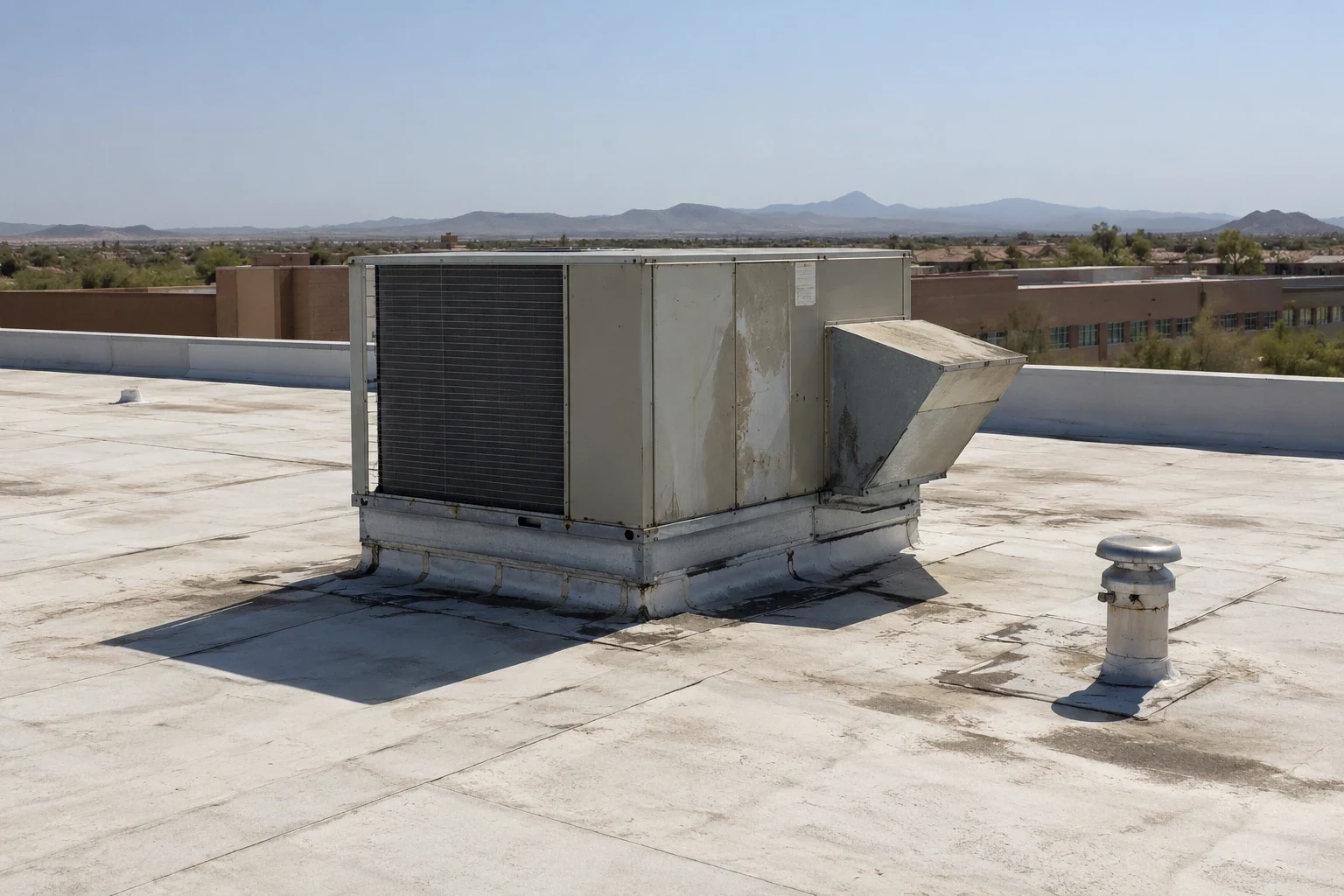
The surface gets hot enough to change the work. Sealants skin over before they bond, adhesives flash off and a crew kneeling on a dark membrane at midday works slower and less carefully. Detail work moves to the first hours, with shade for staged material and water for the crew.
Heat also ages the roof. Seams carry the strain of daily expansion, and sealant around penetrations cracks first. Heat and UV damage is visible as crazing, chalking and curling edges, and recording it on the roof plan lets the owner see which sections are aging fastest and plan around them.
Water and shade stay on the roof, and a heat break is written into the plan.
Why do parapets, scuppers and dock edges get their own check?
Perimeter details leak when the field is perfect. Many warehouse walls rise above the roof as parapets, and water leaves through scuppers cut in them, so a scupper liner that has pulled away or a coping joint that has opened sends water down the wall and behind the membrane. Dock canopies and loading-door heads add their own flashing, and a lift truck that clips an edge can bend the metal without anyone reporting it.
We sight along the coping for gaps and rust streaks, check the wall flashing height and look at the membrane termination behind the metal. Metal edges are repaired as full runs where the cleat has failed, and a short section is patched only when the rest is sound. Where a building sits beside a distribution center or cold storage bay, the edge details differ, and we confirm which one we are looking at before choosing the repair.
When does a local repair stop being enough?
A bounded defect in sound, dry membrane takes a patch. Several open seams, repeat leaks in separate bays or moisture across a broad field change the answer. We use infrared or other testing to find areas that need confirmation, then open them selectively and mark each opening on the plan.
A recover can preserve a usable assembly, but only after the layers, load, edge height, drainage and attachment are reviewed. Wet insulation cannot be fixed by covering it. If the roof is past that point, replacement comes with tapered insulation at the low points. Access, equipment clearances, insulation depth, deck condition, disposal and the number of transitions all move the price, so each is listed by roof area and none hides inside a single allowance.
Which parts of the St. George area do we dispatch to for warehouse work?
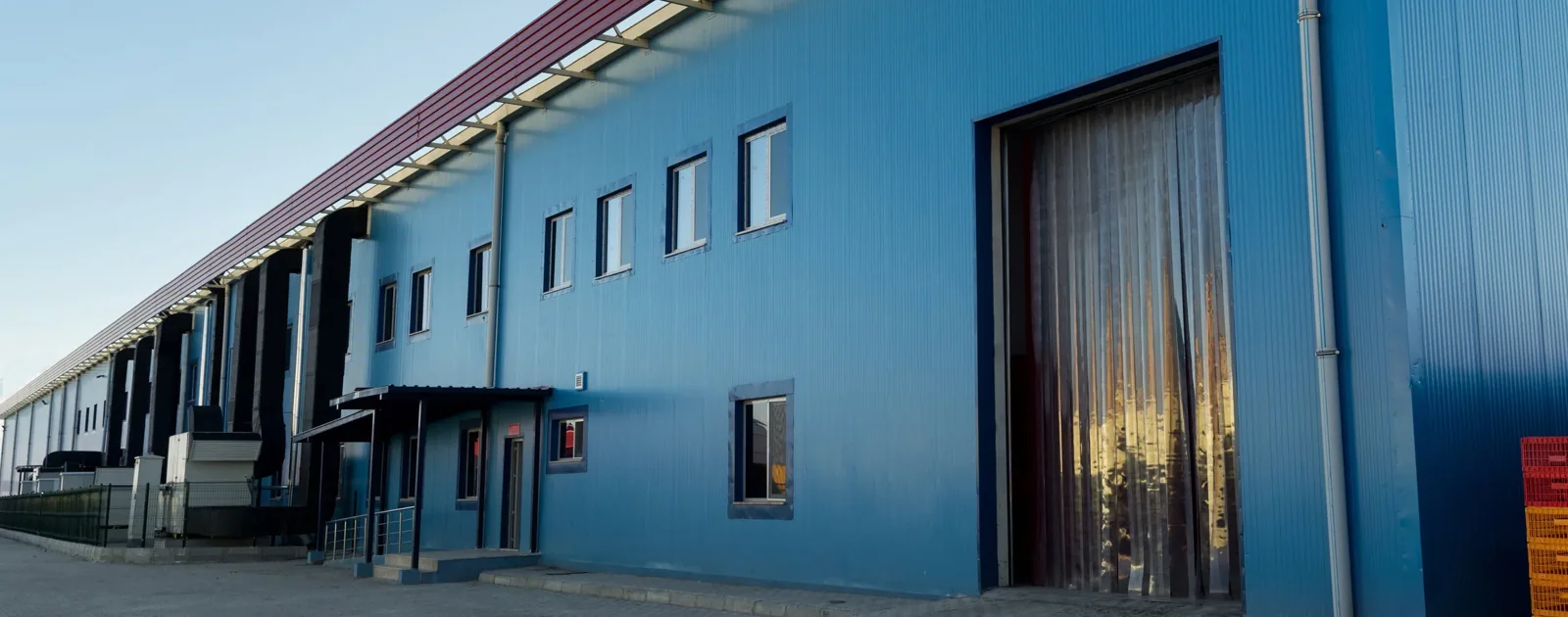
Fort Pierce Industrial Park lists warehousing among its permitted uses, alongside light manufacturing, fabrication and wholesaling, and the city also names St. George Industrial Park and Green Valley. Those names get us to the right part of town. They say nothing about a particular building's membrane, so the roof plan and a walk do that work.
Send the roof plans, repair history, leak locations, inventory sensitivities and shipping windows. The city's commercial stock is largely post-1980, but that does not date a roof or its overlays. A written condition report keeps photographs, measurements and open questions together for the next budget decision, and a condition report for each building lets a multi-warehouse owner compare roofs on equal terms.
Commercial Roofing Questions
Can repairs happen while shipping continues?
Often, with the work divided around receiving hours and a protected path. We agree the zone, the lift position and the route before setting the crew window, and a spotter covers any dock door that stays live.
What if the leak appears far from the roof opening?
Water travels along the deck and insulation joints. We compare the interior mark with slope, seams, curbs and drains uphill of it.
How do you decide between a patch and a replacement?
The repair boundary, the surrounding membrane, the insulation and the repeat-leak pattern guide it. Confirmed findings and concealed questions are listed separately.
Does a recover fit every warehouse roof?
No. Moisture, layers, deck support, load, edge height and drain connections come first. A wet or unstable assembly is not carried forward.
What should the facility manager prepare?
Roof plans, repair history, leak locations, inventory sensitivities, access rules and shipping windows. They focus the first walk, and a list of which bays hold the most valuable stock tells us where to protect first.