
Commercial Roofing in Leeds, UT
Leeds Overview
The county road map tells us how to reach Leeds, and the town tells us what can be built there. Leeds publishes a 2022 General Plan and a zoning-map link, and the guidance for any roof work is to use town parcel-level planning information and not treat the county road map as a site permit. The county's transportation map lists I-15 and Silver Reef Road among the arterial and collector routes, which helps us plan travel and delivery. For an owner with a building in town, the practical first step is a commercial roof inspection that records the roof as it is, followed by a check of the parcel's zoning before anything beyond repair is priced.
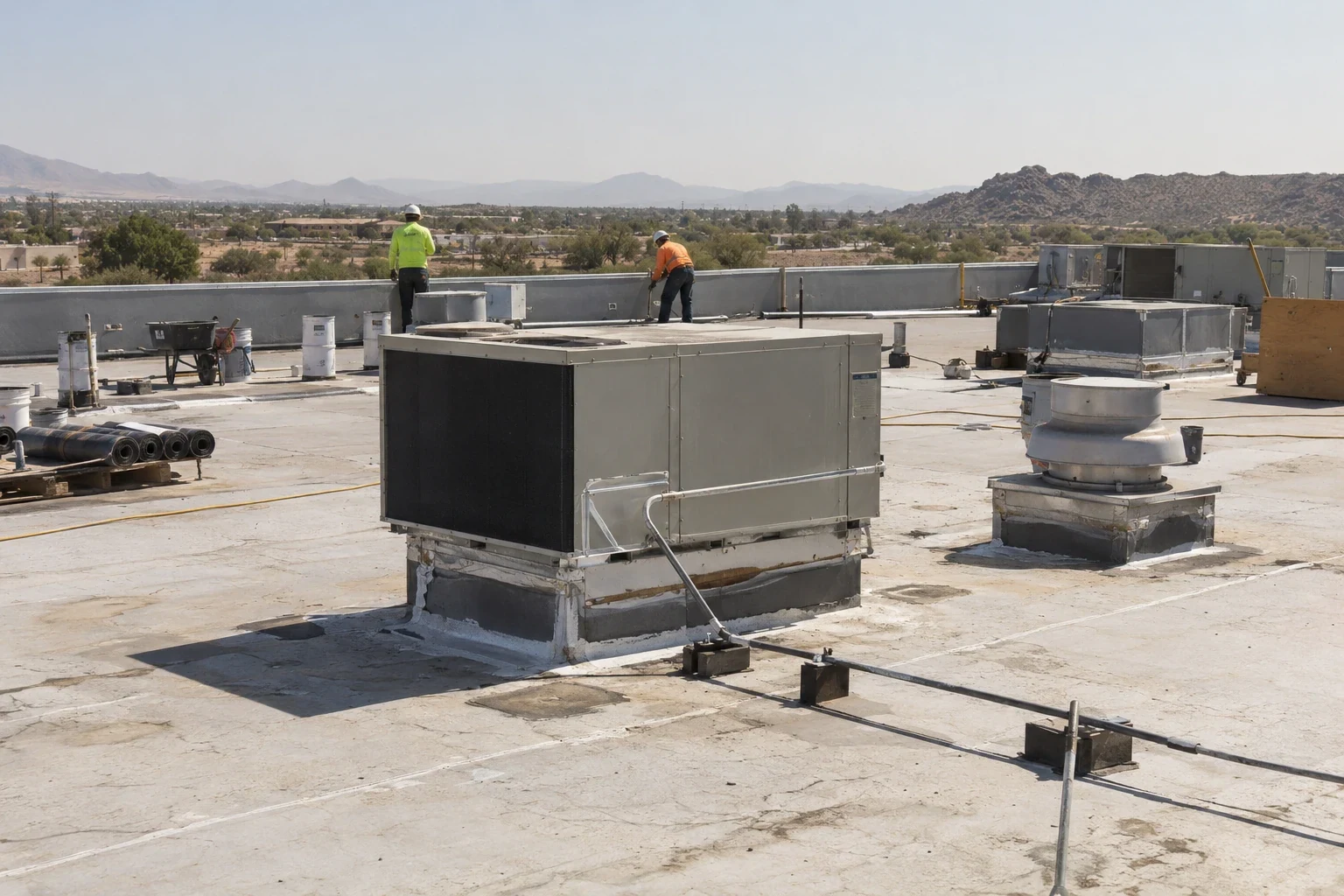
What does a parcel-level check settle before the roof is priced?
Zoning tells us what the building is allowed to be, and the town's plan tells us what it may become. For a roof, that matters in three ways. It affects height and screening limits for new equipment or a raised parapet. It affects whether an addition or a change of use is possible, which in turn decides whether a repair now should be built to be extended later. And it affects the permit path, which sets the schedule.
The town documents are the source, and the county road map is not. We read the zoning map for the parcel, ask the town which approvals a given scope needs and record the answer in the roof plan. The owner then sees the scope, the approvals and the timing together, instead of discovering a permit step after the material is on order.
If the parcel's designation and the existing building do not obviously match, we list that as an open question and leave it for the town to answer. A roof contractor should not guess at zoning, and a repair scope should not depend on a guess.
Where does water get past a commercial roof first?
On most low-slope roofs the field of the membrane outlasts the details around it. Flashing at walls, curbs and penetrations moves with the building, takes the heat and holds the seal between two different materials. When it fails, the water follows the wall or the curb into the building. We check the termination at each wall, the height of the flashing above the finished roof, the condition of sealant and the corners where flashing has to fold.
Repairs at these places are precise work. A failed corner may need a prefabricated piece, not a smear of sealant. A cracked pipe boot should be replaced, not patched. The flashing failure repair we recommend follows the cause: movement, UV, poor adhesion or mechanical damage. Fixing the cause keeps the repair from failing again.
Walls matter most when the building has changed. A new tenant fit-out can add a wall penetration, a grille or a conduit run, and each is a new place for water. The first walk looks for those later additions and checks whether the roofer who made them restored the flashing properly.

Does spray foam make sense for a small commercial building?
Spray polyurethane foam goes on as a liquid, expands into a continuous insulating layer and is then protected with a coating. It can conform to irregular roof shapes, fill around penetrations and add insulation value without a seam network. It also needs careful conditions: a dry substrate, controlled temperature and wind, and trained applicators.
Foam is not the answer for every roof. It does not suit a substrate with trapped moisture, and the protective coat must be maintained. On a building where access is tight and the roof is irregular, spray polyurethane foam roofing can be an efficient path, especially when insulation levels are a concern. We compare it with membrane options, using the roof's condition and the owner's goals as the test. In July, when the St. George station records a mean daily high of 101.9 degrees, application is scheduled for the cooler morning hours.
Edges, penetrations and drains still need attention with foam. The coating must be continuous over every detail, and the thickness has to be checked at corners where it tends to run thin. Those checks are part of the finished-roof record the owner receives.
Which records make the next roof decision easier?
A roof file earns its keep when something goes wrong or something changes. Keep the permit documents, repair invoices, inspection reports, photographs and any manufacturer paperwork in one place. Write down which contractor did what and when. When the building changes hands, the file shows the buyer how the roof was treated.
We build on the records. After each visit, the report adds photographs, locations and findings, and over time the file supports roof asset management decisions about repair timing and replacement. It also helps an insurer understand what existed before a loss. If the owner has little paperwork today, we create the baseline now so it exists later.
Warranty documents deserve special care. A manufacturer warranty usually carries conditions about maintenance, repairs by approved parties and notice after damage, and missing those conditions can void coverage on a roof that is otherwise sound. We read the paperwork the owner has, note the conditions and schedule visits so they are met.
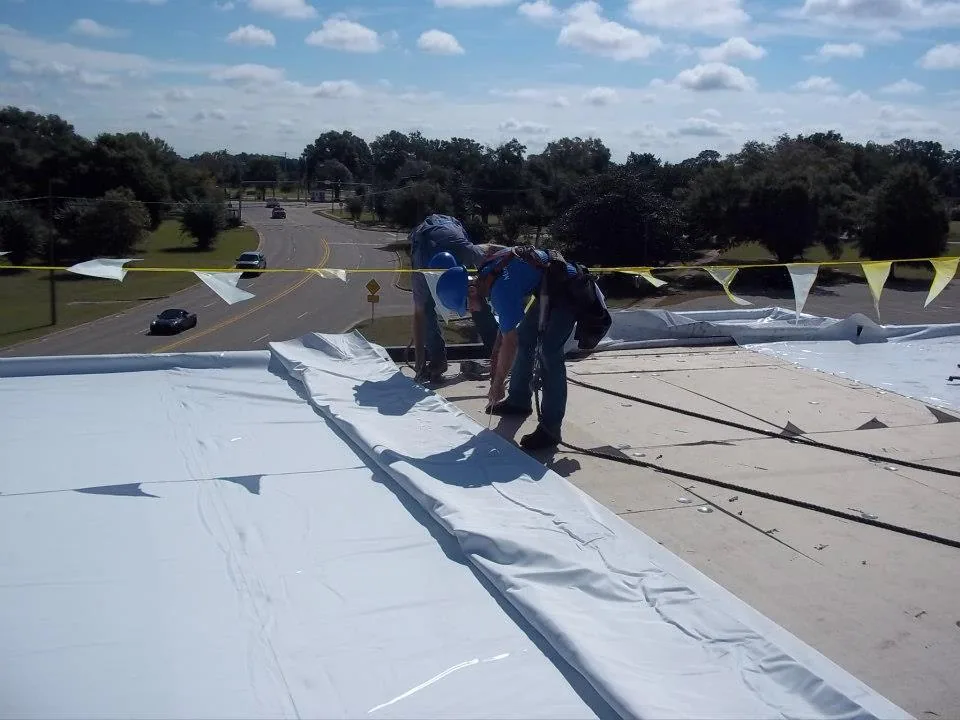
How do Leeds jobs connect to nearby towns?
I-15 and Silver Reef Road link Leeds with the wider area on the county map, and owners who hold property in Toquerville or Washington City may want the work coordinated. Each town has its own planning documents and permit process, and we keep them separate. The inspection format, the report and the ranking of urgent items remain the same across all of them.
That consistency allows an owner to compare buildings and to see what the whole group needs. A small town building with a failing flashing and a larger one with a worn membrane do not compete for the same fix, and the report makes the order of work visible.
For emergencies, the route map gives dispatch a starting point and a call to the building contact settles the last stretch. The same photograph-first routine applies: before and after images, moisture readings and a summary left with the owner.
Commercial Roofing Questions
Does Leeds require a permit for a repair?
The town decides, and the answer depends on the scope. A small repair may not need one, while a recover or replacement usually does. We ask the town before pricing the work and tell you what we learn.
Can the county road map be used to confirm a site?
It is a route reference only. Site details come from town parcel-level information and from a visit. We use the county map to plan travel and the town's materials to understand the parcel.
Is spray foam good in desert sun?
It can be, with a protective coating that reflects light and is maintained. Unprotected foam breaks down in sunlight, so the coating is part of the system, and its condition is checked at each visit.
What should I do if I find a stain on the ceiling?
Photograph it, note the date and call us. We will ask whether it follows rain, wind or equipment operation and decide whether it is urgent. An active leak gets an immediate response at any hour.
Why do you separate repair items from capital items?
Because they are different decisions with different budgets. A repair fixes a defined condition now. A capital item replaces or renews the roof. Mixing them hides the choice the owner actually has to make.
What does a roof file need if the building is sold?
A buyer will want the latest inspection report, repair history, warranty papers and any permit records. We can provide a condition summary with photographs, so the buyer sees the current state and the near-term repair list.