
Commercial Roofing in Riverside Business Park, St. George, UT
Riverside Business Park Overview
On a wet Monday the first call about a business-park roof usually goes to the wrong party. The city's features map lists Riverside Business Park as a named place, and Washington County's transportation map puts River Road in the regional arterial and collector network, which is the practical reference for routing a crew to the park. For an asset manager with a multi-tenant building there, the first roof question is who owns which part of the problem and what the record shows.
We start with the operating schedule, the roof plan and the lease responsibilities, then check the details that decide where water goes. In July the sun picks the hours, with a NOAA mean high of 101.9 degrees, and the roof picks the scope. What comes back is a short record every party can read.
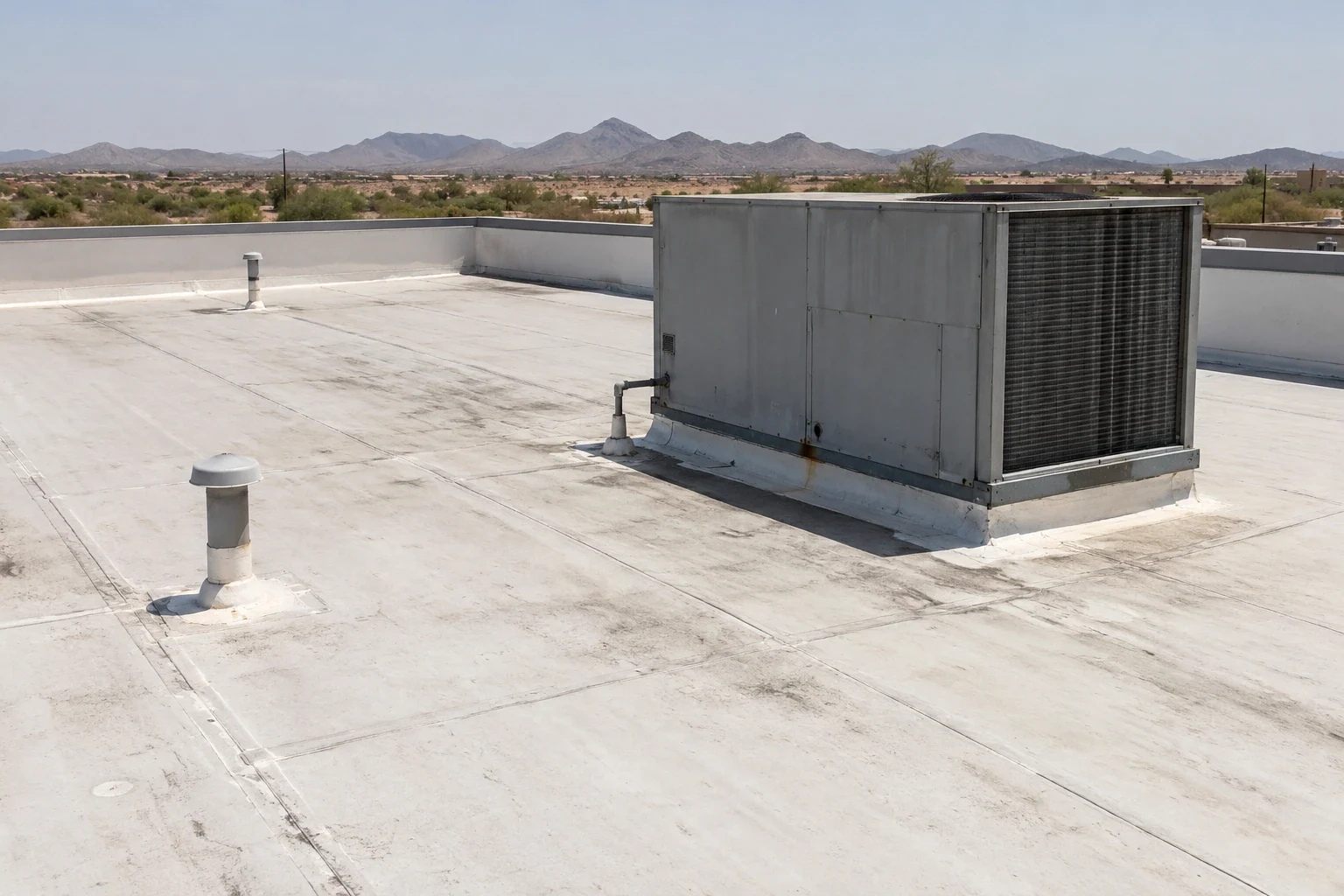
How is a roof shared by several tenants documented?
Zone by zone. A multi-tenant building has one roof and several occupants, and a leak over one suite is seldom that tenant's alone. A repair at one curb may protect two suites. The roof plan therefore marks the suite beneath each zone, and every photograph is tied to a location, which answers the question each party asks first: where is the water coming from.
Much of the city's commercial stock dates from 1980 or later according to its Consolidated Plan, so roofs in a park may be decades old or recent, and the park's name settles nothing. We confirm each roof's age and system at the building and ask which tenants added rooftop equipment, since each unit adds a curb and a service path. A suite that sells goods, a suite that stores them and a suite full of desks do not tolerate the same drip, so the record notes what each tenant keeps under its stretch of roof. Landlord items and tenant items are separated wherever the lease draws that line.
What does the summer calendar do to scheduling?
It pushes the delicate work to early morning. The NOAA normals give August a mean high of 99.9 degrees, and a roof is hot underfoot by midmorning, with sealants and adhesives behaving poorly past their working range. Crews start at first light, do the seams and flashings first and plan breaks. The station figure is a scheduling guide, not a reading on any property.
Tenants set the calendar too. A park with offices, light industrial users and service tenants has different hours, and noisy work has to fit around them. We ask the manager for quiet periods and delivery times, set lift positions away from loading doors and give each tenant notice of start dates. The next decision is whether the work happens in one push or in zones across several weeks, and the schedule says.
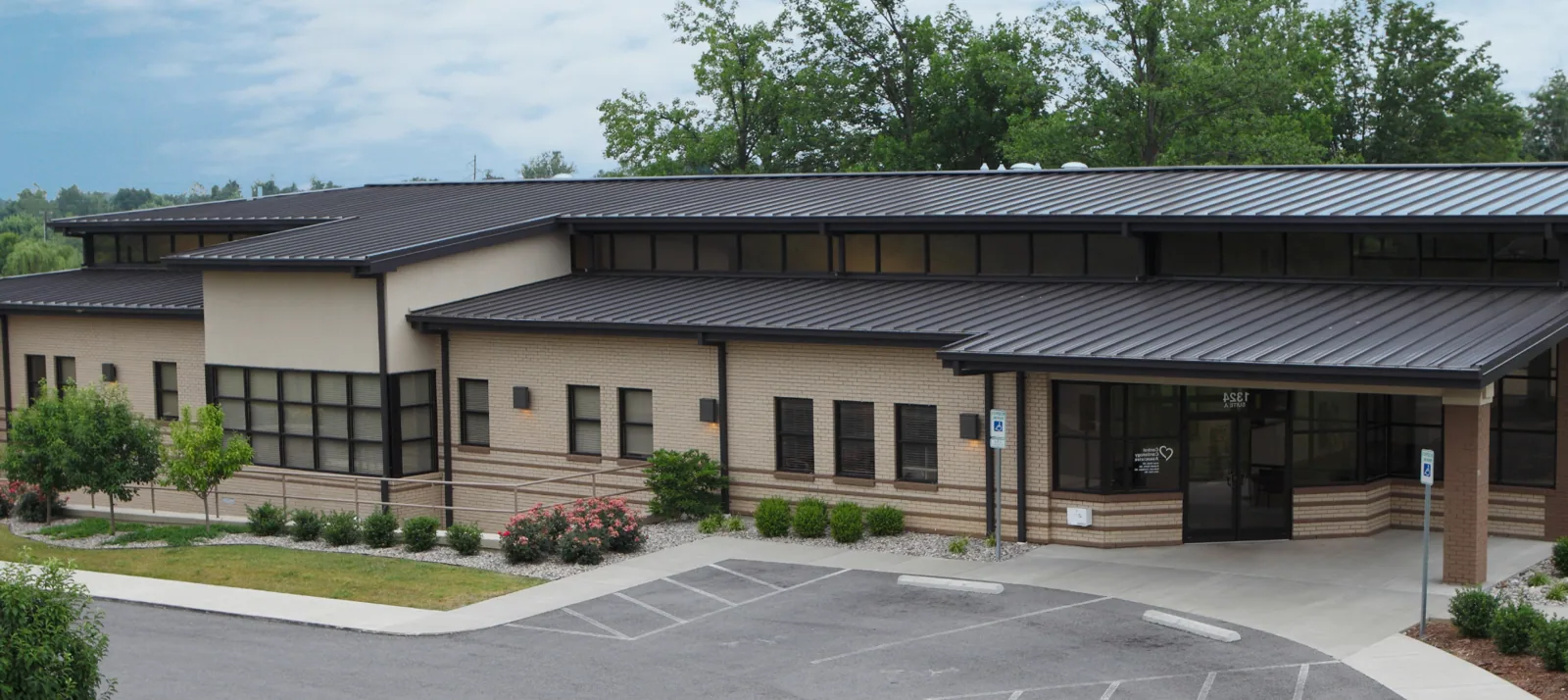
Which roof details fail first on a business-park building?
The ones tenants and trades have touched: rooftop unit curbs, exhaust and plumbing vents, conduit runs and sign or antenna mounts. Beyond those, drains, scuppers, parapet flashings and seams at walls take the movement and the debris. In a dry climate drains collect dust and leaves for months, and the first storm finds them blocked.
- Rooftop unit curbs and the membrane turn-up at each
- Vent boots, conduit supports and sign mounts
- Drains, scuppers and the path to the outlet
- Parapet caps, coping and wall flashings
- Seams and laps near walls and penetrations
A maintenance visit before the wet months clears the drains and reseals loose details, and it is the cheapest way to avoid a Monday call. The visit also records what came out of each drain, so the next one starts from a known state.
How do we prove where the water entered?
By following a path. We map stains on the roof plan, walk upslope and check each detail along the line. Moisture readings confirm wet insulation, and an infrared moisture survey maps it across a bigger roof. Photographs show the whole zone first and the detail second, so a reader sees both the entry and its surroundings.
With 9.31 inches of precipitation a year at the station, mostly spread thin, stains may date from storms months apart, so we ask tenants for dates and compare them with the stain pattern. Where the evidence does not settle the entry, the record says so and names the test that would, such as a moisture survey or a controlled water test. Confirmed and suspected findings stay in separate columns.
Notes from tenants, even a phone photograph of an old stain, point to the first section to open and save the crew time.
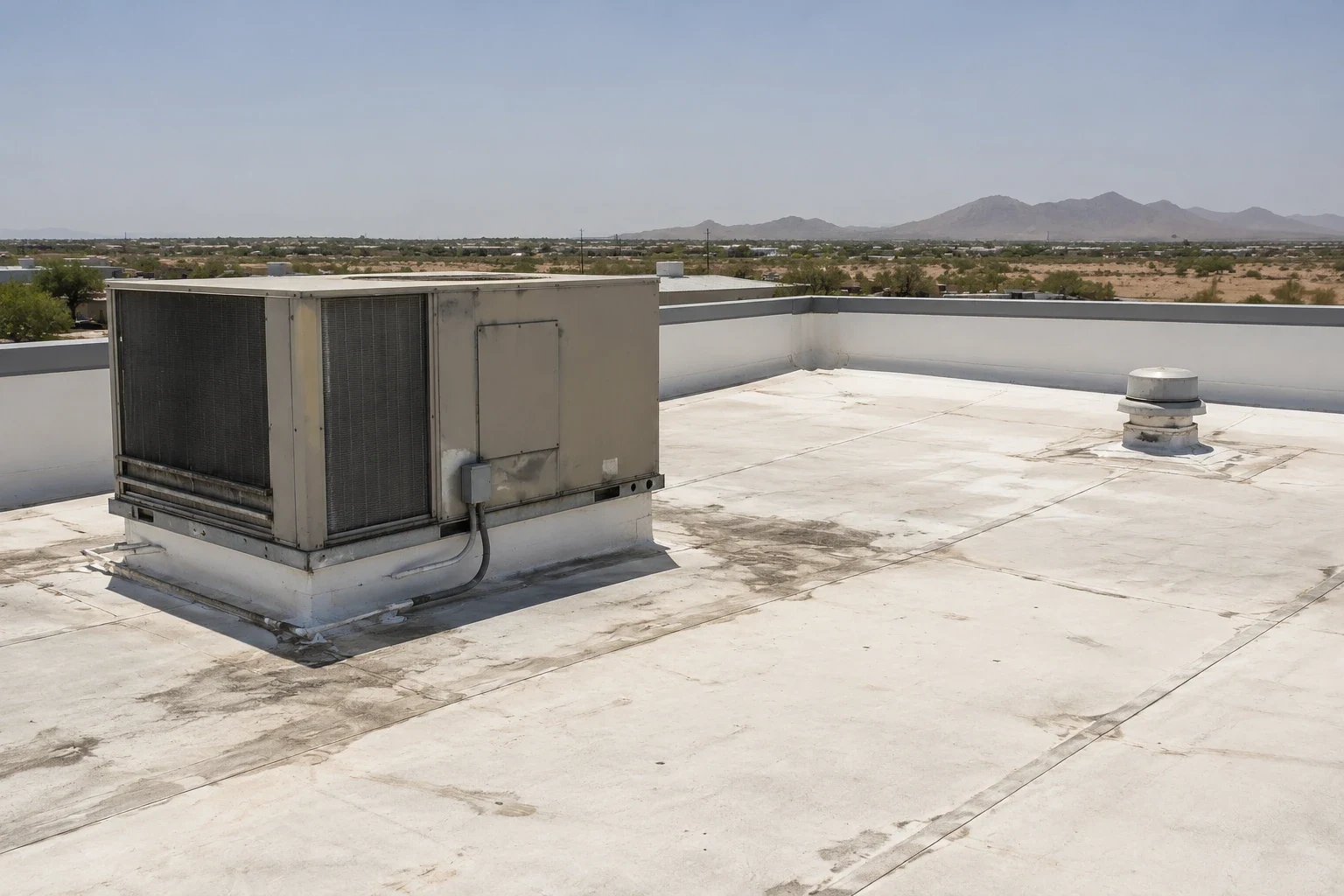
How far does a repair go, and who pays?
A repair goes as far as the damaged membrane and the wet insulation. A leak repair stops at sound, dry material. Who pays is a lease question that the roof record supports without deciding: it shows location, cause and extent. We neither rule on responsibility nor leave it unclear.
Tenant improvements deserve their own line. When a tenant adds a unit, a vent or a sign, the work cuts the membrane, and the contractor who closes the cut may not be the one who maintains the roof. A short landlord sign-off should capture the location, the flashing detail and photographs before and after. When repairs recur, the owner weighs a coating restoration against a replacement: a coating suits a sound, dry roof, and replacement suits wide moisture or failed seams.
What should the owner decide next?
An owner of a park building weighs lease dates, rent, retention and cash, so the roof decision sits next to the lease calendar. A replacement planned for the quiet stretch between lease events costs the tenants less than an emergency in the middle of one, and a written condition record turns a tenant's roof complaint into a scheduled item instead of an argument. The same record shows a prospective buyer or lender what has been inspected, repaired and left under watch. A roof at the end of its life can be the reason a tenant leaves, and a new one can help a sale. We provide the condition and the cost drivers, and the owner sets the timing. Insulation rules under the statewide energy path starting July 1, 2026 can add to a replacement's cost, so the City is asked which code edition applies.
An owner with buildings in St. George Industrial Park or Fort Pierce Industrial Park can read all the roofs in one format, ranked on a capital plan. Send the lease map, the roof records and the leak dates, and the first visit answers a defined repair or capital question.
Parking stalls lost to a lift are agreed with each tenant ahead of time.
Commercial Roofing Questions
Who is responsible for a leak in a multi-tenant building?
The lease decides. We supply the plan and photographs that tie each defect to a location so everyone reads the same facts.
Can the roof be worked during business hours?
Often, with lifts away from doors and noisy steps in quiet hours. Each opening is closed before the crew leaves.
Why do park roofs leak in the first storm?
Dust and debris block drains through dry months, and dried sealants split. The first heavy rain exposes both.
How old are the roofs in the park?
It varies. Much commercial stock in the city dates from 1980 on, but each roof's age is confirmed at the building.
Does the permit date matter for a park reroof?
Yes. It picks the code edition, and the City tells us which one before we price.