
Roofing for Manufacturers in St. George, UT
Manufacturers Overview
A plant manager rarely gets to say when the roof will be quiet. Production runs, shipping deadlines and maintenance shutdowns set the calendar, and the roof has to fit inside them. In St. George, UT, summer adds a second constraint, because the local station's normals run to nearly 102 degrees in July and just under 100 in August. Hot work, adhesives and heavy membrane handling are slower and harder on a crew in that heat, so we plan the longest tasks for early shifts and for the months when the surface is easier to handle.
The first visit with a manufacturer is a conversation about what the building makes and what the roof carries. Exhaust stacks, makeup air units, process piping and dust collection each leave a mark on a membrane, and a commercial roof inspection that ignores them will miss the repeated failure points.
What does process equipment do to a roof?
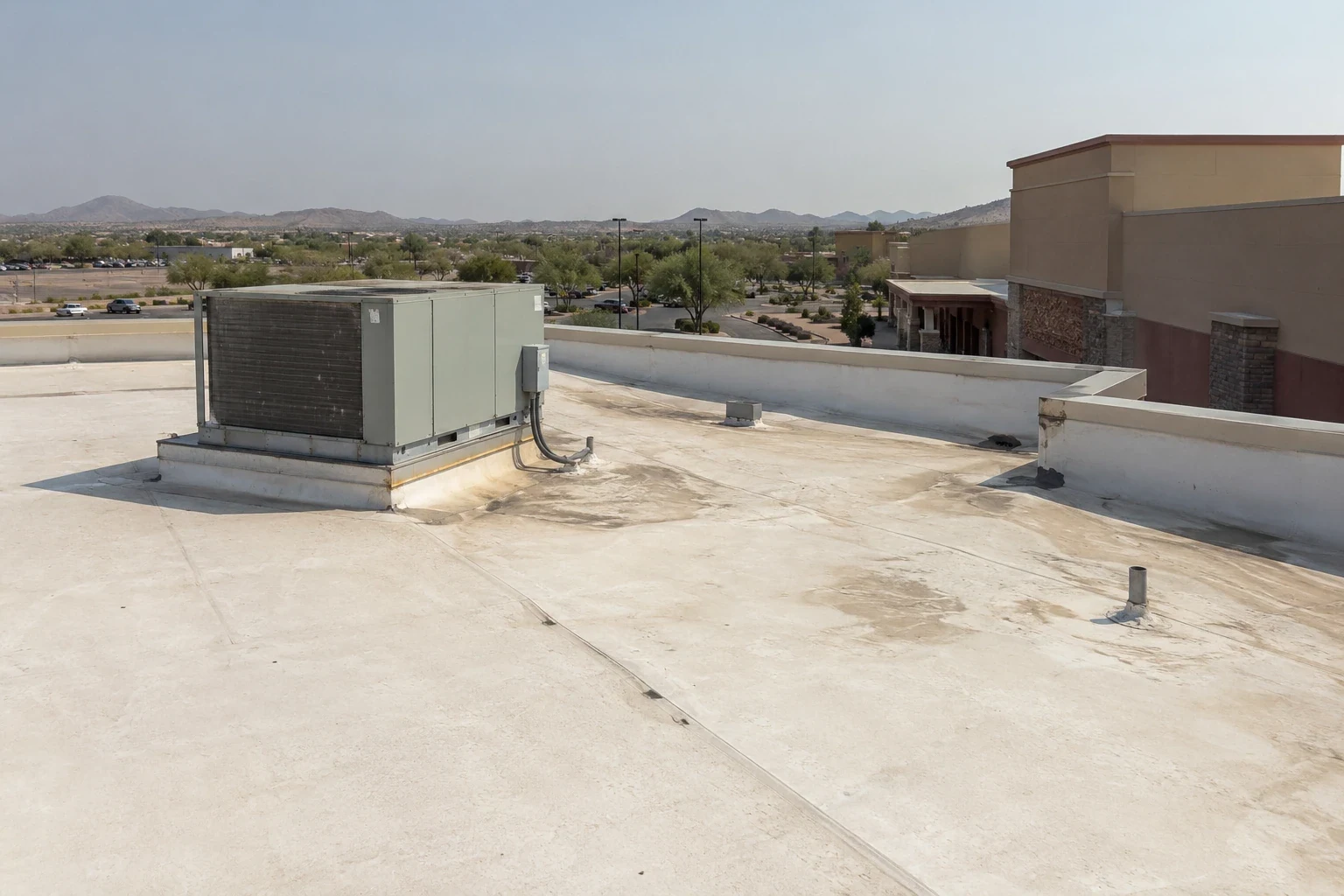
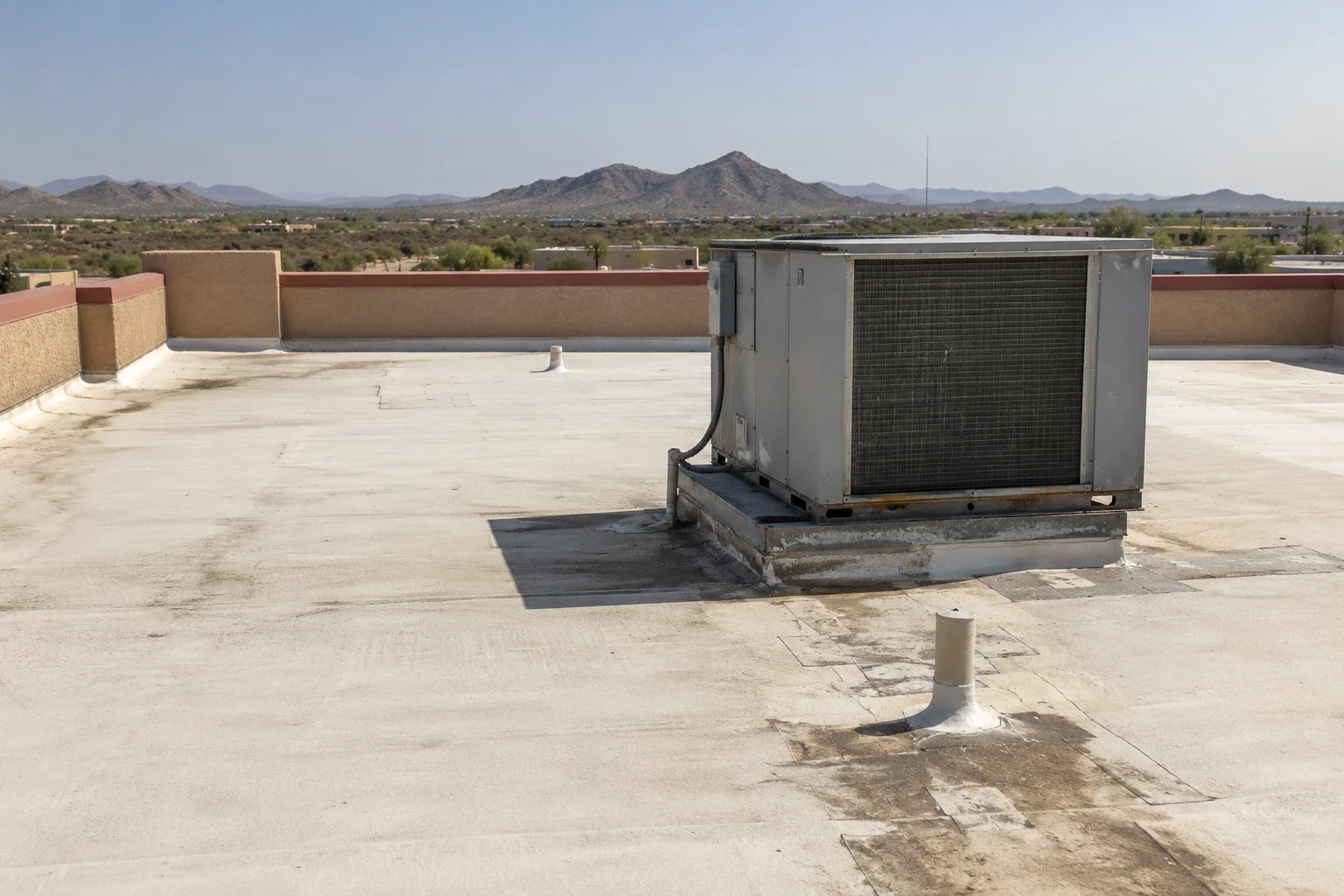
Equipment concentrates the risk. A roof with a dozen units is a roof with a dozen curbs, dozens of pipe and conduit penetrations, and a steady flow of maintenance technicians walking the same paths. Foot traffic wears the membrane along those routes, and oil or condensate from equipment can sit against a seam. Where exhaust discharges onto the membrane, the surface and the sealant can change character faster than the field of the roof.
We inspect each equipment area as its own cluster: curb height and corners, counterflashing, support legs, walkway protection and the condition of sealant. Rooftop equipment curbs and supports frequently need work after a unit is replaced, and the roof scope should say who restores the transition. The membrane type matters too, because PVC roofing and other membranes respond differently to grease and chemicals, a question to settle before material is chosen.
How does the St. George industrial mix change the roofs?
In the Guard's own planning documents, Fort Pierce Industrial Park reads as largely M-1, a class where warehousing, light manufacturing, fabrication, wholesaling and services all fit. Hurricane's land-use plan describes its Light Industrial/Business areas as employment centers with small-scale warehousing or assembly, and the Greater Washington industrial plan covers 318.614 acres centered on Sunrise Valley Industrial Park, with improved lots delivered in phases.
Those are zoning and planning descriptions. They tell us a plant may be one of several uses in a park, and they do not tell us the roof under any one of them. A fabrication shop with an older metal panel roof and a newer assembly building with a single-ply membrane can sit on the same street. The building list and the roof walk establish which systems we are dealing with, and the manufacturing plant roof plan follows.
Can roof work happen while the line is running?
Often it can, if the zones are defined. We ask which bays run continuously, which can pause for a shift, and which have overhead clearance, hazardous areas or hot-work restrictions. Roofing that involves torches, heat welding or flammable adhesives needs a fire-watch plan and permits agreed with the plant's safety lead before the crew opens a section.
Noise and dust matter below the deck as well. A tear-off over a precision area can shake debris loose, so the plan names the protection for equipment and product beneath the work, and the crew closes each opening at the end of the shift. Occupied-building reroofing applies directly: the roof is divided so that production below each zone knows its dates. A plant with a planned shutdown can use that window for the heaviest scope, and we schedule material delivery to arrive when the shutdown starts.
When is a patch enough for a plant roof?
A patch is enough when a defect has a boundary and the surrounding roof is sound. A split seam beside a curb, a failed pipe boot or a lifted corner of flashing can usually be repaired in a visit. A pattern of leaks in the same bay, or a ceiling stain that returns after repair, suggests that water is entering elsewhere or that insulation is wet.
When that happens we look for the path before we repair again. Drainage deserves a check, since a clogged scupper can turn a minor seam issue into a recurring leak, and drain and scupper repair is often the cheapest fix. Where the metal panels themselves have failed at fasteners and laps, a metal roof retrofit may let the plant keep the structure and replace the weathering surface without a full tear-off.
How should a plant fund the roof?
A plant's capital process usually weighs the roof against production equipment, and the roof tends to lose when it appears as an unexplained line. We give the plant a condition record by roof section, a ranked list of probable actions and a range of cost drivers: the number of layers to remove, the depth of insulation, rooftop units that need a crane, and the shift structure that sets labor hours. The capital option stands beside the repair option, so the plant sees what each commits it to.
The code path is part of the discussion. On the code side, the 2024 International Building Code is the Utah base, and the 2024 IECC with ASHRAE 90.1-2022 turns mandatory statewide on July 1, 2026. A roof recover or a replacement may bring insulation and fire-classification questions, and we raise them with the plant's engineer and the permit office before the budget is fixed.
Rainfall in St. George is limited, at 9.31 inches a year by the local station normal, and the wettest month is February. A plant can therefore run many months between leaks and forget the roof, which is how a small defect grows unseen. A twice-yearly walk, one before the summer heat and one before the February rains, costs little next to a leak over finished product, and it keeps the repair list short enough to handle during ordinary maintenance.
What should the plant send to start?
Send the building layout with roof areas marked, equipment lists by bay, any process exhaust information, the shutdown calendar and the safety requirements for roof access. Include leak history with the bays that were affected and any prior repair records.
If the plant is in the St. George Industrial Park or the Sunrise Valley area, say so, because the access and delivery routes differ by park. Companies that also run distribution space can pair this with the planning used for logistics operators, and plants being built or expanded by a general contractor can pass us the roof package early so the work window is set before the schedule locks.
Commercial Roofing Questions
Do you need the plant to shut down for a reroof?
Not necessarily. Defined zones, protection below the work and a fire-watch plan can keep many lines running. A heavy tear-off over sensitive equipment may be better placed in a shutdown.
How do you protect product and equipment under the roof?
We agree on protection with the plant before opening a section, then close every opening at the end of the shift. Anything beneath a tear-off area is covered, moved or scheduled out.
Can exhaust damage a new membrane?
It can, depending on what the exhaust carries and where it lands. We identify discharge points before choosing the membrane and add protection or alternate material at those spots.
What does a plant roof record include?
Roof sections, membrane type where readable, equipment locations, repair history, photographs and open questions. It lets a new maintenance lead pick up the roof without starting over.
Who handles hot-work permits?
The plant controls them. We bring our crew's procedures and follow the plant's permit and fire-watch rules, and we do not start torch or flame work until the permit is in hand.