
Commercial Roofing in St. George Industrial Park, St. George, UT
St. George Industrial Park Overview
The hardest part of an industrial roof job is often getting to the roof: a hatch behind a storage rack, a ladder that stops below the parapet, a rooftop unit that must be shut down before anyone can stand beside it. The city's features map lists St. George Industrial Park as a named place, and that name is enough to route a crew, nothing more. For an asset manager with a building there, the first deliverable is a written access plan, finished before July heat sets the clock, because July's mean daily high in the NOAA normals is 101.9 degrees and August's is 99.9.
Once the crew can reach the roof safely, the walk follows the water and the record separates what we confirmed from what remains to be tested.
What has to be settled before anyone climbs?
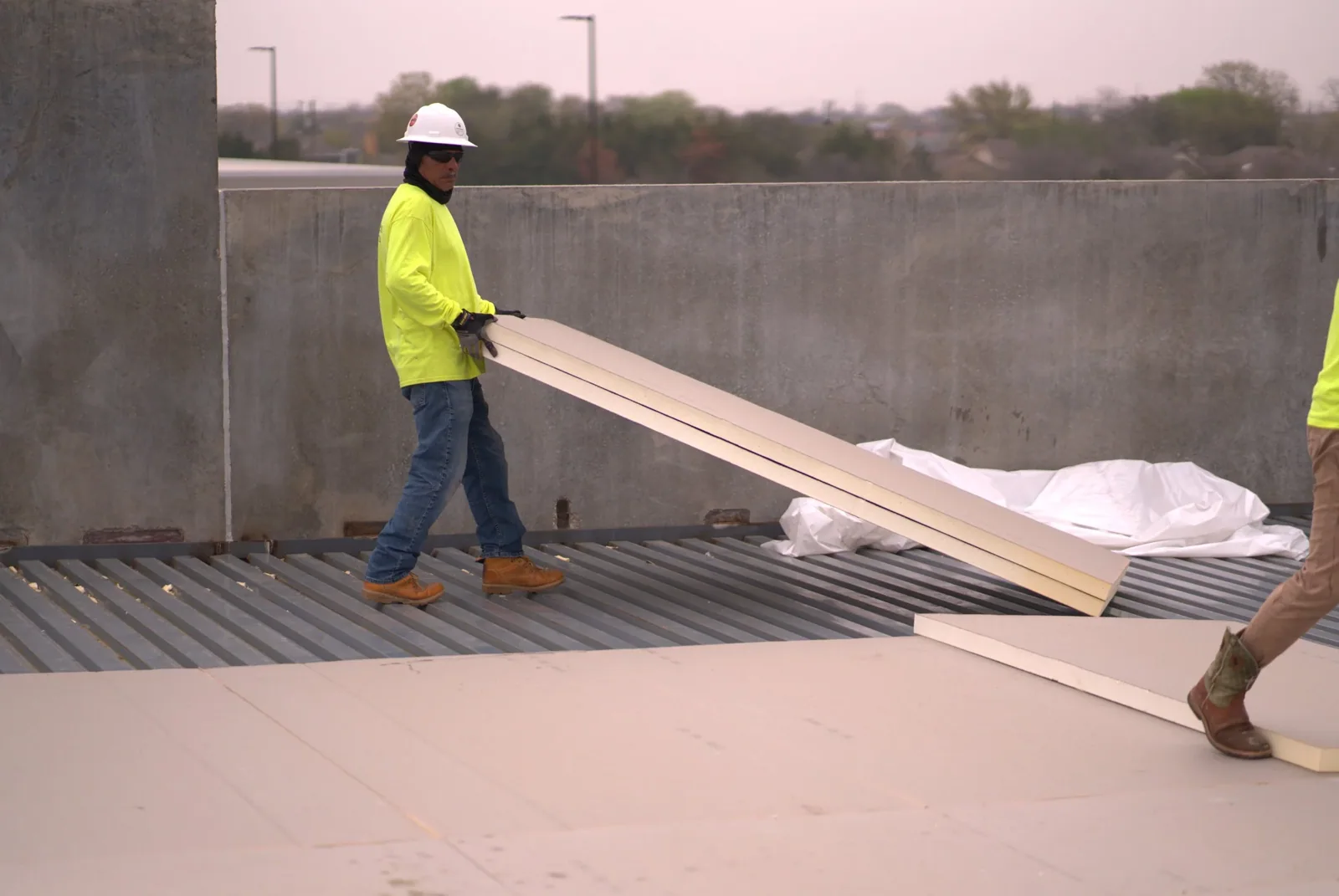
Four things: how the roof is reached, who must be told, what below the work needs protection and which hours are workable. A fixed ladder, a hatch and a lift each carry different rules. A hatch may open into a room the tenant uses all day. A lift needs a flat footing and clearance from dock traffic and power lines. Fall protection depends on how far the work sits from the edge, and a roof without tie-off points needs a plan before the crew is dispatched.
We write down the route, the fall-protection method and the contact who holds the key, then send tenants the start times. Because early starts leave the crew on a cooler surface, the notice usually goes out for first light. Those steps cost little and keep the first visit from becoming a second visit just to finish the access.
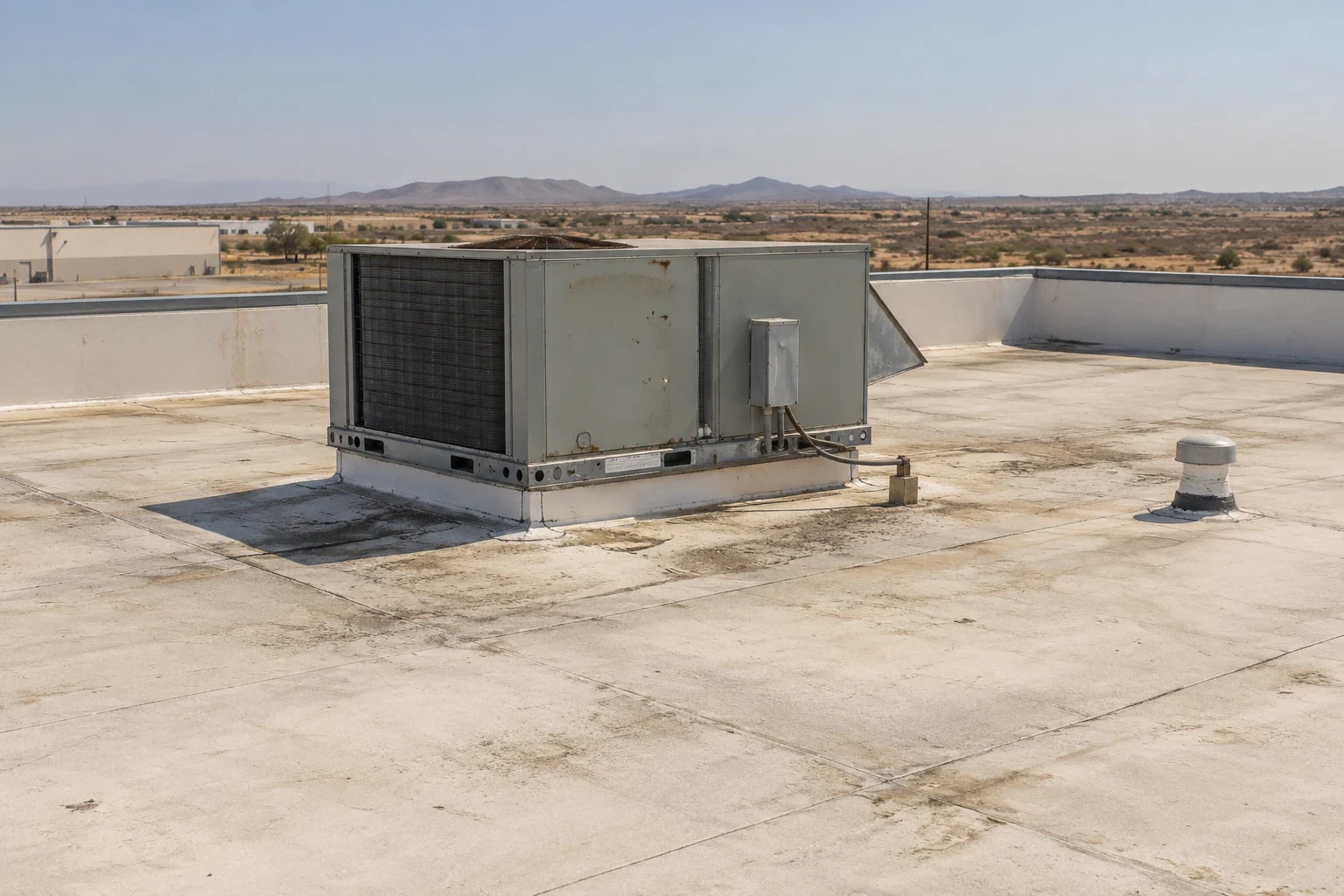
Rooftop units add a step of their own. A unit that must go off before anyone can work beside it is shut down through the tenant's mechanical contractor, and its restart is logged before the crew comes off the roof. Anything that needs a torch or a grinder also needs the building's hot-work permit and a fire watch, and those are requested before the day, not at the hatch.
How do we read a park with several kinds of buildings?
One building at a time. The city's land-use map keeps Commercial, Industrial and mixed Industrial/Commercial parcels apart, which is a fair broad screen for the mix of commercial and light-industrial roofs, and still tells us nothing about a particular sheet or its age. The Consolidated Plan dates much of the commercial stock to after 1980, so a park building may carry its first roof, a recover or a replacement. We find out at the roof.
The first visit builds the facts: the membrane or panel identified from a sample or a record, the layers counted at a cut edge, the equipment listed and the drain routes marked. The building might be a single-tenant warehouse, a multi-tenant flex block or a small shop. Each reads differently, and the asset manager gets a roof plan with photographs and a short list of open questions.
We note on the plan whether the roof is shared with a neighboring unit, since a shared roof also shares its drains.
What does a dry-climate roof show that a wet-climate roof hides?
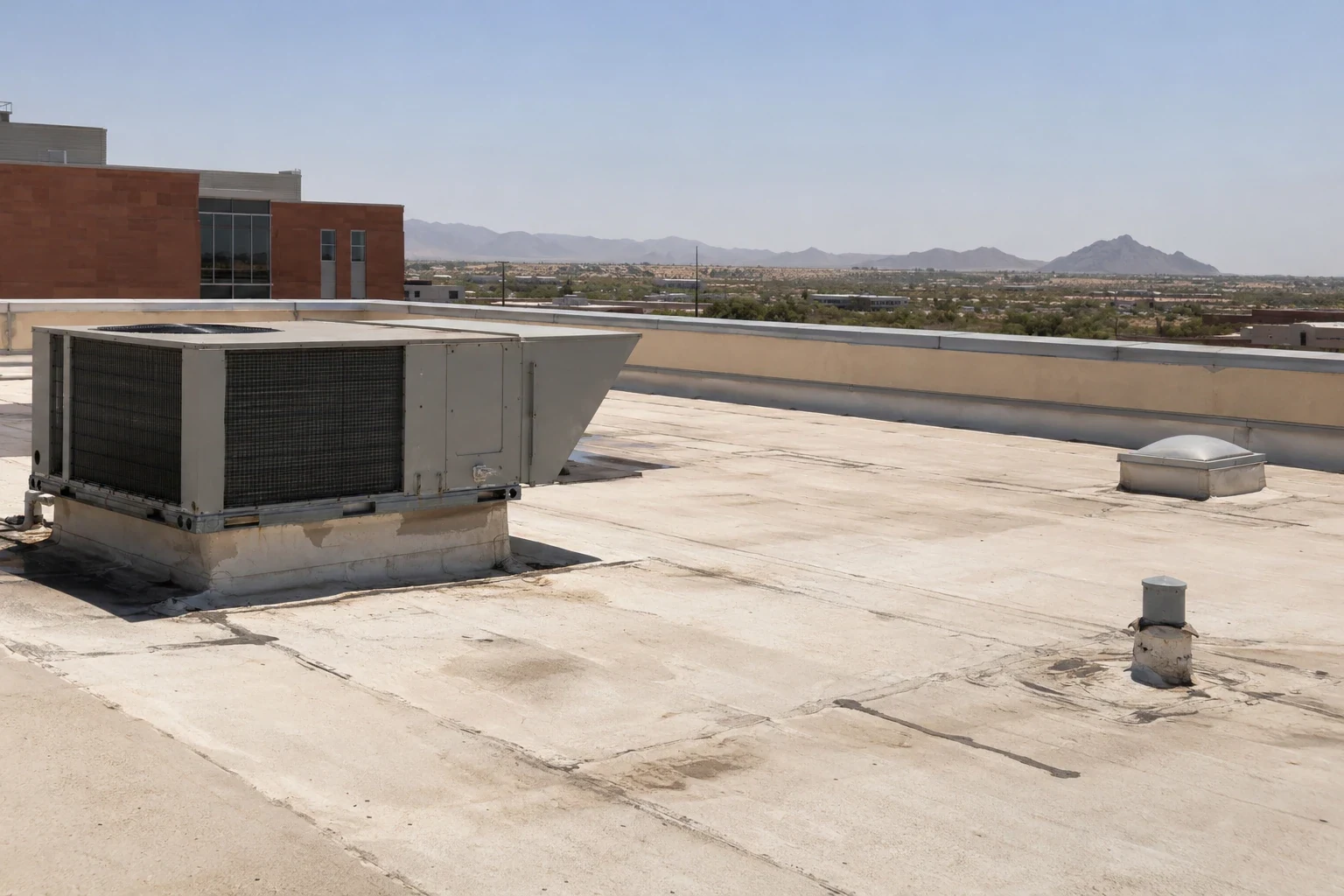
Neglect, mostly. With 9.31 inches of rain a year at the station, wettest in February at 1.38 and driest in June at 0.16, a drain can clog in March and not be tested until the following winter. Dust packs the bowls, sealants dry and crack unseen and the first storm finds every weak point together. We look for debris-packed outlets, cracked sealant at curbs and wall bases, shrunken flashings and ponding rings that show where water stood after the last one.
The snowfall normal is about 1.2 inches a year, which is a low-elevation figure that should not be carried to higher ground without a check. Ponding repair begins by finding out why the water stays.
How do we confirm what we think we see?
By testing each impression. A soft spot underfoot suggests wet insulation, and a moisture meter confirms or rules it out. A blister suggests trapped moisture, and a small cut shows what is inside. A ceiling stain points to a leak, and tracing the water route across the roof finds the entry. The roof plan marks what was observed and what was tested separately, so nobody reads a guess as a result.
On a big industrial roof, a drone pass finds ponding and staining quickly and an infrared survey points to wet board, but both only guide where hands and meters go. Service routes to rooftop units get their own check, because technicians walk the same strip every month and wear the membrane along it. A walk pad along that route is cheap protection.
Where does a repair end?
Where sound, dry material begins. A patch closes a puncture, the sound end of the bond limits a seam repair and the corner where flashing still holds limits a curb repair. If the insulation is wet, the repair runs to the wet edge. In the afternoon heat adhesives and welds leave their working range, so the crew starts early and stops when the surface leaves it.
For a roof near the end of its life, the replacement comparison follows, using the moisture evidence and the repair history. Four inputs carry that decision: how much of the roof is wet, how many repairs have been made, how much life the membrane has left and how long the owner will hold the building. We supply the first three. The code step comes with it. Because the permit date picks the edition, and the statewide energy path begins on July 1, 2026, the City of St. George is asked which pathway a reroof follows before insulation is priced. Owners who also hold Fort Pierce Industrial Park or Riverside Business Park buildings can compare all the roofs on one list.
What should be ready for the first visit?
The property address, any roof plans or invoices, the leak dates, the access rules and the operating schedule. County maps show I-15 and St. George Boulevard as part of the regional network, a routing aid; exact access is confirmed at the property.
If the building has several tenants, add the contact for each and mark which suites sit under which roof zone. If it has one tenant with a production schedule, add the shifts and the weeks that cannot take disruption. We use the list to set the order of zones, the position of the lift and the hours of the first visit. Photographs of the roof hatch, the ladder and any shutoffs help as well, and they let the crew arrive with the right equipment instead of finding out at the door.
Commercial Roofing Questions
What if the roof has no safe access?
We plan a lift or temporary access first and tell the manager what that adds. Work starts only after the access plan is written.
Can tenants stay in place during repairs?
Usually. We agree on start times, protect the space below and close every opening before the shift ends.
Why do dry-climate roofs fail in the first storm?
Debris and dried sealant build up unnoticed, and the first heavy rain tests everything at once.
Is a drone enough to price a replacement?
No. A drone guides the walk. Pricing needs hands-on checks and, where wet insulation is possible, moisture testing.
Do energy rules change a reroof?
They can. The energy path applies from July 1, 2026, so we confirm the pathway for the permit date before pricing.