
Commercial Roofing in Historic Downtown on Telegraph Road, Washington City, UT
Historic Downtown on Telegraph Road Overview
One roof drain often serves a whole small downtown building, and when it clogs there is no second outlet to take the load. Washington City defines its Historic Downtown commercial area along Telegraph Road from 500 West to 300 East, with commercial uses reaching half a block north and south on the cross streets. The city's downtown plan treats Historic Downtown and the neighboring Milepost 10 commercial area as separate centers that share Telegraph Road, and it describes a pedestrian-oriented, mixed-use downtown that fits the traditional neighborhoods around it.
That vision suggests shorter buildings, shared walls and walkable streets with people under the eaves. A roof visit there starts with the access route and the hours of the shops below, then moves to the drain, the parapets and the flashings, because a small roof has fewer places for water to go.
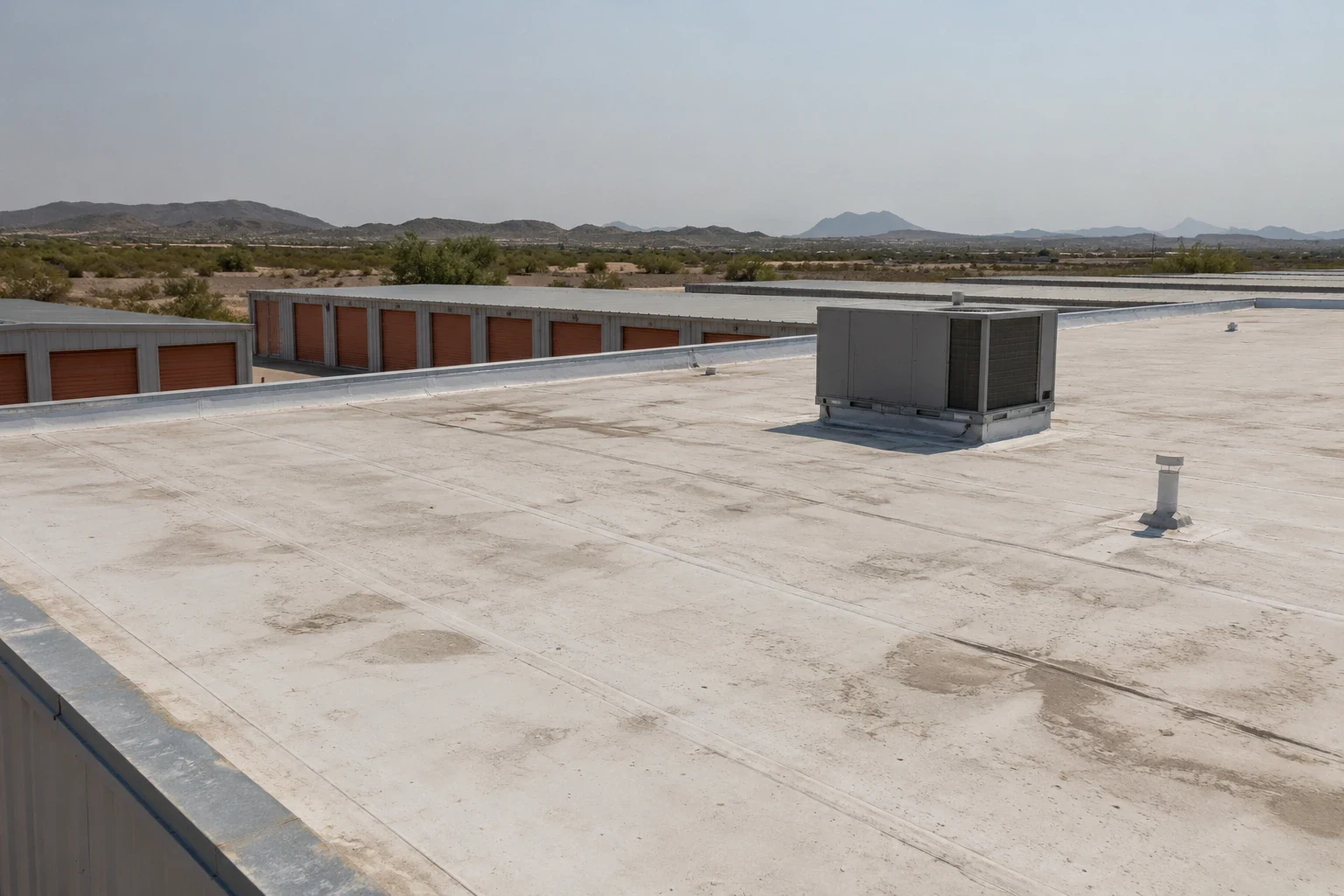
What does a walkable downtown ask of a roof crew?
Protection for the people on the sidewalk. A loose coping cap, a failing gutter or a shifted piece of edge metal can drop onto a public walk, so any work over the street side, including edge metal and coping repairs, is fenced, spotted and timed away from busy hours. Deliveries to the shops arrive early, and a roofing truck in the loading zone can stall a morning, which is why staging is placed before the first load comes.
Mixed use can also put homes above or beside storefronts, so noise, dust and hours have to be agreed with more than one party. We ask the property manager who occupies each suite, when they open and where the entrance is. The plan that results protects the sidewalk, the storefront and the neighbor, and the next decision is whether the work fits between opening hours or needs several days of fencing.
Pedestrians also set the pace for cleanup, which is done before the shops open.
Where do shared walls and neighbors change the roof work?
At the joint. Where one building's roof meets a neighbor's parapet, the flashing runs across two owners, and a half-repaired joint leaks as freely as an unrepaired one. We photograph both sides of the shared wall, report what we can see of the neighbor's side and list any defect there so the owner can raise it. A scupper that discharges onto a lower roof gets the same look, since it can wear a hole in the roof below, and drain and scupper work often settles it.
On these small roofs a single rooftop unit can occupy a big share of the surface, and its curb takes service traffic every month. Counting the penetrations, testing the sealant and placing a walk pad along the service route cost little against a patch on a worn membrane.
- Parapet caps and the wall flashing below them
- Scuppers, gutters, downspouts and where they discharge
- The curb and pipe flashings around the single unit
- Seams and laps close to walls, where movement is greatest
- The shared wall, which neither owner may ever have inspected
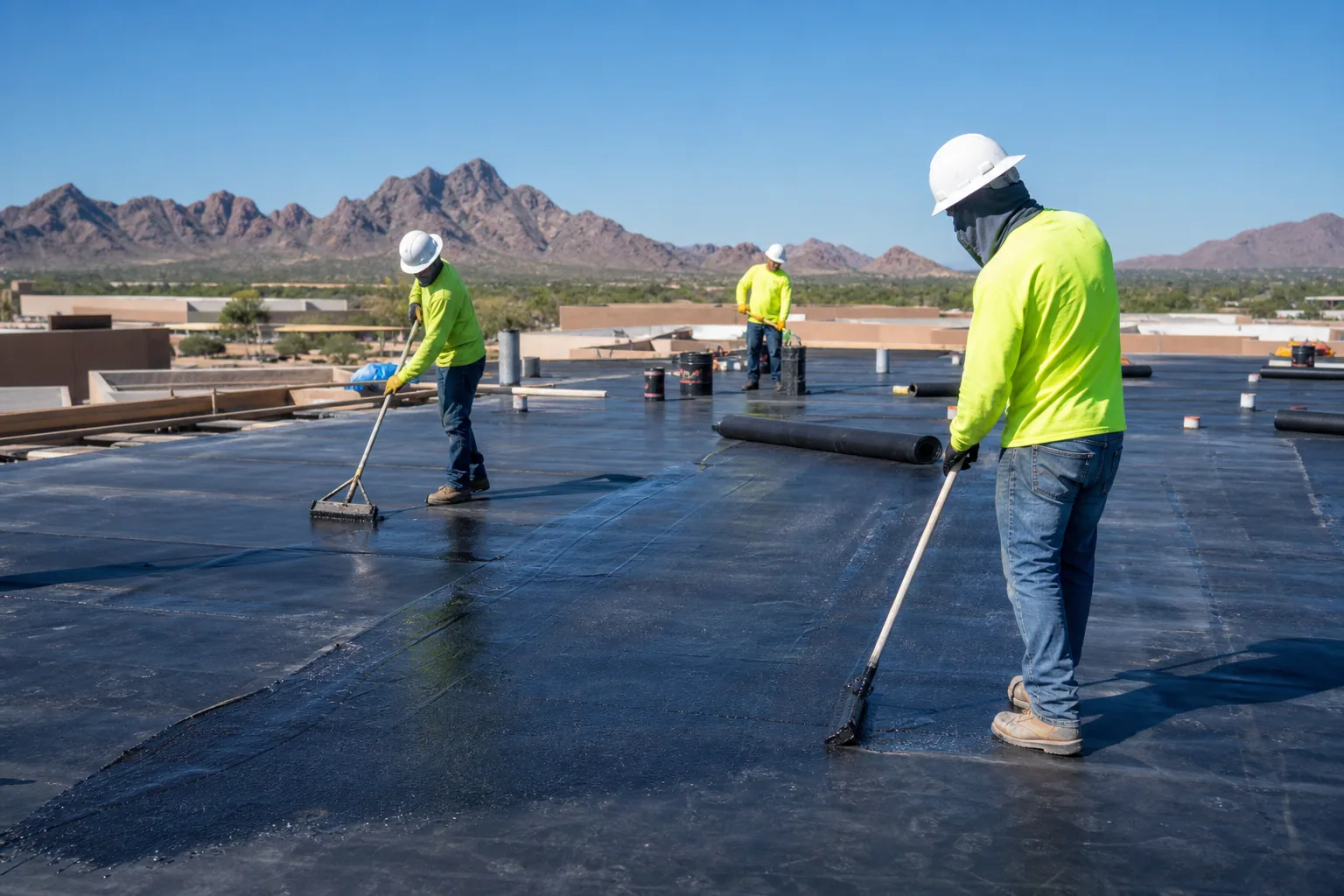
How does summer heat set the hours on a small roof?
Early. A small roof in full sun is too hot for careful detail work by early afternoon, and July's mean daily high at the NOAA station for St. George is 101.9 degrees, August's 99.9. Washington City sits in the same region, but a station figure is not a reading on one roof, so each roof is judged by its own surface. Crews start at first light, finish the delicate welds and flashings first and keep water and breaks in the plan.
The same station reports about 1.2 inches of snowfall a year. That is a low-elevation number, and no one should lean on it for higher ground without a local check, but it does mean snow is rarely the stress that drives a repair here. The calendar follows the roof and the weather on the day. A flashing repair at a parapet, a penetration repair at a curb and a drain clearing can usually be done in a single early shift, with the sidewalk reopened before the shops fill. A full reroof is sequenced by section instead, with each section dried in before the crew leaves and the fence moved only when the street side is clear.
What can a historic label tell us about the roof?
Little. The word historic in a district name does not say what a roof is made of. A building may be old or newly built, and its roof may be original or replaced. We do not assume masonry, an age or a membrane. What we record is the system we can see, the layers at an edge, the condition and the moisture state. If a design review or preservation rule applies to materials or visible edges, the owner tells us and we confirm it before the scope is set.
Evidence comes from stained walls, ponding rings and cracked sealant that show how the roof behaved in the last storm. At the station 9.31 inches of precipitation falls in a year, February leading at 1.38 and June trailing at 0.16, so a roof here meets a few events instead of steady rain. Doubtful areas get moisture readings, and where wet insulation is likely an infrared moisture survey maps it.
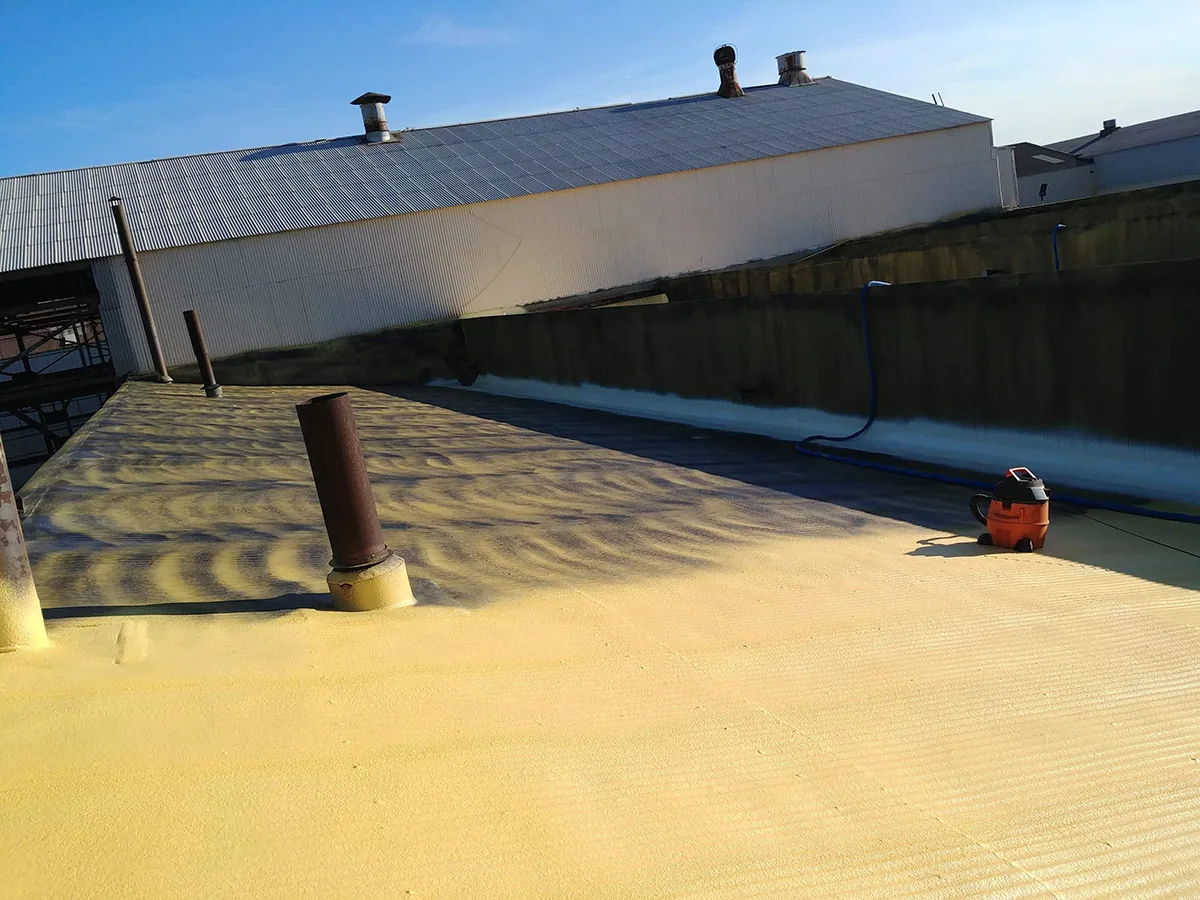
How far should a downtown repair run, and when is replacement cheaper?
A repair runs to sound, dry material, which on a small roof can be most of the surface. A repair suits local damage. A replacement suits a roof with wet insulation throughout or a failed membrane. Because the cost gap between a large repair and a new roof is modest on a small building, replacement also brings new insulation and flashing, so both are priced and set side by side.
Before a reroof is priced, the City is asked which code edition and energy pathway the permit date calls for, since the statewide energy rules begin on July 1, 2026 and can change the insulation, and with it the number.
What decision does the owner face next?
It depends on the tenants. A building with a long lease and a sound structure justifies a durable roof. One likely to be redeveloped may need only the repairs that keep it dry. The city's plan favors a mixed-use downtown, and a change of use or an addition changes what the roof has to do. We lay out three paths with the evidence for each: hold with repairs, restore or replace.
An owner with other buildings in Washington City or along the I-15 and Buena Vista corridor can use the same record. Bring the address, the roof records, the access rules and the shop hours, and we will come back with a defined repair or capital question answered.
Photographs of the roof before and after any work become part of the file the next owner inherits.
Commercial Roofing Questions
Do you work over public sidewalks?
Yes, with fencing, a spotter and deliveries timed away from busy hours.
Does a historic label change the roof work?
Only when a design review or preservation rule applies to the building. The owner tells us and we confirm before the scope is set.
Why survey the whole of a small roof?
One drain or one flashing carries the entire roof, so a small defect has a large effect.
When is replacement cheaper than another repair?
When insulation is wet across the roof or repairs keep recurring. Small roofs reach that point sooner.
Who decides which code applies to a downtown reroof?
The City decides, from the permit date. We ask before pricing, because the answer can change the insulation.