
Commercial Roofing in Tech Ridge, St. George, UT
Tech Ridge Overview
The most useful roof inspection on a new building is the one made before the first lease clause or warranty condition is tested. Tech Ridge describes a planned mix of offices, retail and homes on a mesa in St. George, and the city's features map lists it as a named place. A district with that mix will put office roofs, retail roofs and residential roofs side by side, each with a different slope, a different amount of rooftop equipment and a different owner.
A Tech Ridge visit begins with the roof plan, the owner's schedule and the route to the roof. Then we look at what separates a sound new roof from one with a defect not yet visible: flashings, drains, penetrations and seams. Heat decides the hours, since the NOAA mean daily high is 101.9 degrees in July, and the evidence decides the scope.
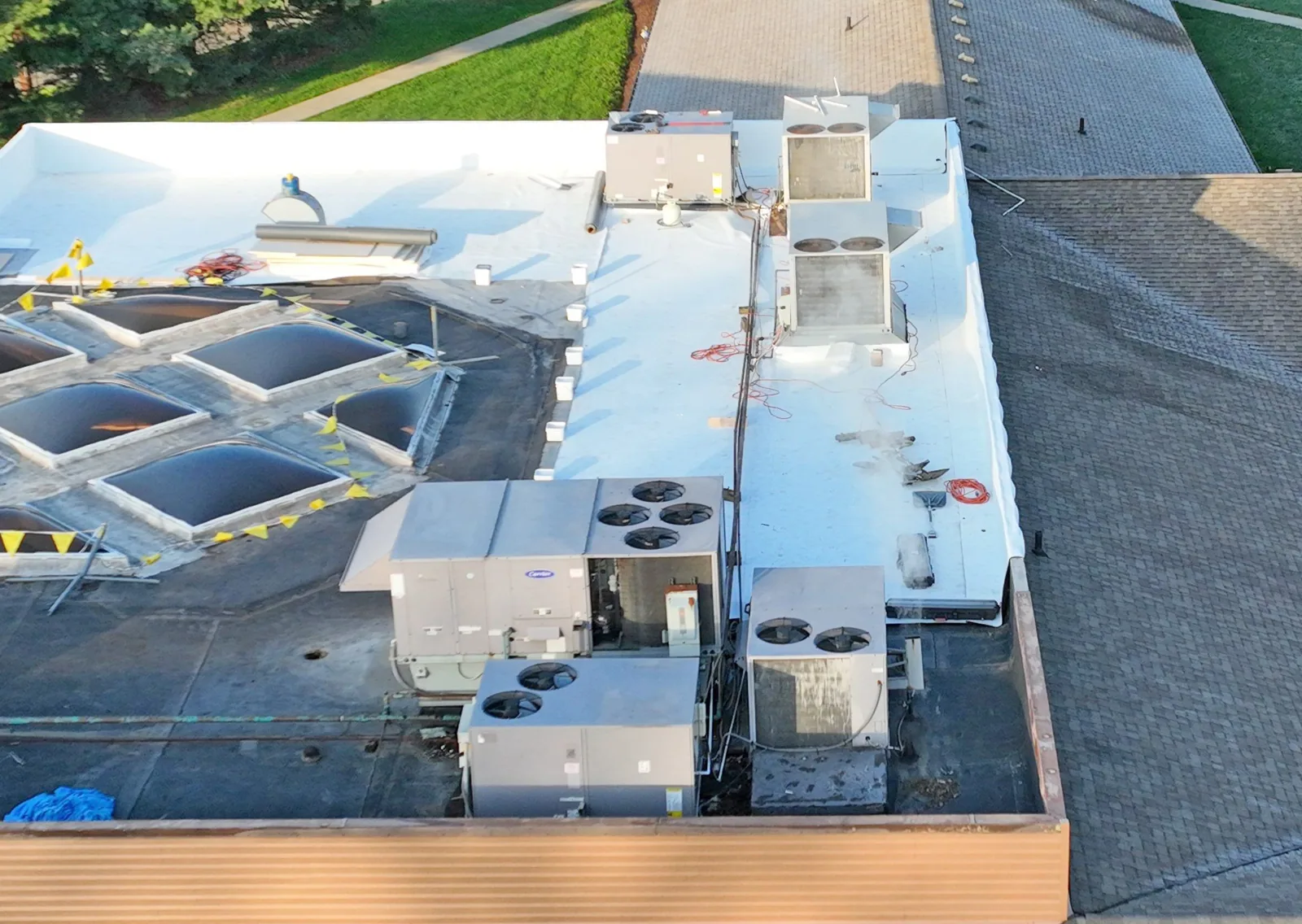
What does an office, retail and residential mix need from its roofs?
Three sets of habits. An office roof tends to carry many rooftop units and the penetrations that go with them, so it fails at curbs and conduit. A retail pad carries a parapet, a canopy and signs, so it fails at attachments and edges. A residential building may mix pitched sections with drains and gutters, so it fails at transitions and vent boots. The same weather works on all three, and the failures differ.
We keep the roof record by building type, with a plan, photographs and open questions for each building, so an owner or an association can read the district at a glance. Being on a map tells us nothing about the sheet overhead, and every fact about a roof is confirmed at the building. The mesa is a fact about the site, not about any roof, but a raised site can bring more exposure at edges and corners, so perimeter metal, coping and membrane terminations are checked on each building and the way they are secured is recorded.
Why wait until the other trades have left?
Because they leave marks. On a district still being built out, mechanical, electrical and sign installers walk the roof, cut it and set equipment on it, and a roofer's inspection made before they leave records their work as if it were wear. We ask which trades are still on the roof and when the last unit goes up, then walk after they are gone, looking for punctures, crushed insulation, displaced flashing and drain bowls full of construction debris.
New membrane is soft in July heat and easy to scuff, so an early start protects the roof as well as the crew. The record gives the owner a baseline from which later damage can be separated from construction wear, and it fixes the date from which a warranty or maintenance obligation is read.
Turnover paperwork belongs in the same file. A new roof usually arrives with a specification, a membrane data sheet and a warranty form, and those documents say who may repair the roof, what notice a leak requires and which inspections the maker expects. We read them against what we found, flag any detail that departs from the specification and keep the set with the photographs, so a claim two winters from now starts with a complete folder instead of a search.
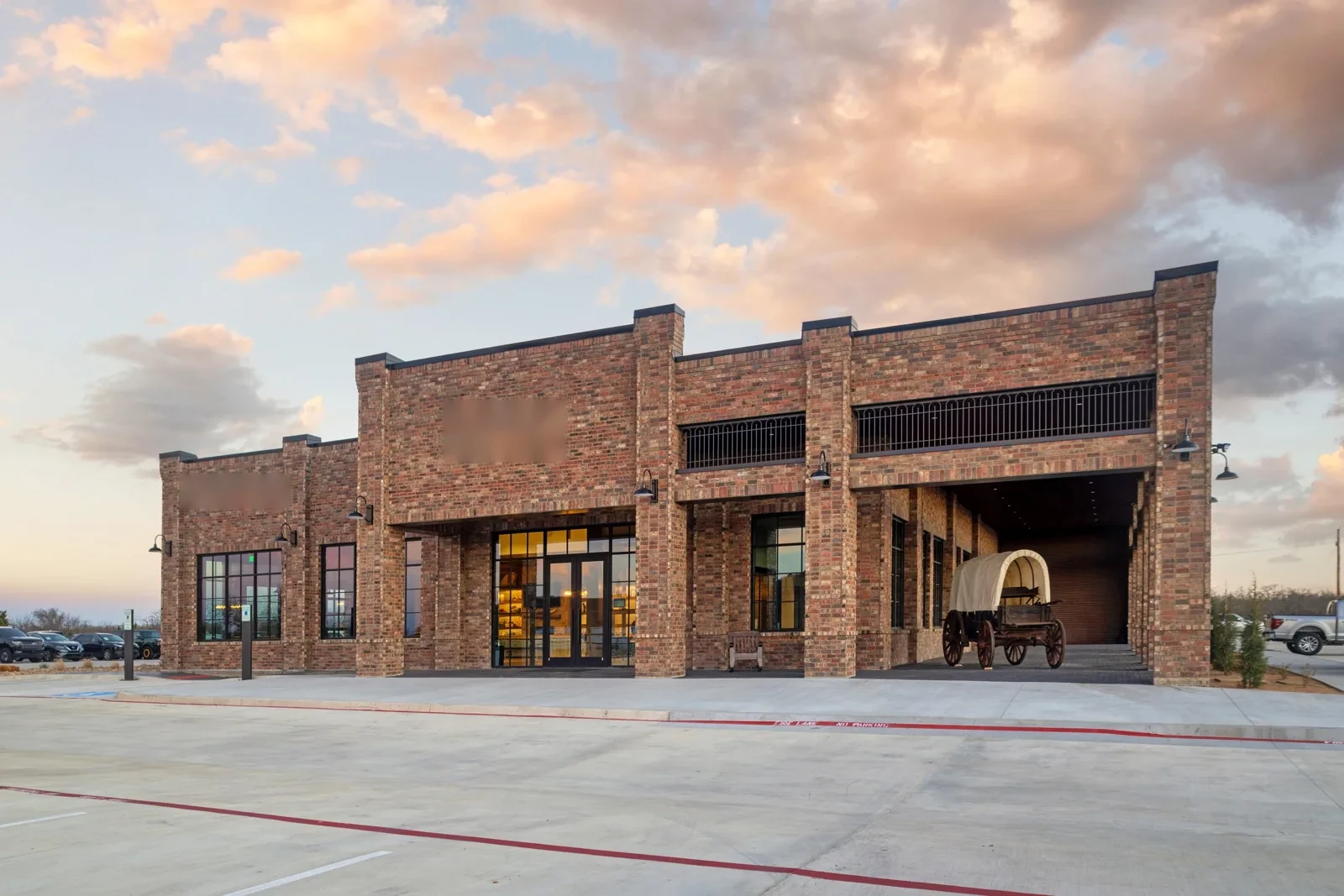
Which details deserve a second look on a recently built roof?
The ones where two trades meet. A pipe boot done in a hurry, a curb flashing finished by someone other than the roofer and a coping joint sealed in cold weather are the usual weak points. Drain bowls may hold debris. Fasteners in metal edge flashing back out as the metal expands in the sun.
- Pipe and conduit penetrations added after the membrane was laid
- Curb corners and inside angles formed in place
- Parapet caps, wall bases and counterflashing
- Drain bowls and overflow scuppers
- Scuffs and cuts left by trades on the roof
A puncture repair found in the first months is cheap and quick. The same puncture found after a storm costs the insulation under it.
What counts as moisture evidence in a dry climate?
A roof here may not meet real rain for months: the station normals give 9.31 inches in a year, so the average month brings well under an inch. A defect present since installation can wait for the first storm to show itself. That is a reason to inspect before the wet months, not after one.
Evidence comes from a walk, photographs and, where needed, moisture readings. A baseline commercial roof inspection after construction records day one, and an infrared moisture survey a year later can be compared with it. Snowfall at the St. George station averages only 1.2 inches, but that is a low-elevation reading, and a building on the mesa deserves a local check before the number is trusted.
Dated photographs of the drains and the low areas, taken at the first walk, give the next visit something to compare against.
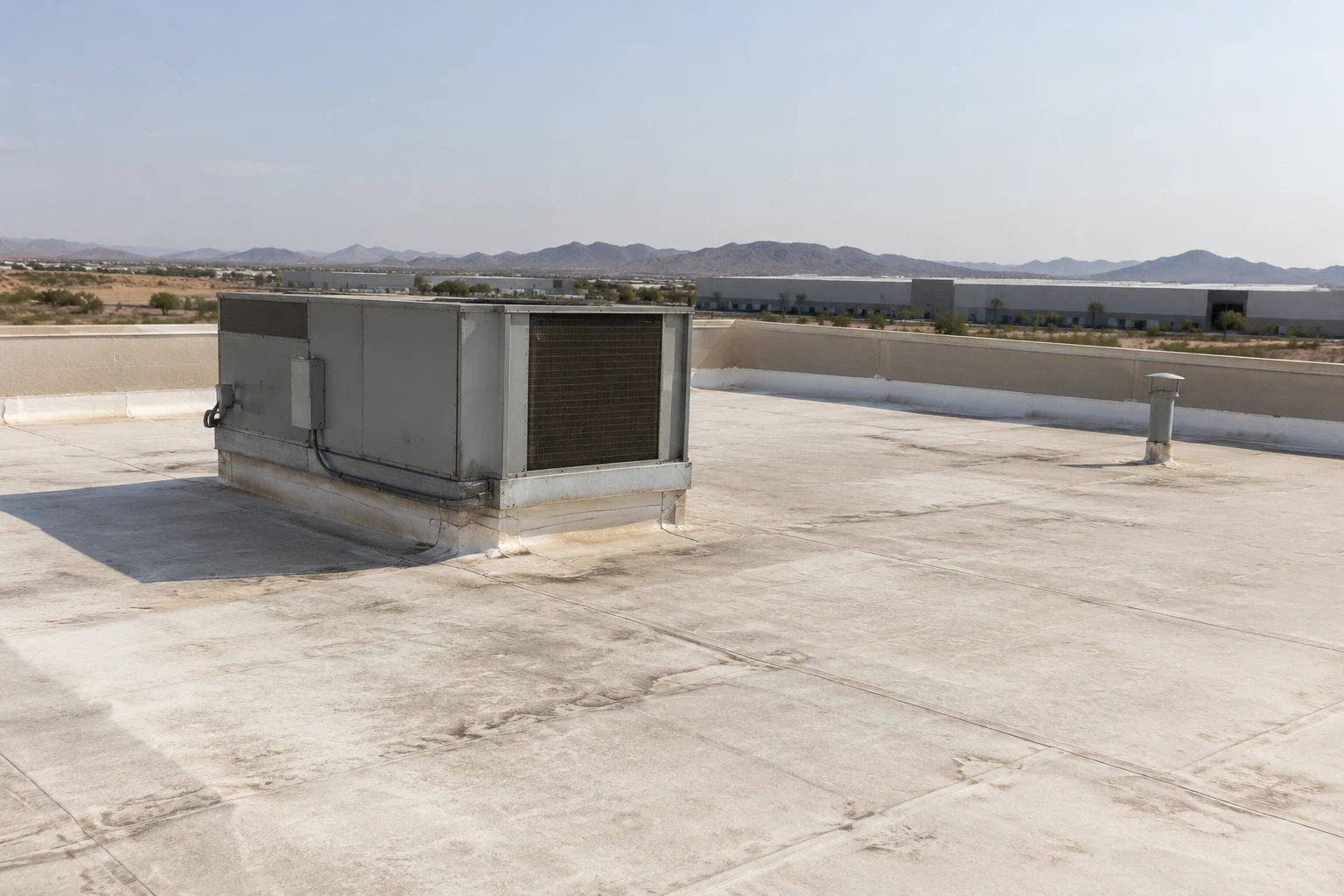
Who owns a defect found in the first year?
The contract and the cause decide. An installation defect belongs to the installer, and a wear item belongs to the owner. We cannot rule on another contractor's work, but we can document what we see and where, with photographs and a sketch, so the owner arrives at the installer with a clear record.
For repairs we are asked to make, the boundary follows the evidence: a patch where the surrounding sheet is sound and a wider repair where insulation is wet. If the roof will carry more equipment later, we mark curb locations and walk paths now so new penetrations land on sound membrane. Code is the last piece: before any scope is set, the city confirms which edition of the amended 2024 International Building Code the permit date triggers.
How should an owner budget for roofs across a district?
From the first year. A spring and a fall maintenance visit clears drains, checks sealants and finds small defects early, and the record shows trends that a roof capital plan turns into a funded year. Tenant improvements keep adding penetrations in a district like this. A new unit, vent, sign bracket or antenna each cut the membrane, so the owner keeps a short sign-off per change: where it went, how the curb or flashing was made and a photograph before and after, taken on the day. That habit keeps new holes away from low spots and old patches and gives the next inspector a list of changes since the last visit. An owner with buildings elsewhere, in Riverside Business Park or St. George Industrial Park, can read those roofs in the same format. Bring the plans, the roof records and the schedule, and the first visit answers the one decision you need to make.
A short reserve line for the first-year baseline visit keeps the record from slipping into the next budget cycle.
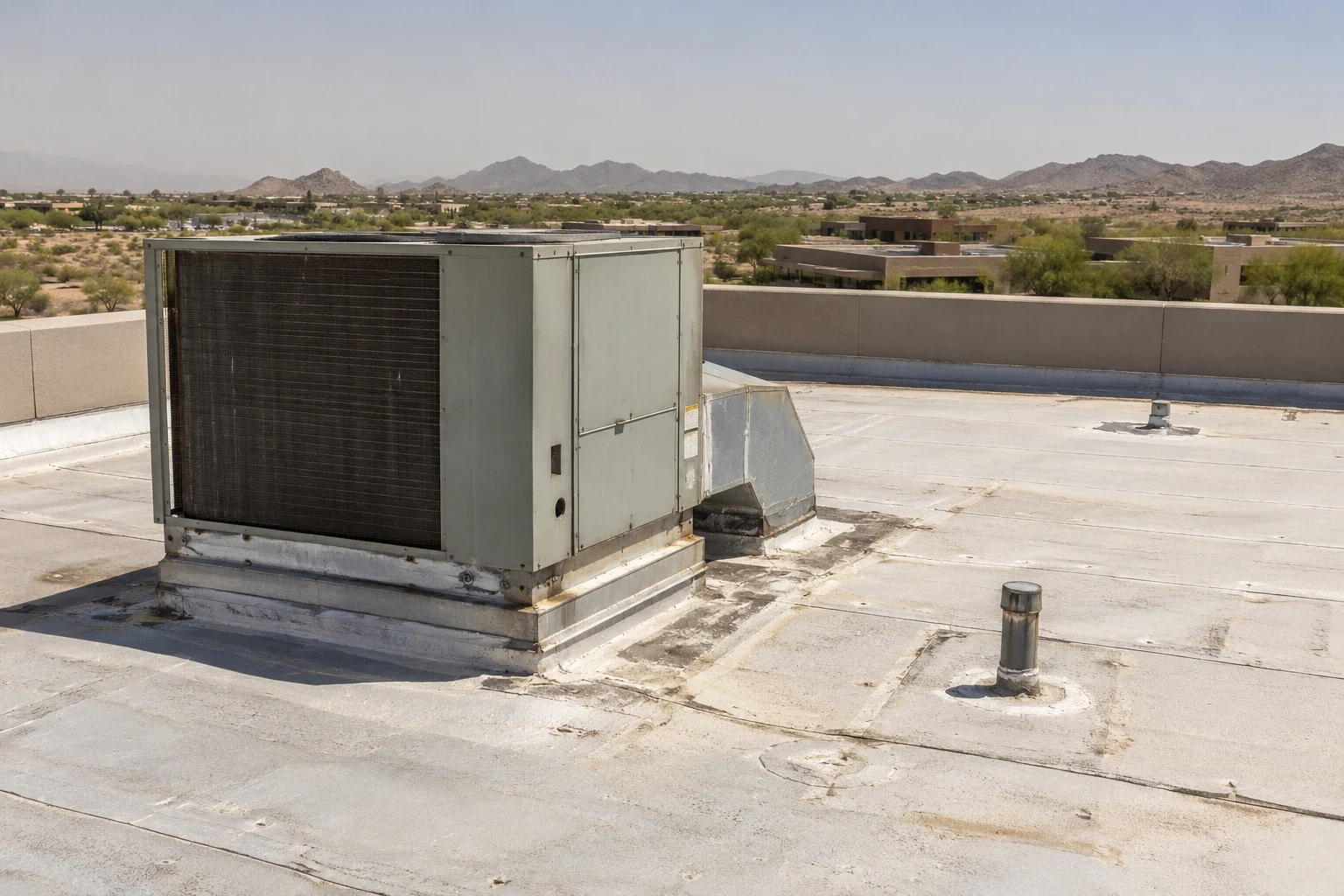
Commercial Roofing Questions
Should a new roof be inspected?
Yes. A baseline walk in the first year records the roof's starting condition and catches construction defects early.
Why wait until the other trades finish?
They scuff, puncture and displace flashings. An inspection after they leave separates their damage from later wear.
Does the district name tell you the roof type?
No. The plan describes a mix, so we confirm each building's system and condition on site.
What if a defect shows up in year one?
We document it with photographs and a sketch. The owner takes that record to the installer.
Who confirms the code edition on a new-build reroof?
The City, from the permit date. The answer is in hand before any scope is set.