
Commercial Roof Leak Repair in St. George, UT
Commercial Roof Leak Repair Overview
Rain is rare enough in St. George, UT that a leak can wait months for its first real test. The station normals total 9.31 inches a year, with June near 0.16 inches and February the wettest month at 1.38. A roof that sat dry through a long summer can go from sound to soaked in one winter storm, and the first sign inside is often a ceiling tile that has already stained and dried before anyone reports it.
Our work on a leak call has a fixed order. We stop the water that is coming in now, trace where it enters, confirm the path with moisture evidence and only then write the repair scope. The asset manager gets the confirmed condition separate from the open questions, along with the next decision to make.
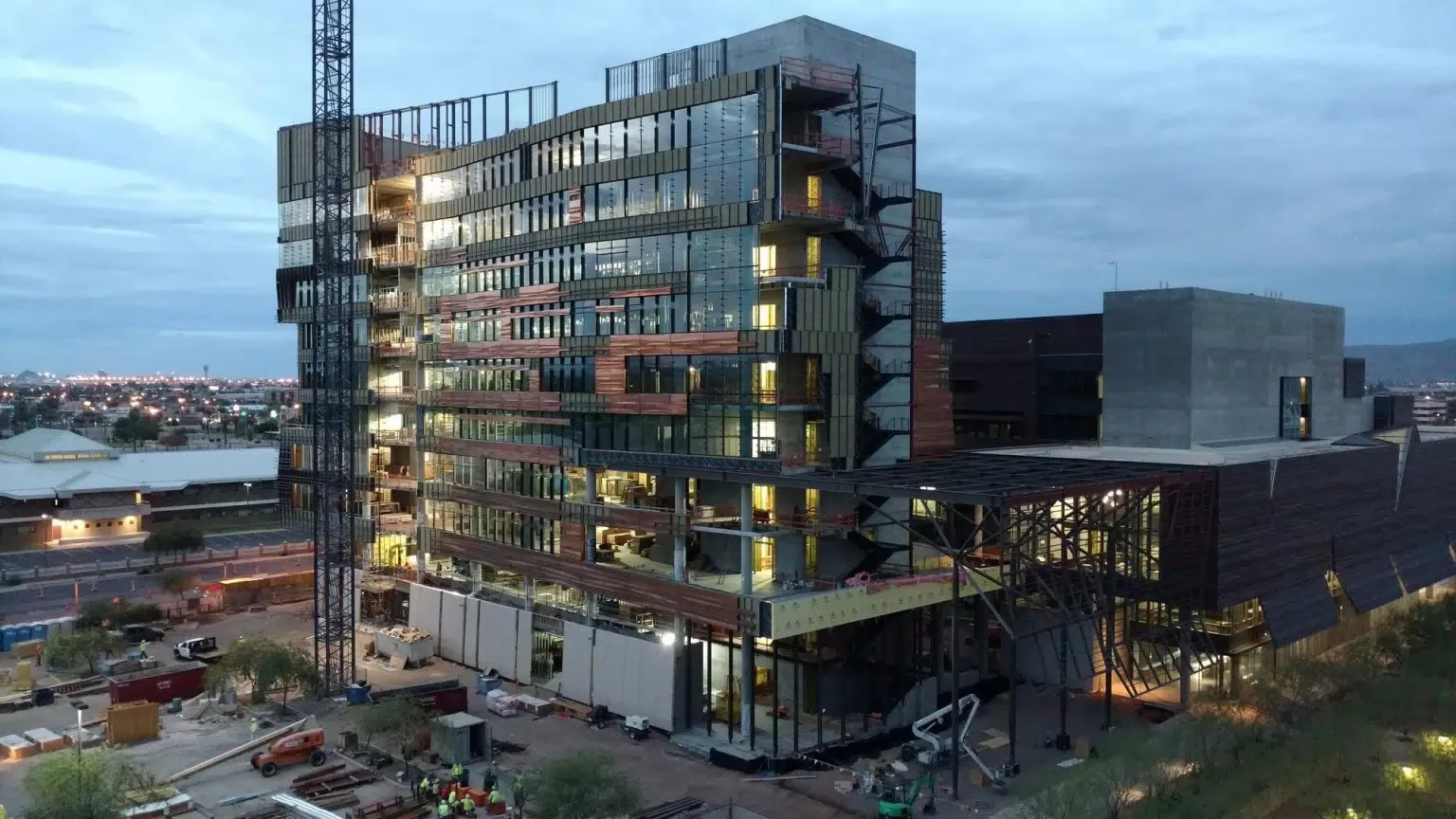
How do you find where the water actually enters?
Water travels. It follows the deck, runs along a steel purlin or an insulation joint, and drops through a ceiling many feet from the opening. The interior stain is a clue to the area to search, not the address of the leak. We begin by measuring the stain against roof features such as curbs, drains, walls and seams, then climb the roof and check the details uphill of it first, since water enters above where it appears.
On a flat roof, a leak often lines up with a seam, a pipe boot, the base of a wall flashing or an open lap near a drain. We probe seams with a blunt tool, check fastener heads for backing out and look for blisters, cracks or splits that suggest movement. Where the cause is not visible, a controlled water test over a small area, one section at a time, isolates the entry point without flooding the roof.
Once the entry is found, we mark it on the roof plan and photograph it before any repair, so the cause is on record. If the entry is a seam on a thermoplastic sheet, the repair is a welded patch. If it is a pipe, the fix is a new boot or a liquid flashing system, matched to the membrane around it.
What counts as proof the roof is wet inside?
Looking at a stained ceiling cannot show how far the water spread above it. Moisture evidence can. Infrared imaging picks up temperature differences in wet insulation after sunset, when the roof gives back stored heat unevenly, and core cuts confirm what the scan shows. A moisture meter on the deck underside adds a third read from below.
That evidence changes the repair. A small, isolated wet area can be cut out and replaced with dry insulation and a patch. Wet material across a wide area points to a bigger scope. Both outcomes are better learned from data than from hope, and the evidence is written into the report with locations and photographs.
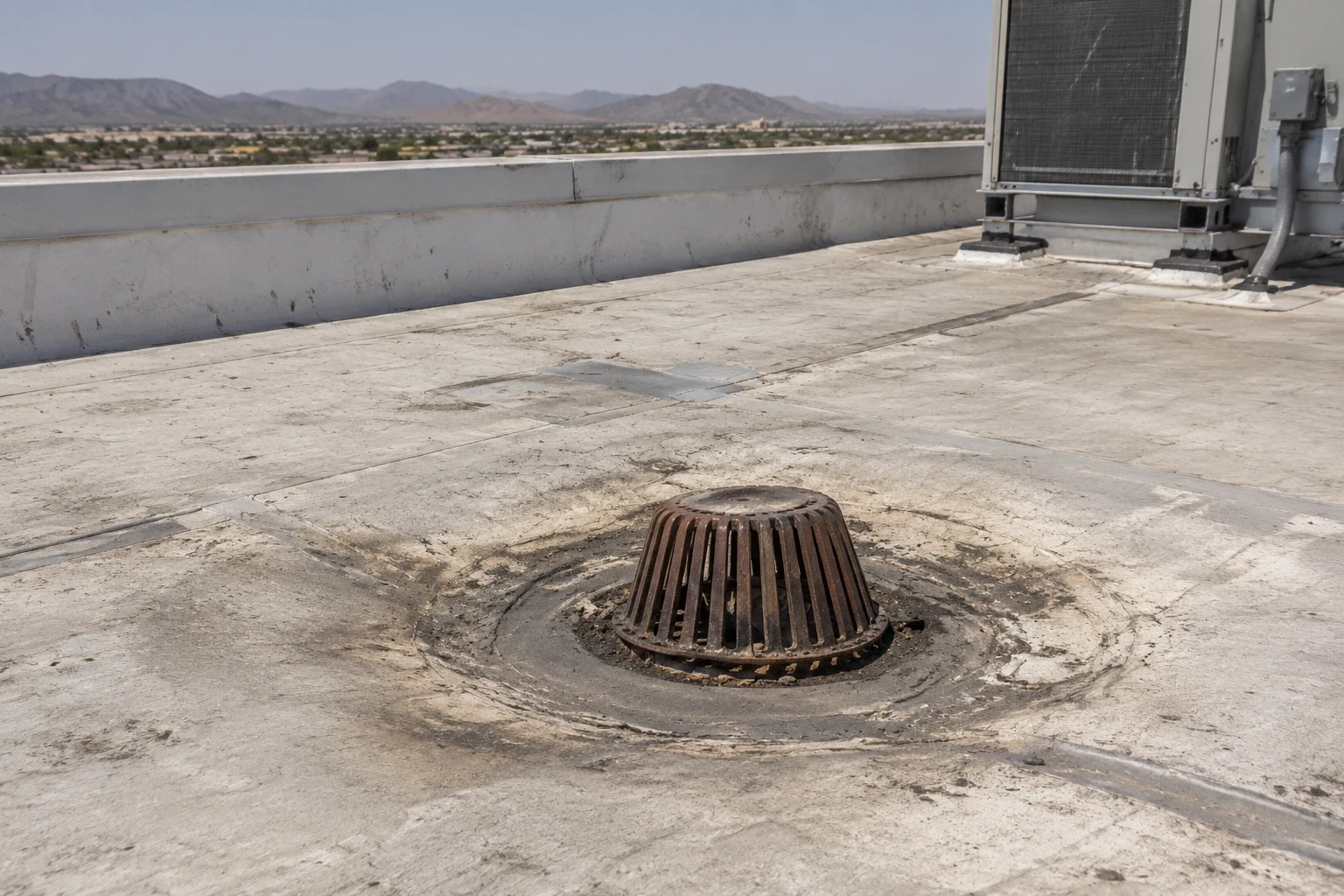
What happens before the permanent fix is ready?
If water is entering now, the first visit is a dry-in. We close the opening with a temporary membrane, a sealant system or a tarp, secure it against wind, and tell the building contact where interior protection is needed. Temporary work buys time; it is not the repair. If the leak is a result of a storm event, the emergency response and the leak scope follow the same photographs.
Materials set the pace for the permanent fix. A heat-welded repair on a thermoplastic sheet needs a dry, clean surface; a liquid-applied flashing needs cure time before rain. We describe the weather window in the proposal so you know whether the repair can finish in one visit or needs two.
Interiors are part of the dry-in. Buckets, plastic sheeting and a shut-off for power under the wet area protect stock, equipment and people. We ask the building contact where the sensitive areas are, such as server rooms, inventory aisles and exam rooms, and set priorities for where protection goes first.
Which causes come back most often?
A short list covers most commercial leaks: failed flashing at walls and curbs, open seams, punctures from foot traffic or equipment work, clogged drains that let water stand and sealant that has split around penetrations. Heat adds its own pattern. With mean highs around 100 degrees in July and August at the St. George station, membranes expand and contract daily, and seams and flashing take the strain.
Mixed-use districts such as Tech Ridge, where office, retail and residential uses are planned together, bring several roof profiles into one area, and each profile leaks in its own way. A single-ply roof tends to leak at seams and flashing, while a metal roof leaks at fasteners and laps. Fixing a leak without fixing its detail leaves the cause in place, so we repair the detail and, where it makes sense, rebuild the curb flashing so it is not the next call.
The warehousing, fabrication and wholesaling uses zoned into Fort Pierce Industrial Park bring a different cause into view: on any low-slope roof, one blocked scupper can hold enough water to find every weak seam at once. Clearing drains is a leak repair, and we treat it as one.
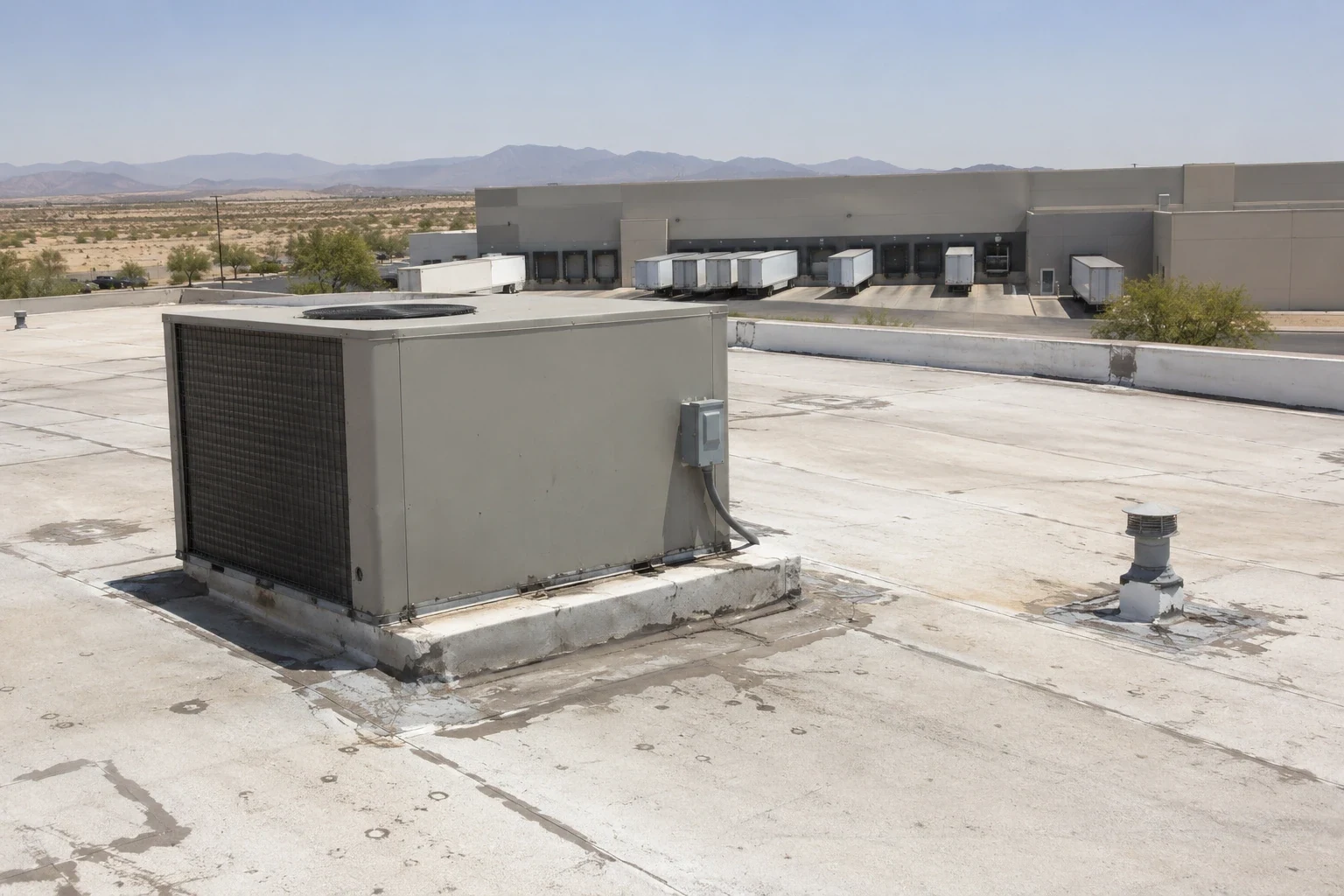
What should the building keep after a leak is fixed?
A leak file earns its value over time. Dated photographs of the interior and roof, the moisture findings, the materials used and the location of each repair let the next manager see the history without reading old emails. If a pattern appears at the same curb or seam, the file shows it and supports a bigger repair, a planned repair program or a capital request.
Insurance matters too. Water damage to interiors sometimes follows a covered event, and the photographs and findings taken at the first visit support a claim. Our claim documentation keeps those records organized without assigning cause beyond what the evidence supports.
Commercial Roofing Questions
Why does the ceiling stain not match the roof leak?
Water runs along the deck, insulation joints and structural members before it drops. The stain marks where it left the ceiling, and the entry can sit several feet away on the roof. We trace uphill and across the roof before cutting anything open.
Can a leak be fixed while it is raining?
Temporary protection can go on in wet weather when the crew can work safely, but a permanent repair usually needs a dry surface. Materials like welded patches and many adhesives will not bond to a wet sheet. We stop the water for now and schedule the lasting repair for the first dry window.
How much of the roof do we have to open to find a leak?
Often none. Visual checks, a controlled water test and infrared imaging locate most leaks without cutting. Core samples are small, and each one is patched the same day. Opening a larger area becomes necessary only when the evidence shows wet material beyond what the first tests found.
Will the leak be covered by the roof warranty?
That depends on the terms and on the cause. Some warranties cover defects in workmanship or material and exclude damage from storms, foot traffic or lack of maintenance. Send us the paperwork and we will read it against the findings. A written record of the cause is useful in either case.
What if the same spot leaks again after repair?
Call, and we return to the spot with the earlier photographs. A repeat usually means the entry was somewhere else, or the detail around the first fix is failing too. The second visit adds a closer test, such as flood testing the area, to separate a bad patch from a second opening.