
KEE Roofing in St. George, UT
KEE Roofing Overview
Before anyone welds a patch on a KEE roof, someone has to prove the roof is KEE. The name covers a family of PVC-based sheets modified with a ketone ethylene ester, and the sheets differ by manufacturer, thickness and reinforcement. In St. George, the NOAA station's summer normals, close to 102 degrees in July and 100 in August, push weld work to the cooler hours, but the first morning on the roof goes to identification, not welding.
We read the roof records, look for printed markings on the sheet and, where nothing survives, cut a small sample. Then we check seams, flashings and the drain route, and we hand the asset manager the open questions and the next decision. A commercial roof inspection produces the field record that the product data sheet gets matched to.
How do we confirm what sheet is on the roof?
Records come first: the original specification, the warranty paperwork and any earlier repair invoices. If those are gone, the underside of a lifted lap or a small core often carries the manufacturer's marking, and the thickness and reinforcement can be read from the sample. Appearance alone settles nothing, because aged PVC and aged KEE both fade, chalk and stiffen. A buyer who inherits a roof often receives none of these papers, which is why the sample is taken before a bid is written.
The answer matters because every repair material rides on it. Cleaner, primer, flashing stock and welding temperature all come from the manufacturer's instructions for that sheet, and a patch from the wrong family can lift in a season. When identification stays uncertain, we weld a small test strip, pull it and record where it was made and what it did. That strip tells the owner how far a seam repair can reasonably run.
What is landing on the roof besides sun?
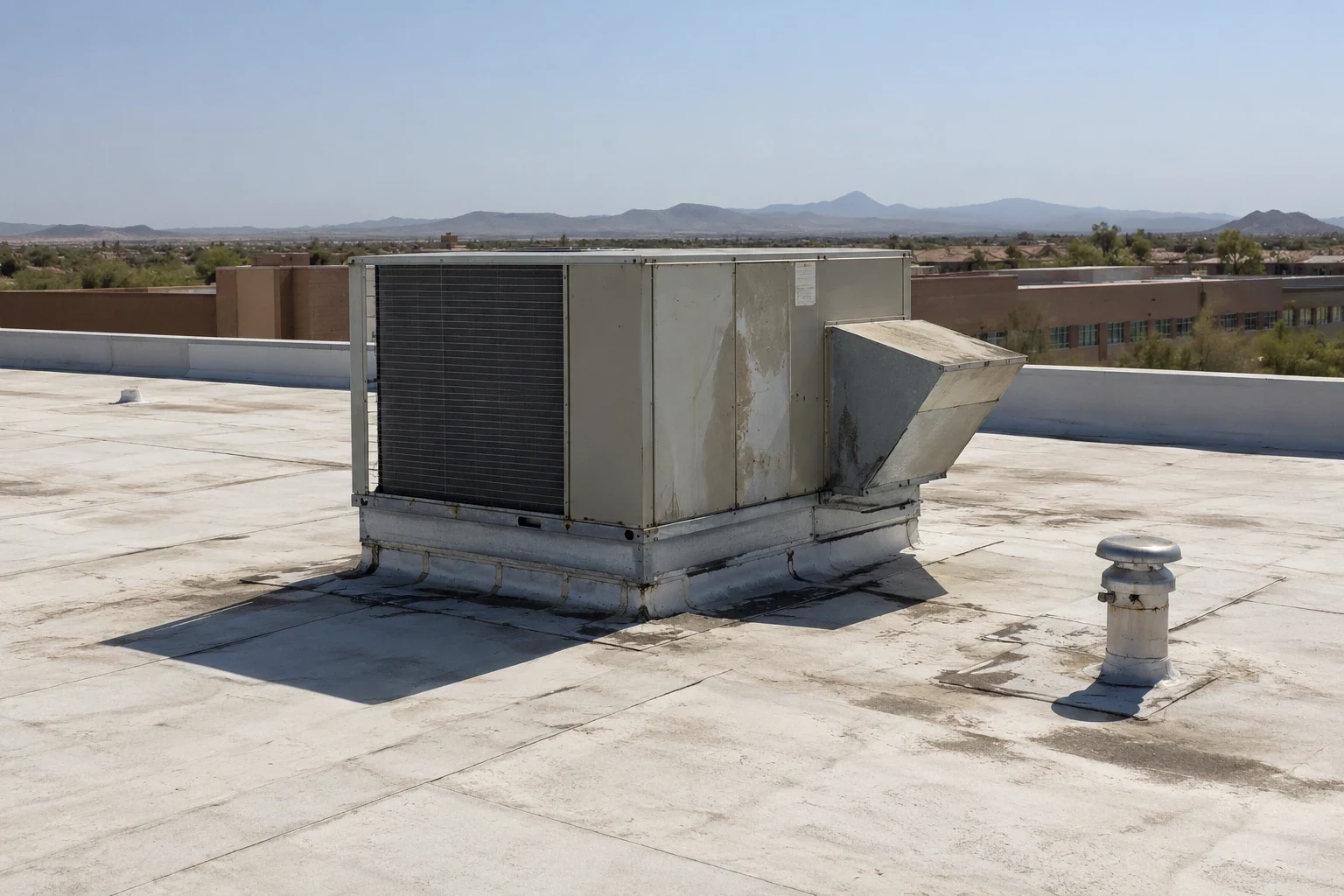
KEE is specified when oils, fats or process chemicals reach the membrane, so the plume matters more than the calendar. We trace each exhaust fan and stack on the roof plan, walk the downwind side and look for softening, staining, sticky film or seam trouble inside that zone. The deposit pattern often explains why one corner of the roof has aged faster than the rest.
A bakery or restaurant on a shared roof along Buena Vista Boulevard, inside Washington City's I-15 corridor, is a setting where grease lands on a roof the tenant does not own. The city lists retail, food service, medical, office and lodging uses on that stretch. Resistance is a product property, not a promise from the name KEE, so we compare the substance with the manufacturer's data before we call a detail sound. Walk pads under the service path and a grease tray at the fan outlet protect the sheet more cheaply than a repair.
What makes a KEE seam hold?
Clean surfaces, even heat and steady pressure. We probe the full length of each lap for skipped welds, trapped dirt and wrinkles, and we pay attention at corners, where several layers of sheet meet. A weld that has cooled can be pulled in a test, and one that peels clean tells us the surface was contaminated or the sheet is too aged to fuse.
Heat shapes the schedule. Welding a sheet that has soaked up a morning of sun risks scorching it, so the crew starts early, shades the staged rolls and lets each weld cool before it is checked. Photographs mark each probe location and each finished repair so the next inspector can see what was tested and what was only looked at.
Each repaired lap is probed again after it has cooled, and the probe is logged beside the photograph.
Which details fail on a roof with heavy exhaust?
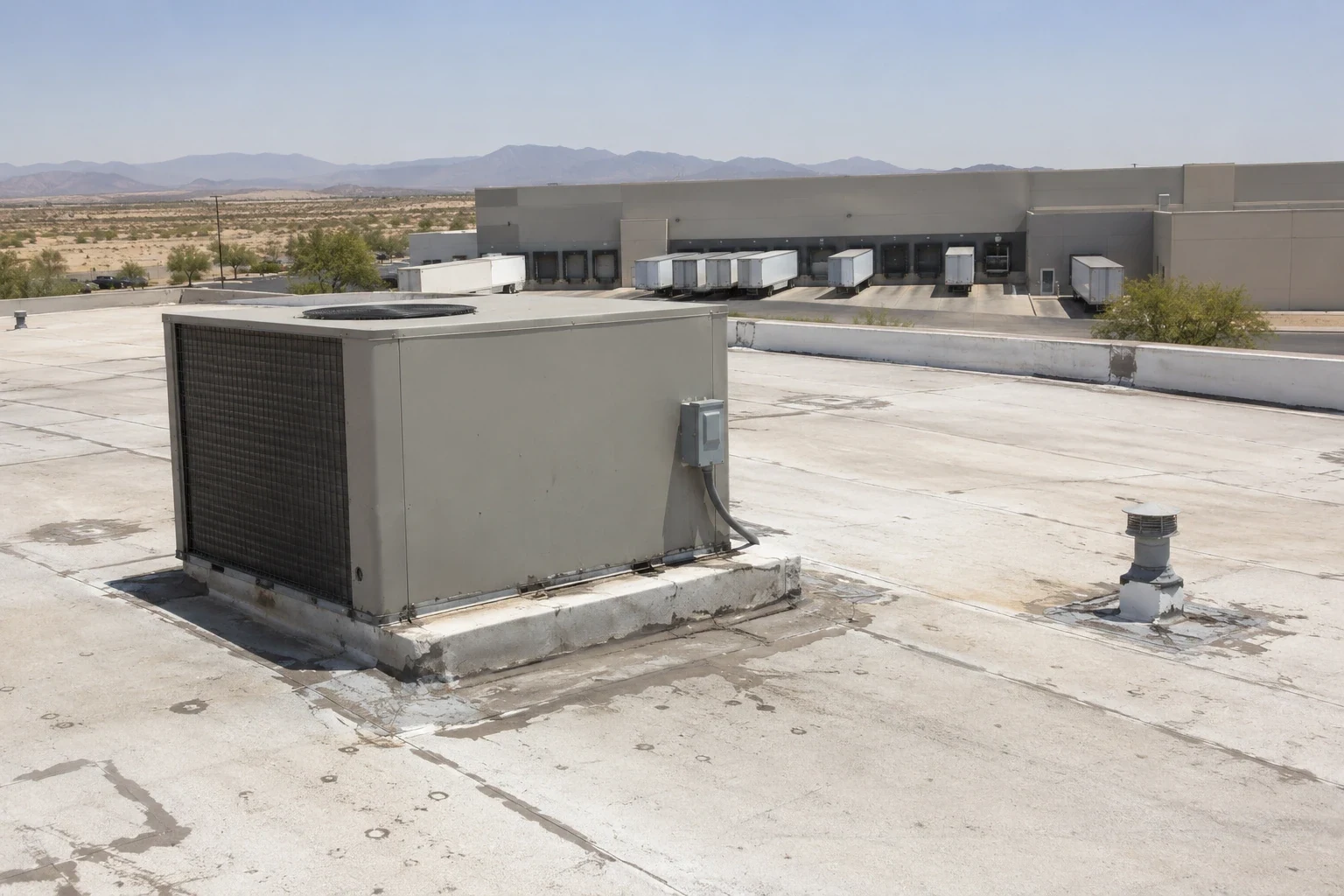
Flashings and boots around the equipment. Every stack, fan curb and pipe is wrapped in field-formed or pre-molded KEE material, and those pieces take the most exposure and the most movement. A boot that has shrunk away from a pipe, a corner that has split or a termination that has lifted all give water an easy start. Equipment curbs and supports that were added later by another trade are the usual suspects, because the membrane transition was rarely agreed before the unit was set.
We list each opening on the roof plan with a photograph and a note on whose work it is. The roofing repair ends at the membrane, and the unit belongs to the mechanical contractor, so the plan says which trade lifts, braces or disconnects before the roof is opened.
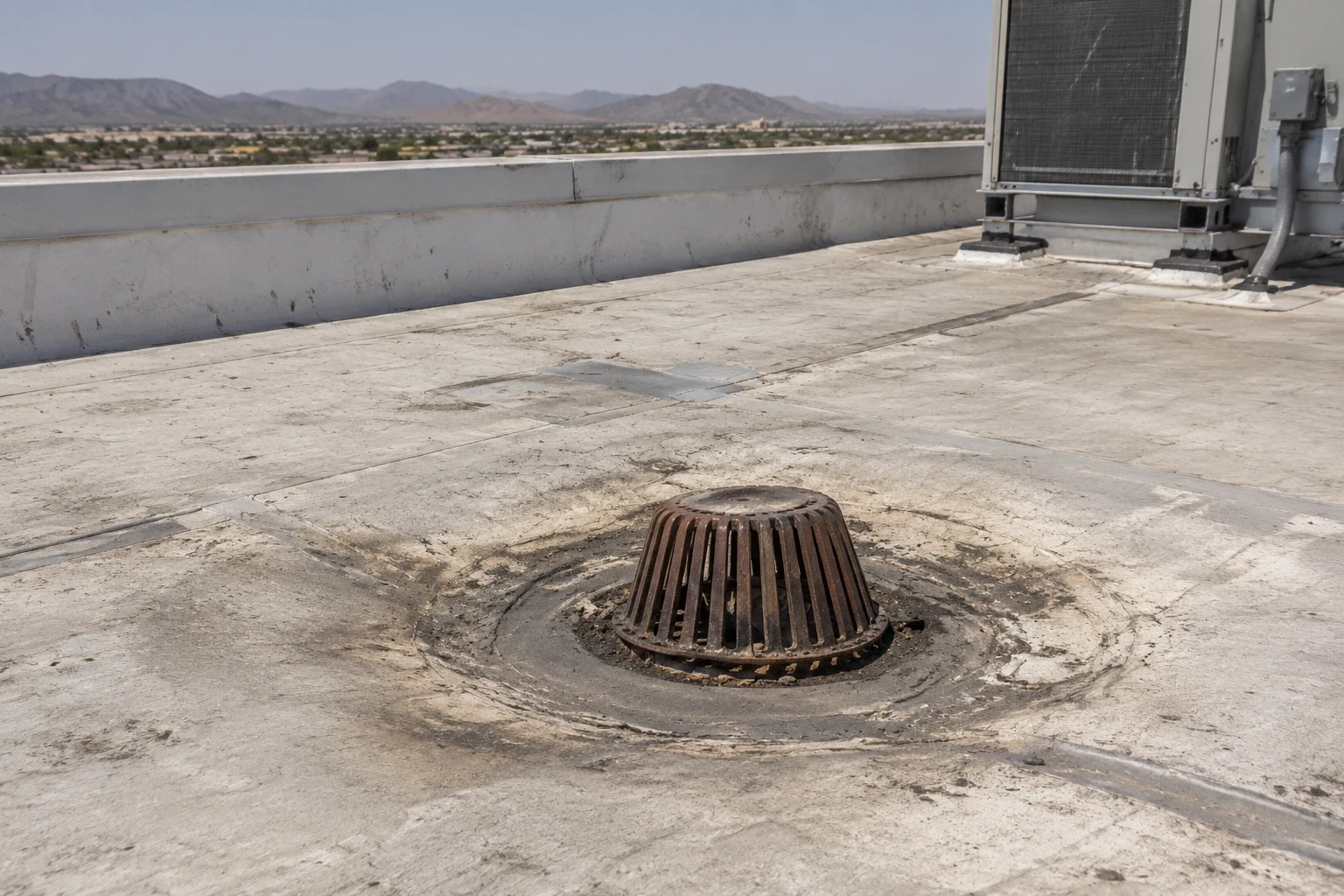
How does the drain route fit a dry-climate roof?
Annual precipitation at the station normals is 9.31 inches, with February at 1.38 and June at 0.16. A KEE roof can stay dry for weeks, packing its bowls with dust and debris, and the next storm then sits on the sheet. We pull strainers, check the clamp rings and the connection below and make sure the overflow is open and at the right height.
A recover that adds insulation raises the field relative to the drains, so the bowl heights are measured before the scope is final. Where water stood on the old roof, tapered board corrects the low spots; drain and scupper work is written into the same proposal as the membrane so the two are priced together.
When do we repair, recover or replace a KEE roof?
Repair suits a defect with a clear edge in dry, bonded sheet. When insulation is dry and firm, a recover may be possible, once weight, height and attachment are checked. Wet board, a sheet that fails a test weld or open seams in several zones move the question toward replacement, and the moisture map decides it.
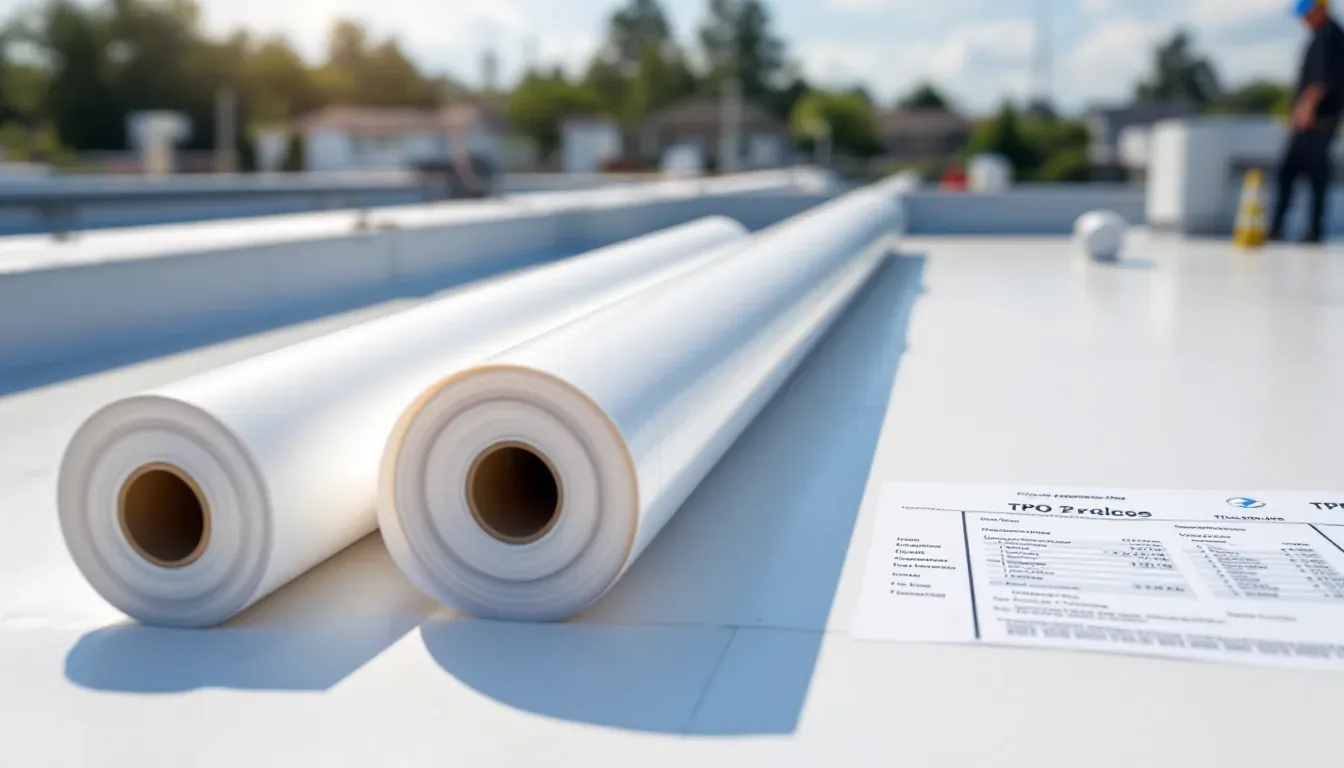
Against its neighbors, KEE sits next to PVC, which is the base chemistry, and TPO, which welds the same way but resists exposure differently. A coating is not an automatic companion; the sheet has to take the primer and hold the bond.
Which St. George properties raise KEE questions?
Any roof with a vent that can drop oils or process vapor. In Green Valley, where Sunset Boulevard appears on the county's arterial map, and in Fort Pierce Industrial Park, mapped largely M-1, some roofs will carry fabrication or food-related exhaust and others none. The map label never says which, so the roof plan and the vent list answer it.
Send the roof records, the equipment list, the access rules and the hours the roof can be reached. We will identify the sheet, test the welds and mark which findings are firm and which are still open.
Commercial Roofing Questions
Is every KEE membrane repaired the same way?
No. The formulation and reinforcement depend on the manufacturer's product. We identify the sheet first, then use the cleaner, flashing and weld settings that product calls for.
Does the name KEE mean the roof resists every chemical?
No. Resistance depends on the substance and the formulation. We name the source and check it against the product data before recommending a detail.
Can a KEE roof be patched in July?
Yes, early in the day. We start at first light, weld in shade where we can and test each repair after it cools.
How do we know a seam repair will last?
A test strip pulled on the roof shows whether the sheet still fuses. A clean peel means the repair stays short or the sheet is near the end of its life.
When is replacement the better call?
When insulation is wet across a wide area, test welds fail or seams open in several zones. The moisture map and the test results carry that decision.