
Commercial Roofing in Winchester Hills, UT
Winchester Hills Overview
On a roof job in a community outside a city limit, the first question is not about the roof but about who issues the permit. Washington County lists a Winchester Hills community plan and map among its general-plan references, which verifies the named unincorporated community, and its business-license page lists Winchester under county jurisdiction for unincorporated business locations. The county also notes that the exact jurisdiction for addresses in the separately named Winchester Hills planning area should be confirmed, so an asset manager's first step is to do that before any roof scope is priced.
We open with that question, then the operating schedule, the roof plan and the access route. A roof is inspected the same way anywhere, and the scope follows what is found. Midsummer heat, with a July NOAA mean high of 101.9 degrees, sets the hours.
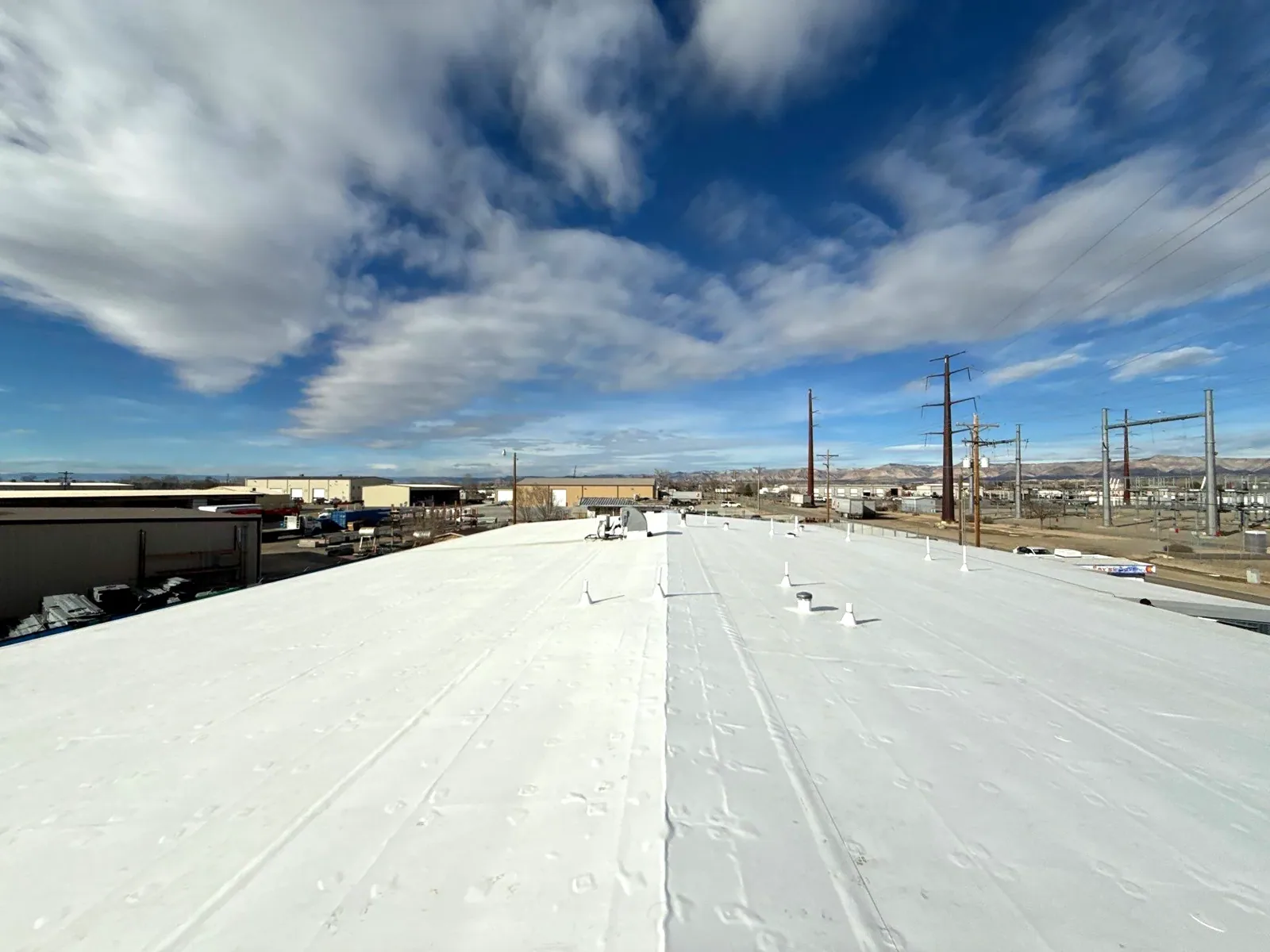
Who issues the permit, and what does that change?
For a property inside a named planning area, the jurisdiction can be the county, a nearby city or a special district, and the answer sets the permit office, the fee schedule, the inspector and sometimes the local code amendments. We ask the owner for the parcel number and address, check the county's references and call the right office before a scope is final.
Under the State Construction Code the amended 2024 International Building Code is the base, and the 2024 IECC with ASHRAE 90.1-2022 turns statewide on July 1, 2026. Which edition and pathway apply depends on the permit date and the jurisdiction. The scope states the permit path in writing, so a requirement does not surface late in the project. Where a reroof is simplified or exempt in a given jurisdiction, we record that and the source.
What can we say about buildings we have not seen?
Little, and we say so. The county's references confirm that Winchester Hills is a named planning area and that its roads appear on the arterial and collector map. They do not describe the buildings, the roofs or the tenants. A community name is no reason to assume a roof type.
What we can describe is how we find out. We ask for the roof plan, invoices and warranty paperwork, then identify the system from samples and records, count the layers, list the equipment and mark the drain routes. A building in a small community might be a single-tenant shop, a barn-style structure converted to commercial use or a small retail building, and each reads differently. The roof record comes from observation, not from the map.
Out here the paper trail also matters because it is thin. A structure that grew in stages may have a front section from one decade and a rear section from another, each with its own membrane and its own repair history, and no drawing that shows the join. We walk the join, mark it and record which side holds which system. If the roof records are missing, the visit builds them, and the owner leaves with a dated plan that did not exist before.
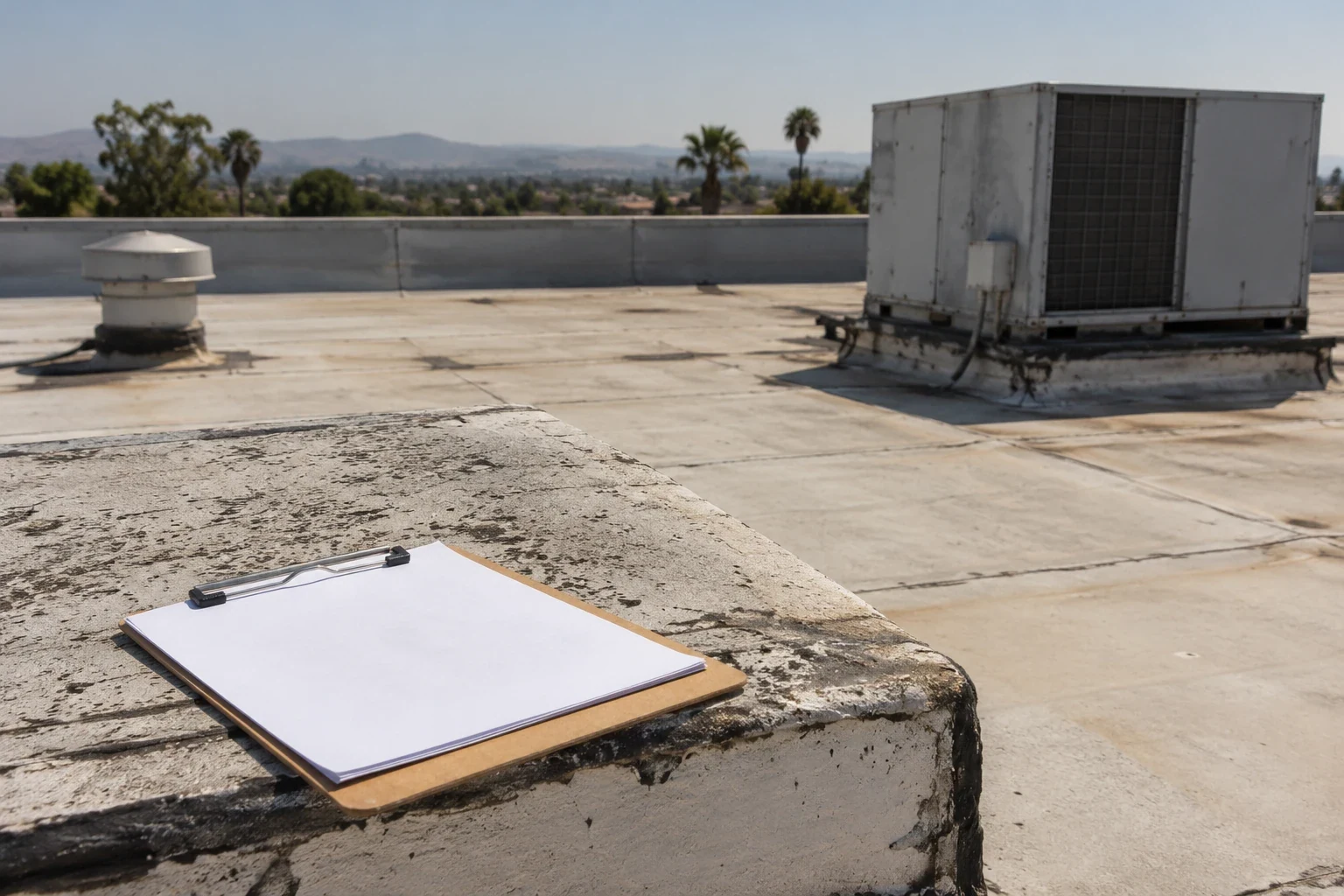
How do travel and heat shape the work window?
Travel becomes part of the day. The county's arterial and collector map places Winchester Hills in the regional road network, and exact access is confirmed at the site. For a crew coming from St. George, we plan arrival so work begins at a workable hour and the crew is on the roof before surface heat builds.
The St. George station is a regional reference, not a reading at each property, and Winchester Hills may differ in elevation and exposure, so conditions are judged on the day. Early starts, planned breaks and a hard stop time keep the delicate work in the cooler hours. We carry materials sized to the job, since a missing part at a remote site costs a return trip.
What do we check first on any roof?
The same things everywhere. Drains and scuppers lead the list, since a blocked outlet turns any rain into ponding. Curbs and penetrations next, because each is a cut in the membrane that depends on a flashing. Then seams and laps, edge metal and the transitions where roof meets wall.
- Drains, gutters and downspouts, and where they discharge
- Rooftop unit curbs, vent boots and conduit supports
- Seams, laps and earlier patches
- Edge metal, coping and wall flashings
- Skylights and other roof openings
On a smaller or more isolated building, rooftop equipment is often limited, so the few details that remain, such as one vent or a skylight, carry more of the leak risk. A skylight and penetration flashing repair often settles it, and drain and scupper work prevents ponding.
Because a remote site is costly to revisit, the crew carries spare flashing, sealant and temporary cover so a hidden wet area found during a repair can be closed in the same visit. Photographs go to the owner the same day, and anything unfinished is listed with the reason, so a second trip is planned instead of discovered.
What counts as moisture evidence out here?
A walk, photographs and moisture readings. A soft spot underfoot, a blister or a ceiling stain is a reason to test. On a large enough roof an infrared moisture survey maps wet insulation; on a small roof a few readings and one core are enough. The record keeps what was observed apart from what was tested and names the open questions.
The St. George station records 9.31 inches of precipitation in a year, with a February peak and a June low, plus roughly 1.2 inches of snow, a low-elevation figure that should not be carried to higher communities without a local check. Winchester Hills may have its own pattern, so we ask the owner what they have seen and when.
What does the owner need to decide before a project?
Three things: how long the building will be held, what the business needs from the roof and what budget can be committed. A small building in a small community often has one owner who makes all three decisions at once, which keeps the process quick when the evidence is clear. We supply the condition, the cost drivers and the options, and the owner sets the timing.
A small, dated record also helps if the building is sold, financed or insured, because it shows what was inspected, repaired and left under watch. The options come down to a repair, a restoration or a replacement, each priced from the same findings. For an owner with property in Washington City, Hurricane or St. George Industrial Park, one record format lets the roofs be compared. Bring the address, the parcel number, the roof records and the access rules, and the first visit answers one defined repair or capital question.
Photographs and a roof sketch from the first visit travel with the parcel number, so any later contractor, lender or buyer starts from the same page.
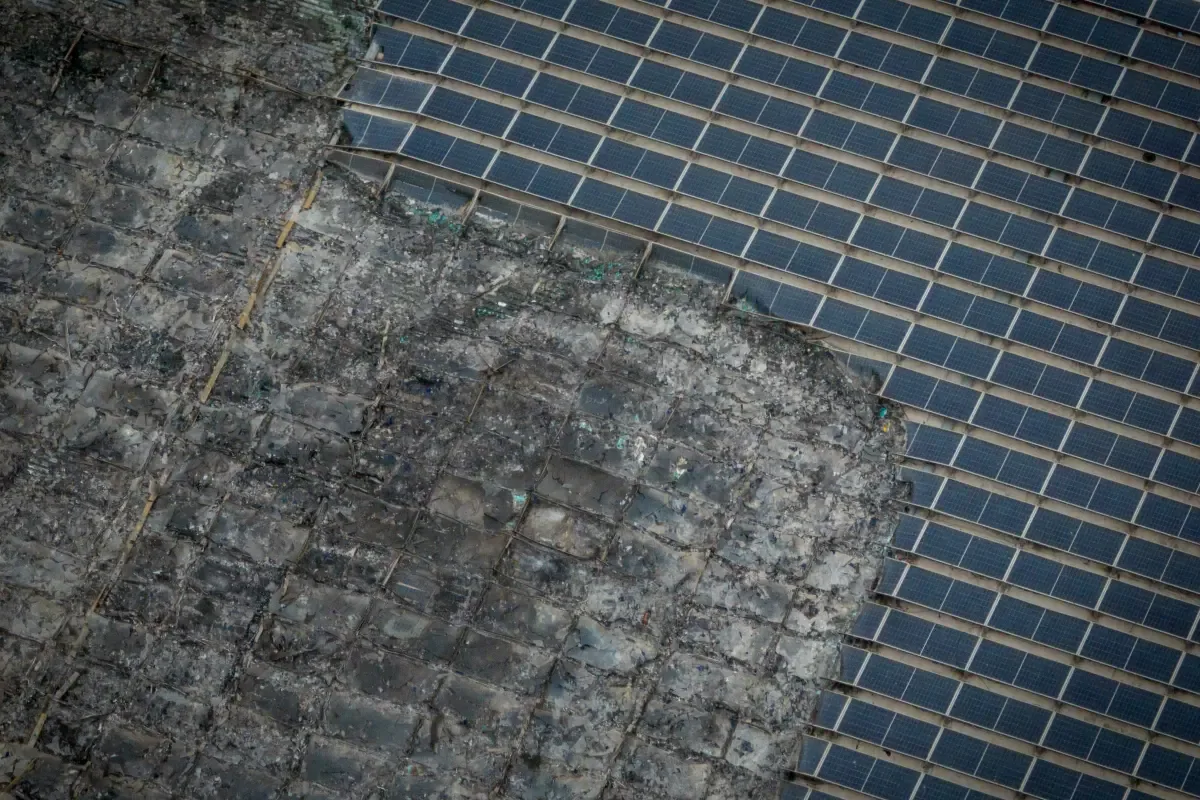
Commercial Roofing Questions
Is Winchester Hills inside a city?
The county lists a Winchester Hills planning area and Winchester under county jurisdiction for unincorporated business locations. We confirm the jurisdiction for each address before pricing.
Does distance change the quote?
It changes travel time and how we plan the day. We say so up front and bring materials sized for the work.
Can you tell the roof type from the area?
No. We identify the system from samples and records at the building.
Does the jurisdiction change the code?
It can change the permit office, the fees and the local amendments. We confirm the jurisdiction first, then the edition.
What do I send first?
The address, the parcel number, roof records, reported leak areas and access rules.