
Commercial Roofing in Fort Pierce Industrial Park, St. George, UT
Fort Pierce Industrial Park Overview
A roof call in Fort Pierce Industrial Park usually starts at a dock door, not at the roof hatch. The Guard's environmental plan for the St. George Armory maps the park as largely M-1, a class that allows warehousing, light manufacturing, fabrication, wholesaling and services, so the buildings under one zoning label can run from a plain storage shed to a shop with exhaust stacks. July in the NOAA normals averages 101.9 degrees for the daily high and August 99.9, which is why the first hours of a roof visit belong to the roof and the afternoon belongs to the loading schedule.
The walk runs in a fixed order: the day's operations, the roof plan, then drains, curbs, seams and edges. The first commercial roof inspection leaves a short written list that separates confirmed findings from open ones.
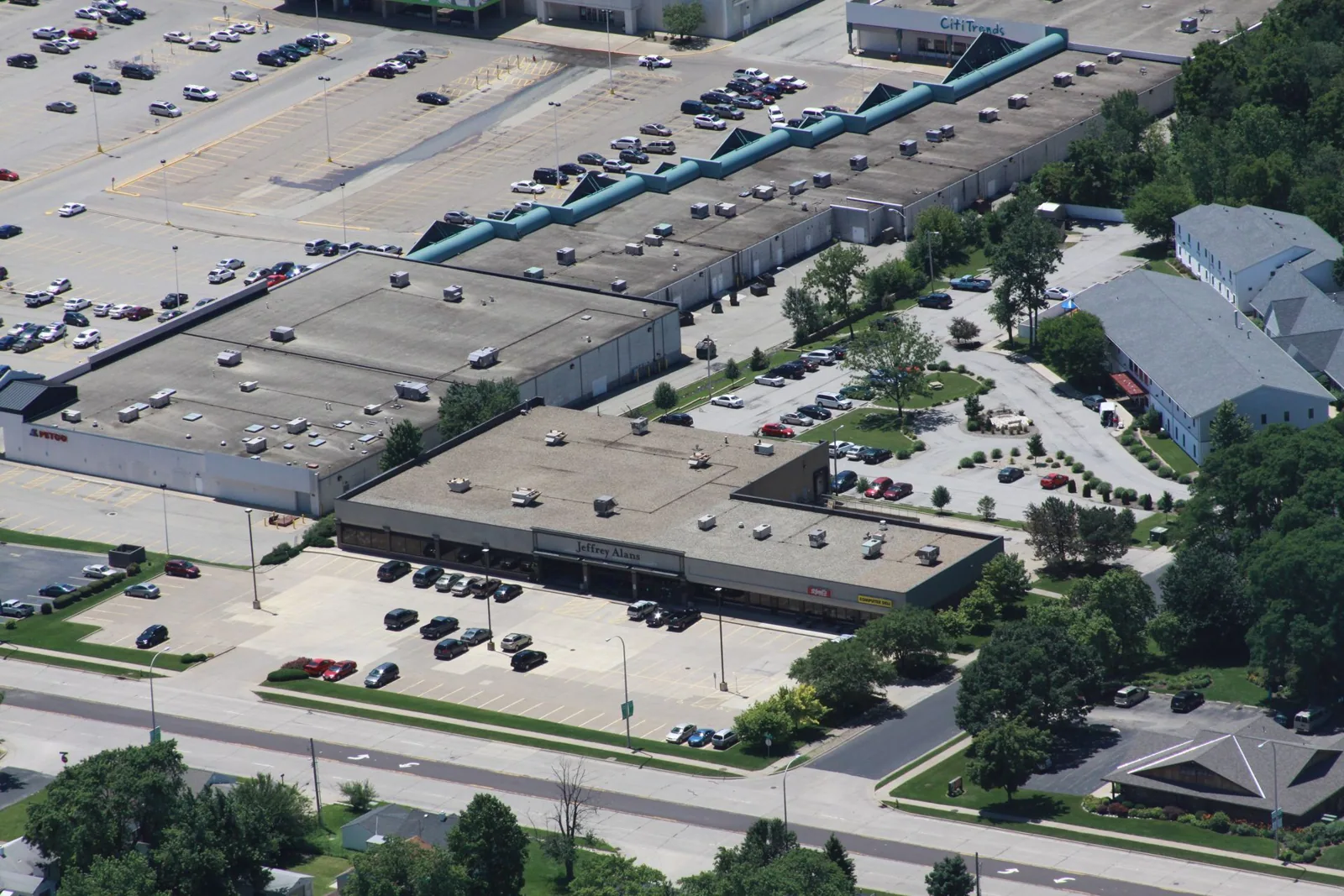
Which kinds of buildings share an M-1 park?
Several, and the roof tells them apart faster than the zoning does. A warehouse bay may carry a few vents and a long, quiet field of membrane. A fabrication shop beside it may carry exhaust stacks, makeup air and heavy curbs. A wholesaler may have an office front with a lower roof and a rear bay with a taller one. The fact that all three sit in the same park says what the city allows there and says nothing about a given membrane or its age.
The city's Consolidated Plan dates most of its commercial buildings to 1980 or later, so a park roof may already be on a second system, and the layers, not the date, settle it. We read each building's layers at the edge or through a small core, and the roof plan records the result before any price is discussed.
What does the dock schedule do to a roof plan?
It decides where a lift can stand and when. Trucks arrive in windows, trailers sit in the courts and forklift lanes run close to the walls. We map the court before staging: the drop areas, the fire lanes, the paths under the roof edge where a dropped tool could reach the ground. Anything above live doors is done before the afternoon loading peak, with a ground spotter under the edge.
Inside, product sits under the deck. If a section opens over racking, the stock below is moved or covered first, and the section closes before the crew leaves. Occupied-building reroofing methods handle the zoning on a larger scope, and the operator names the peak weeks that cannot take disruption.
Where does shop exhaust show up on the membrane?
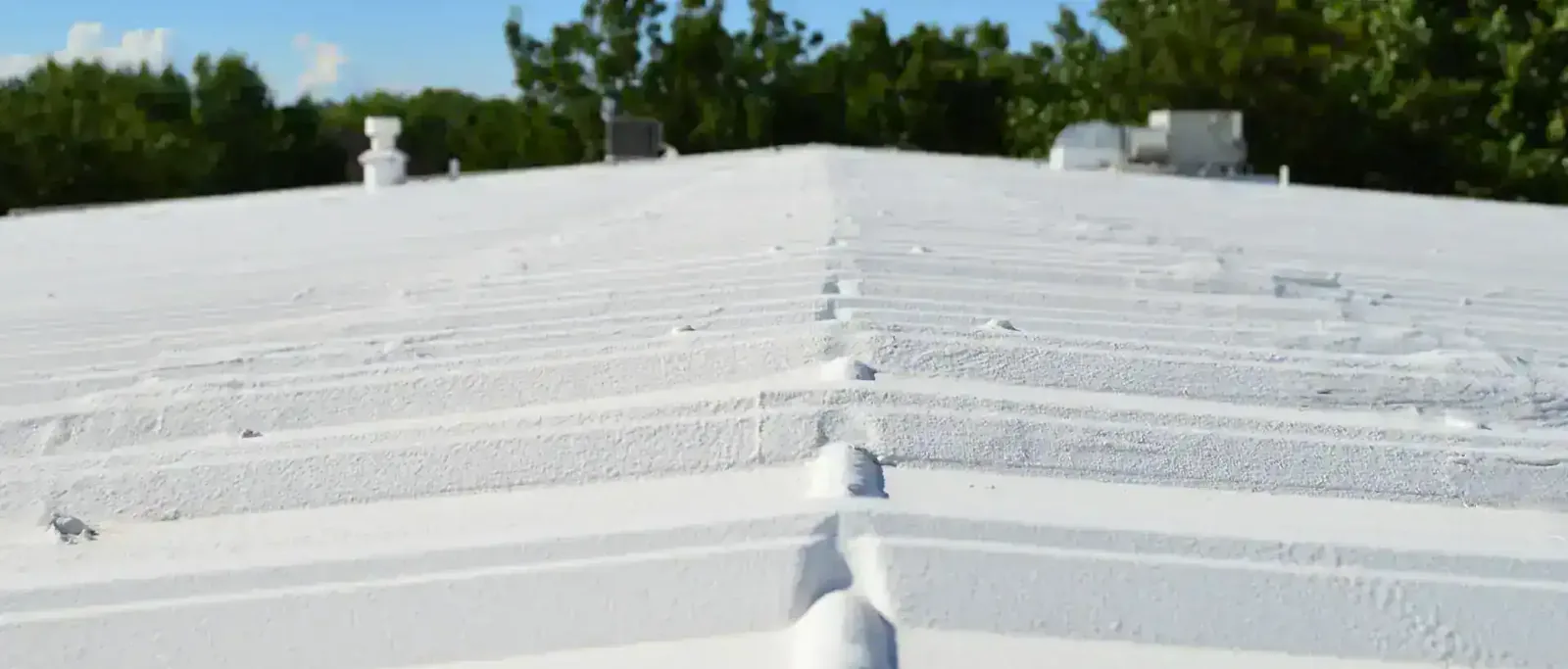
Downwind of the fan. Heat, oils and fine particulates from a fabrication or light-manufacturing process leave a film that softens some sheets, stains the surface and collects dust, and the damage often stops at the edge of the plume. On a walk we trace each stack, look at the membrane for stickiness, discoloration or seam trouble in that zone and compare it with clean sheet elsewhere on the roof.
A repair patch laid on a greasy surface will not bond, so cleaning comes first. Where the discharge is the problem, a deflector, a drip tray or a different sheet in the plume area may protect the roof better than a larger repair, and the idea goes to the mechanical contractor. For a roof with many such outlets, the PVC option is often the starting point of the comparison.
What does summer heat change on a park roof?
The order of the work. Adhesives flash off, a weld on a sheet baked by the morning sun can scorch it, and work on a dark membrane at midday goes slow and sloppy. Detail work moves to first light, staged material sits in shade and the afternoon goes to cleanup, drain work and walks with the building contact. A station figure is not a reading on a single roof, so the surface temperature is checked at the start of each shift.
Heat also ages what the crew is repairing. Seams carry the strain of daily expansion, and the sealant around penetrations cracks first. On a park of bigger buildings such as those near Riverside Business Park, the same early-start rule applies, and the roof plan records which sections aged fastest so the owner can budget around them.
How does a park roof behave in a dry year?
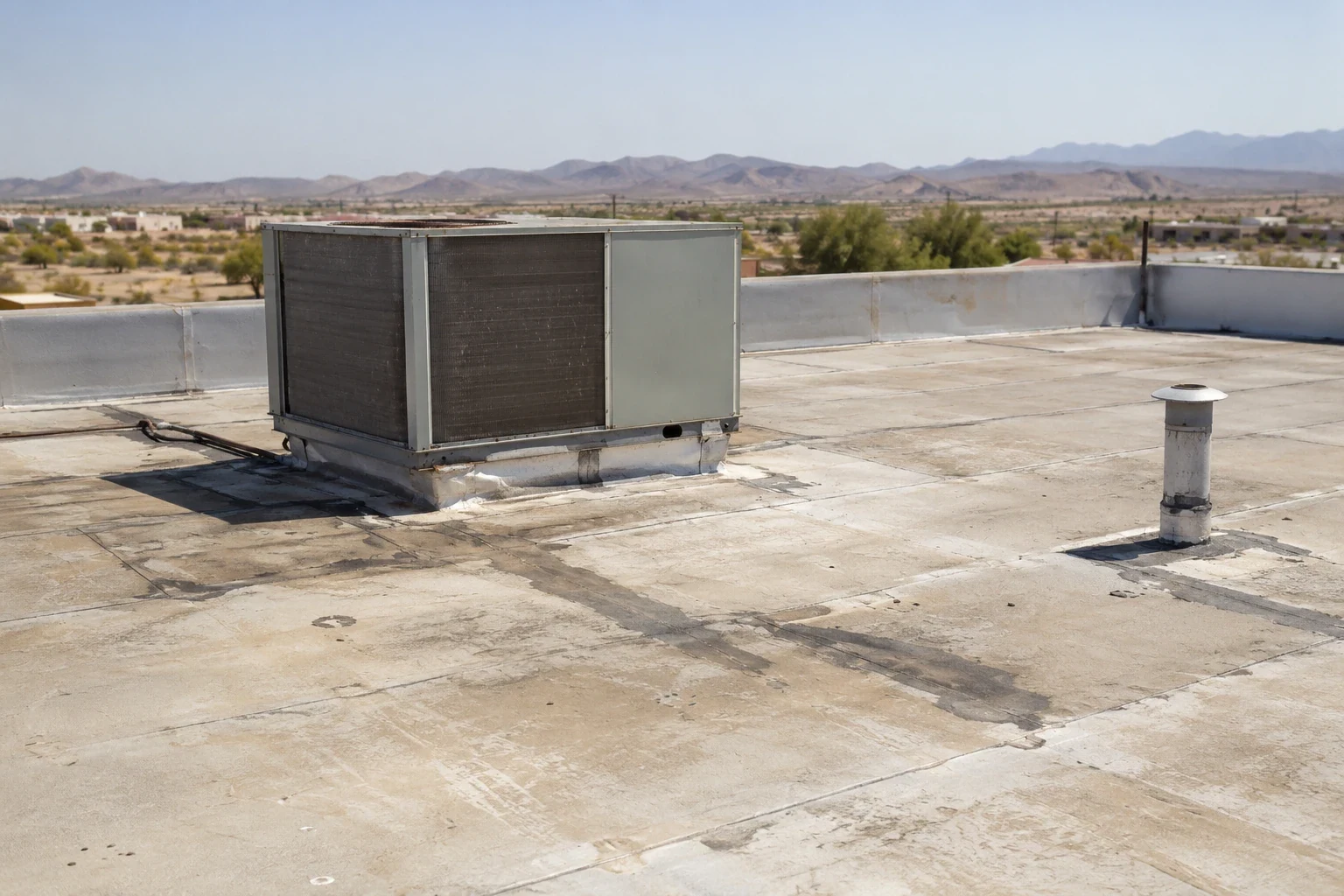
Quietly, until it does not. Yearly rainfall at the station is 9.31 inches and lowest in June at 0.16, which lets a roof sit for months without a real test. Dust and grit pack the drain bowls in that time, sealants dry at curbs and wall bases, and the first heavy storm meets all of it at once. Ponding marks and stained walls tell us how the roof behaved in the last one.
We pull strainers, check the overflow height and trace the water route from the high point to each outlet. Drain and scupper service before late winter is the cheapest repair in the park, and photographs with dates let the next visit tell a new problem from an old one.
Where does a repair end and a capital line begin?
A repair ends at sound, dry material. Each defect gets its own boundary: a patch for a puncture, the good end of the bond for a seam, the held corner for a curb. Wet insulation extends the boundary to the wet edge, and a moisture survey with a few small cores draws that edge. When repairs recur in the same bay or the wet area keeps growing, the owner compares a coating restoration with a replacement, priced on the same evidence.
For an owner with buildings in St. George Industrial Park as well, one record format covers both parks, and the capital list ranks roofs by what sits below them as well as by condition.
Photographs of each repaired and each untouched detail go on the roof plan with the date.
What should be ready for the first visit?
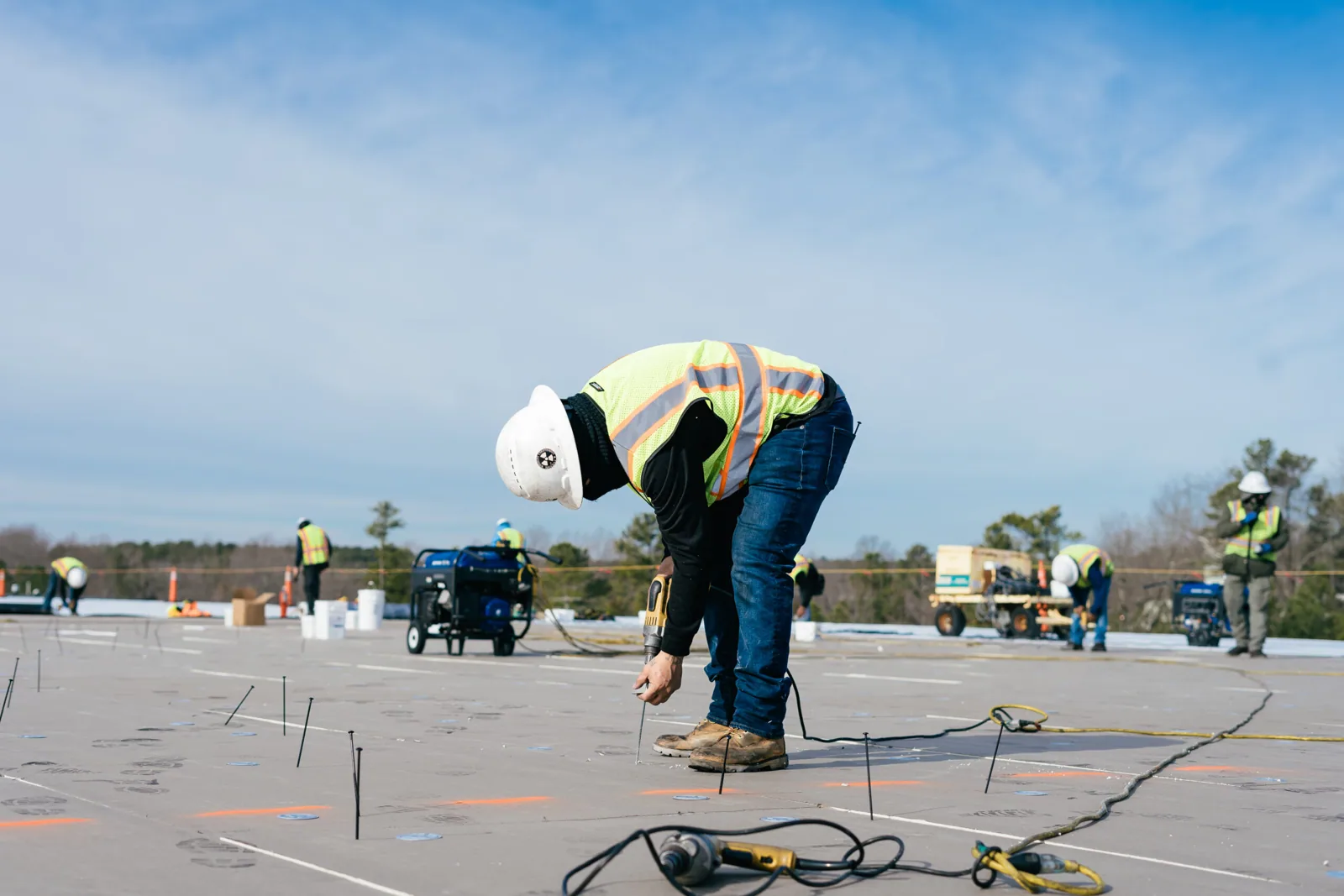
The address, any roof plans or repair invoices, the leak dates, the access rules, the shift and receiving hours and a list of what vents through the roof. On Washington County's transportation map, I-15 and St. George Boulevard sit in the regional network, which dispatch uses, and exact access is confirmed at the property. The first visit is set up to answer a single question and hand the asset manager the next decision.
Tell us as well which tenants hold the roof keys, whether a unit has to be shut down before anyone stands near it and whether any bay stores goods that cannot take a drip. Those three answers decide the lift position, the first zone opened and the protection laid below it, and they save the first hour of the first visit.
Commercial Roofing Questions
Does an M-1 label tell you what roof a building has?
No. It says what uses the city allows. Seams, layers and equipment tell us what the roof is, and we record them on the walk.
Can roof work run while trucks load?
Usually, in sections. We keep lifts off the courts and fire lanes and close each opening before the afternoon peak.
How do you find roof damage from shop exhaust?
By comparing the membrane downwind of each stack with clean sheet elsewhere, then testing for softening or seam trouble.
Why do park roofs leak in the first big storm?
Dust blocks drains and sealants dry out through the dry months. The first heavy rain meets both.
What decides repair versus replacement?
Moisture evidence. Dry insulation and a bounded defect support repair. Wet board across a bay points toward replacement.