
Roofing for School Districts in St. George, UT
School Districts Overview
School roof work has a calendar that most commercial work does not: a few weeks between the last bell of spring and the first bus of fall. In St. George, UT, that break lands in the hottest part of the year, when July daily highs at the station average about 102 degrees. A district that wants a roof replaced before students return has to plan around membrane handling in heat, material lead times and the permit path, and a late start can push the finish into the school year.
A city analysis resting on older survey data counts education and health care among its largest employment sectors. For a facilities director the useful part is that schools are buildings with many roof types under one budget. We start with a roof condition report for every building, sorted so that the repairs, the coatings and the replacements can each be timed to a break.
What roof types does one campus usually combine?
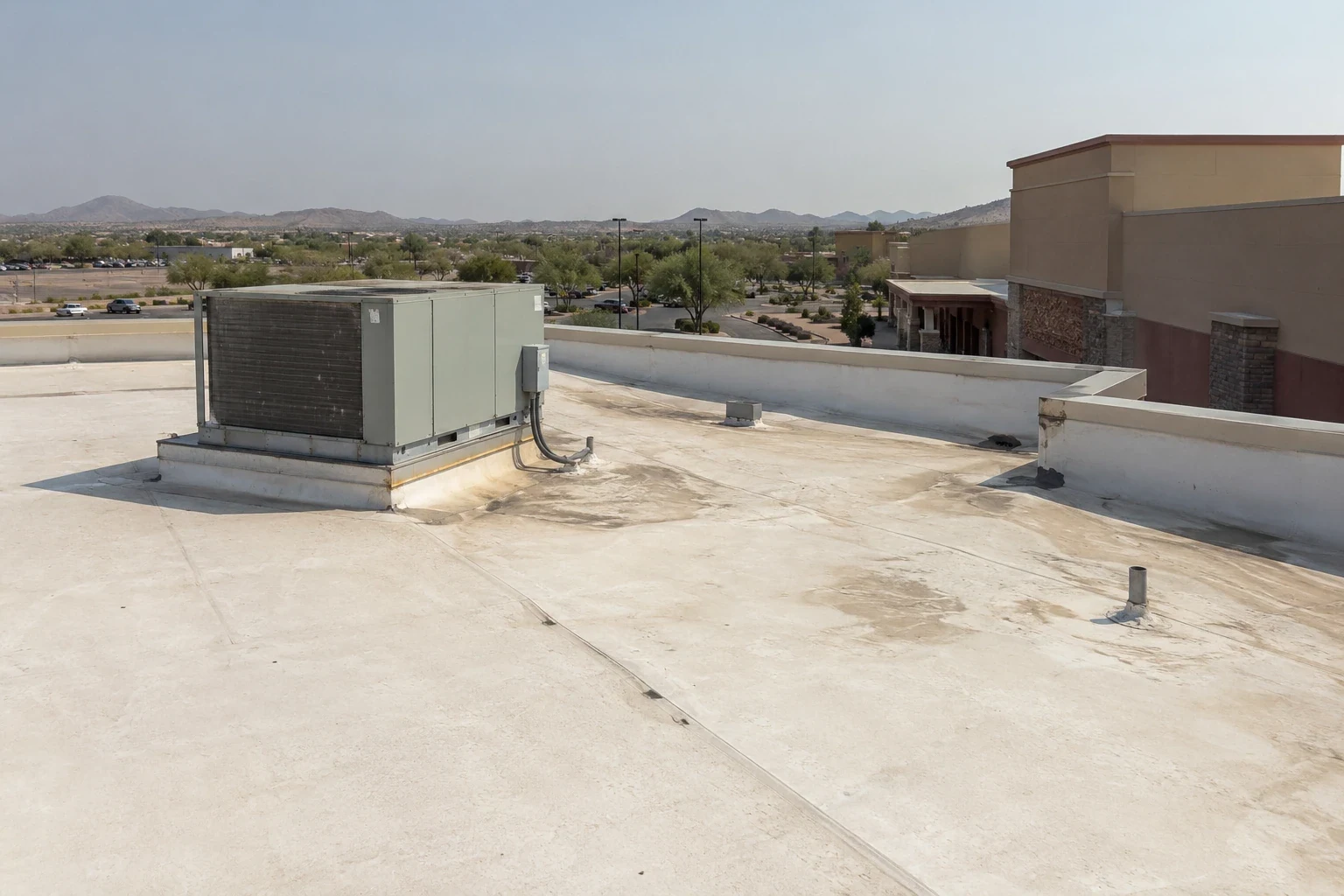
A campus grows in pieces. A main classroom building, a gymnasium, a cafeteria with kitchen exhaust, portable classrooms, a library addition and a bus barn can each carry a different roof, and each may have been added or reroofed at a different time. The consolidated plan puts much of the city's building stock after 1980, but a given school roof can be older, newer or repaired in sections, and the record at the district office is the better guide.
We list each building and each roof section separately, record what we can identify on the surface, and ask the district for plans and warranty documents. A school roof with a metal gym section and a single-ply classroom wing has two repair vocabularies, and the plan keeps them apart so a maintenance technician does not use one material on the other.
Can reroofing finish inside the summer break?
Often, if the scope is sized to the available weeks and the materials are ordered early. Large buildings are divided into phases that can be torn off, dried in and closed each week, and the order is set so that rooms needed first in August are completed first. The plan also names the days when crews cannot work, such as district events or inspections.
Heat shapes the day. Membrane handling and adhesive work are slower in extreme surface heat, so crews start early and finish the sensitive tasks before midday. When the schedule slips, the safest choice is to stop at a watertight stage, not to rush a detail. Where the work cannot finish before students return, occupied-building reroofing methods limit noise and traffic near entrances and lunch areas, and the principal's office approves the work zones.
What does a school inspection look for?
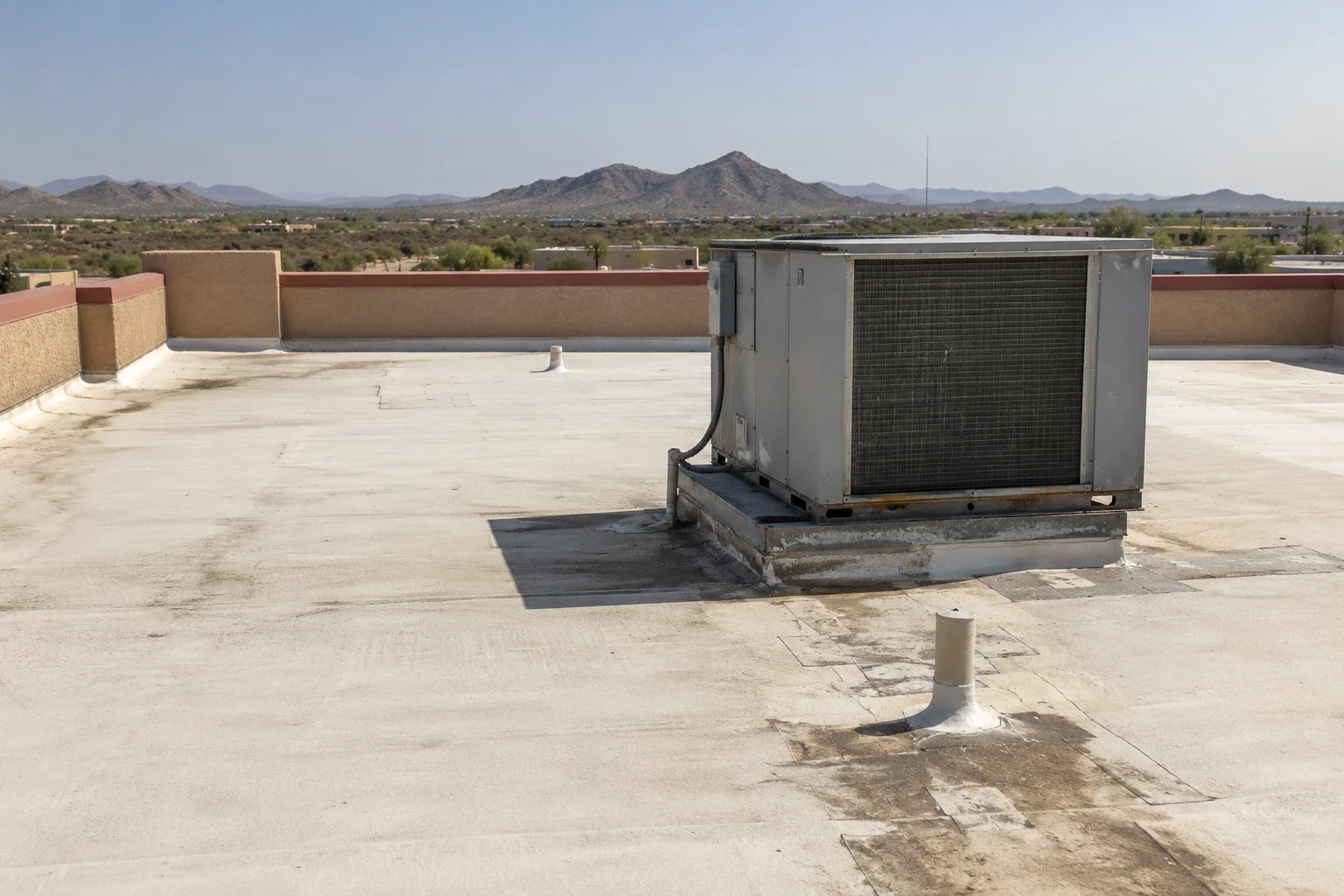
Schools have specific hazards. Kitchen exhaust leaves grease on the membrane near the fan, rooftop units serve classrooms and carry maintenance traffic, and flashings at covered walkways and canopies move with the structure. Roof drains clog from leaves and debris, and parapets, scuppers and gutters collect trash from the grounds. We inspect each of these and photograph by building and section.
Water that appears in a classroom may enter at a different place. Rainfall in St. George is limited, with an annual normal of 9.31 inches and a wetter February than June, so a roof can go through the long dry stretch hiding a defect that a single winter storm reveals. Checking drains and scuppers and edge metal ahead of the wet months keeps small problems from becoming a closed classroom. Skylight and penetration flashing gets a close look as well.
How does a district decide between repair, restoration and replacement?
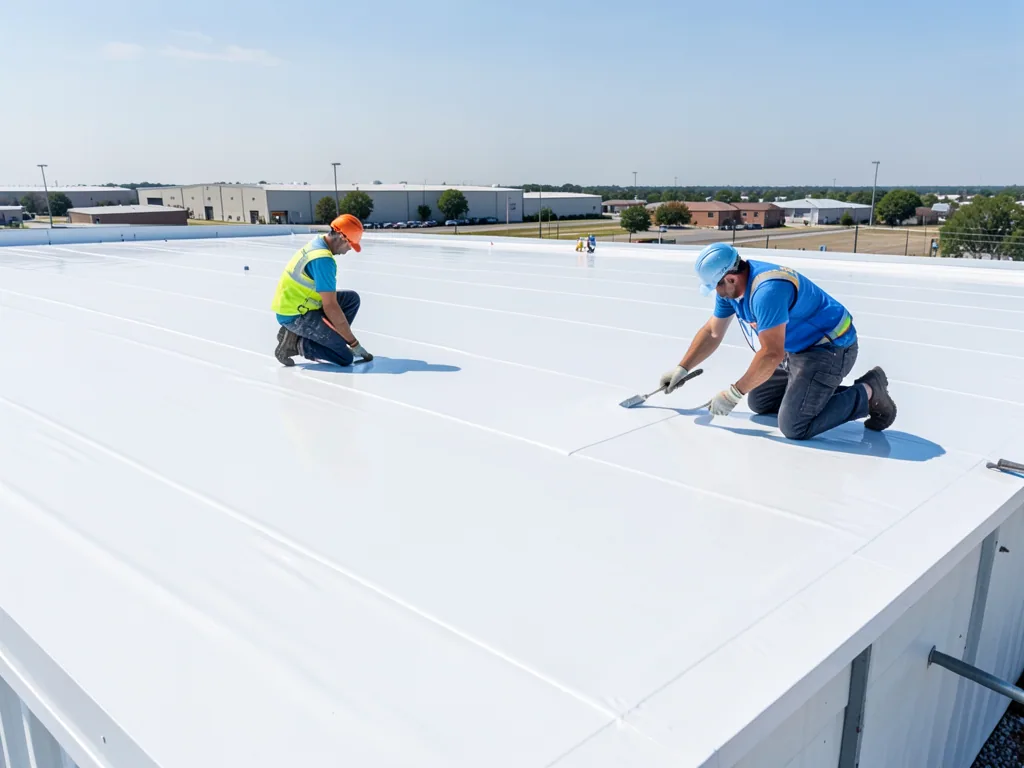
The decision follows the condition and the remaining budget cycle. A defined defect gets a repair. A roof whose surface has weathered but whose insulation and deck are sound may suit restoration, and roof coating restoration can extend service when moisture testing supports it. A roof with saturated insulation, repeated failures or a damaged deck points toward replacement.
A cool surface can also reduce the heat load on the roof and on the rooms below, which matters in a place where summer highs are near 100 degrees for two months. Cool roof installation works only with a sound assembly beneath it, so the sequence is condition first, surface second. We bring the findings and the options to the facilities team, and the district chooses the path that fits its schedule and funding. The options are priced on the same basis, so a board member can compare a repair now against a coating next summer against a replacement the summer after, with the risk of each stated.
How should roofs be funded across a district?
Districts typically plan capital over several years and answer to a board, so the roof plan needs to be readable by people who do not climb roofs. We give each building a condition grade described in words, a probable action and a range for timing. The cost drivers are listed qualitatively: tear-off layers, insulation depth, equipment that must be lifted, and access at occupied spaces.
Code enters at the permit date. Permits for a school reroof run on the 2024 International Building Code with Utah's amendments, and from July 1, 2026 the statewide energy rules may add insulation or edge requirements that an older replacement never had. A roof capital plan and a current warranty file let the board see where each building stands before it votes. When a district delivers a new wing through a general contractor, the roof package belongs in the first coordination meeting, because roof access, crane placement and flashing responsibility are cheaper to settle on paper than on the deck.
What should the facilities director send first?
Send the building list, year of construction or last reroof where known, plans and warranties on file, the summer-break dates, any leak work orders from the past few seasons and the person who authorizes roof access. Flag which buildings are used during the break for camps or events.
Campuses on the Bluff Street corridor in St. George and those in Washington City or Hurricane may need different permit contacts, since the county lists each of those cities with its own licensing division. A district that shares facilities with the city can hand us the same list a public agency would, and a college building on the list follows the same break-window logic.
Commercial Roofing Questions
How early should we plan a summer reroof?
Start the condition report in the fall or winter. That leaves time for design review, board approval, material orders and a permit before the break begins.
What if the roof leaks during the school year?
We respond to leaks around the clock and aim to stop water entry first. The permanent repair is then scheduled for a time that avoids classes, usually a weekend or a break.
Can work happen near students?
Only with separated zones, fencing and supervised deliveries. The district decides which areas are closed, and the crew keeps equipment and materials inside those limits.
Do you replace only the damaged section of a school roof?
Sometimes. If the surrounding membrane and insulation are sound and the section has a clear boundary, a partial replacement is reasonable. We document the boundary so it is clear what was done.
How do you handle a campus with several roof ages?
Each roof is recorded separately, with its own condition and action. The plan staggers the work so the roofs in the worst condition and the ones over the most heavily used rooms go first, and the district can swap the order if a program or event changes the calendar.