
Data Center Roofing in St. George, UT
Data Center Roofing Overview
Over a data center the roof protects something that cannot be dried out once it gets wet, so the first rule is that nothing opens until the access plan is approved. Cooling equipment, electrical rooms and cable pathways sit close to the roof, and the facility sets limits on entry, tools and photography that a normal commercial visit never meets. In St. George, the NOAA July mean high of 101.9 degrees also loads the cooling equipment on the roof, and a crew working beside it adds heat and dust to the equipment's intake zone.
We map roof access, equipment clearances, drains and penetrations before proposing an opening or a repair window. A commercial roof inspection records what can be seen without disturbing the facility and names any test that needs its own authorization.
How should roof access be controlled?
By the facility's own protocol. Start with the approved entry route, escort rules, equipment clearance zones and the limits on photographs or tools. We confirm which roof areas are open and who can authorize a lift, an opening or a temporary shutdown. A walk with no penetration can still disturb cooling equipment, so its route stays clear of air intakes, electrical enclosures and service paths the owner has marked.
If a repair needs hot work, a test cut or equipment coordination, we list the request and the affected zone before the visit. The facility decides whether its controls permit the step and who must be present. A narrow work window helps staff arrange an escort and protect critical operations, and occupied-building reroofing methods separate sequence, temporary protection and access duties in writing.
A short briefing with the facility's security lead before the first visit settles the escort, the tool list and the photography limits.
Where can water reach critical equipment?
Further from the opening than it looks. Water at a ceiling or a cable tray may have traveled along the deck from a detail many feet away. We compare the interior report with slope, drains, seams, equipment curbs and wall transitions. February carries the highest monthly rain normal at 1.38 inches, and June the lowest at 0.16, so a roof can sit dry through the summer and meet its first test in the winter.
We photograph strainers, bowls, scuppers and membrane tie-ins and label each on the roof plan. Ponding can come from a blocked outlet, compressed insulation or a low section, and those causes call for different work. Where the outlet connection is part of the path, drain and scupper repair accompanies the membrane repair. Each proposed opening is listed on its own so the owner can decide what evidence justifies an invasive step.
What do equipment curbs and penetrations require?
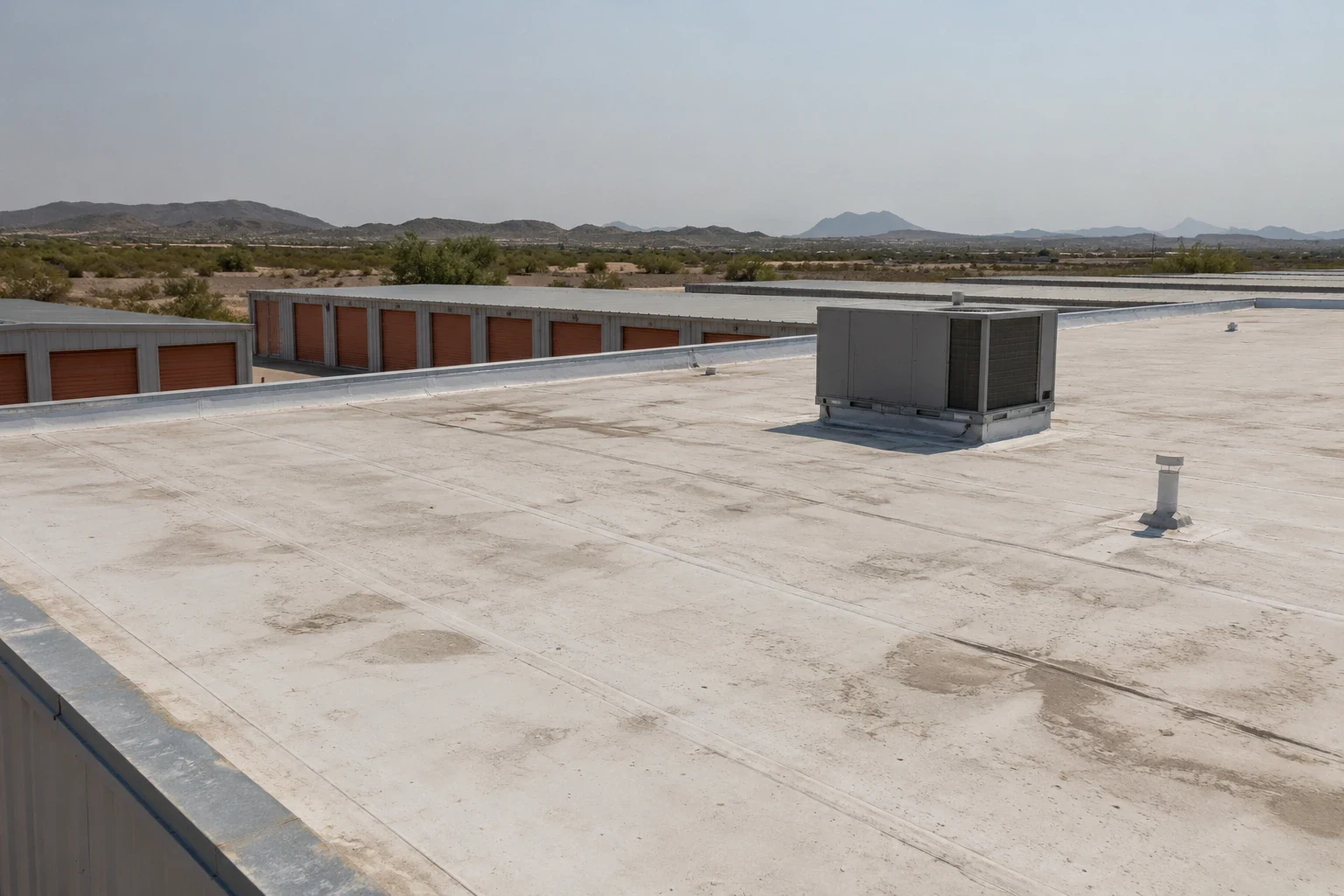
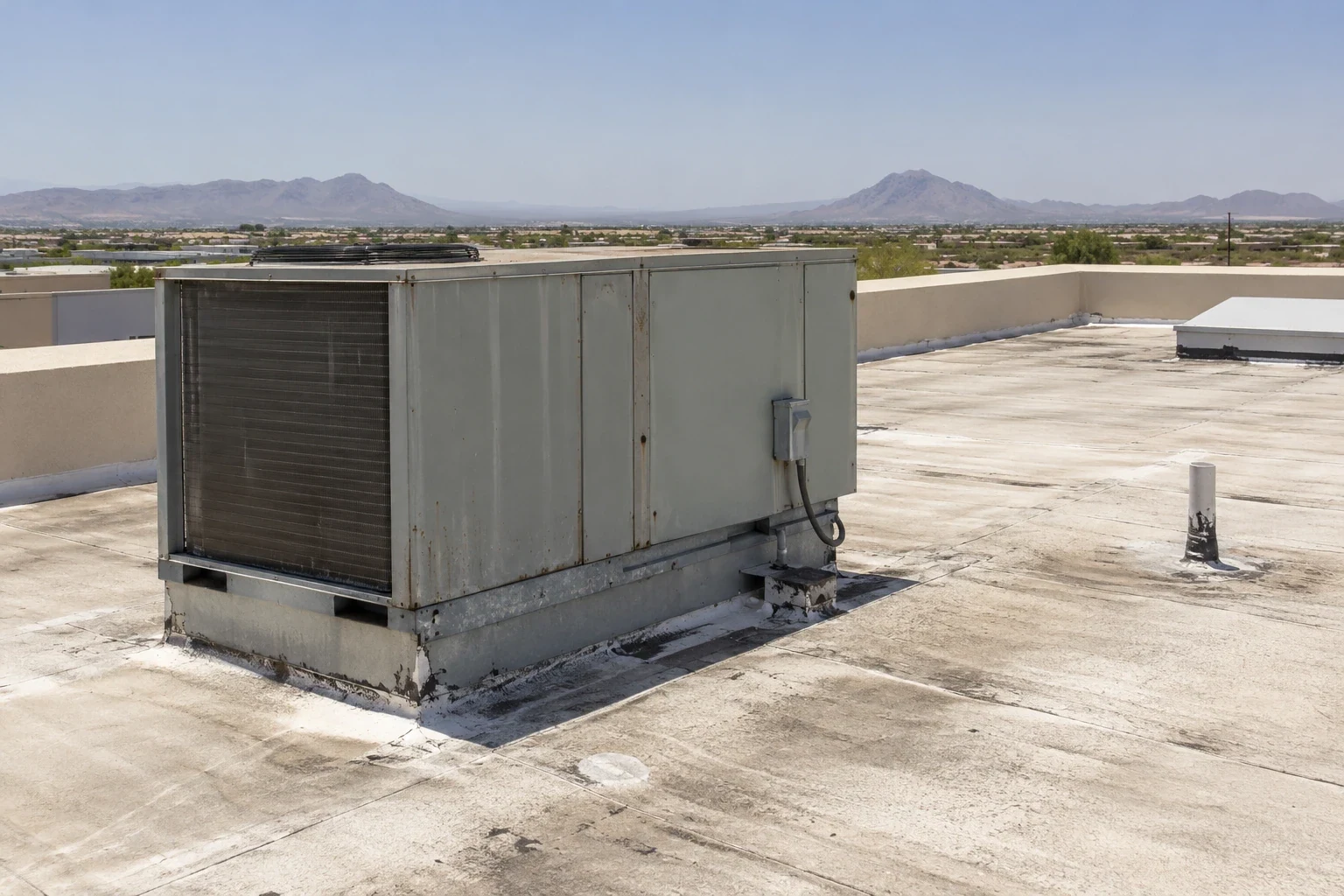
Cooling units, conduit, pipe supports and exhausts interrupt the roof. We inspect flashing corners, edge terminations, pitch pans and nearby seams for movement, splits or incomplete closure. A new equipment support can leave responsibility unclear unless the owner assigns the curb and the membrane tie-in before the work starts, so we agree that boundary with the mechanical trade and inspect the finished transition before the area is logged as closed.
Cable and conduit entries get their own look. Where wiring passes through the roof, a pitch pocket, a boot or a custom-formed flashing seals the opening, and sealant that has cracked in the sun is an easy path for water into a pathway nobody can afford to wet. We list every entry on the plan with a photograph, check the seal and mark which ones belong to the electrical contractor so a repair never closes a pathway the facility still needs.
Material follows the installed assembly. TPO and PVC use heat-welded seams, while other membranes need their own compatible details. Product records and field markings help confirm what is present, and if the history is incomplete the identification stays open until a record, a sample or an agreed test settles it. Work on rooftop curbs and supports carries the membrane interface in its own sequence.
Can a roof repair stay clear of the data hall?
Usually, because most roof work happens from the roof. The access route, noise, vibration, debris and staging can still matter below, so we separate tasks that stay on the membrane from tasks that need an opening. The owner may approve a roof-only survey first and decide on a test cut after reading the result. If a penetration is opened, a named person and an agreed sequence cover temporary closure and restoration.
Operations and security staff supply the rules; we supply the roof findings and the methods under consideration. The same concerns for controlled interiors appear in cold storage roofing, though each facility's limits differ. At St. George Industrial Park or in the light-industrial mix at Fort Pierce Industrial Park, the park name never tells us which building is mission-critical, so the facility's own records come first.
When does a local fix give way to capital work?
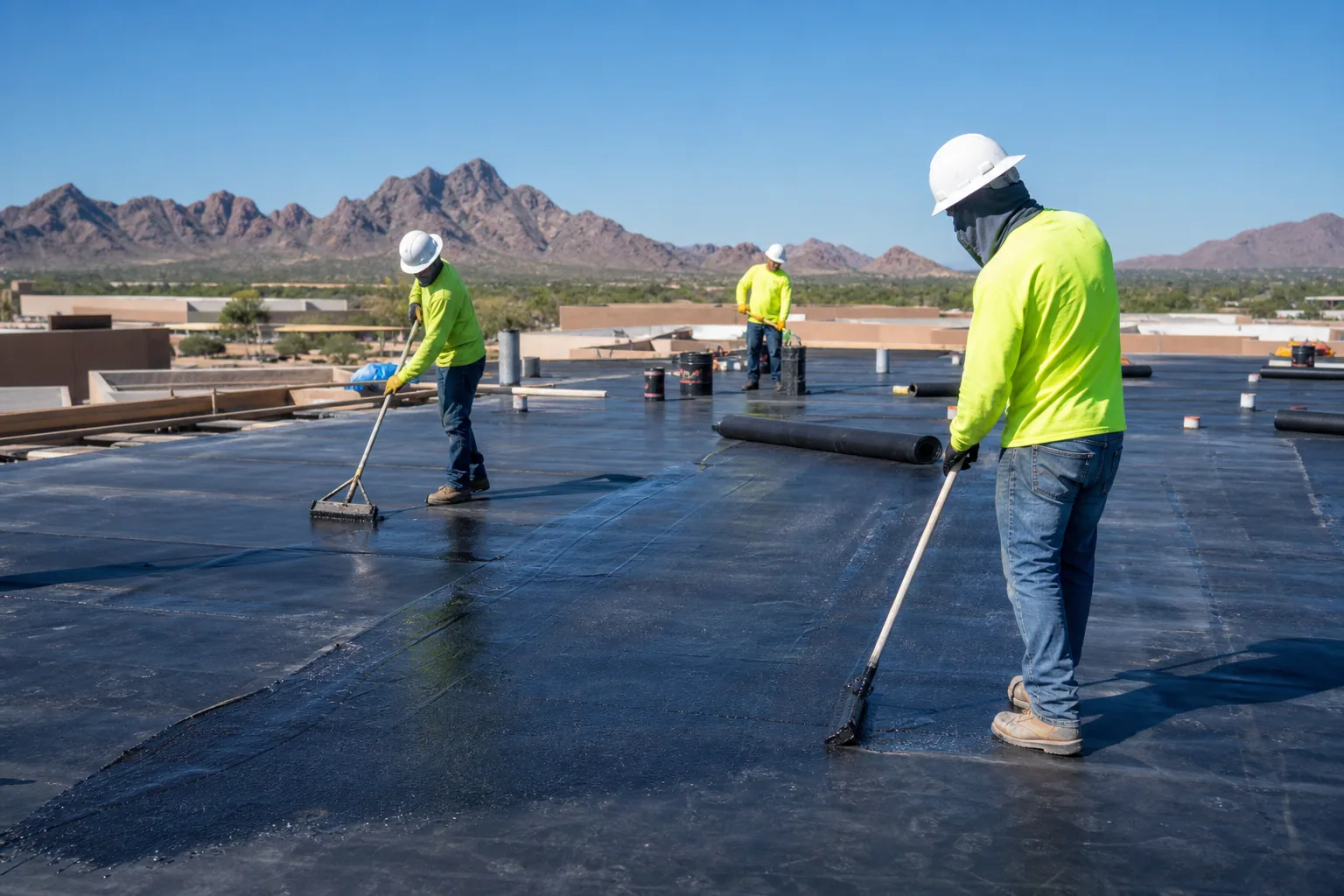
When the pattern outgrows the patch. A repair is easy to bound when one seam, curb or drain transition has a visible defect and the assembly around it is serviceable. Recurring leaks, broad moisture, unstable attachment or a deck concern change the scale. We map findings by roof zone and use infrared or selective openings only when they resolve a stated question. Confirmed conditions and untested areas stay separate in the report, and the record names who can approve more access and how an opening will be closed if the test finds a problem.
A recover needs sound layers, good attachment, enough edge height and compatible drainage, and wet insulation cannot be hidden under a new sheet. If planned cooling changes touch the roof, the capital scope lists curb work, clearances, insulation and the responsible design review. A written condition report records that without suggesting a roof finding proves anything about a facility system.
Which records make the next visit safer?
The roof plan, equipment layout, repair history, access rules and current contact list, kept together. Mark which zones restrict entry and what method was authorized. Attach photographs to the roof-zone label, and record any test result, temporary closure or open question. The next technician follows the approved route and does not reopen an area without a reason.
Send those documents with the proposed work window. We will document the roof condition and the open questions and return them in a form that respects the facility's own access process. The escort, shutdown and record habits are the same ones we use over a clinic or a hospital, adjusted to each facility's rules.
Commercial Roofing Questions
Can an infrared scan confirm a roof leak?
It can show temperature patterns for follow-up. We compare the result with roof conditions and open the assembly when the decision needs direct confirmation.
Will an inspection need access to the data hall?
A roof walk usually does not. The facility's access and escort rules govern the visit, and we define the requested areas before we arrive.
How do you handle a repair near cooling equipment?
We identify clearances, service routes and the membrane transition, then coordinate any support or curb work with the responsible trade.
What if a leak report does not match the roof opening?
We trace the report against slope, drains, seams and penetrations. Water travels below the membrane, so the opening needs evidence, not a guess.
Can a recover be planned without a shutdown?
That depends on approved access, method, staging, noise and interior protection. We propose a sequence for the owner and operations staff to review.