
Commercial Roof Repair in St. George, UT
Commercial Roof Repair Overview
Repair work begins by drawing a boundary. Somewhere on the roof is the point where a patch is still the cheapest sound decision, and past it the same money buys nothing durable. In St. George, UT, where the NOAA station averages daily highs close to 100 degrees through July and August, that boundary moves with what the sun has done to the surface as well as with the leak that prompted the call. A membrane baked brittle at its seams does not hold a repair the way a flexible sheet does.
We walk the roof, mark each defect with its location and likely cause, and sort the list into items that can be fixed now and items that need a larger decision. The asset manager gets that list, the open questions and the next step, instead of a general recommendation.
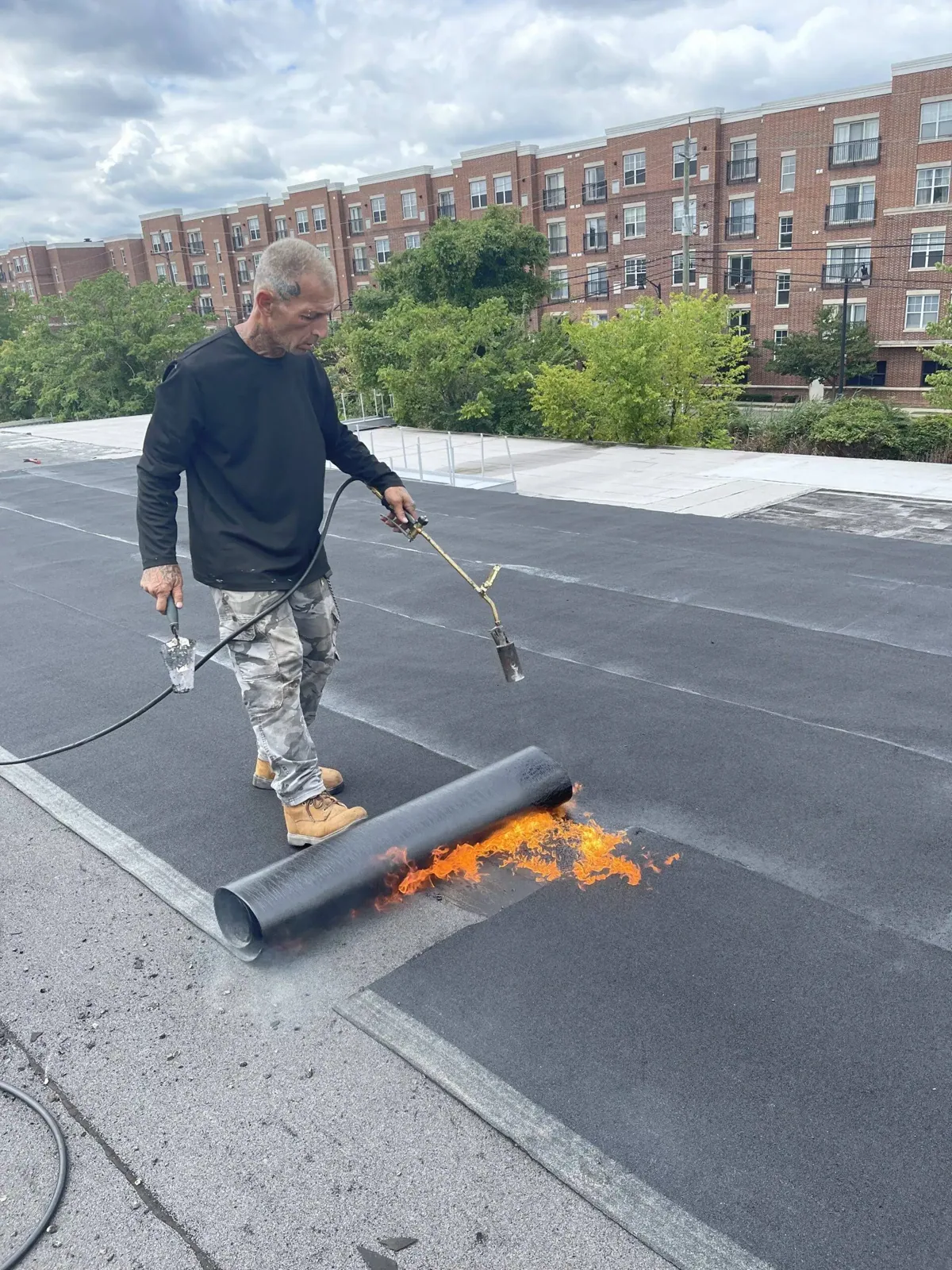
Where do repairs start on a flat roof?
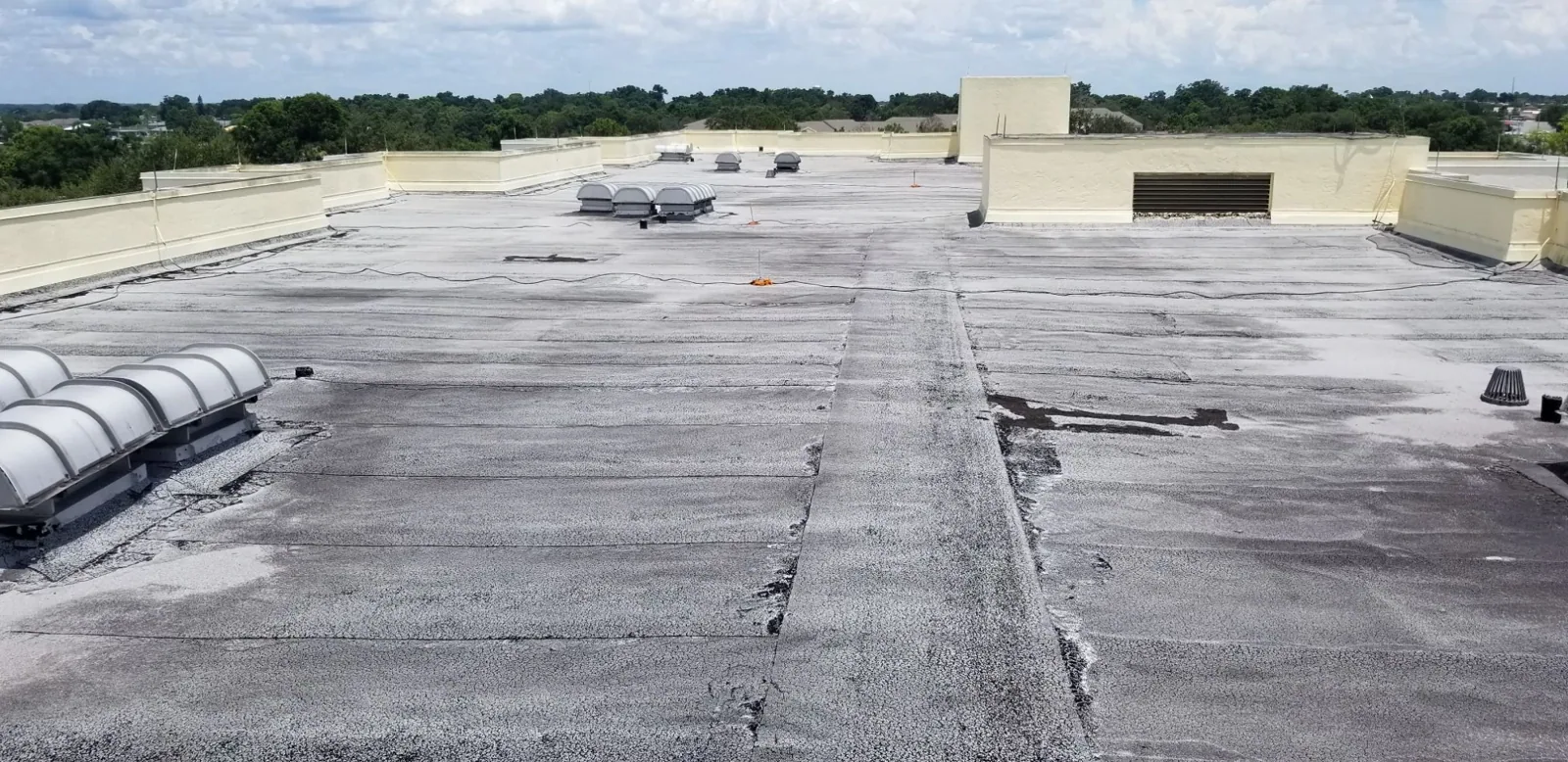
Water finds the weakest detail, and on most low-slope roofs the weak details cluster in the same places: laps and seams, base flashing at walls, curbs under rooftop units, drains and the metal at the perimeter. We start at those spots before touching the field, because a field repair that ignores a failing curb only moves the leak a few feet.
Foot traffic is the quiet cause. Technicians servicing HVAC units walk the same paths for years, wearing the membrane and cracking sealant where they step. A walkway pad on those paths costs far less than the membrane patch that follows every service visit. We map the traffic as part of the repair scope when we see it.
Standing water gets recorded too. If the roof holds water days after rain, the repair has to deal with the ponding or the new patch will sit in it.
Penetrations get a second look because they move. Pipes, conduit and equipment supports shift with heat and building vibration, and the sealant around them stretches until it splits. A pitch pocket that was filled once and never reinspected will usually be dry on the outside and open at the base. We probe those details by hand and record what gives under pressure.
Will a repair match the existing membrane?
Compatibility decides the material. A heat-welded patch goes on a thermoplastic sheet, a liquid-applied flashing resin handles odd shapes around pipes and equipment posts, and a cold-applied mastic bridges small cuts on a built-up surface. Using the wrong chemistry on an old roof can lift the patch within a season, so we identify the membrane first, with a sample where the markings are gone.
Age affects the choice. The city's commercial stock is largely post-1980, so a repair on an older single-ply may call for cleaning and priming that a newer sheet would not. We note on the repair scope what surface prep each patch needs, so the price covers the whole bond and not just the sheet. Where repair after repair has stacked up, a restoration coating may cover the field more evenly.
A repair is also a chance to correct a recurring cause. If a drain keeps clogging with windblown grit or a parapet keeps trapping debris, we recommend a small change in detail along with the patch, so the same spot does not fail again.

How does desert heat change repair timing?
Many repairs rely on cure time. Sealants skin over in minutes on a hot surface and never bond below, adhesives flash off before the sheet is pressed in, and hot-air welding on a membrane already warmed by the sun can scorch the material. We schedule detail work in the early hours and keep the dark membrane shaded where we can.
The same heat sets the pace for safe access. Crew safety sets the pace as well, so we plan shade, water and a shorter shift in the hottest weeks. When the repair is not urgent, spring and fall give longer, calmer work windows, and we say so when a delay carries no extra water risk.
When does repair stop making sense?
The numbers usually tell you. When repair costs for one roof climb year over year, when new leaks appear beside old patches, or when core samples show wet insulation across a wide area, further patching only postpones replacement. Records help here: a repair log with dates, locations and costs lets a capital planner see the trend without guessing.
We separate repair from capital in the written findings. Items under the repair boundary receive prices and a schedule. Items beyond it are noted with the evidence that puts them there, so you can compare the cost of another patch with the cost of a new assembly at the same decision point.
Insurance is a separate track. A repair that follows a storm needs the damage photographed before any material is touched, and our claim documentation keeps the repair record and the loss record in the same file, so neither contradicts the other.
How are repairs scheduled around tenants and roof access?
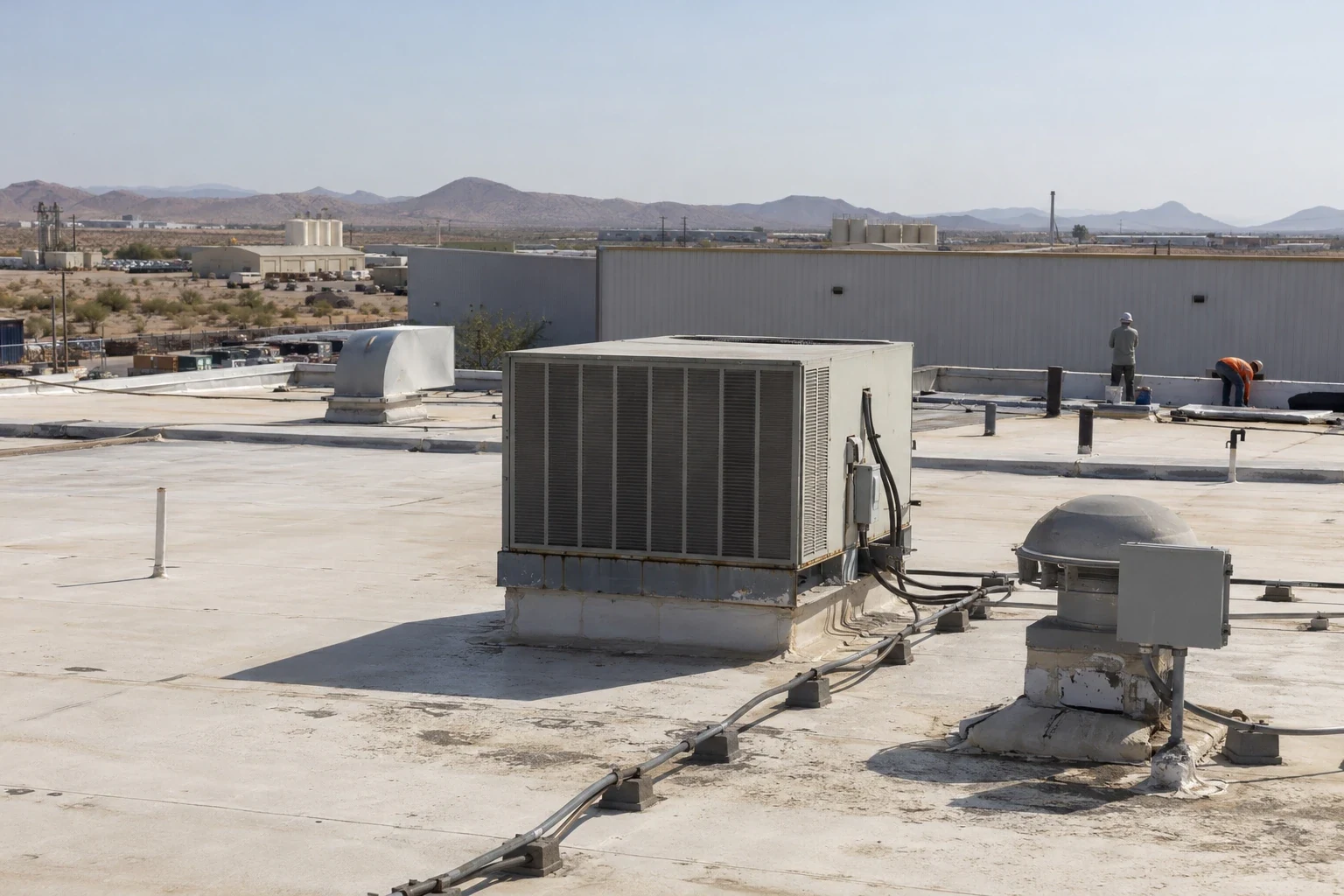
Small repairs still need a roof plan. Roof hatches, ladders, locked doors and tenant approval for after-hours entry decide when a crew can get up, and rooftop equipment may need to be shut down while a nearby curb is reworked. For a clinic or office near River Road, or a business park such as Riverside Business Park, those details can be settled with a single call to the building contact.
Mechanical contractors, solar installers and other trades also visit roofs. When their work caused the damage, we document it with photographs and location marks so the owner can work out responsibility. A hands-on inspection before and after trade work keeps a clear record of what changed.
Hot-work permits and fire watches apply when torch or heat equipment is used near combustible decks, and we confirm the building's requirements before anything is lit. The roof plan lists who signs off on each item.
Commercial Roofing Questions
Can a repair restore the original warranty?
A repair does not extend a warranty, and unapproved repairs can sometimes affect it. Hand us the paperwork and we check its conditions against the repair before any material is opened. Some manufacturers require specific materials or installers for covered work, and that is better learned before the first patch goes down.
How long does a typical patch last?
Life depends on how well the cause was addressed. A patch over a sound, clean membrane with the underlying defect corrected can outlast the sheet around it. A patch laid over a failed detail or wet insulation may last only until the next rain. We write down what each repair is expected to accomplish.
Do small repairs need a permit?
That turns on scope and jurisdiction. Whether a given repair triggers permit review is the City of St. George's call, made under the 2024 International Building Code as Utah amends it. We check before work begins, since a repair that grows into a reroof may follow a different path.
What records should we keep after a repair?
Keep the dated photographs, the location marks on the roof plan, the material descriptions and the invoice. Those four items let the next inspector see what was done and let a capital planner trace repair history. We deliver them with every repair visit.
Why do repairs fail when the leak comes back?
The most common reason is that the water entered somewhere other than where it appeared inside. A stain on a ceiling tile can sit many feet from the opening. A tracing step comes before a fix, and moisture evidence confirms the path before material is installed.