
TPO Roofing in St. George, UT
TPO Roofing Overview
A white TPO sheet in a St. George July throws back glare and still holds heat, and both decide how a crew can work it. In the NOAA normals for the St. George station, July's mean daily high is 101.9 degrees and August's is 99.9, which pushes welding, patching and sheet traffic toward first light. A station figure is not a surface reading on one roof, and we use it only to set the work window.
TPO is a single-ply membrane whose seams are joined with hot air, which makes the roof exactly as good as its welds, its flashings and the drains that carry water away. We begin every TPO visit at those three places and hand the asset manager the open questions along with the next decision. A first commercial roof inspection sets the baseline.

How do we tell a sound TPO weld from a tired one?
A good lap shows a continuous, even bead at the edge of the weld, with no gap you can slide a probe into. We run a blunt probe along the seam edge and look for fishmouths, skipped sections, wrinkles that bridge the lap and dirt trapped in the weld. Where laps cross each other, the T-joints get extra attention, because three layers of sheet in one spot are the hardest welds to make and the first to open.
Age changes the answer. A sheet that has chalked under years of sun may not accept a new weld the way a clean one does, so on an older roof we make a test weld in an out-of-the-way spot and pull it before committing to a long repair. The result goes on the roof plan, and it tells the owner how far the repair can reach before the material stops cooperating.
Where does a TPO roof leak before it leaks in the field?
Almost always at a detail. The field of a TPO roof is a single sheet and rarely opens by itself; the trouble starts where the sheet is cut, folded or stopped. Pipe boots and curb corners are usually field-formed from pieces of membrane, and the corners shrink and pull open as the sheet ages. A wall flashing that has slipped down its fasteners leaves a gap at the top, and a termination bar that was never sealed lets water in behind the sheet.
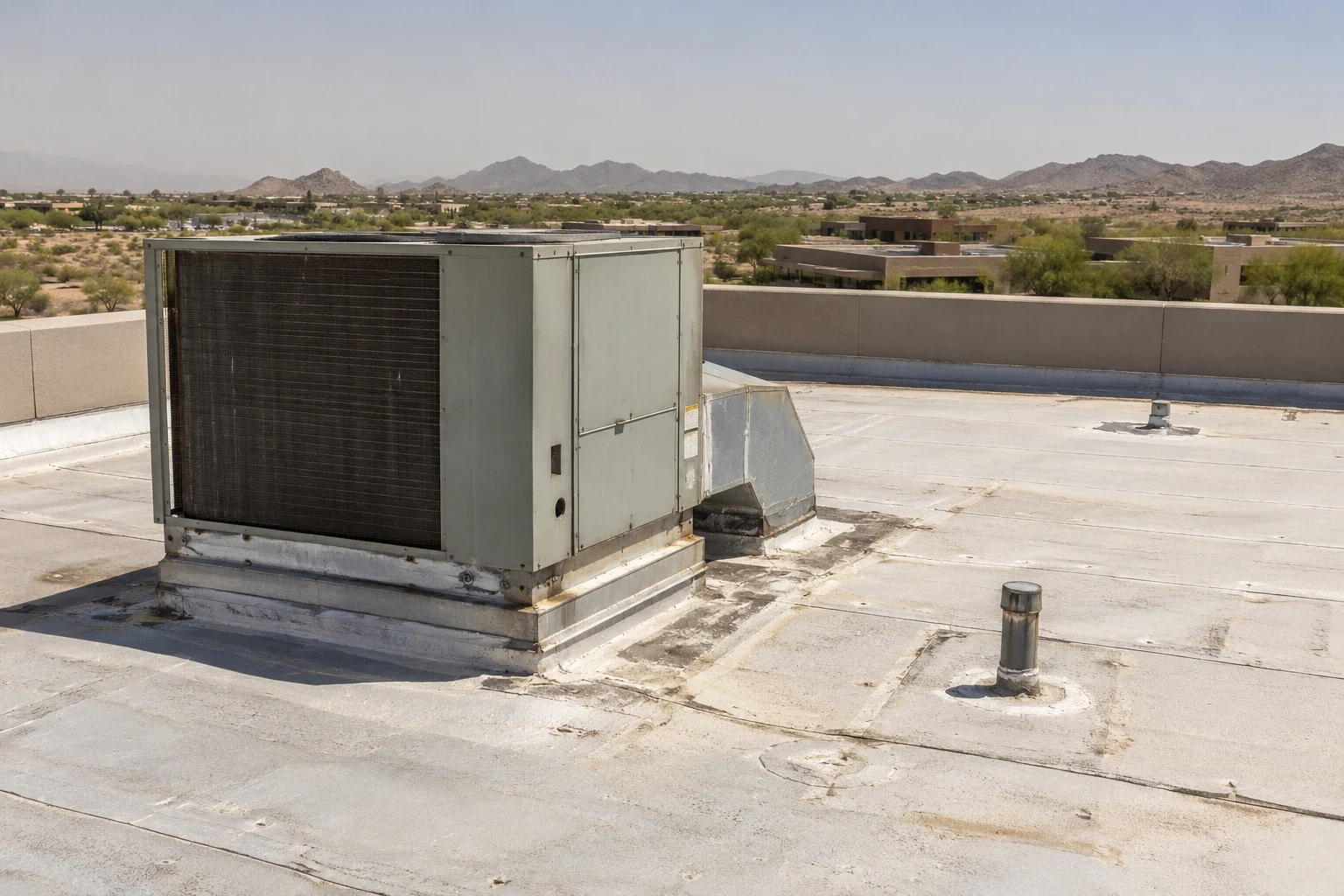
Rooftop equipment makes it worse. Every service visit puts a boot heel on the same few feet of membrane, and a technician who sets a panel down on the sheet can leave a puncture nobody sees until the next storm. We list each curb, stand and pipe on the roof plan with a photograph, so flashing repairs are priced detail by detail rather than as a vague allowance.
Which layers sit under the sheet?
The membrane is the visible part of a roof assembly. Under it may be mechanically fastened insulation, adhered board, a cover board, an old membrane left in place or a combination of all four. A sheet can look flat and tight over insulation that has absorbed water, and wet board does not dry under a sealed membrane. Moisture evidence therefore comes before any promise about how long a TPO roof has left; an infrared moisture survey and a few small cores show what the top cannot.
Fastener pattern matters on mechanically attached roofs. A sheet that flutters in wind loads its fasteners and plates, and a plate that has backed out can lift under the membrane and wear a hole from below. We look for the bumps and ridges that mark it. Over insulation and cover board, the same sheet is adhered, and the question there is whether the bond has held. Either way, the roof plan records which system we found, because a repair that suits one will damage the other.
How does water leave a TPO roof in a dry climate?
Rain totals 9.31 inches a year in the station normals, and February's 1.38 inches is the highest monthly figure against 0.16 in June. Months of dry weather let dust and grit collect around drain bowls and scupper openings, and the first real storm finds them packed. TPO handles standing water better than some membranes, but water that sits for days still loads the deck and works at every seam it covers.
On the roof we follow the drain route from the high point to each outlet and mark every place the sheet holds water. A reroof is the moment to fix that, because tapered insulation can build slope toward the drain and a new drain body can sit at the true low point. On a roof that is staying in service, drain and scupper service and a cleared overflow are the first repairs, before anyone patches a seam that is only wet because water has nowhere to go.
What does surface heat do to the sheet over the years?
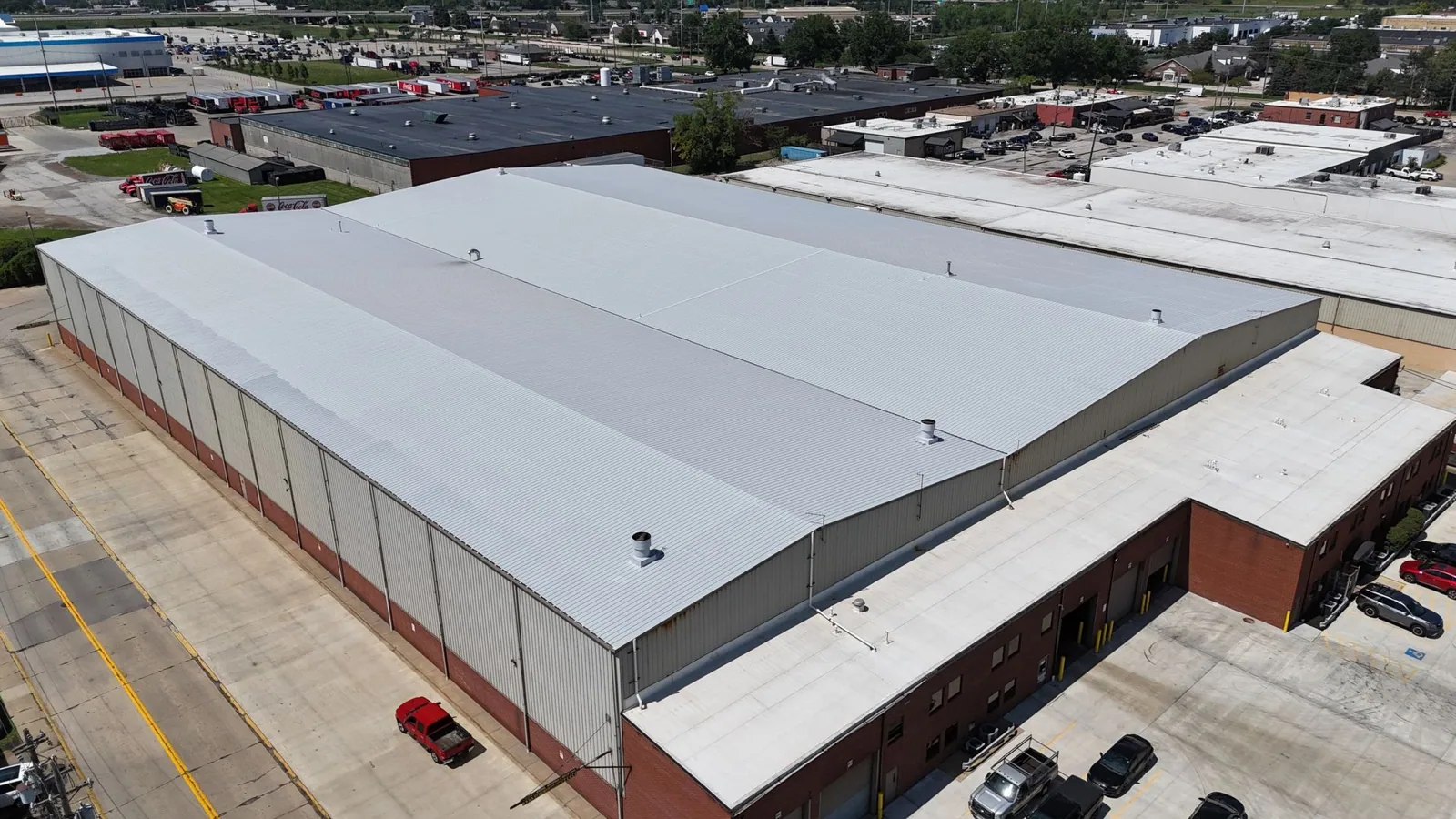
Sun and heat work on the surface of a white membrane slowly. The top film chalks, the sheet loses some flexibility and the welded seams carry the strain of daily expansion and contraction. None of that fails a roof alone. It becomes a failure at the points where the sheet is held rigid, such as a curb corner, a stiff flashing or a fastened edge, and the movement tears the weakest of them first. Heat and UV damage shows up as crazing at those details long before the field gives way.
The daily work follows the same logic. Hot-air welding on a sheet that already holds the sun's heat can overcook the material, so the crew starts at first light, shades staged rolls and stops detail work when the surface climbs.
When does repair give way to recover or replacement?
A repair is the right answer when the defect has a clear edge and the sheet around it is dry and well bonded. Several open seams across different roof areas, loose flashing at repeated curbs or wet insulation under a wide area change the question. Then the owner is comparing a recover over dry, firm insulation with a full replacement down to the deck, and the moisture map decides which is open. A coating can sometimes extend a sound TPO surface, and a silicone coating is one route when the seams are tight and the insulation tests dry.
Against other single-plies, TPO sits close to PVC, which is also heat-welded but resists grease and chemicals differently. Our scope names the system we found and the system we propose, so a change is a decision and never a surprise.
Which buildings in the St. George area raise TPO questions?
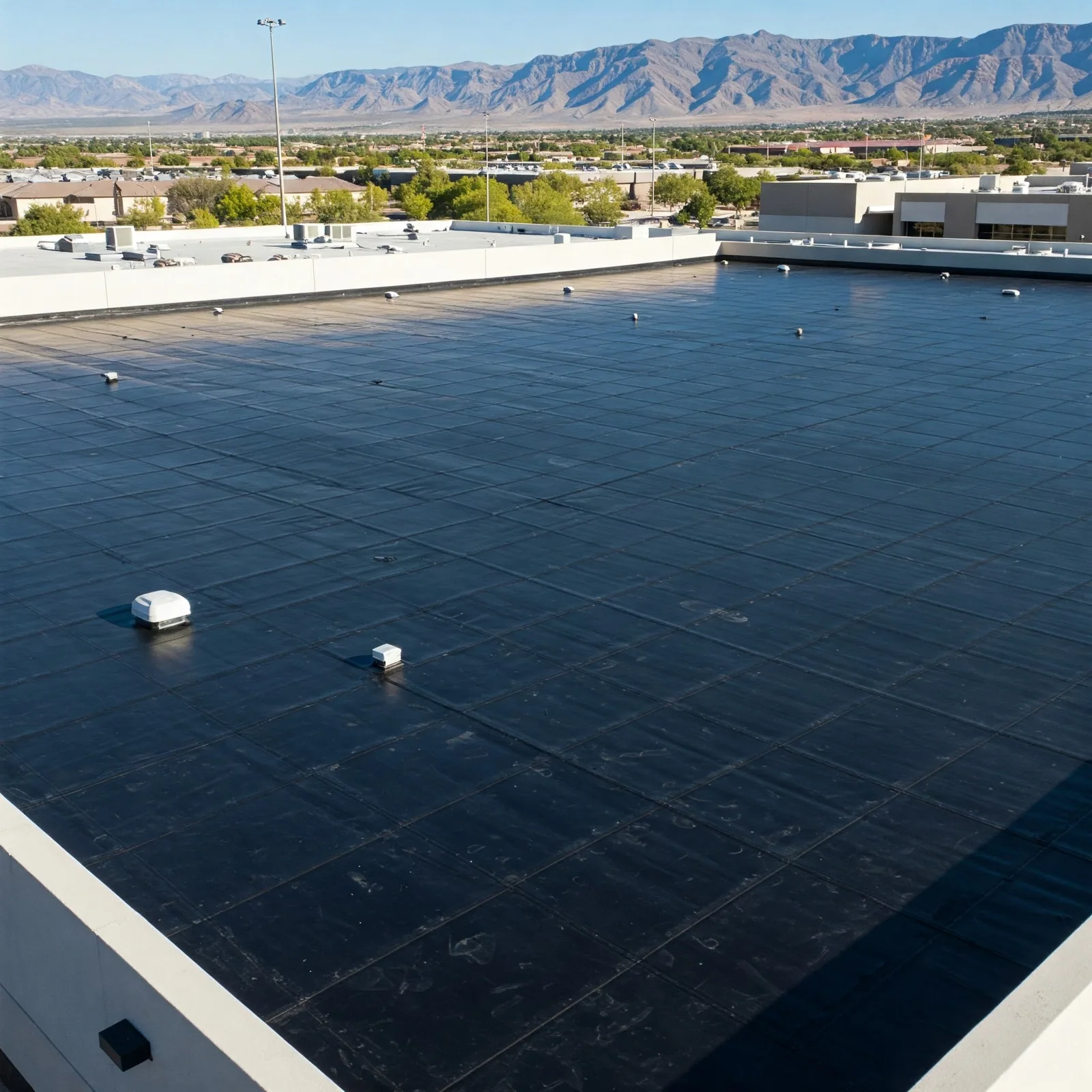
Zoning in Fort Pierce Industrial Park is largely M-1, the class that allows warehousing, light manufacturing, fabrication and wholesaling. A warehouse with few penetrations and a fabrication shop with exhaust stacks and makeup air ask different things of the same membrane, and neither land-use label tells us which sheet is overhead.
Tech Ridge sits on a mesa and is planned for offices, shops and homes together, which points toward several commercial roof profiles in one district. Whatever the name on the parcel, the roof plan, the access rules and the operating schedule come first. Send them, and we will walk the roof and return a repair scope that separates what we confirmed from what remains open.
Commercial Roofing Questions
Can a small TPO seam opening be repaired without a full reroof?
Yes, when the sheet around it is dry and bonded. We clean, test the weld and extend the repair past the visible edge to material that accepts a new weld.
Does TPO need a tear-off every time it leaks?
No. Condition decides. A localized defect gets a patch, wet insulation widens the scope, and the moisture map tells us which one applies.
What does a test weld tell you?
Whether the existing sheet will fuse at all. A sheet that peels clean in the test is too aged for a long seam repair, and we say so before pricing.
Can the existing drains stay during a TPO reroof?
Sometimes. The bowl height, the pipe connection and the overflow have to suit the new thickness. We measure each one and price any change as its own line.
When should we walk the roof?
Before the first storm of the wet season, and any time rooftop equipment has been serviced or replaced. In summer we book the walk for early morning.