
Commercial Roofing in Hurricane, UT
Hurricane Overview
A leak call from Hurricane sets two clocks running: the water coming in, and the question of who is licensed to fix it. Washington County lists Hurricane as a city with its own licensing division, so contractors verify local requirements before taking work there, and permit and zoning questions go to the city. The county's transportation map places SR-9 and SR-59 among the arterial and collector routes, which gives dispatch a starting reference. With that sorted, the roof work follows a plain order: stop the water, document the damage, inspect the assembly with a commercial roof inspection and give the owner a repair scope that separates urgent items from planned ones.
What happens in the first hour of a leak call?
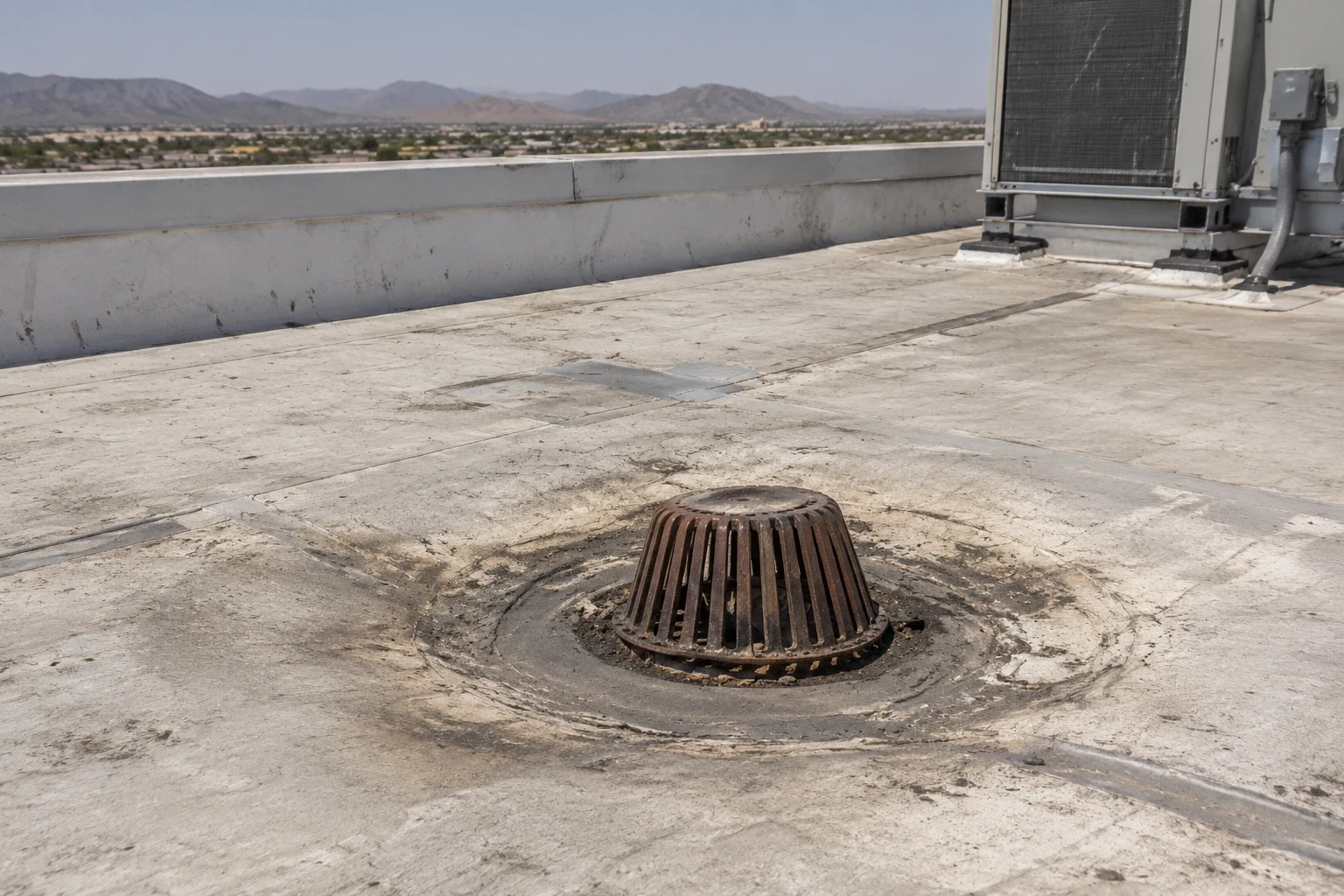
The first questions are practical. Where is the water entering, what is it damaging and can anyone reach the roof safely? We ask for photographs from inside, the time the leak started and whether it follows rain, wind or an equipment cycle. Those details tell us whether to look first at a drain, a curb, a seam or a wall flashing.
On arrival, the crew checks safe access, then moves to the most likely source. A temporary patch, a tarp or a sealed penetration usually holds until the permanent repair can be scheduled. We photograph the area before and after, record moisture readings if the equipment is available and leave the owner with a short summary. Our emergency roof repair crews respond at any hour, including weekends and holidays, because water does not wait.
Inside the building, we look for the path the water took. It often runs along a deck flute, a beam or a pipe before it drips, so the ceiling stain can sit well away from the opening. Mapping that path before cutting anything open saves time, and it keeps the first repair aimed at the real source instead of the nearest wet spot.
How do we support an insurance claim after storm damage?
A claim rests on evidence. The adjuster wants to see what the roof looked like, what changed and what caused the change. We document the damage with dated photographs, locations marked on a roof sketch and a written description of the visible system. Where the cause is unclear, such as a lifted seam that might be wind or age, we describe what we see and avoid guessing.
The roof insurance claim assistance we provide puts the repair scope in a form an adjuster can compare against policy language. We separate storm-related items from pre-existing wear, since that distinction affects what is covered. The owner keeps the report, which can also support later decisions about replacement.
Timing in a claim matters. Photographs taken before cleanup, wet material kept until the adjuster has seen it where practical, and a dated record of every temporary measure all help. We hand the owner a folder with those items in order, so the file is ready whenever the adjuster asks for it.
How do SR-9 and SR-59 help with dispatch and planning?
The county map lists both routes among the region's arterial and collector network, and we use them to sort jobs by geography and plan material delivery. They are orientation tools, not access instructions. Gates, dock hours and lift locations are confirmed with the property manager, and exact access is settled onsite.
Hurricane has named commercial areas, such as the State Street and SR-9 corridor and the downtown plan area, and we do not carry assumptions from one to the next. A first walk records the building as it stands, with its roof type, its drainage and its equipment, and the plan comes from those findings.
Industrial and light-industrial uses add their own roof questions. Loading docks, large exhaust systems and process vents put different loads on a membrane than an office does, and a walk through the light industrial business area would look for those loads first, tied to what the building actually does.
How does desert heat affect repair materials?
At the St. George NOAA station the July daily high averages 101.9 degrees and the August figure runs 99.9, and a Hurricane roof is evaluated directly, with the station figure as a planning reference only. Sealants, adhesives and coatings all have temperature windows. A patch applied to a scorching surface may skin over and cure poorly underneath, and a primer can flash before it wets the substrate.
We start early, work in shade where possible and choose materials suited to the temperature. Temporary repairs use products that tolerate heat and sun until the permanent fix is made. A cheap temporary patch that cooks off by afternoon is no help, and the tarp or membrane must be secured against wind as well.
Heat also affects people. Crews need shade, water and a schedule that lets them rest, and a roof that is too hot for hands is too hot for careful work. Slowing down on the hottest afternoons costs a little time and saves a lot of rework.
When does a leak repair turn into a replacement discussion?
One leak with a clear cause and dry insulation is a repair. Several leaks across the roof, wet insulation in multiple areas, widespread seam failure or repeated patches at the same spot suggest the system is near the end of its service life. An infrared survey helps draw the line, and so does a review of past repair invoices.
The decision is financial as much as technical. We lay out the repair scope, the cost drivers for a recover or replacement and the consequences of waiting. The owner then picks a path with a clear understanding of each. A commercial roof repair that buys two or three good seasons can be the right call when the budget is set, and the roof plan says when the next decision arrives.
If replacement is the direction, the next questions are what comes off and what stays. A recover keeps the existing layers and needs dry insulation. A full tear-off exposes the deck and lets us repair it. Each has a different effect on the schedule, the building's operations and the permit path the city requires.
Commercial Roofing Questions
Who verifies licensing for work in Hurricane?
Washington County lists Hurricane as a municipality with its own licensing division. We check the local requirement before accepting the work and tell the owner what the city needs, including any permit that applies to the scope.
What should I photograph before the roofer arrives?
Take pictures of the interior damage, the ceiling stain or dripping area, any wet equipment and, if safe, the roof surface from a window or ladder. Note the date and time. Do not climb a wet roof; the crew will handle access.
Will a temporary patch affect my claim?
A documented temporary repair that limits further damage is generally a normal part of a loss, and policies often expect it. We record what was done and why. Check the policy with your insurer for specifics.
Can the permanent repair wait until after the rain stops?
Usually, as long as the temporary measure holds. We plan the permanent work for a dry window, since many materials need dry, warm surfaces. St. George station data shows the highest monthly precipitation in February, at 1.38 inches, so late winter repairs need extra planning.
How do I know if my roof is a repair or a replacement?
The inspection answers it. We look at the extent of moisture, the condition of the seams and flashings, the age of the layers and the history of repairs. Then we explain the evidence and the options.
Does the city require a permit for an emergency tarp?
A temporary measure to protect the building is usually handled differently from a permanent reroof, though the city decides. We confirm with the local office when there is any doubt, and we prepare the paperwork for the permanent scope while the temporary measure holds.