
EPDM Roofing in St. George, UT
EPDM Roofing Overview
Black rubber under a desert sun does what physics says it will: it soaks up heat and moves. NOAA's St. George station puts the mean daily high near 102 degrees in July and 100 in August, and an EPDM sheet that has spent years in that exposure shrinks a little, pulls at its edges and stresses every point where it is held. We start an EPDM visit at those points, because the field of the roof is a single sheet and the trouble sits in the seams, the flashings and the terminations.
EPDM is a synthetic rubber membrane, usually installed ballasted, fully adhered or mechanically attached, and its seams rely on tape or adhesive, not heat welds. That difference drives every repair choice. The asset manager gets a repair boundary tied to what we found, the open questions and the next decision. A first commercial roof inspection sets the record.
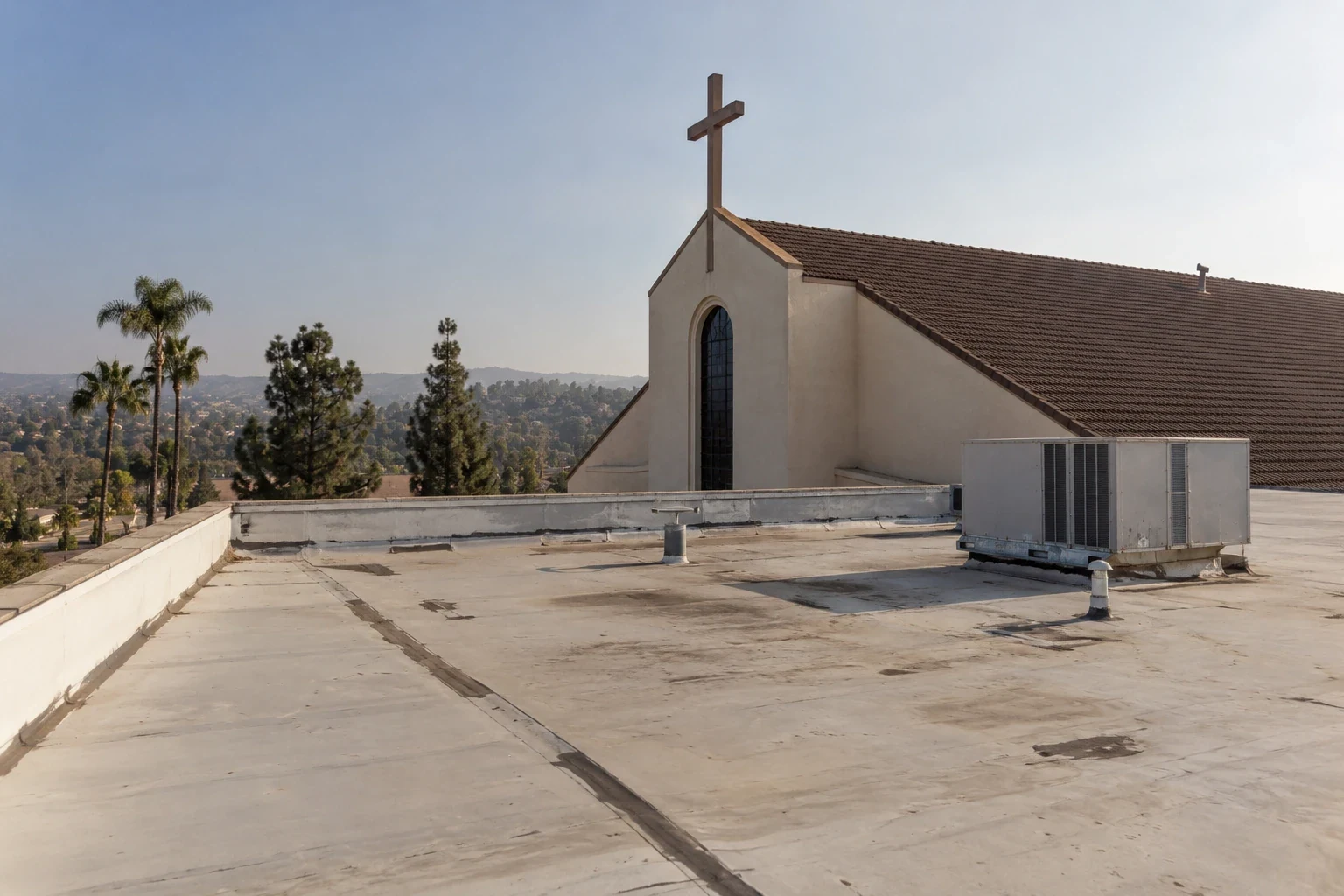
How is an EPDM seam made, and how does it fail?
Splice tape or seam adhesive bonds one sheet to the next, and the bond depends on clean, primed rubber. We run a probe along each lap and look for lifted edges, wrinkles at the splice, dirt trapped under the tape and the dark line that shows a seam has let go. A failed splice can be rebuilt with the right primer and tape; a bead of sealant over the lap hides the opening for a few weeks and does not restore the bond.
Where the sheet is old, cleaning it so a new splice will stick is the hard part, because weathered rubber carries a film that blocks the tape. We test a small repair, pull it and note the result. The test tells the owner whether a long seam repair will hold or whether the sheet has reached the point where repairs buy only a season.
Installation method changes the work. On a ballasted roof, the stone has to be raked back before a seam can be reached, and the weight of that stone is part of any load question. On an adhered roof, the bond between sheet and board is checked as well as the lap. On a mechanically attached roof, we look for the ridges that mark a plate backing out under the membrane.
Why do EPDM edges and flashings pull away?
Rubber shrinks, and a sheet held fast at a wall or curb pulls toward its center. Over summers the stress concentrates at corners and terminations, where the membrane turns up a wall. A flashing bar that has loosened, a sealant bead that has split or a corner that has bridged and torn all let water in behind the sheet. We check each termination and photograph the ones that have moved.
Equipment adds to the load. Each service visit sends boots across the same strip of membrane, and a unit set on the roof after the original install often sits on a curb that was never flashed to the current sheet. Penetration flashing repairs are listed by location, with a photograph, so the cost can be tied to the detail and not to a general fix.
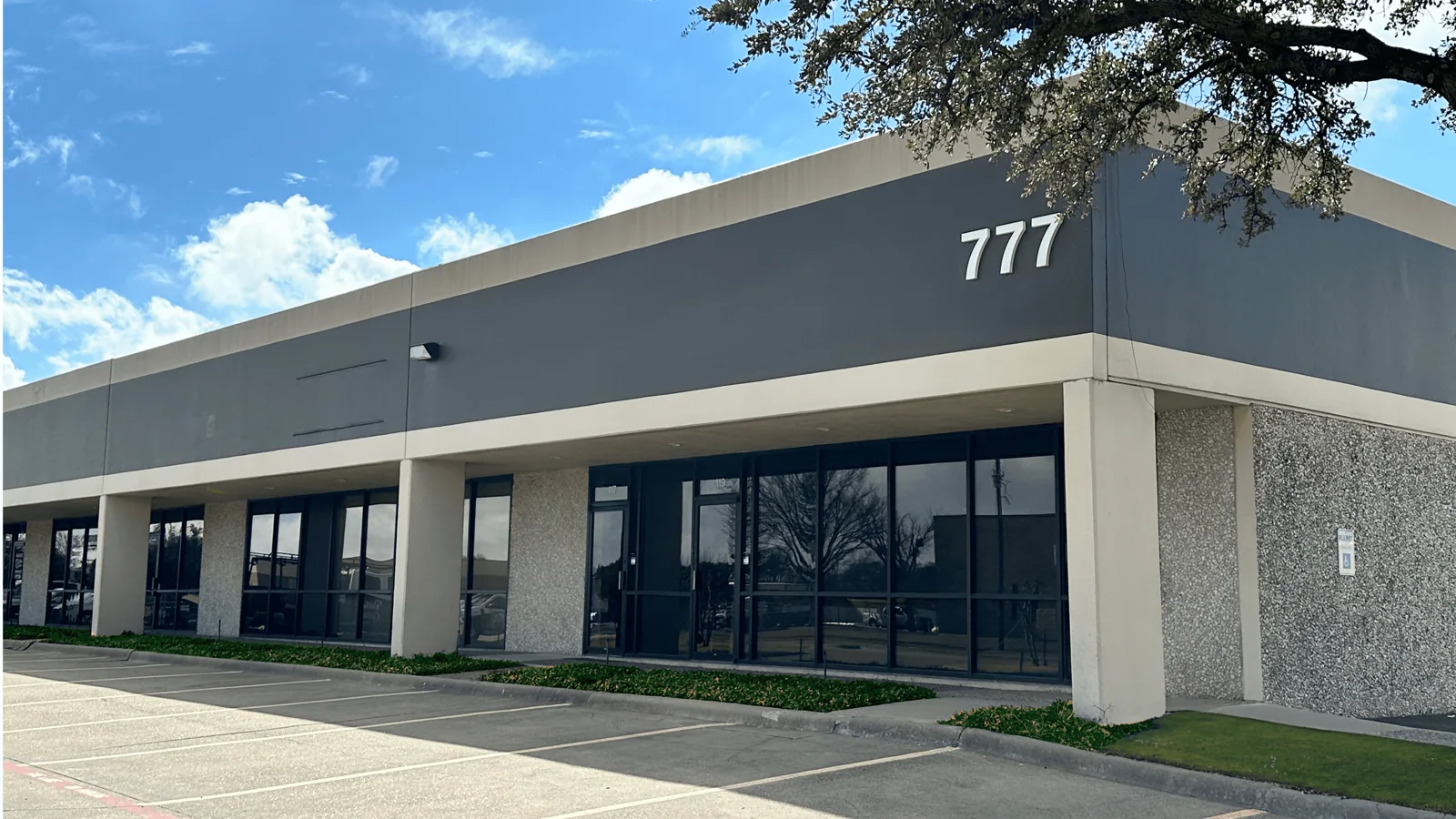
What does summer do to an EPDM roof, and to the crew?
Surface temperature on black rubber runs well above the air. The sheet gets too hot to kneel on, adhesives flash off before the rubber is pressed down and tape can lose its grab. The crew starts at first light, stages material in shade and finishes the adhesive-sensitive work while the sheet is cool. Walk pads along the service path spread the load and keep boot heels off a softened surface. A surface that cooks all day also stores heat into the evening, which is why we avoid late-day seam work.
Over time, the same heat leaves the surface chalky and hard. That alone is not a failure; the checks that matter are whether the seams still hold, whether the attachment is intact and whether wet insulation lies underneath. When EPDM is nearing the end of its life, heat and UV damage repair is the first step before any larger decision.
Where does a leak travel before it shows inside?
Water follows the deck, runs along insulation joints and drops through the ceiling far from the opening. Interior stains point to an area, not an address. We compare the stain with seams, drains and penetrations uphill of it, probe the splices there and check the insulation for soft spots. A black membrane hides moisture well, so an infrared scan after sunset and a few small cores often find what the surface cannot.
St. George's rain totals about 9.31 inches a year, February is the wettest month at 1.38, and June brings 0.16. Long dry spells let dust and grit pack drain bowls, so the first real storm leaves ponds on the roof. We pull strainers, check the clamp rings and confirm the overflow before blaming the membrane, and drain and scupper service is written into the repair scope when the drain is part of the path.
Can the existing assembly stay?
A recover is possible only when the insulation is dry, the deck is solid and the added height still clears the flashings. We review the deck where it can be seen, the insulation, any cover board and the edge heights, and a few small cores confirm what is wet. If the substrate is unstable, a new membrane over it carries the same problem forward, and the owner pays twice for the same repair. If the board is dry and firm, a recover may save the disposal cost and shorten the work window.
Next to TPO and PVC, EPDM has different seams and different cleaners, so a change of system needs a transition plan at edges, drains and curbs. Where the whole assembly has failed, the better route is replacement with tapered board at the low spots.
Which St. George roofs raise EPDM questions?
The roofs along the River Road corridor, which the county maps as a named arterial, and the industrial areas around St. George Industrial Park hold buildings of different ages and uses. Much of the city's commercial stock dates from after 1980, according to the Consolidated Plan, and that date range does not tell us which roofs are rubber or how many overlays sit on them.
Send the roof plan, repair history, the leak locations and the hours the roof can be reached. We will walk the seams, drains and terminations and return a repair scope that marks what is confirmed and what is not.
Photographs of every seam repair go on the roof plan so the next walk can find them.
Commercial Roofing Questions
Can roofing cement repair an EPDM seam?
Not for long. A bead on top does not rebuild the splice. We clean, prime and tape the lap, then pull a test to confirm it bonded.
Does a black EPDM roof need replacing in St. George?
No. Heat is a reason to plan for the cooler hours. Replacement follows seam condition, attachment and wet insulation.
How do you check for moisture under the sheet?
Infrared after sunset, a moisture meter and small cores where the scan flags a reading. Each core is patched the same day.
Can another membrane go over EPDM?
Sometimes, once weight, moisture, attachment and edge heights check out. The scope shows each transition and what must be removed.
What should we send before the visit?
Roof plans, repair invoices, known leak areas, access rules and equipment locations. They let us focus the first walk, and any warranty paperwork tells us what the maker expects for repairs.