
Roof Recover and Overlay Systems in St. George, UT
Roof Recover and Overlay Systems Overview
Dry insulation is the only reason a recover can work. A new membrane laid over an old one saves disposal, shortens the time the building is exposed and keeps most of the existing assembly working, but it also traps whatever moisture is already inside. Annual precipitation in the St. George station normals is 9.31 inches, so a roof can stay dry for weeks, and a slow leak under an old membrane may go unseen for seasons.
We treat a recover as a decision that earns its place with evidence. The first visit confirms what the roof is made of, how many layers it already carries, where it holds water and whether the deck can take more load. The open questions then reach the asset manager as a short list, along with the next decision.
What has to be true before a recover is allowed?
Three conditions come first. The existing insulation has to be dry across the whole field, the deck has to be sound enough to hold the added weight, and the code has to permit another layer. Another roof covering is also a code question. Utah amends the 2024 International Building Code, and the cap on how many coverings a building may carry is a permit-date answer we get from the City of St. George instead of assuming.
If any of the three fails, the answer changes. A wet corner can sometimes be cut out and replaced, while a roof with wet insulation in a dozen places usually points back to a full tear-off. We would rather tell you that after the survey than after the first rolls are down.
The test that settles it is physical: an infrared scan followed by cores where the scan flags readings.
Timing matters because of how rain arrives. The highest monthly normal at the station is 1.38 inches in February, while June averages 0.16, so a survey taken just after winter shows where water found a way in. A survey done in a dry month can still locate trapped moisture, but the cores and the scan are read with that season in mind.
How is the new membrane attached over the old one?
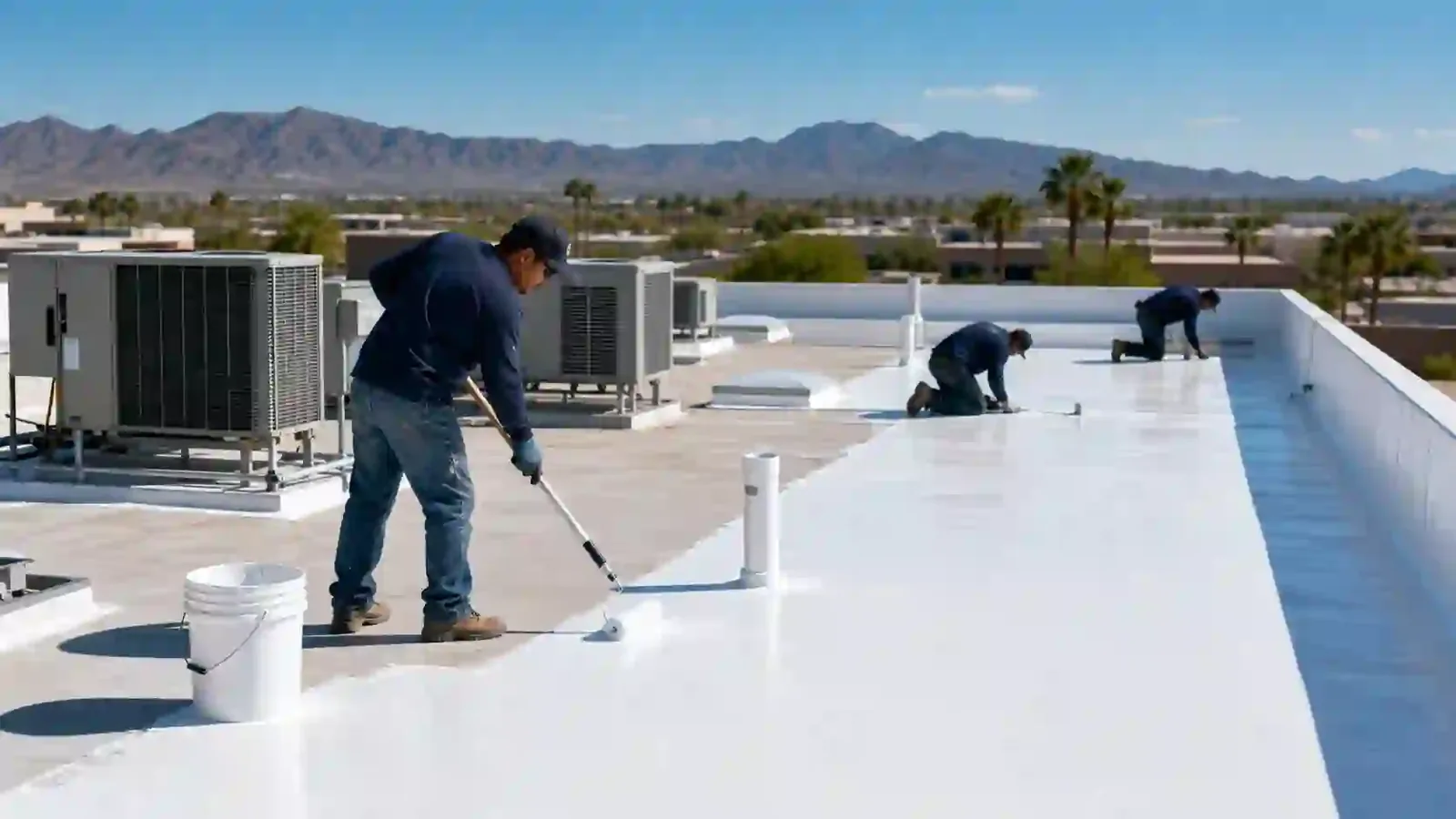
The answer depends on the existing surface. Over a smooth, clean membrane, a mechanically fastened or fully adhered system can go on a separation or cover layer. Over gravel, the stone is usually swept or a cover board is installed to give the new sheet a flat bed. Over a coated or oil-stained surface, adhesion tests are run before anything is committed, because a bond that fails in July heat does so at the seams and edges first.
Fasteners and plates must reach the structural deck through the old layers, and the pull-out values vary with the deck type. In the cooler hours of the morning we run test sections, record the results and adjust the pattern. Surface heat that tops 100 degrees at the station in July and August also shortens the working time of adhesives, so the bonded areas are sized to what the crew can close before noon.
Seams get the same care. A recover sheet is welded or bonded across laps that sit over old lap lines, and we stagger them so a weak spot below does not telegraph upward. Probing every seam after welding is part of the closeout on any membrane we place.
Will the building carry another layer?
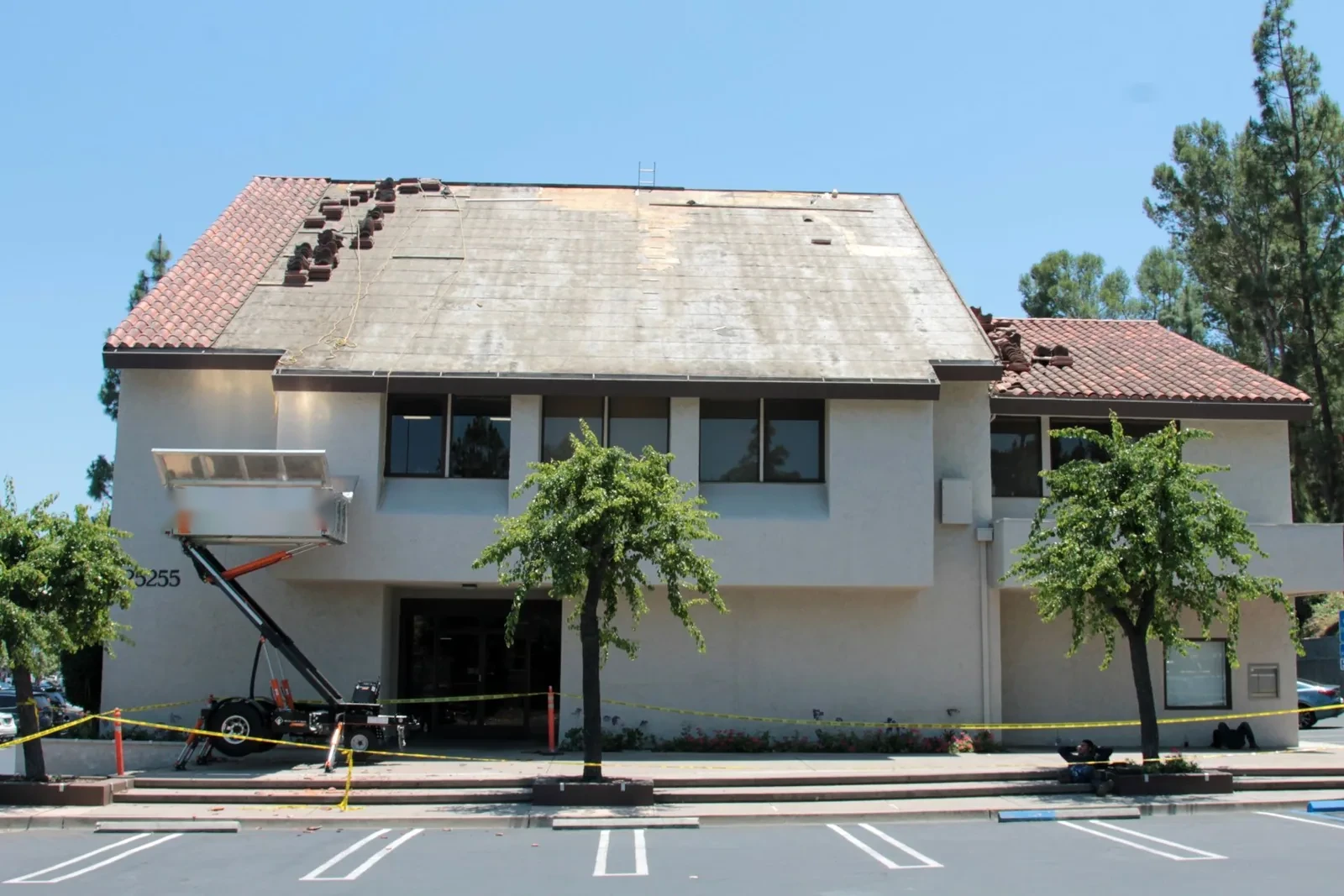
Weight is more than a code number. Rooftop units, new curbs, ballast and a second membrane all add load, and an older metal deck may already be near its limit. Much of the commercial stock went up after 1980 according to the city's Consolidated Plan, so the structures are not ancient, yet original drawings can be incomplete and equipment added later is common. We ask for structural records where they exist and note on the report where they do not.
A lightweight single-ply over a dry, intact system adds little compared with the stone it may replace, while a fluid-applied or coating approach adds almost nothing. If load is the question, a coating restoration may suit the roof better than a second membrane, and we say so when the numbers point that way.
Equipment is the part owners forget. A rooftop unit set after the original roof was installed can have a curb that was never flashed to the current membrane height, and the extra layer will bury it. We list every curb, pipe and support in the report and say which ones must be raised, so the recover scope carries those costs openly.
What still has to be rebuilt even when the field stays?
The field membrane is only part of the roof. Flashing at walls, curbs and penetrations has to be raised to meet the thicker assembly, and drains need extension rings so the new surface does not sit above the strainer. Edge metal usually comes off and goes back as new, because a recover that leaves old metal under a new sheet creates a lip where water gathers.
These are the places where a recover goes wrong. We photograph each rebuilt detail before it is closed so the file shows what is under the new sheet. If the drains are the low point, we correct the slope with tapered pieces over the old surface rather than carry the old ponding forward.
Where does a recover fit in a multi-building plan?
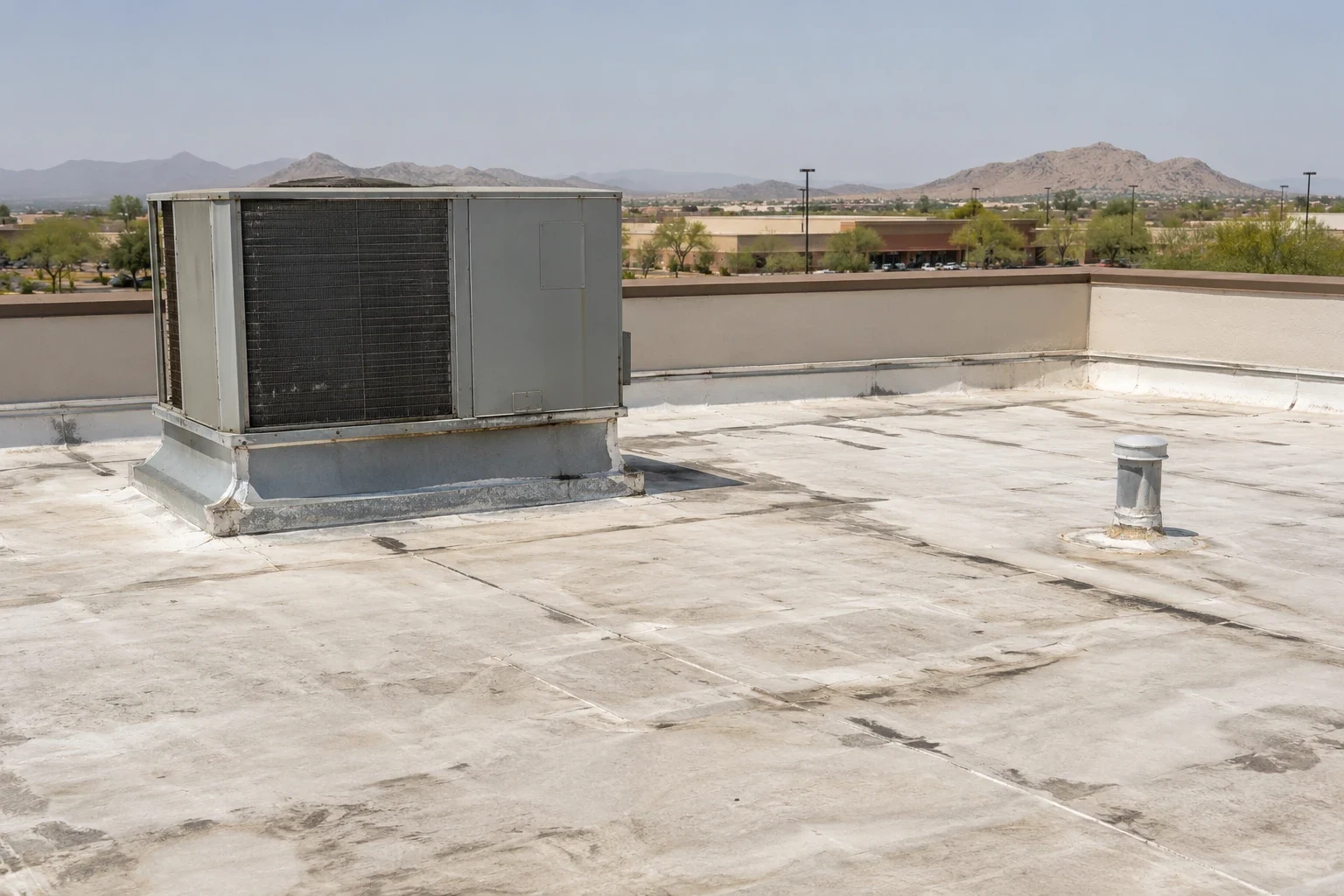
A recover suits buildings whose operations cannot absorb a tear-off. A building in St. George Industrial Park or Riverside Business Park may have a dock, an office and loading lanes that cannot go quiet for a tear-off, and a recover, with less debris and no opened deck, fits that operator. Whether a given building qualifies is still a roof-by-roof finding.
For owners with several roofs, a recover can be the right treatment on one building and the wrong one on its neighbor. Capital planning for the roof portfolio compares the options building by building so the budget reflects what each roof needs now and what it needs next, and the recover is slotted where its remaining life makes sense.
Commercial Roofing Questions
How many layers can a roof carry?
The adopted building code sets a limit on roof coverings, and the exact allowance depends on the edition in force on the permit date and on the structure under the roof. We confirm the figure with the City of St. George before pricing. A third layer is rarely worth the argument when the deck is already carrying two.
Is a recover cheaper than replacement?
Usually the upfront line is lower because disposal, deck repair and insulation removal drop out. The comparison has to include remaining life, because a recover over a tired assembly may need attention sooner than a full replacement would. We show both scopes side by side so the capital team can see the cost per year of service.
What happens if wet insulation is found after the work starts?
The survey is designed to prevent that, but cores can miss an isolated spot. If wet material appears, we cut it out, replace it with dry board and mark it on the roof plan. A unit price for that repair is set in the proposal, so a discovery does not turn into a debate.
Does a recover change the existing warranty?
It can. A manufacturer warranty on the old roof may end or be reduced when a new layer goes over it, and a new system carries its own terms. Bring the warranty paperwork and we will compare its conditions with the proposed scope before you commit.
Can a recover be done in summer?
Yes, with adjustments. Adhesive-applied systems have a short window when the surface is hot, so crews begin at first light and cover only what they can close the same morning. Mechanically fastened assemblies are less sensitive to surface heat and can run longer into the day.