
Commercial Roof Replacement in St. George, UT
Commercial Roof Replacement Overview
A tear-off in a desert summer starts before the workday does. NOAA normals for the St. George station put the mean daily high at 101.9 degrees in July and 99.9 in August, which leaves a replacement crew on a dark membrane only a narrow morning in which adhesives, welds and torch work behave. A station figure is not a roof reading, yet it tells us to build the schedule backward from the cool hours and open only what can be dried in by afternoon.
Replacement is the largest capital decision an asset manager makes about a roof. It removes the old system down to the deck, corrects what the deck and insulation are hiding, and puts a new assembly in its place. Our job on the first visit is to separate what we have confirmed from what only a tear-off will reveal, and to hand you the open questions along with the next decision.

How do you know repair has run its course?
The signal is rarely one leak. It is a pattern: seams that open again after being sealed, flashing that lifts at several curbs, ponded areas that stay wet days after a rain, and a membrane that has gone hard and chalky across its field. When the repair log shows the same roof drawing money from the maintenance budget three or four times a year, the repair boundary has been reached and a capital line is the better answer.
Moisture changes the picture most. Wet insulation does not dry out under a membrane, and it stops insulating, so a roof can look sound on top and still be failing underneath. We use an infrared and core-cut moisture survey to map the wet areas before anyone commits to scope, because a replacement priced without that map either overpays for insulation that was fine or underprices insulation that was not.
Age matters less than condition. The city's Consolidated Plan dates much of the stock after 1980; the layers on a given roof are counted by cutting a core.
What does a tear-off look like in July heat?
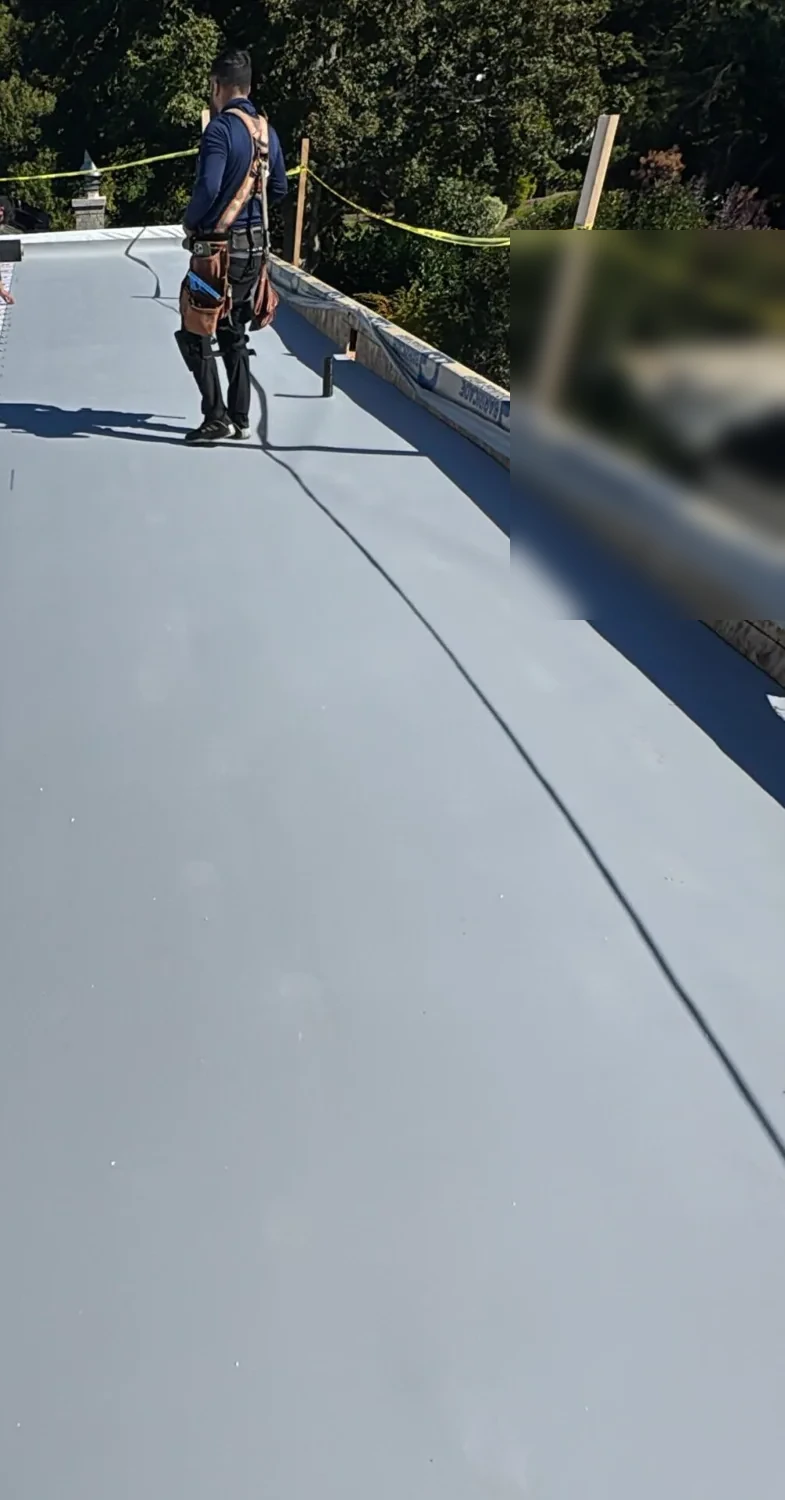
We open the roof in sections sized to what the crew can close in the same shift. Old membrane and insulation come off, the deck is inspected and any corroded, soft or damaged panels are flagged, and the new insulation and membrane follow before the day ends. We never leave a stripped deck open overnight. The June normal at the station is only 0.16 inches, which makes a surprise storm easy to forget until it arrives over an open roof.
Heat also governs the work itself. Adhesive-applied systems have a working window that shortens as the surface warms, hot-air welded seams need a clean and dry sheet, and crews need shade, water and rest cycles built into the roof plan. In the hottest weeks the crew starts at first light with material already staged.
Safe access comes first. Hoist locations, fall protection and the debris path are fixed before the first panel moves, so nothing crosses a tenant entrance.
What goes back on the deck?
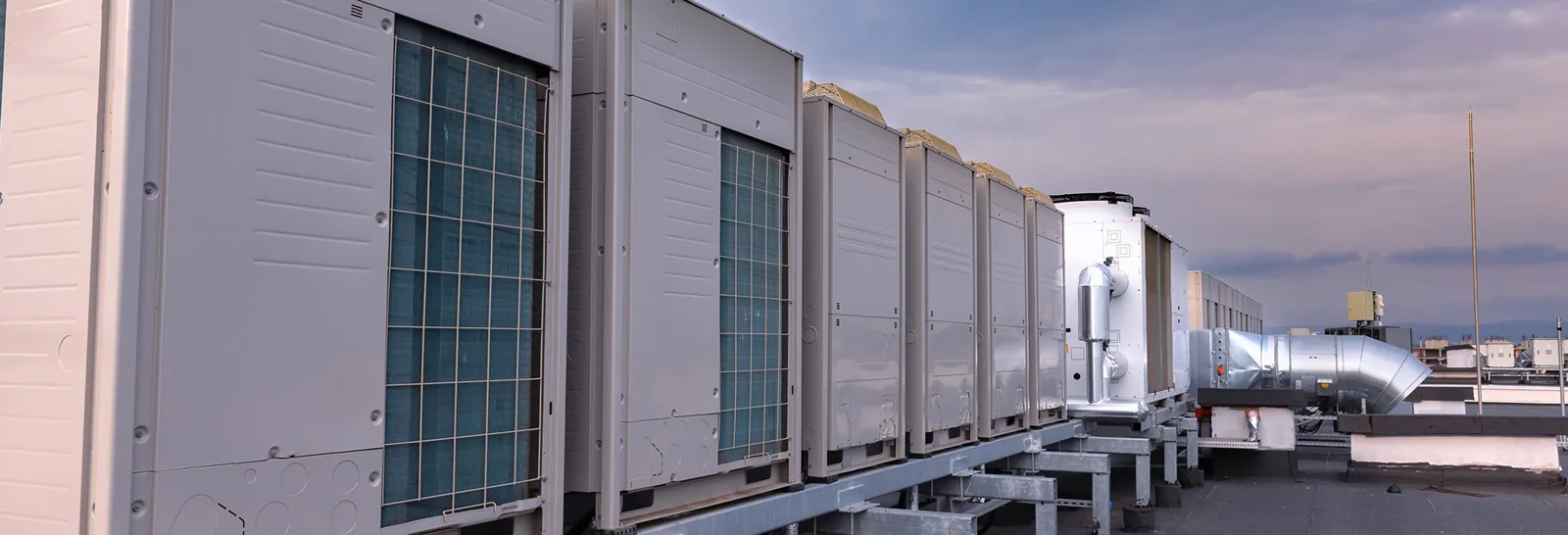
The new assembly is chosen for the building, not for the catalog. A white single-ply membrane is a frequent choice on low-slope commercial roofs because it reflects surface heat, but PVC, modified bitumen, standing seam metal or a fluid-applied system may suit a roof with heavy rooftop equipment, grease exposure or a metal deck at a steep pitch. The decision turns on the traffic the roof carries, the chemicals it sees and how the drains move water.
Insulation gets its own decision. The state building code is the 2024 International Building Code with amendments, while Utah's commercial energy listing names the 2024 IECC and ASHRAE 90.1-2022 and starts statewide enforcement on July 1, 2026. A reroof permitted after that date may carry a different insulation level than one permitted before it, so we confirm the permit-date edition with the City of St. George before pricing the insulation and cover board layers.
Cover board, tapered pieces and new crickets are priced as separate lines so you can see what each buys.
What happens at the drains, edges and curbs?
A new field membrane is only as good as the details around it. Roof drains get new sumps or rings and a clean clamping surface, scuppers are reset to the final height, and edge metal is replaced as a complete run instead of patched. Curbs under rooftop units are re-flashed to the new membrane thickness, and any unit that has to be lifted is scheduled with the mechanical contractor so the curb is never left open for a night.
Details are where roofs tend to leak first. We photograph each one before it is covered, so the file shows what is under the membrane. Drainage deserves the same attention: if the old roof held water in the same low spots for years, the replacement should correct the slope with tapered insulation rather than copy the old problem onto new material.
Can the building keep operating during the work?
The operating schedule belongs in the roof plan from day one. A warehouse tenant in Fort Pierce Industrial Park, where the zoning allows warehousing, light manufacturing and wholesaling, and an office or retail building in Tech Ridge each need a different arrangement. Dock hours, deliveries and tenant move-ins decide which side of the building is opened first.
We phase the work by roof section, protect interiors where the deck is opened, and agree in writing on the daily stop time, the debris path and who we call if conditions change. Tenant notices and interior protection follow the pattern of reroofing an occupied building. The point to settle before contract is which hours the crew can use.
What should the capital file contain before contract?
A replacement bid compares cleanly when the roof plan, the last inspection findings, the moisture map, the permit path and the access rules sit in one place. Change orders then stay limited to what is hidden under the old roof. For owners planning several buildings, roof capital planning sets the order of replacements so one roof is not rushed because another failed.
Bring the building address, the roofing records you have, the site contact and the hours the roof can be worked. We walk the roof, mark the open questions and return a scope the finance side can act on.

Commercial Roofing Questions
Does the old roof have to come off completely?
Not always. If the existing system is dry and the code and deck allow it, a recover over the top can avoid disposal and shorten the schedule. A tear-off becomes the better call when the insulation is wet, the deck is damaged or there are already layers that limit what the building will carry. The moisture survey and a few core cuts settle the question before anyone prices it.
How long does a tear-off take on a mid-size building?
Duration follows the roof sections, the weather and the tenants more than the total area. A building opened in phases takes longer than one worked in a single push, but it keeps operations running. We give a phased calendar after the walk and mark the weather-sensitive stretches.
What if the deck turns out to be damaged?
Damaged panels show up once the old system is off, and the bid carries a unit line for replacing them so the price is known in advance. We photograph each repair and mark its location on the roof plan. Owners then see exactly what was replaced and where, and the change order reflects only what the deck required.
Which permit edition should we plan around?
Whatever edition is in force on the permit date controls the submittal. The 2024 IBC is the base code, and the energy path names the 2024 IECC and ASHRAE 90.1-2022 with enforcement beginning July 1, 2026. Before the insulation line is final, we ask the City of St. George which pathway your reroof falls under.
Can replacement be scheduled around summer heat?
Heat shapes the schedule but does not stop the work. With July and August highs near 100 degrees at the NOAA station, the crew starts at first light, opens a small area and dries it in the same day. If the roof is not leaking, a start in spring or fall gives longer comfortable hours.