
Modified Bitumen Roofing in St. George, UT
Modified Bitumen Roofing Overview
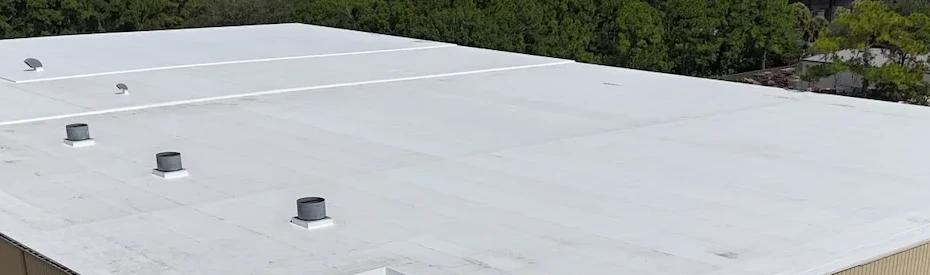
A modified bitumen roof tells its story in the granules. Where the cap sheet has lost its mineral surface, the asphalt underneath is taking the full St. George sun, and the NOAA station's mean July high of 101.9 degrees and August's 99.9 give that exposure plenty of hours. We start a modified bitumen visit by reading the cap sheet, the laps and the places where foot traffic has scuffed the surface, because those marks show where the roof is aging fastest.
The system is a reinforced, multi-ply asphalt membrane, installed with torch, hot asphalt, cold adhesive or self-adhering sheets depending on the specification. Which one is on the roof decides what repair will bond. Our visit ends with the open questions and the next decision for the asset manager. A commercial roof inspection starts the record.
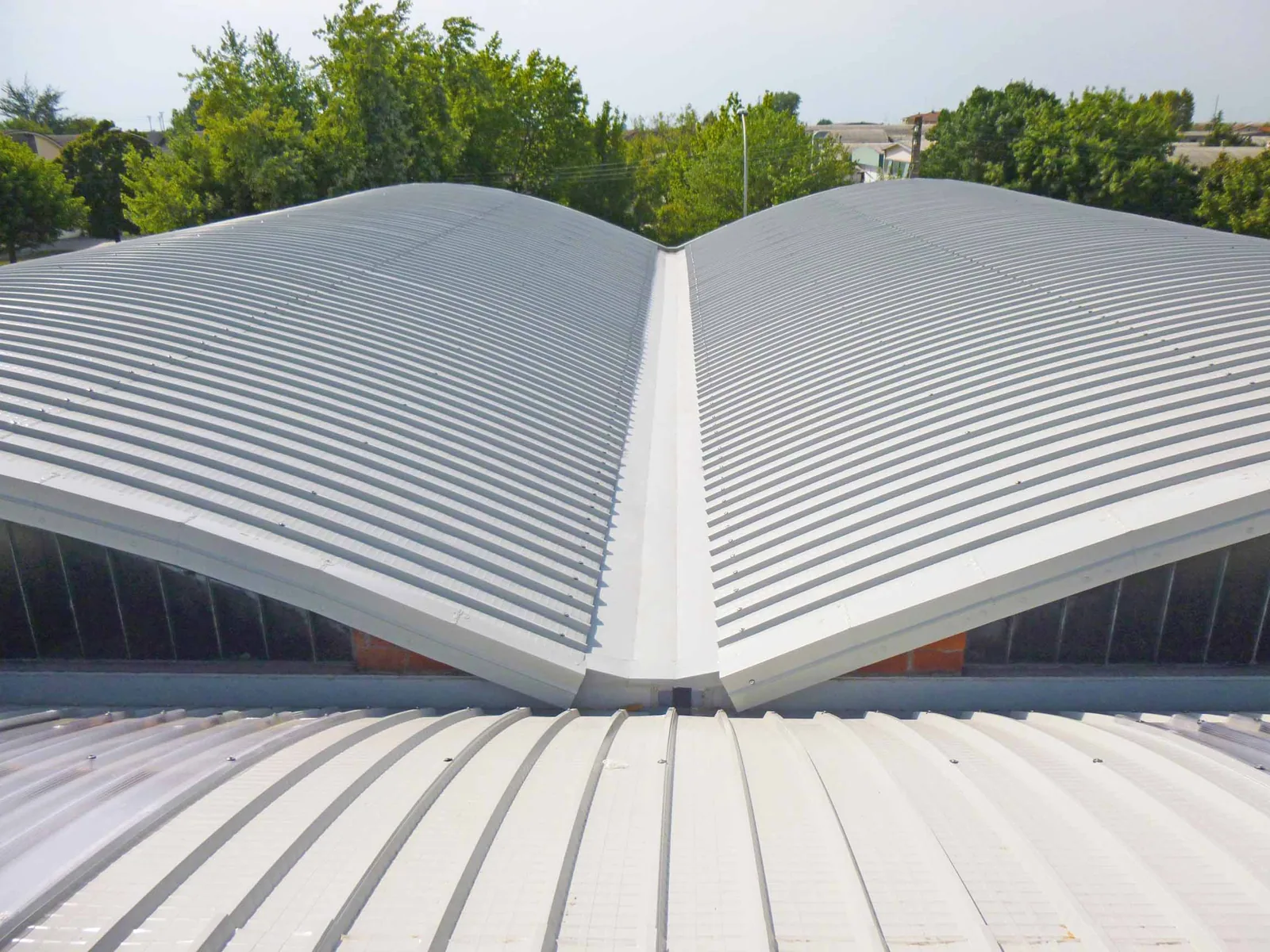
What is actually under the cap sheet?
Usually a base sheet, sometimes a second ply, over insulation and a deck. The plies may be torched together, mopped in hot asphalt, set in cold adhesive or fastened, and the cap sheet carries the granule surface that shields the asphalt from ultraviolet light. A blister or split has to be read against the layers beneath it; a surface nick and a delaminated ply look alike from above and need different repairs.
We probe the visible condition, note where the membrane terminates at walls and curbs and check whether earlier patches bridged a moving joint or trapped water. Where the records are missing, a small core shows the number of plies and what the insulation is doing. Next to built-up roofing, which also stacks layers, modified bitumen repairs use different materials, so the identification step cannot be skipped.
Where does a modified bitumen roof open first?
At laps, flashings and the places where the sheet changes direction. A side lap that has lifted shows a dark line of exposed asphalt. A split beside a curb usually follows movement the sheet could not absorb. A patch that curls at its edge failed at its bond, not in its material, and the fix starts with the cleaning, not the patch.
We check whether each opening is isolated, whether water has reached the insulation and whether the sheet around it stays firmly attached. A local repair makes sense when the adjoining membrane is sound. Several openings in different zones, or wet board under the field, point to a larger scope. The repair we write says which plies are cut, how the new patch is reinforced and how its edges are sealed.
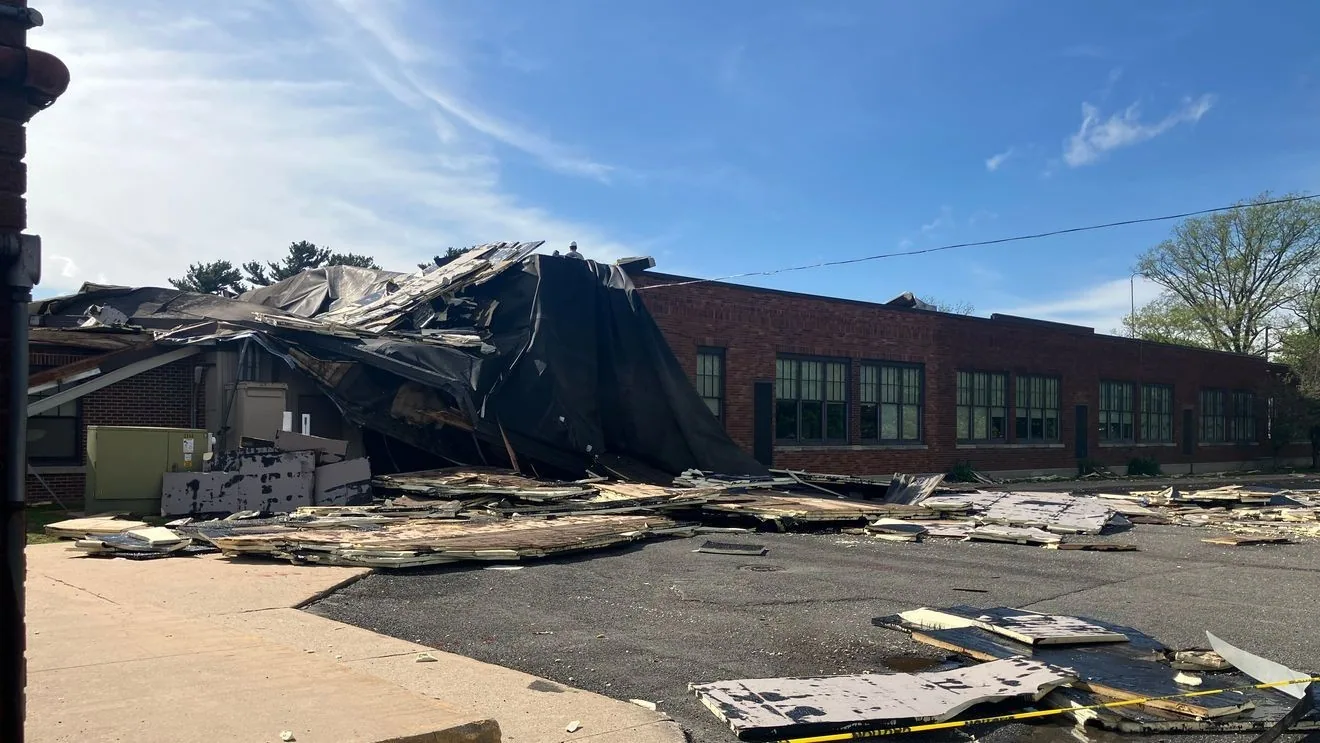
How do heat and foot traffic wear the surface?
Asphalt softens as the surface warms, and a surface that reaches high temperatures in July scuffs under boot heels and the feet of service technicians. Walkways that nobody planned form between the roof hatch and the units, and the granules wear away along them first. A walkway pad on the regular path is cheaper than the patch that follows each service call, and a pad laid over the worn strip protects granules that are still there.
Heat-applied work adds its own rules. A torch on a roof needs a hot-work permit, a fire watch and a look at what sits under the deck, so we confirm the building's requirements before anything is lit. Cold-applied and self-adhered systems avoid the open flame, and they behave differently on a hot sheet, so the start time moves to first light and staged rolls stay in shade.
What does limited rain do to a modified bitumen roof?
Yearly precipitation at the station is 9.31 inches, February brings 1.38 of it and June 0.16, so a roof can go weeks dry. Dust gathers at bowls and scuppers during those weeks, and the first big storm meets drains that are partly blocked. Ponded water on an asphalt membrane softens the surface and shortens the life of any lap below it.
The water route gets traced from the high point to every outlet, and each low spot that holds water past a day or two is marked. A drain and scupper correction belongs in the scope when it is part of the problem, but it never substitutes for repairing the membrane. Tapered insulation can fix the low spots at reroof time.
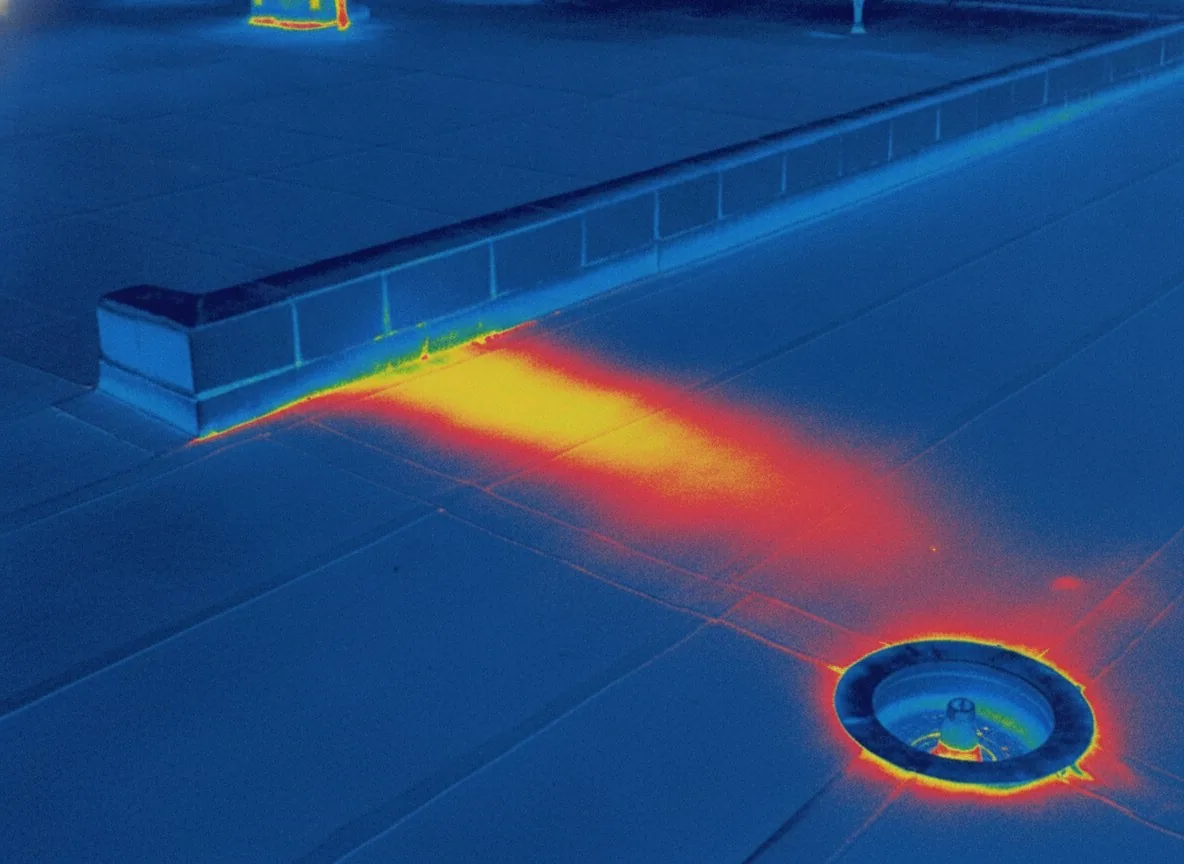
What has to line up before installation?
The product and its attachment method, the condition of the substrate, the tie-in details and the disposal plan. We mark penetrations and drains on the roof plan and review each rooftop curb before production starts, since equipment curb details decide how the flashing is built. Where an old roof carries several generations of repair, a few selective openings answer what the surface cannot.
On an occupied building, work zones, noisy steps and delivery routes go into the schedule. A business in St. George Industrial Park, which the city's features map lists as a named industrial area, may need dock lanes kept clear; a tenant in Riverside Business Park may need quiet hours. The roof plan and the operating schedule decide, not the district name.
Repair, recover or remove?
Repair is the narrower choice when the defect is limited and the surrounding assembly is dry and stable. A recover reduces tear-off, but only when the layers, attachment and moisture condition can carry another system. Replacement wins when deterioration is widespread, when wet insulation is present or when another patch would leave the same failure pattern in place.
Cost and duration move with removal quantity, insulation replacement, edge work, penetrations, crane or delivery access and the number of separate work areas. For a roof that is sound and only worn at the surface, a silicone coating can compete with the other options once the moisture map says the insulation is dry. Roof replacement carries a code check: the City of St. George tells us which edition of Utah's amended 2024 International Building Code the permit date triggers.
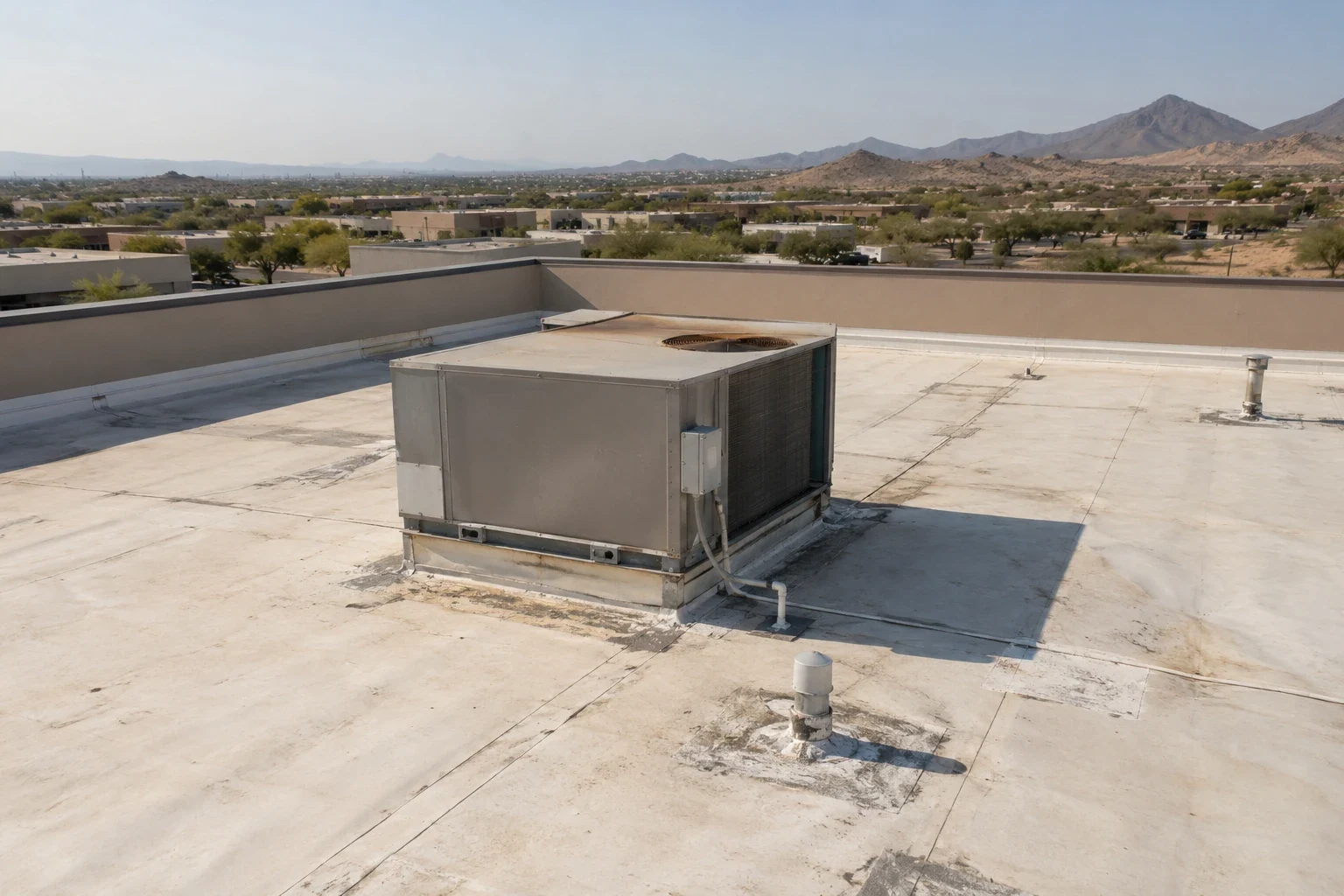
What should the roof file show afterward?
The scope completed, the products and assembly information, detail photographs, the open conditions and the maintenance items still waiting. That file lets the next facilities review tell this repair from older patches, and it gives the asset manager a basis for budgeting a larger section if conditions change. We add the drain-cleaning dates and the next inspection item, so a maintenance visit starts with a list instead of a blank page, and the repair limits shown on the plan stay fixed when staff change. Send the roof plan, prior repair records, access rules and operating window, and we will inspect the assembly and separate an immediate repair from the next capital decision.
Commercial Roofing Questions
Can a modified bitumen roof be repaired without replacing the section?
Yes, when the failure is local and the surrounding sheet, substrate and attachment are sound. We check for moisture first, then reinforce the repair to stable material.
What does a blister mean?
Trapped air or moisture between plies. Its size does not show how far the condition runs, so we check the bond, nearby laps and any soft board before leaving, repairing or removing it.
Can torch-applied work happen in a St. George summer?
With a hot-work permit and a fire watch in place. The crew starts early, and the permit, the deck below and the forecast are confirmed before any flame is lit.
How do we choose between a patch and a recover?
The existing layers, the attachment, the moisture evidence and the edge heights decide. If board is wet or plies are separating widely, removal is the clearer path.
What records should an owner keep?
The marked work area, photographs, materials, repair limits and open items. Those let the next inspection separate new work from old patches.