
Infrared and Core-Cut Moisture Surveys in St. George, UT
Infrared and Core-Cut Moisture Surveys Overview
Wet insulation is invisible from the top of a roof. A membrane can look clean, taut and intact while the board beneath it has absorbed water for seasons, lost its insulating value and added weight to the deck. In a place that receives 9.31 inches of precipitation a year by station normals, the water often arrives in a few events, and a small opening can pass it into the roof assembly long before an interior stain gives the leak away.
A moisture survey makes that hidden condition visible. We scan the roof with an infrared camera after the sun goes down, confirm the readings with core cuts and moisture meters, and draw a map that tells the asset manager how much of the roof is wet, where it is and what that means for the next decision.
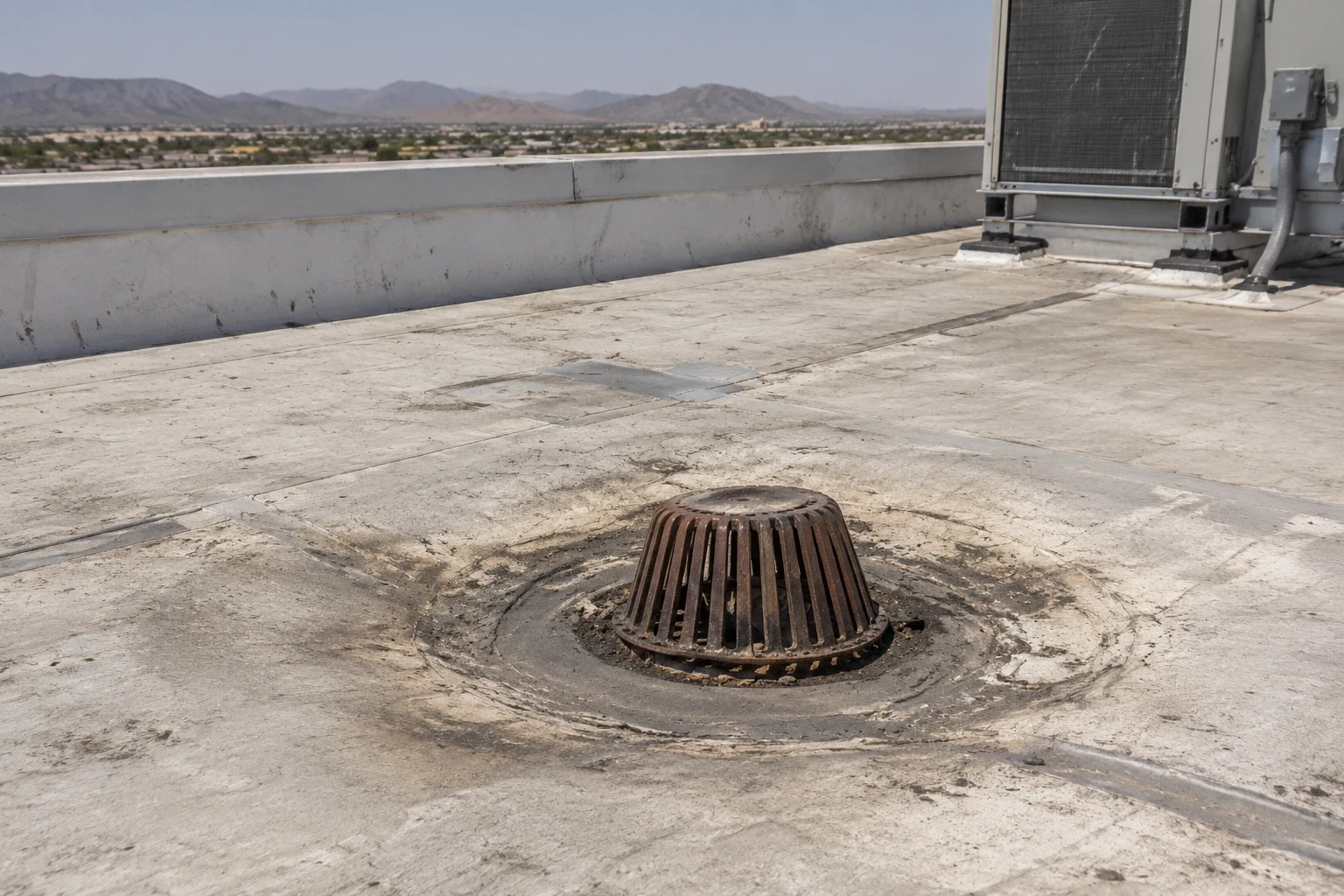
How does an infrared scan find wet insulation?
Wet material holds heat longer than dry material. After a sunny day, the whole roof absorbs heat. As the evening cools, dry areas release it quickly while saturated insulation keeps it, and the camera sees that difference as a warmer patch. The effect is strongest on a clear, calm evening after a hot day.
The scan is a screen, not a verdict. Warm patches can also come from thicker insulation, ductwork below the deck, a ballast layer or a patched area with different material. Cool patches can come from shade or wind. For that reason every anomaly is checked by another method before it is called wet, and the report states which areas were confirmed and which remain open questions.
Safe access matters on an evening scan. The crew walks the roof in low light, so we confirm lighting, walking routes and fall protection with the building contact in advance, and we mark edges and skylights before the sun goes down. Rooftop equipment that runs at night, such as exhaust fans and heaters, is noted so its warm exhaust is not mistaken for wet insulation.
When is the best window for the scan?
After a summer day the roof holds a lot of stored heat, and with July and August mean highs near 102 and 100 degrees in the station normals, the thermal signal after dusk is strong. Summer is therefore a productive season for scanning, and June, with a normal of only 0.16 inches, lowers the chance that surface moisture confuses the readings.
February carries the highest monthly rain normal at the station, 1.38 inches. A wet surface, a recent storm or a cold clear night can mask or mimic the thermal pattern, so we wait for a dry stretch before scanning. The best schedule is the one that follows a dry day and a warm afternoon, and we set the evening visit with the building contact after checking the forecast.
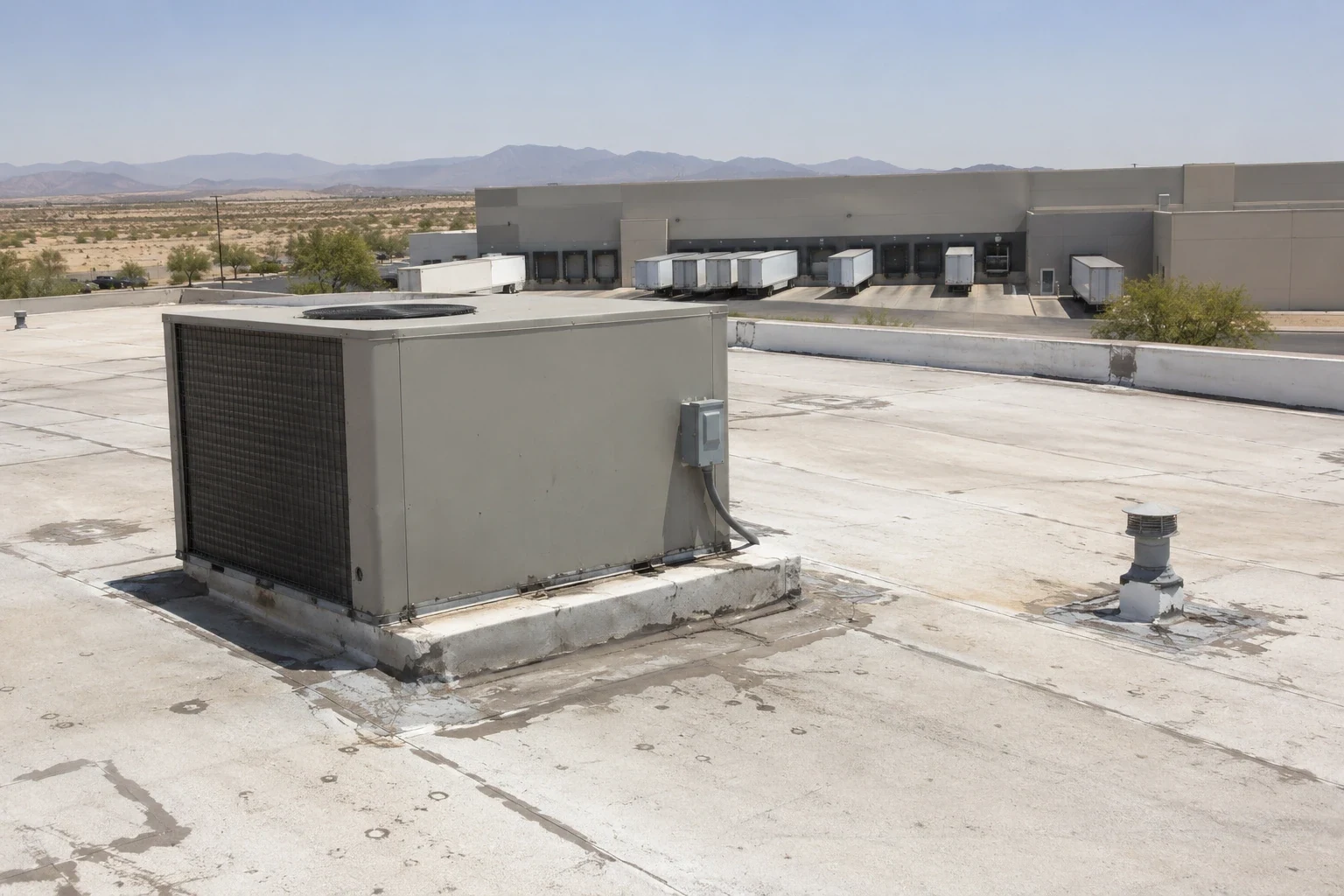
What do core cuts add to the scan?
A core is a small round sample cut through the roof to the deck. It shows the layers, their thickness, their condition and whether the insulation is wet, damp or dry. It also proves what the roof is made of, which matters because records are often missing and older roofs may carry multiple layers.
We choose core locations from the scan: a few in suspect areas and a few in areas that appear dry, so the map has both positive and negative evidence. Each hole is patched and sealed the same day with a method matched to the membrane. A moisture meter on the cut sample and on the surface supports the reading. Together, the scan and cores give a map in which the wet boundary is drawn from physical evidence.
The core sample also tells us something the scan cannot: whether the insulation is a single layer or several, whether a vapor retarder is present and whether the deck beneath is sound. That information shapes the repair scope and, for a replacement, the demolition plan. A deck that has been wet for years may need panels replaced, and learning that from a core costs far less than finding it on the second day of a tear-off.
What does the map change about the repair or replacement decision?
A wet area that is small and isolated can be cut out and replaced, and the surrounding roof left alone. Wet material across a wide area means the insulation, and likely the membrane above it, has reached the end of its useful life, and the owner should compare repair costs with replacement.
The map also answers a question that comes before a recover: if the insulation is dry, a recover over the existing roof may be available. If it is not, a recover would trap moisture and should not go forward. Having the map before bidding means contractors price from the same facts, and change orders tied to hidden wet insulation are less likely.
The survey is a record too. A dated scan with photographs shows the roof's condition at a point in time, which helps in a lease dispute, a sale or an insurance question. A follow-up scan a year later shows whether a wet area has grown, so a managed roof can be watched instead of guessed at.
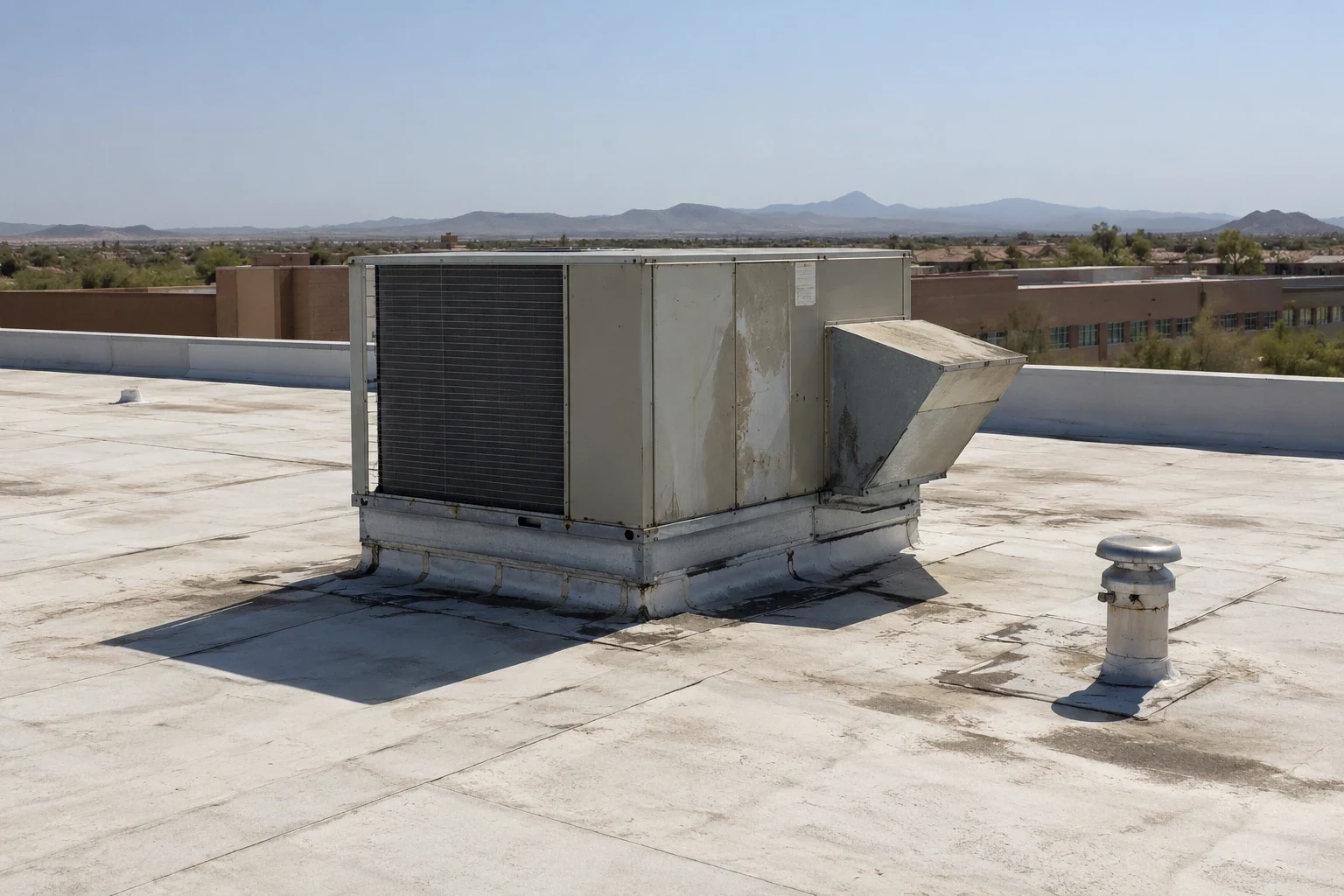
Which buildings are worth scanning first?
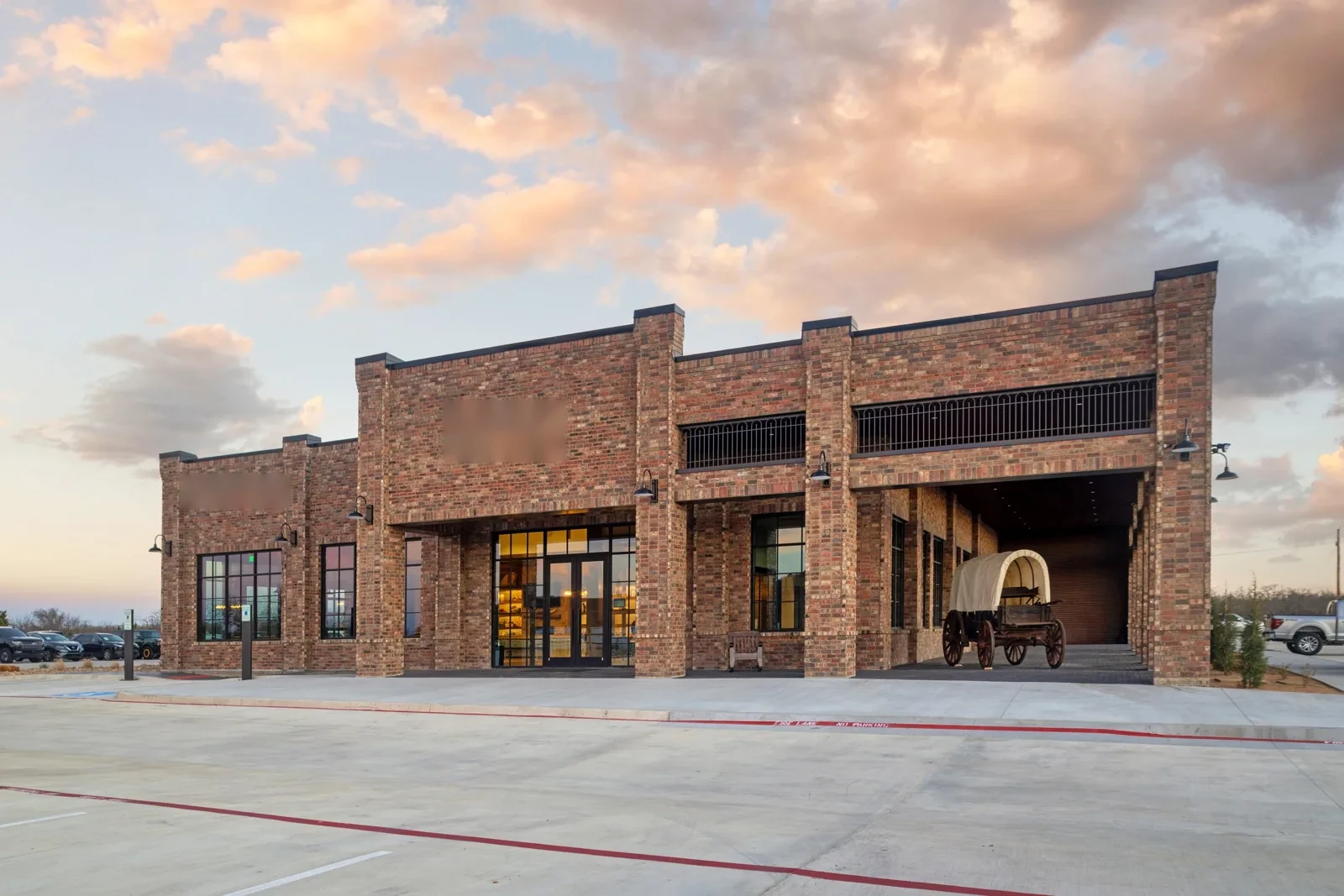
Start with roofs that have a history of leaks, ponding or repeated patches, and with any roof being considered for a recover or a sale. A scan in St. George Industrial Park or Tech Ridge tells us which assembly each building actually has, since neither name settles.
A site with more than one building can hold roofs of different ages and different insulation, and a 1980 construction date for much of the city's commercial stock does not say which is which. For portfolios, scanning in a planned sequence produces a comparable record for each building, which supports capital planning. A survey also pairs well with aerial imaging when the roof is large.
Reports go to the people who will use them. We write the findings so a finance team can read the summary and a roofing contractor can price from the map. The summary states plain facts: where the wet areas are, how many cores were taken, what each showed and what the recommended next step is.
Commercial Roofing Questions
Does a moisture survey damage the roof?
The scan touches nothing. Cores are small and are patched and sealed with materials matched to the membrane before we leave. We keep the number low, place them with the scan results and photograph each repair so the roof file shows where they are.
Why scan at night instead of in daylight?
Daytime sun heats everything on the roof and hides the difference between wet and dry insulation. After sunset, dry areas cool faster and wet ones stay warm, which the camera can detect. The evening window is when the signal is clearest, so we schedule for it.
Can every roof type be scanned?
Not equally. Roofs with ballast, a heavy coating or a reflective surface can mask the signal, and metal roofs generally do not hold moisture in a way the camera can detect. We tell you at the outset whether infrared suits your roof or whether another method works better.
What does the survey cost compared with a new roof?
The price depends on roof area, access and the number of cores. It is small next to a replacement and can prevent paying for the wrong scope. We quote after learning the building size and the decision the owner faces.
How long does wet insulation take to dry out?
Under a sealed membrane it often does not, because the vapor has no easy way out. Trapped water can remain for years while it degrades the board and the deck. We recommend removing wet material rather than waiting for it to dry.