
Roof Capital Planning in St. George, UT
Roof Capital Planning Overview
A roof budget in St. George, UT starts with how the roofs will age. Only 1.2 inches of snow falls in a normal year at the St. George station, so snow load rarely forces the timing here. Heat and ultraviolet exposure do the aging instead, and they work quietly on the surface until a seam opens or a flashing lets go. The capital question is when the cost of repairs overtakes the cost of a new system, and what that date does to the operating schedule.
Roof capital planning answers that with evidence. We inspect, test where the roof calls for it and set each building on a timeline with defined options. The asset manager sees which roofs can wait, which need repair now and which need a replacement slot in the next budget cycle.
What goes into a roof budget number?
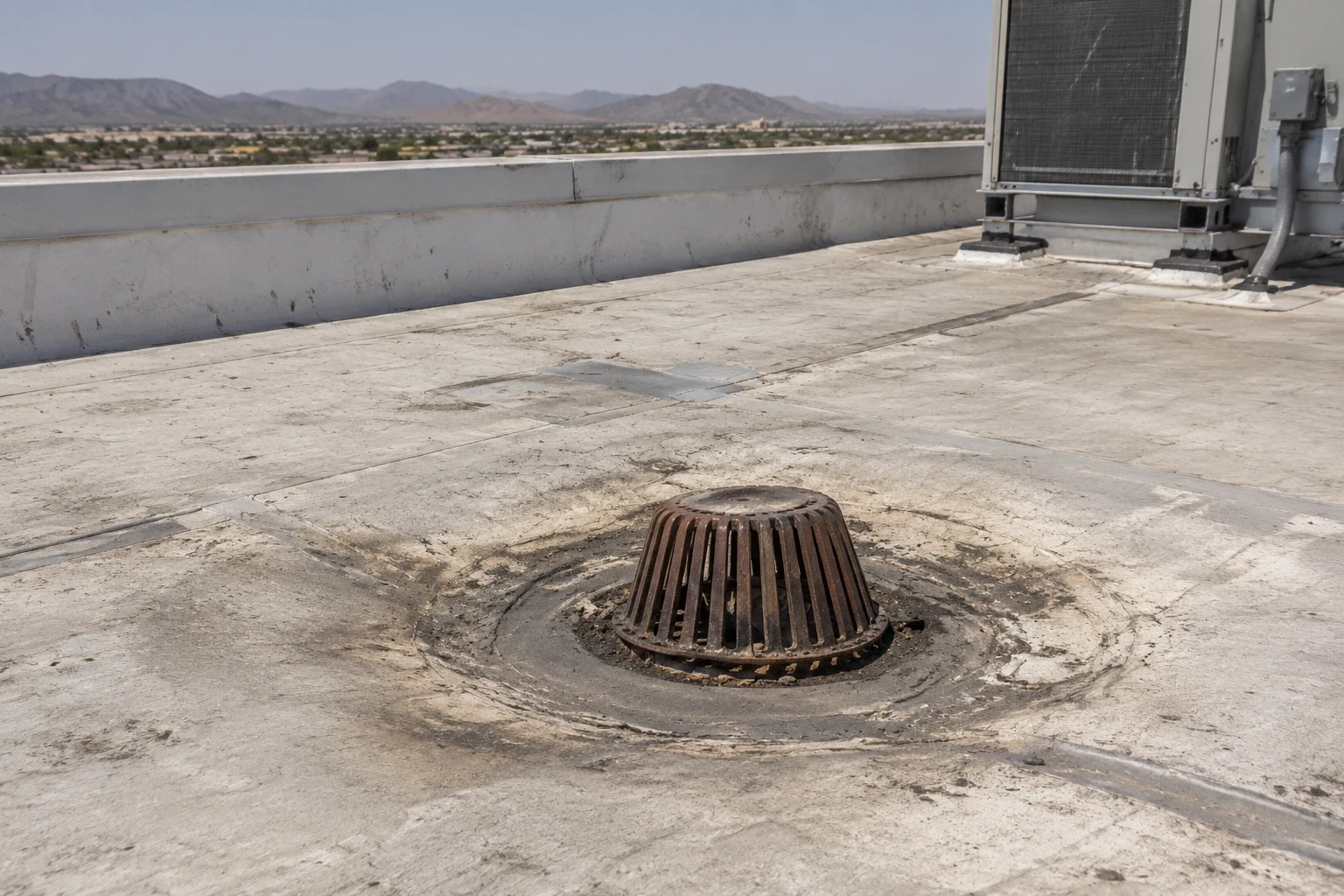
Five inputs drive the figure: the roof area, the existing layers, the insulation depth the energy code will ask for, the access equipment and the operating limits on the work. A flat field with clear access prices differently from the same area crowded with curbs, skylights and rooftop units. We list each item by roof zone so the owner can see which one moves the number.
Disposal and deck condition are the two items most often left as allowances. If the existing assembly has several layers, a test opening confirms what has to come out and whether the deck is sound. The estimate then carries a measured condition in place of a guess. Without that opening, a plan has to hold a larger contingency, and the owner pays for uncertainty up front.
Timing of the work also enters the number. A crew that must start before sunrise to avoid surface heat, or work around receiving hours, covers less roof per day than a crew with open access. Fewer square feet per shift means more shifts, and equipment stays on site longer. We state the assumed work window beside the price, so a change in the window shows up as a change in the estimate and nobody is surprised at the invoice.
How does desert heat change service-life estimates?
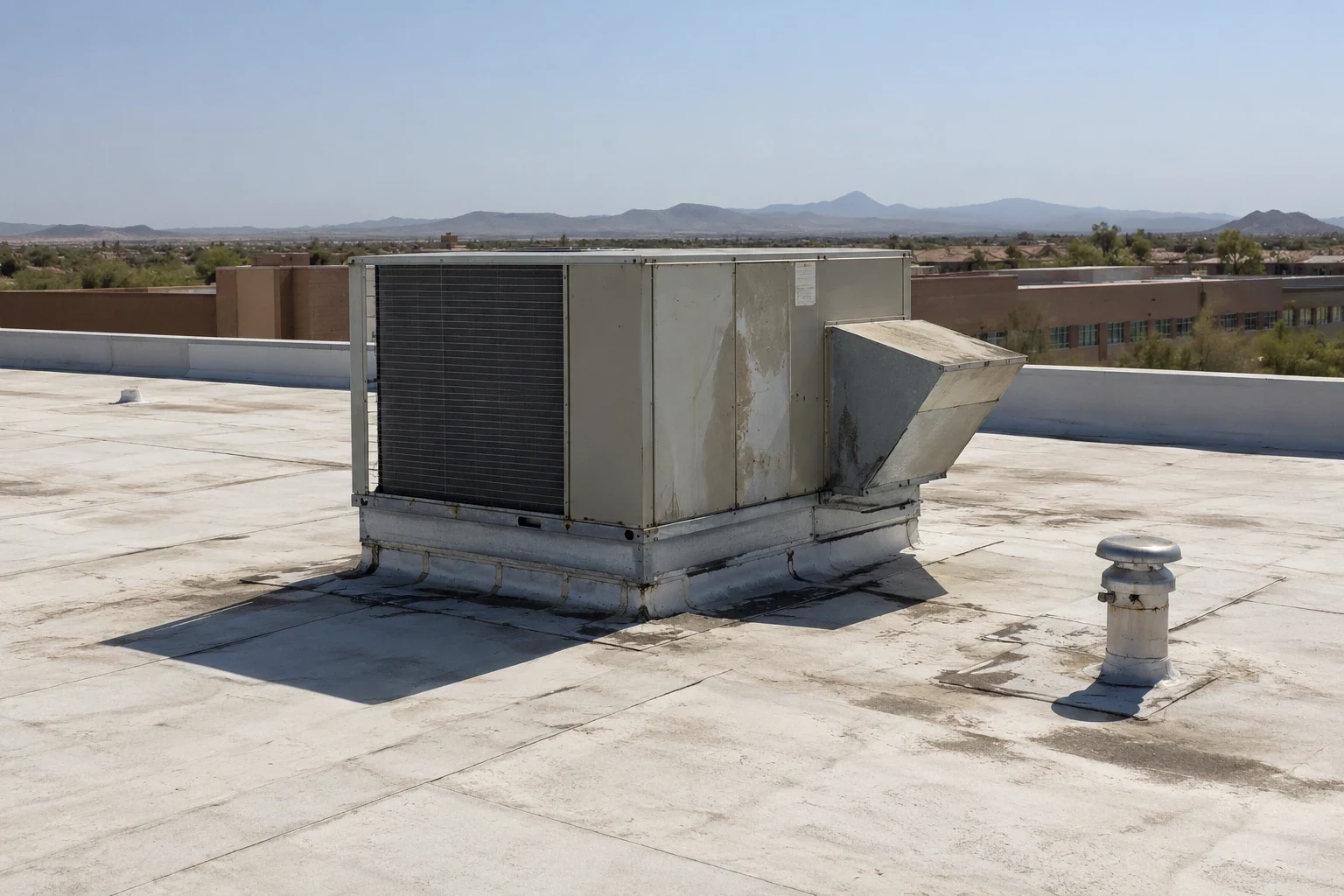
Summer runs long and hot at the St. George station, where July highs average 101.9°F and August highs 99.9°F. Roofing materials that sit under that exposure for decades lose flexibility and surface protection, and reflective or coated surfaces weather differently from dark ones. We do not read a station normal as the temperature at any roof. We look at the roof itself: chalking, shrinkage at the edges, brittle sealant, open laps and exposed reinforcement.
Those signs feed the service-life estimate. A sound membrane with surface wear may have years left under a coating restoration, while a roof with shrinkage and open seams has used its margin. Putting the condition next to the age gives the owner a defensible range instead of a single year, and the range tightens as readings and photographs accumulate. The asset file carries those readings from one visit to the next, so an estimate written in year three does not start over from nothing.
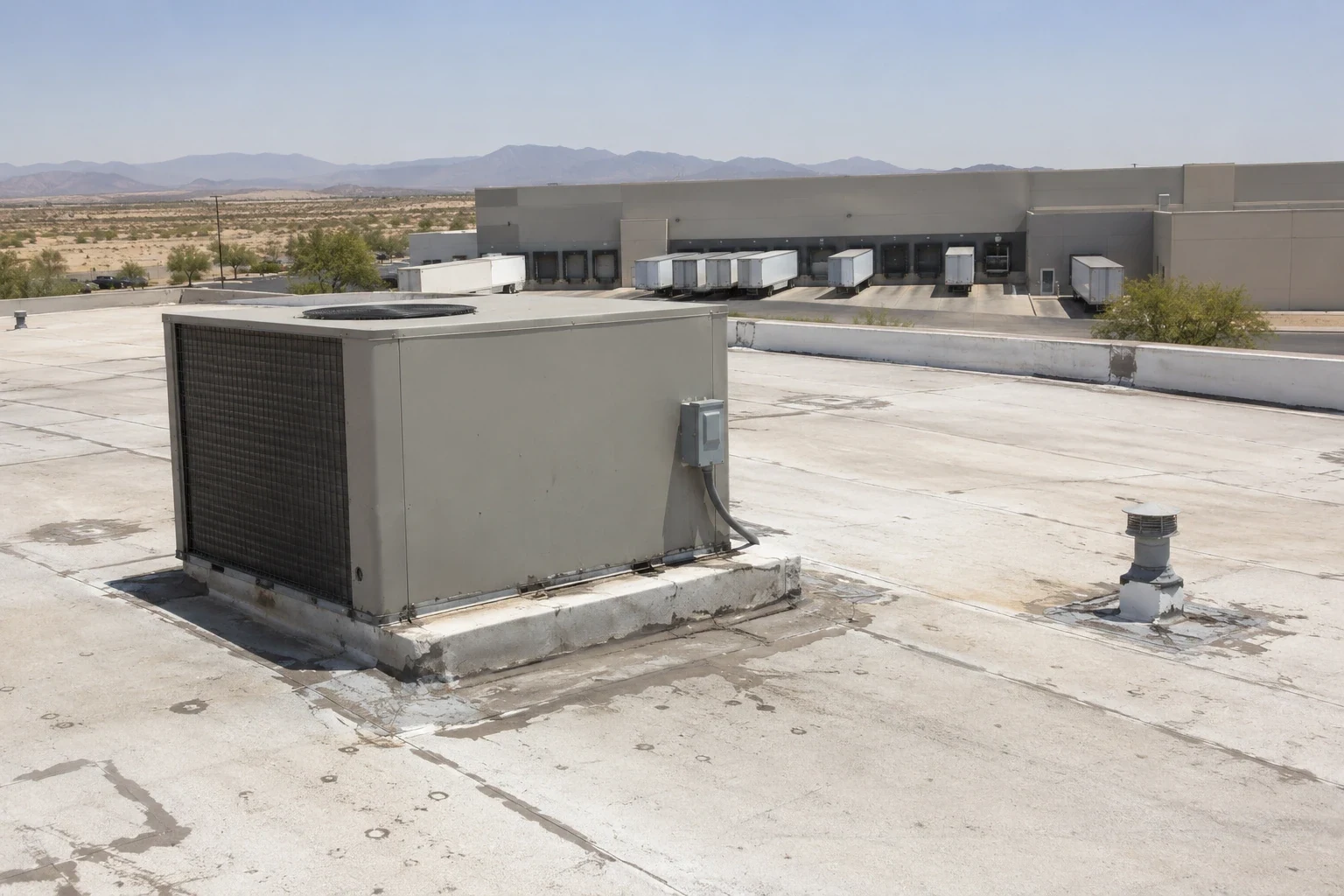
Edges and penetrations age on their own schedule. Metal flashings expand and contract through the daily swing of a desert climate, and sealants at those joints lose elasticity before the field membrane does. A plan that treats the roof as a single age misses the case where the field has years left and the details do not. We price detail work as a separate line, which sometimes lets an owner stretch a sound field with a rebuilt perimeter.
Repair, recover or replace: how do they compare in a budget?
Each option carries a different mix of cost, disruption and remaining life. A repair is the least expensive today and leaves the roof's age unchanged. A recover keeps the existing layers as a base and adds a new membrane, but it needs dry insulation, enough deck capacity and drains that can handle the added height. A replacement removes the old system and resets the clock.
We show all three where the roof allows them, with the condition that would rule each out. A recover over the existing roof is not offered over wet insulation. A full replacement is priced by zone so the owner can phase it. The budget then compares the options on the same known conditions, and the choice follows the building's remaining use, not the lowest first cost. A building expected to change hands or tenants in a few years may justify a different path from one the owner will hold for decades, and the plan records that assumption so a later reader knows why a path was chosen.
What do code and energy rules add to the number?
The state construction code in force adopts the 2024 International Building Code, amended at state and local levels. On energy, the listing points to the 2024 IECC and ASHRAE 90.1-2022, mandatory statewide from July 1, 2026. For a reroof, that can affect insulation thickness, air barrier details and documentation, depending on scope and permit date.
A capital plan should name which edition and pathway the project is expected to follow, and who confirms it with the City of St. George. If a roof is replaced in phases, the early phases and the late ones may fall under different rules. We flag that in the schedule, so a budget written this year does not meet a surprise requirement in the next one. The condition report is the evidence the permit file starts from.
How are phases set across several buildings?
The city's consolidated plan calls for recruiting targeted industry clusters and developing shovel-ready sites, speculative buildings and redevelopment opportunities. A portfolio in a city with that goal can change as new buildings are added. A capital plan holds a rolling five-year view, with each roof's status updated after every visit.
Phasing follows risk and schedule. Roofs over sensitive contents or production move earlier. Roofs with dry insulation and minor defects move later. We also group work by location, since a crew mobilizing in St. George Industrial Park or along River Road can handle several nearby roofs in one trip. Grouping saves mobilization, but only where the conditions justify the order. The plan states the reason for each placement, and it names the date by which a deferred roof must be reviewed again.
Commercial Roofing Questions
How far ahead should a plan look?
Five years is a working horizon for most portfolios. Roofs near the end of life get firm dates, and the rest get ranges. We revisit the plan after each inspection.
Can a plan work without roof cores?
Partly. Surface observation and infrared testing give a good map of risk. Cores or test openings turn the map into measured layers and moisture. Where a replacement is near, we recommend them.
Does a recover always cost less than a replacement?
Not always. A recover saves tear-off and disposal, but it adds height at edges, curbs and drains, and it carries the old assembly forward. If the existing roof fails the checks, replacement is the lower lifetime cost.
What if the budget cannot cover the whole roof?
Phase it by zone. We rank the zones, set each as its own scope and keep the transitions watertight between phases. The owner funds the highest-risk zone first.
Who signs off on the schedule?
The owner or asset manager. We provide the options, conditions and operating windows, and the plan records the decision and its date.