
Flashing Failure Repair in St. George, UT
Flashing Failure Repair Overview
A fresh bead of sealant on a counterflashing usually means the detail has been repaired once already, and the next question is why it opened again. Flashing is where a roof meets everything that is not roof: a parapet wall, a rooftop unit curb, a pipe, a skylight frame. Those joints move differently from the membrane, and in St. George, UT the summer surface heat, with July highs averaging close to 102 degrees, works the joints hard, and a gap that looks small on a cool morning can be wide open by afternoon. We start with the places where water entered, then work backward to the cause.
The visit produces a short list of the flashing details on the roof, each marked as sound, worn but holding, or open. The asset manager receives the repair scope for the open items and a mark beside each detail that will need rebuilding rather than resealing, so a sealant tube is not mistaken for a solution.

Which flashing details fail first?
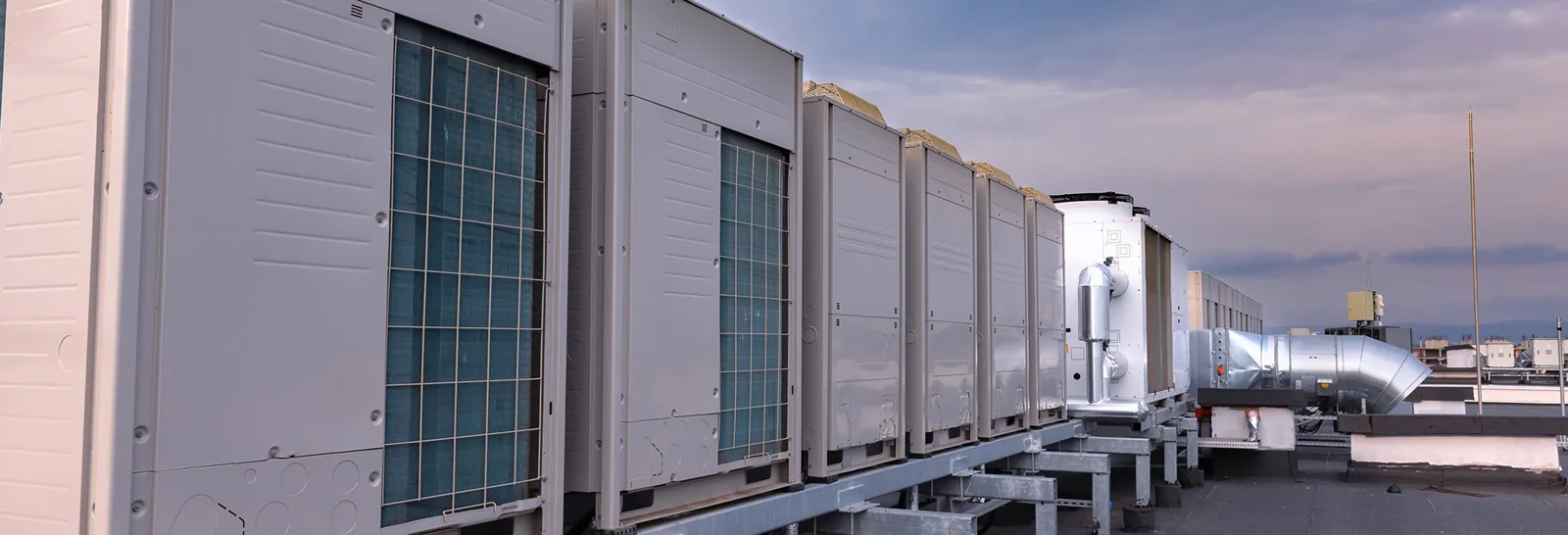
Curb corners, pipe boots, parapet terminations and the places where two membranes meet are the usual suspects. A curb has four corners, and each has a fold or a patch that can split as the unit above vibrates and the membrane expands in the sun. A pipe boot is a rubber or metal collar that dries and cracks. A parapet termination can lose its bar or sealant and let water run behind the membrane. Expansion and contraction are the shared cause: a roof surface that swings through a wide daily temperature range pulls on every fixed point, and the fixed points are the flashings.
We look at the height of each flashing above the roof surface, since a base flashing that sits too low is vulnerable to ponding. We inspect fastener lines, counterflashing laps and the adhesion of the membrane to the vertical surface. Skylight and penetration flashing receives the same checklist as the curbs, because frames and pipes move with the building and the roof in different amounts.
Is the water coming in at the flashing or somewhere else?
A ceiling stain near a wall often points at the flashing, but not always. Water can come in at a high point and run along the deck, or enter at a seam and show up under a curb. We use a systematic approach: trace the interior stain upward, inspect the likely entry, and check nearby seams and drains before we assign cause. Where it helps, a controlled water test on a single detail, with the owner's approval, isolates the entry.
Photographs show the condition before cleaning and after, with a marker for scale. Failed sealant, a pulled-back membrane edge, a rusted termination and a missing fastener each tell a different story, and the record states which we found. Where moisture may have reached insulation, an infrared moisture survey adds evidence, and anything we did not test stays marked as open.
Can sealant fix it, or does the detail need rebuilding?
Sealant has a place. It closes a small gap at a counterflashing, covers a fastener head and renews a joint that is otherwise sound. It does not restore a base flashing that has pulled away from the wall or a membrane that has shrunk back from a curb. In those cases the flashing is cut back to sound material and rebuilt with a compatible membrane, reinforced corners and a mechanical termination.
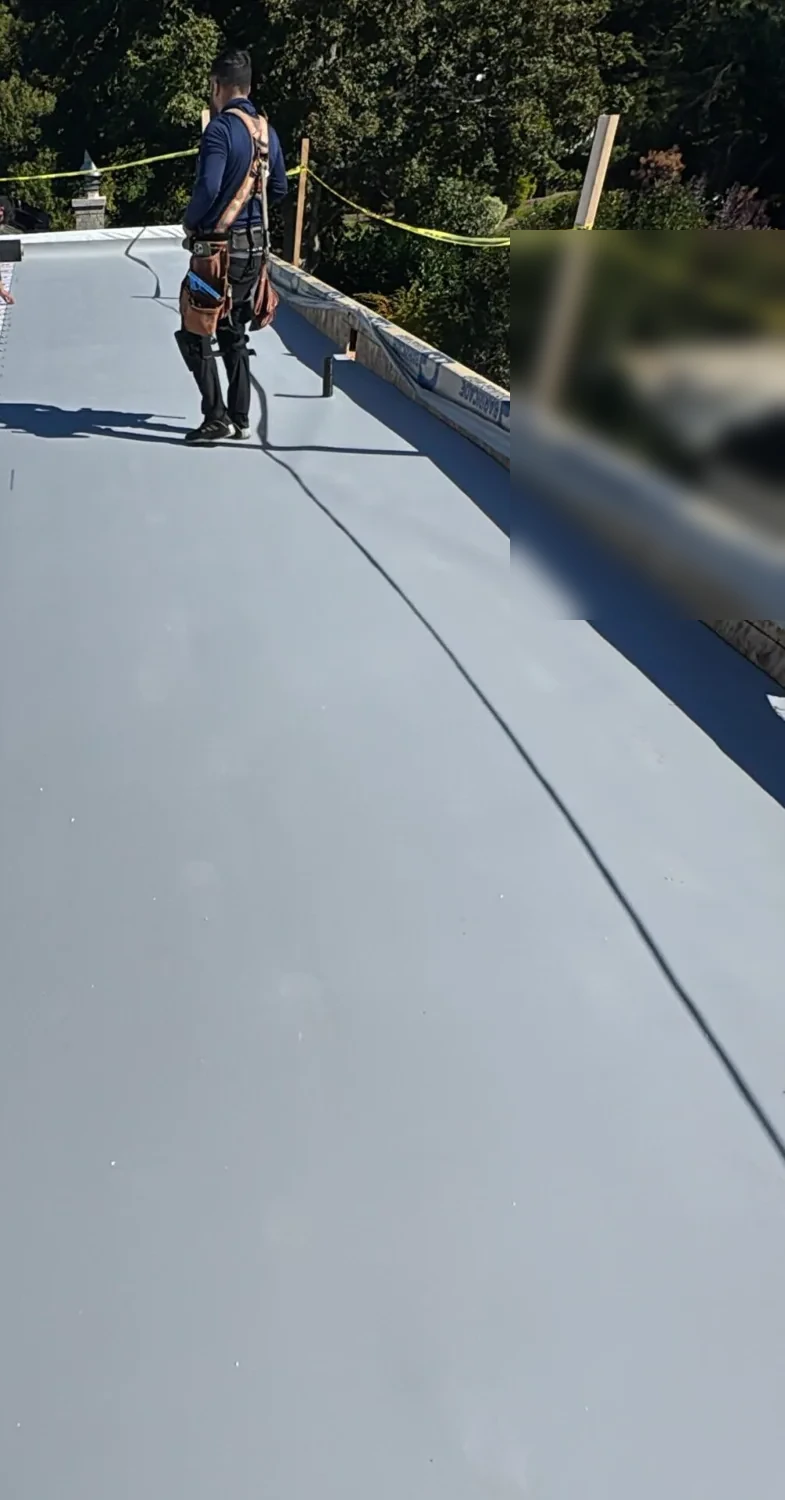
Compatibility matters, since each membrane type wants its own flashing material and adhesive. PVC roofing details are welded with PVC flashing, while other systems use different materials and methods, and the wrong patch can fail within a season. The surface also has to be clean. Dust, old sealant residue and oxidized membrane keep a new bond from taking hold, so preparation is part of the scope and part of the price. A repair scope that names the material for each detail, and the reason for choosing it, helps an owner or manager compare it with an earlier quote.
When should flashing work happen in a St. George year?
Flashing repairs are small enough to schedule in most weather, but adhesives and sealants have temperature ranges. In summer, we place the work early in the day, before surface heat reaches a point where materials flash off too quickly. In cooler months, the roof surface is easier to work, and a repair made in February, the wettest month in the station's monthly normals, may be tested by rain soon after.
Building schedules matter too. A repair above a retail sales floor or a clinic may need a weekend or an early start. Commercial roof leak repair for an active leak begins with temporary protection, and the permanent flashing work follows once the area is dry enough to bond. We state whether a task needs dry conditions, a certain temperature range or a cure period before it is exposed to water.
When do repeated flashing repairs signal a larger problem?
One failed boot is a repair. Failed flashing at most curbs, repeated sealant repairs at the same terminations or a membrane that has shrunk across the whole roof suggests the system has reached the end of its dependable service. At that point, replacing flashing detail by detail costs more than a planned reroof, and the owner is paying for temporary solutions.
The decision is made on the evidence of the whole roof, not on a single detail. A commercial roof repair program can carry a roof for a limited time if the field membrane and insulation are sound. When they are not, the plan moves to capital, and the roof's flashing details are rebuilt as part of a new system that follows the current Utah building and energy requirements at the permit date.
What should the owner send first?
Send photographs of the leaking area, interior stain locations with dates, any prior repair records and the roof plan if there is one. For a mixed-use building, such as the office, retail and residential combinations described for Tech Ridge, tell us which sections belong to which tenants or owners.
We return a flashing inventory, the repair scope and a statement of what we could not see, such as a termination hidden under cap flashing or a base layer that could only be judged by cutting into it. The same record helps when a wind event or a puncture has disturbed the same details, because we can compare the condition before and after. A building in Hurricane or Washington City adds a local licensing check, and we finish it before sending a crew.

Commercial Roofing Questions
Why does flashing fail so often at the same curb?
The curb moves with the equipment above it and the roof below it. If the repair does not allow for that movement, the joint opens again.
Can flashing be repaired in the rain?
Only temporarily. We can seal an active leak, but permanent bonding needs dry, clean surfaces within the product's temperature range.
How high should flashing go above the roof?
Height depends on the system and the design details, and the manufacturer's instructions govern. We measure what is in place and compare it with the project requirements.
Will a new membrane need new flashing?
Usually yes. Flashing materials must be compatible with the new field membrane, and old base flashing is often removed so the new one bonds to a sound substrate.
Do you replace counterflashing too?
Where it is bent, corroded or loose, yes. Counterflashing protects the top edge of the base flashing, so it is checked and secured or replaced as part of the repair.