
Skylight and Penetration Flashing in St. George, UT
Skylight and Penetration Flashing Overview
Every hole in a roof is a promise that someone will keep water out of it. A skylight, a vent pipe, a conduit stub, a rooftop unit curb: each needs flashing that stays bonded through a hot summer, a cold night and the years between. In St. George, UT, the NOAA station normals show July and August mean highs of 101.9 and 99.9 degrees, and flashing material that sits in that heat loses flexibility, shrinks and pulls from what it was sealed to. The roof field can be sound while the penetrations leak.
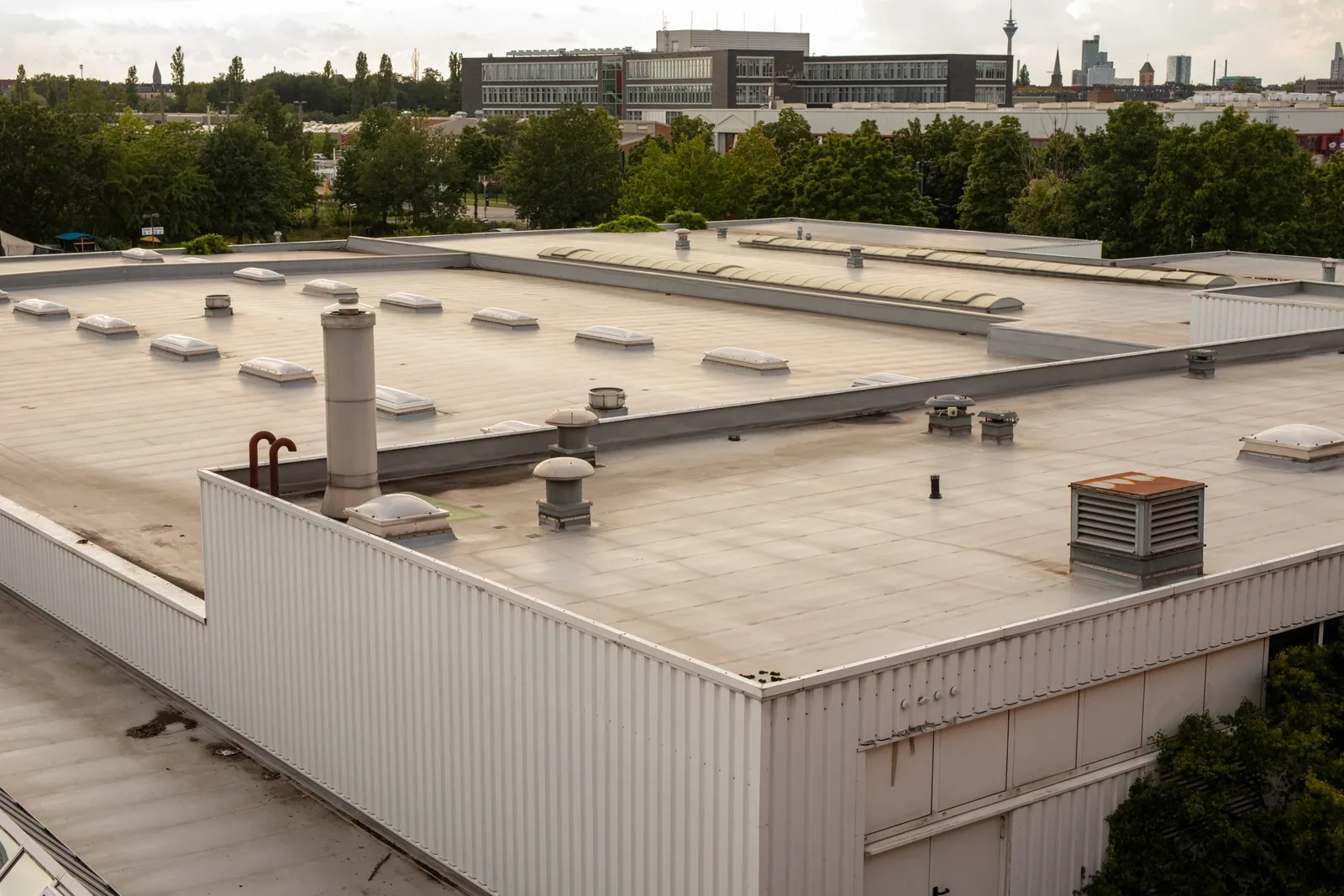
We start at the openings. For each skylight, curb and pipe, we check the flashing, the sealant, the fasteners and the membrane around it, then follow the water route from there to the nearest drain. The asset manager gets a list of penetrations by location and condition, with a repair or replacement decision for each. A commercial roof leak repair often ends at one of these details.
Why do skylights leak?
A skylight leaks in a few predictable places: the glazing seal, the frame joints, the curb flashing and the point where the curb meets the roof membrane. Glazing gaskets harden with age and sun. Frames can flex and open at corners. A curb that is too short lets water splash over its top, and a flashing that has shrunk exposes the curb base.
Condensation can fool an owner into thinking a skylight leaks when it does not, and a true leak can hide as condensation. We check for staining on the curb, water marks around the frame and signs of wet insulation near the opening. If the skylight is old and the glazing is hazed or cracked, repair may cost nearly as much as replacement, and a new unit with a new curb flashing is the lasting fix. Where daylighting matters to the tenant, we ask before removing any unit. A temporary cover keeps the opening dry between removal and installation, and the new unit is ordered to match the curb opening, which we measure on site and not from drawings.
What should a good curb detail look like?
A curb should rise high enough above the roof surface to keep standing water and splash away from the opening, and its flashing should turn up the curb face, lap over the top edge or tuck under a cap, and bond to the membrane at the base with a continuous seam. Corners are the weak points. Pre-formed corners or carefully welded or sealed patches are better than field-cut folds.
Rooftop equipment curbs follow the same logic, and the support legs, conduit and pipe supports that cross the membrane need their own flashing or a protected pad. The heavier equipment details, such as rooftop equipment curb and support work, change how a unit is carried, while the flashing is what keeps the opening sealed. Where a curb has settled or been modified by another trade, we measure its height and check the slope around it before choosing a repair. A curb that sits in a low spot, where water stands against its base, will leak sooner than one on a draining surface, so the fix may include a cricket or a drain nearby, and the proposal shows that as its own line.
How are pipe and conduit penetrations flashed?
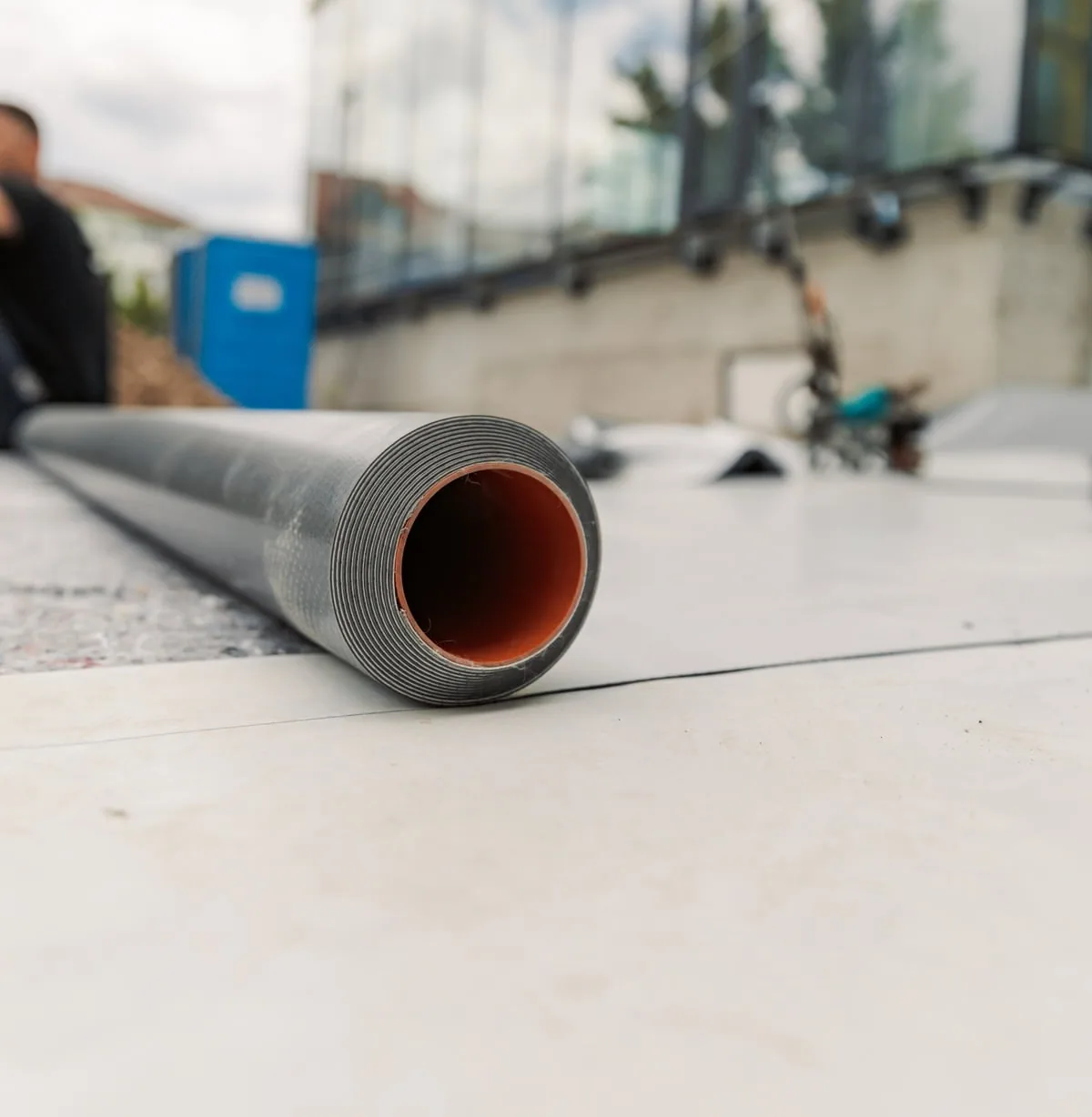
Small round penetrations use pipe boots, pre-molded flashings or field-formed collars, depending on the roof system. A boot has a limited life; the rubber cracks in the sun, and the clamp can loosen. On a membrane roof, a boot is lapped or welded to the sheet, and the top edge is sealed or clamped. On metal roofs, a boot or a flashing with a base plate is sealed to the panel profile.
The heat in St. George works on every sealant. We replace failed boots and renew sealants with materials rated for UV and heat, and we check the membrane around each penetration for cracks and lifted laps. Clusters of penetrations are the most vulnerable, because tight spacing leaves little room for flashing. For those, a pitch pocket or a custom-formed flashing may be better than individual boots, and we explain the choice in the scope. Each boot or collar is recorded by location with a photograph, so a later leak can be matched to a specific detail. Where the sun has chalked or cracked the surface around a penetration, heat and UV damage repair belongs in the same visit.
How do you find which opening is leaking?
We start with the interior stain and work backward, then test on the roof. A controlled water test isolates each penetration, starting low and working up so the first one that leaks is identified. Moisture meters and infrared imaging can show wet insulation near an opening, and an infrared moisture survey maps how far the water has spread.
Testing matters because a roof with ten penetrations can have one that leaks, and replacing all ten flashings is a waste. It also matters because water can enter at one point and show up at another. The record notes which opening failed, what we found and what was done. If an approved test opening is needed to see the deck or insulation near a curb, we describe where it will go and how it will be closed before any cutting.
Each repaired opening is photographed again after the first rain.

Which buildings have the most penetrations?
Buildings with air handling, exhaust, daylighting and plumbing vents have many. A fabrication shop in Fort Pierce Industrial Park, which is largely M-1, may carry exhaust stacks and makeup air where a warehouse next door carries few openings, and the roof tells us the actual count. Tech Ridge is planned as an office, retail and residential mix on a mesa, so Tech Ridge buildings may bring several flashing profiles to one visit.
For a facility with a tight operating schedule, we plan the work window around the people and the equipment below each opening, and a roof condition report lists every penetration so repairs can be staged.

Commercial Roofing Questions
Can a skylight be repaired without replacing it?
Sometimes. If the glazing and frame are sound, resealing the joints and renewing the curb flashing can stop the leak. If the glazing is cracked, hazed or the frame is warped, replacement is the better value.
How long does a pipe boot last?
It varies with the material and the exposure. Rubber boots crack under strong sun and heat, so we check them at each maintenance visit and replace those that show cracking or a loose clamp.
Why does it leak only in some storms?
Wind direction, rain volume and the water route each play a part. A flashing with a small gap may leak only when rain is driven against that side or when water pools at the base. We test under controlled conditions to reproduce it.
Do you coordinate with other trades on rooftop work?
Yes. Mechanical, electrical and solar trades often cut or alter penetrations. We ask who made the last change and confirm that flashing was reinstalled after each. Their work stays theirs, and ours ends at the roof.
Is sealant enough for a failed penetration?
Rarely for long. Sealant can close a small gap for a time, but a failed boot, a cracked curb flashing or a shrunken membrane needs a proper repair. We tell you which one we are doing and what to expect.