
GAF Commercial Roofing Systems in St. George, UT
GAF Commercial Roofing Systems Overview
Surface heat sets the pace for any GAF commercial roof in St. George, UT. In July the St. George NOAA normal high is 101.9°F and in August 99.9°F, so single-ply membranes and asphalt-based layers get worked early, before surface heat changes how seams, adhesives and sealants behave. That is a scheduling fact about the station, not a reading from each roof. The decision for the asset manager is what system is actually installed, what shape it is in and which repair method matches it.
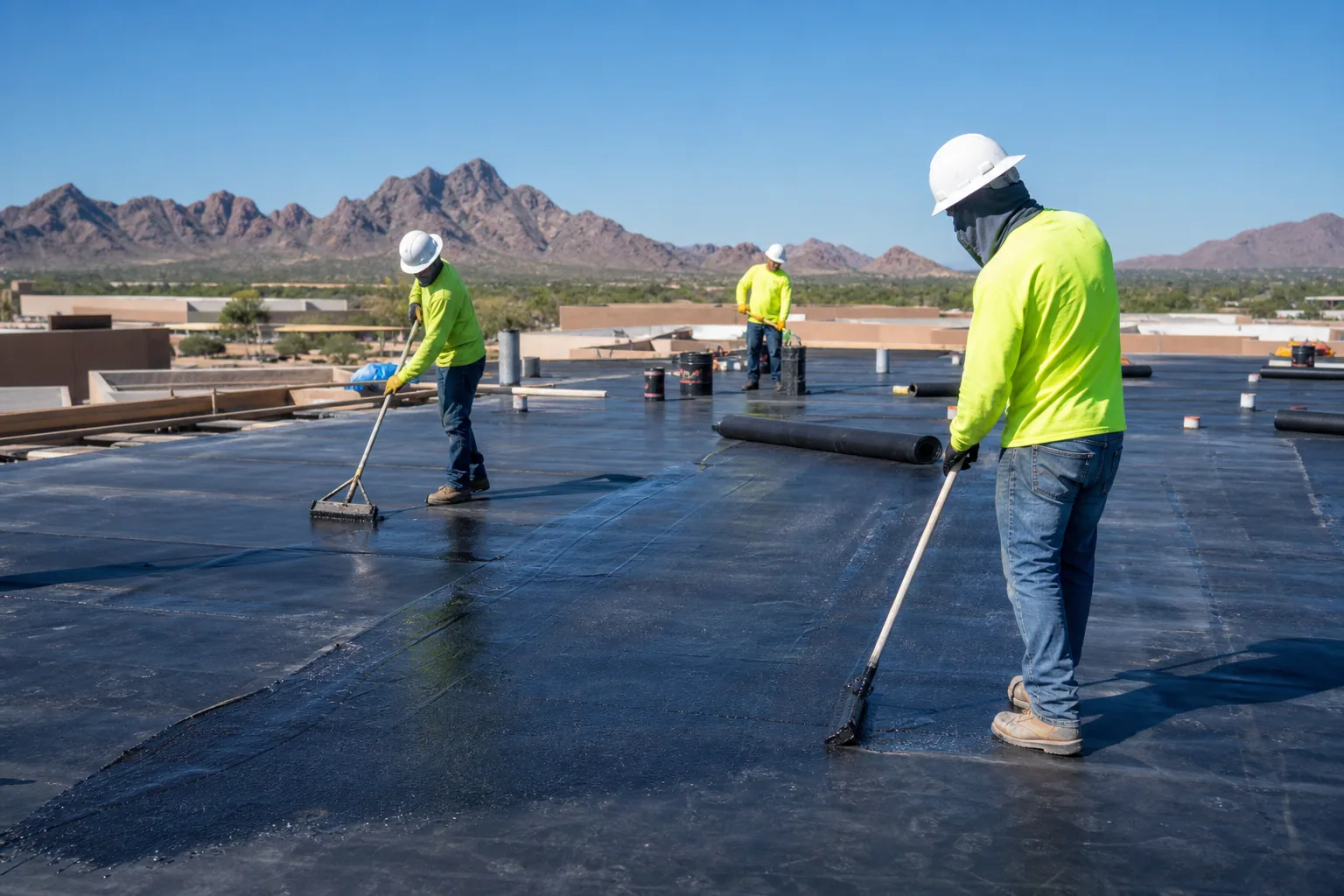
GAF is widely known for steep-slope shingles, and its commercial side covers low-slope roofing: thermoplastic single-ply membranes, modified bitumen, built-up systems, insulation and accessories. We install, repair and maintain these system types, and we identify the one on your roof from records, labels and test openings before choosing a method.
Which GAF system is on my roof?
Ask for the roof plan, the original specification and any warranty papers. If none exist, the roof can still be read. A single-ply membrane shows welded or adhered seams, a reinforcing scrim at the edges and often a marking line. A modified bitumen roof shows a granulated or coated cap sheet with laps. A built-up roof shows layers of felt and asphalt, often topped with gravel or a coating. Fastener patterns and board joints under test openings finish the picture.
We record what we confirm and mark the rest as open. A repair that suits one system can damage another, so we do not match materials by appearance. When a label is missing, a small sample from a safe spot and compatibility testing of adhesives or primers settle the choice. The finding goes into the roof asset file so the next visit starts from a known system.
Single-ply membranes from Carlisle SynTec or Versico can look similar from the walk-up, which is another reason we confirm before we repair. A weld that works on one thermoplastic can fail on another, and adhesives that suit one substrate can attack the next. The roof's own evidence beats a guess based on color or thickness.
How do these systems behave in desert heat?
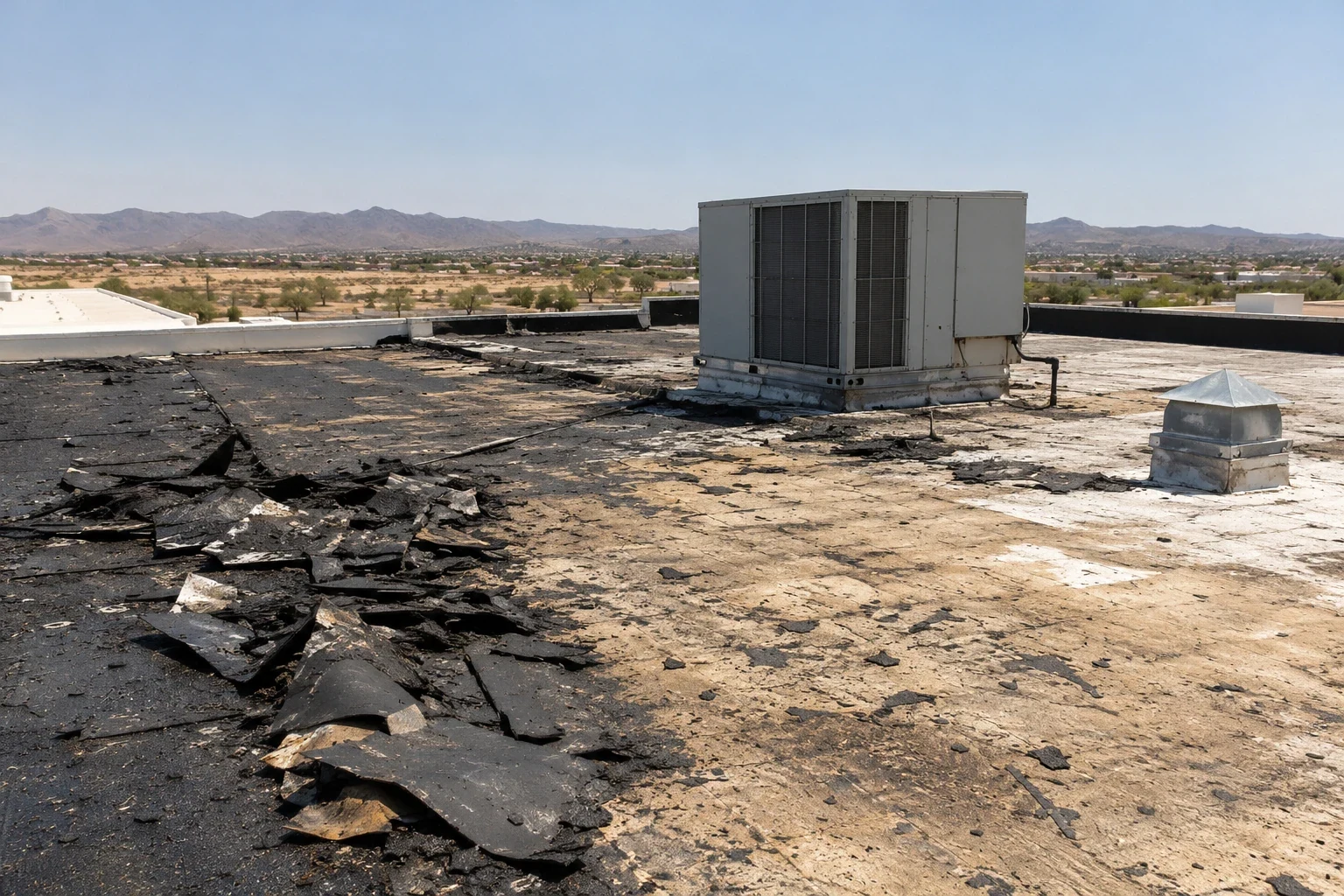
Single-ply membranes expand and contract through the daily swing, and the stress concentrates at seams, flashings and fasteners. Asphalt-based layers soften on hot surfaces and can scuff under foot traffic. A light-colored or reflective surface runs cooler, yet it weathers, chalks and picks up dirt over time. We look for shrinkage at edges, open laps, brittle sealants and exposed reinforcement on every system.
Annual precipitation of 9.31 inches falls unevenly, with February the wettest month and June nearly dry. Dry months bake the surface and wet ones reveal weak spots, so inspections after the first winter rain show what the summer did. A TPO roof and a modified bitumen roof fail in different places, and the report names the places that matter for the system in hand.
Foot traffic is part of heat damage. Technicians who service rooftop units wear paths into a membrane, and on a hot day those paths scuff or soften. We mark worn paths on the roof plan and recommend walk pads where the traffic is regular. Pads cost little, and they spare the membrane the damage that otherwise shows up as a leak beside the unit.
How do you repair a GAF roof so the patch holds?
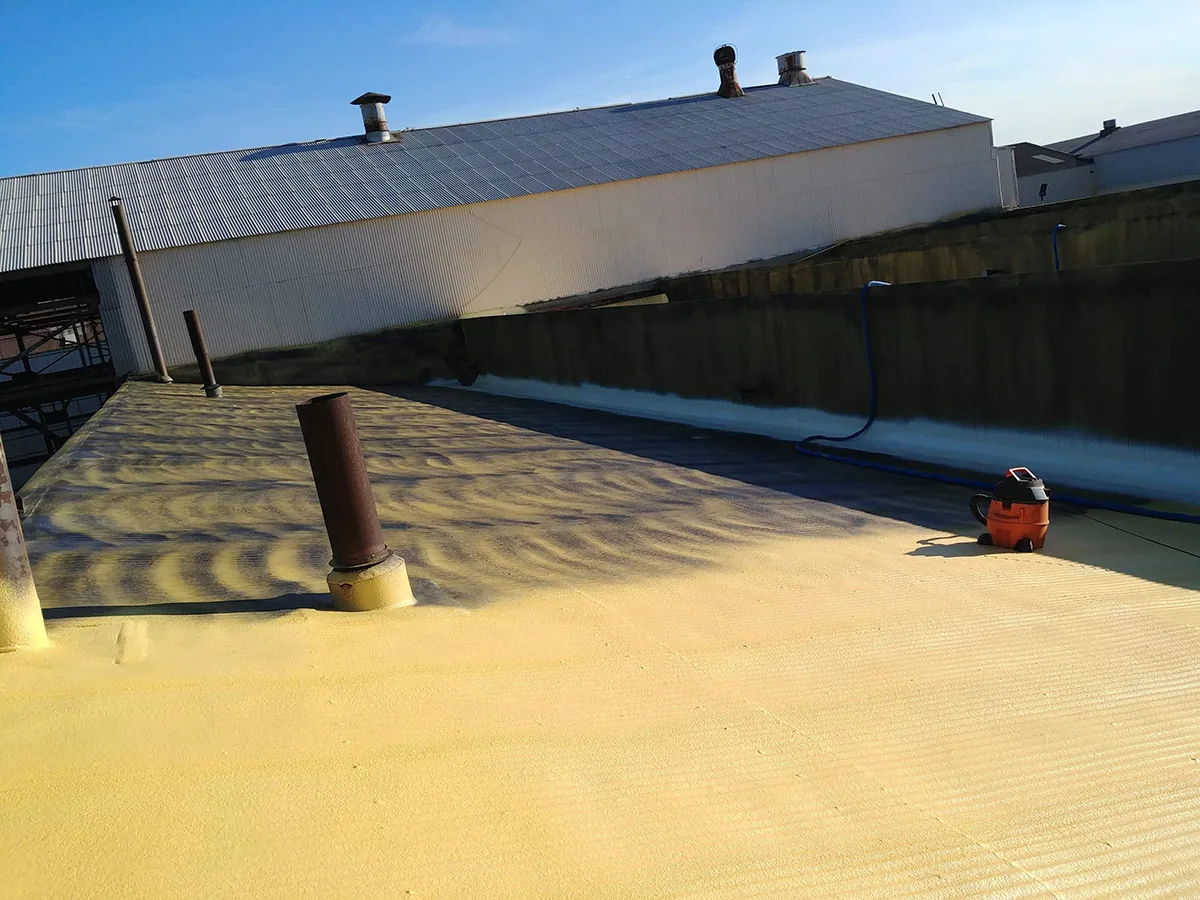
The patch has to be compatible with the existing membrane and prepared properly. On a thermoplastic single-ply, that usually means cleaning the surface, preparing the weld area and heat-welding a reinforced patch or flashing. On modified bitumen, it means removing failed material to a stable edge, priming and setting new cap sheet with the right adhesion method. Built-up repairs depend on the layers beneath and the presence of moisture.
We never seal over dirt, wet insulation or an unknown coating. If a core shows trapped moisture, we tell the owner before closing it in. In heat, the crew works in the morning, checks the substrate temperature and holds materials to the working range the product literature gives. A commercial roof repair record names the product, the method, the weather and the photographs.
Seams get a second look after the repair. We probe welded or adhered laps with a blunt tool, check the edges of each patch and photograph the finished detail. If the system allows, we test a section of weld. The record shows the owner what was checked, not only what was installed, and a later reader can see that the patch was inspected on the day it was made.
Where do these systems turn up locally?
Most of the city's residential and commercial stock dates from 1980 forward, the consolidated plan says, and the land-use plan keeps Commercial, Industrial and Industrial/Commercial apart. The armory plan puts Fort Pierce Industrial Park largely in M-1, which allows warehousing, light manufacturing, fabrication, wholesaling and services side by side. Those labels suggest a range of roof footprints. They do not tell us what is on any specific roof, so we read each one.
For buildings along St. George Boulevard, Bluff Street or River Road, labeled on the county's arterial map, and for Fort Pierce Industrial Park, the questions are the same: system, condition, drainage and access. An industrial building with rooftop units, skylights and exhaust has many penetrations to flash. A smaller office roof may have few. The report gives each its own repair boundary.
Skylights and roof hatches deserve a separate look on any of these buildings. Curbs around skylights and the flashing at hatches fail more often than the field of the roof, and a leak there can look like a membrane failure from below. We open nothing until the water path is traced, then repair the detail that failed.
What should an owner know about warranty and code before a replacement?
Manufacturer warranties carry conditions on installation, maintenance and repairs, and the terms control. We read the document, plan the work against it and keep the records. We do not state what a given warranty will cover; the manufacturer does.
Utah's construction code rests on the 2024 IBC with amendments, while the energy path pairs the 2024 IECC with ASHRAE 90.1-2022 and is enforced statewide from July 1, 2026. Insulation level and paperwork can differ between a replacement and a repair, and the permit date picks the edition. We confirm the edition with the City of St. George before pricing a replacement, then compare the code assembly with the manufacturer's installation requirements.
Commercial Roofing Questions
Does GAF only make shingles?
No. It is best known for steep-slope shingles, but its commercial lines include low-slope membranes, insulation and accessories. The questions here concern that commercial side.
Can you repair a GAF roof if I have no records?
Usually. We identify the system from the roof itself, using seams, layers and test openings. Where doubt remains, we test adhesives and primers on a small area before any repair.
Will a repair affect the warranty?
It can, depending on the terms. We read the warranty first, plan the repair against it and document the work. The manufacturer decides coverage.
Is a reflective surface better in St. George?
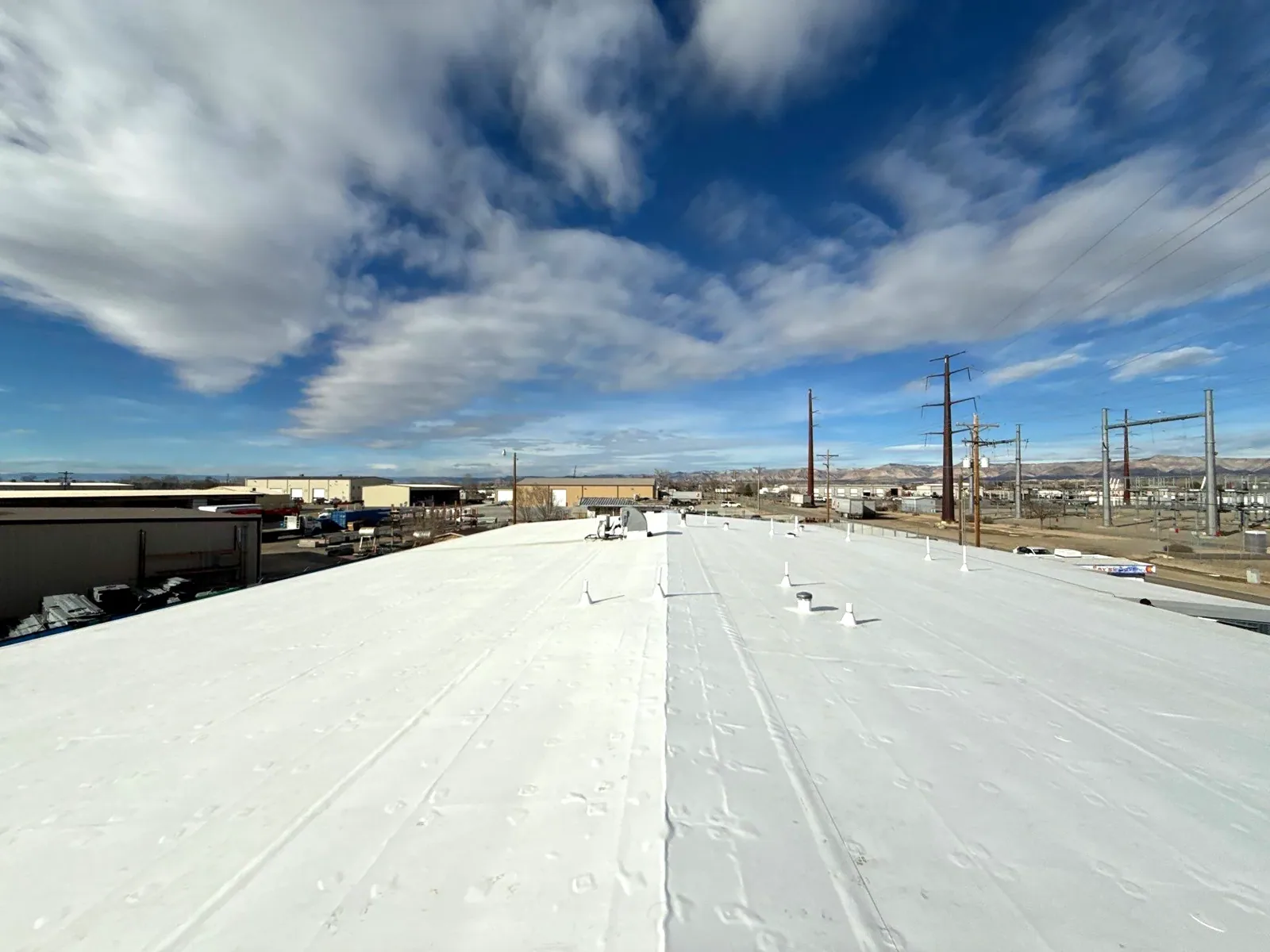
It runs cooler in sun, which can ease thermal stress. It still weathers and needs inspection. The choice depends on the roof, the budget and the energy code.
How often should the roof be inspected?
On a schedule tied to the roof's age and condition, with a drain check before late winter and a post-summer review. A roof with prior repairs needs shorter intervals.