
Carlisle SynTec Roofing Systems in St. George, UT
Carlisle SynTec Roofing Systems Overview
Seam construction is the first thing to learn about a Carlisle SynTec roof in St. George, UT, because the seam decides how the roof handles a hot summer. NOAA normals put the St. George station's mean daily high at 101.9°F for July and 99.9°F for August. That station figure is a scheduling guide, not a measurement from your roof, and it tells us to inspect early and read the surface directly. A membrane held down by adhesive, tape or a weld ages differently, and the repair differs with each.
Carlisle SynTec makes single-ply membranes, and its commercial range includes EPDM, TPO and PVC, along with the adhesives, flashings and insulation used with them. We install, repair and maintain these system types. Before any work, we confirm which membrane is on the roof, how it is attached and what its seams and flashings look like now.
Which Carlisle SynTec membrane is installed?
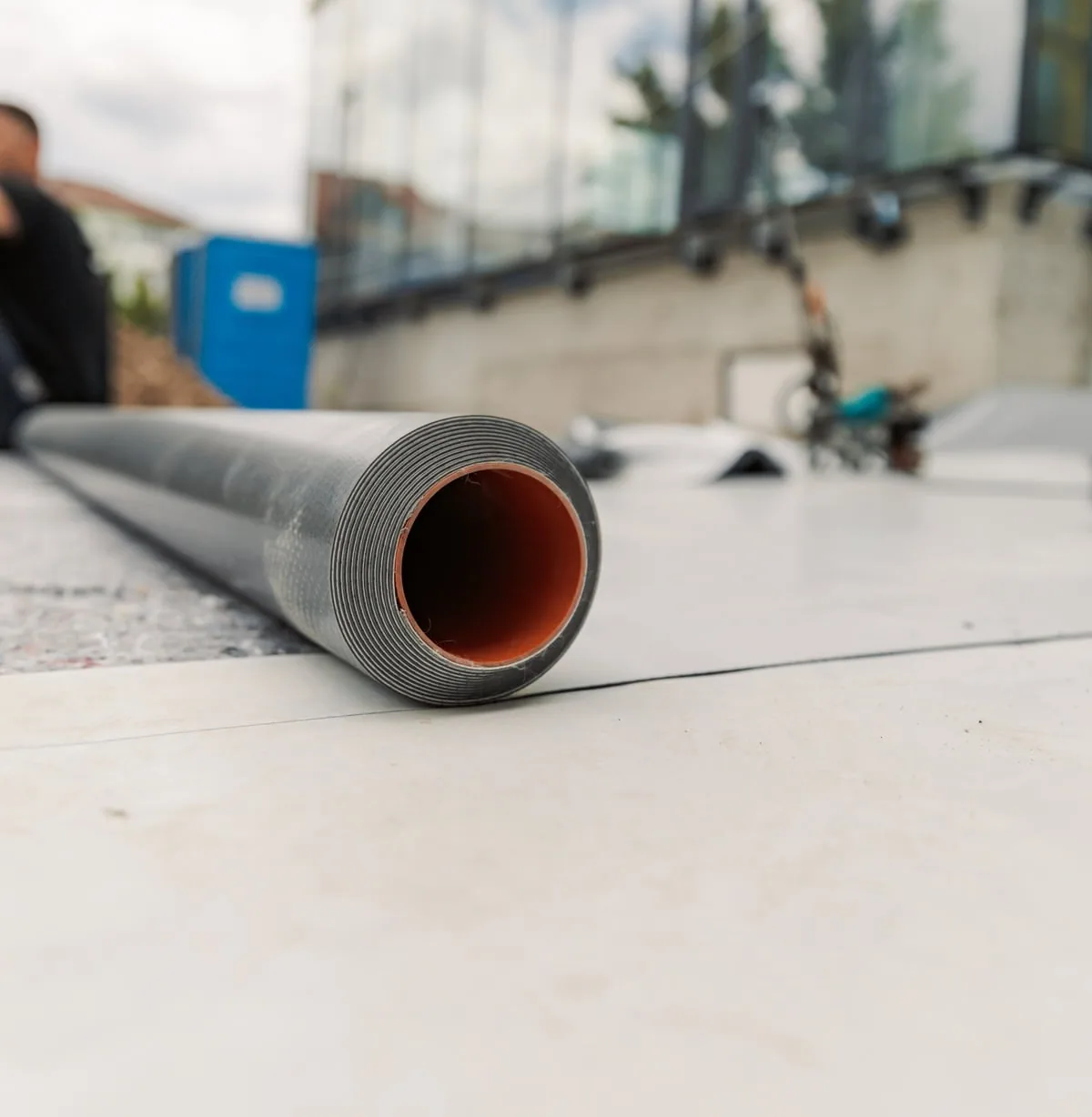
EPDM is a rubber sheet, usually black, with seams joined by adhesive or tape. TPO and PVC are thermoplastics, with seams heat-welded into a continuous bond. Carlisle's TPO line carries the Sure-Weld name, and the family also includes PVC for roofs exposed to oils and fats. The three behave differently under heat, foot traffic and chemical exposure, and the repair for one cannot be assumed for another.
We identify the membrane from the roof plan, the edge details and the seam style. A sample from a safe location, tested for compatibility with adhesives or primers, settles doubtful cases. On a Carlisle roof in the field, attachment and age matter as much as the material, whether the sheet is EPDM, TPO or PVC. Versico and Johns Manville also make single-ply sheets with similar seam concepts, so the field method carries across.
Does the attachment method change the repair?
Yes. A fully adhered membrane is bonded to the substrate across the field, so a puncture can let water travel under the sheet. A mechanically attached membrane is held by fasteners and plates along the seams, and a loose plate or a backed-out fastener can lift a section in wind. A ballasted membrane sits under stone or pavers, so repairs begin by moving the ballast. We check which method applies before choosing a patch.
On a fully adhered roof, we trace the water path by cutting back a small test area or by using infrared testing to find wet insulation. On a mechanically attached roof, we look for fastener pull-through at the seams and for wrinkles that signal movement. Both need the work window in the morning, because adhesive and weld quality depend on the surface being within the product's working range. If the surface passes that range by midday, the crew stops and the open area is dried in until the next morning.
What do uneven rainfall and ponding do to the membrane?
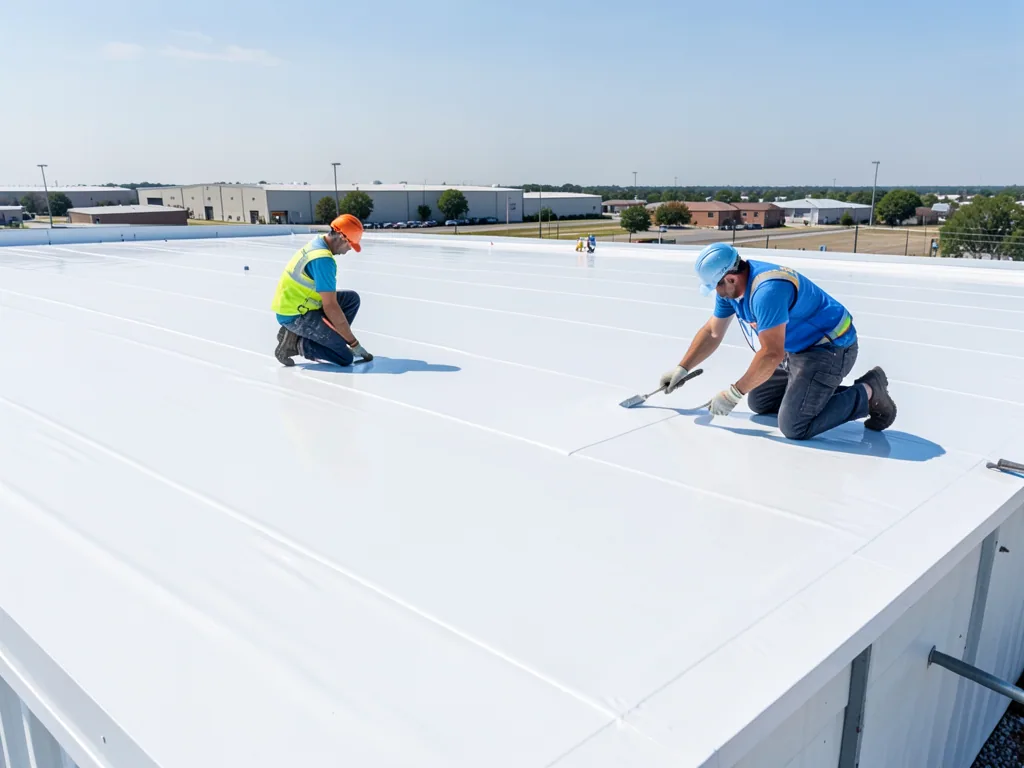
Yearly precipitation at the station totals 9.31 inches, with a February normal of 1.38 inches and a June normal of 0.16. When rain finally falls after dry months, dust and debris wash toward drains and clog strainers. Ponding then sits on the membrane in sun, heating the water and loading the roof. Standing water on EPDM, TPO or PVC does not always damage the sheet, but it speeds dirt buildup, hides punctures and stresses seams.
We measure ponding after a dry spell, trace it to a blocked drain or a low area and recommend a fix. Often the answer is clearing a strainer and adjusting the schedule. Sometimes it is tapered insulation or a new drain. A drain and scupper visit before late winter keeps the first storm from finding the problem for us.
Where do Carlisle roofs fail first?
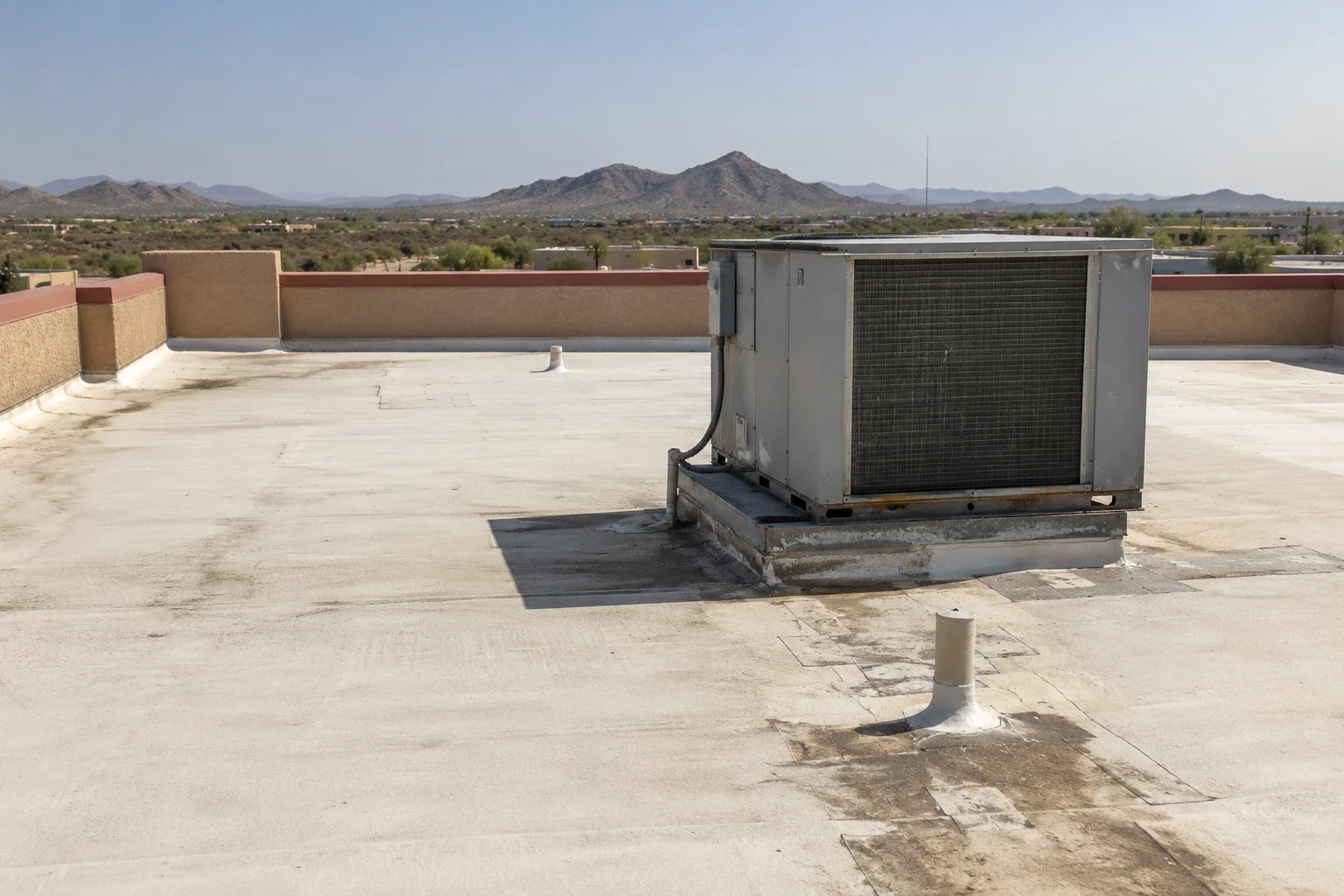
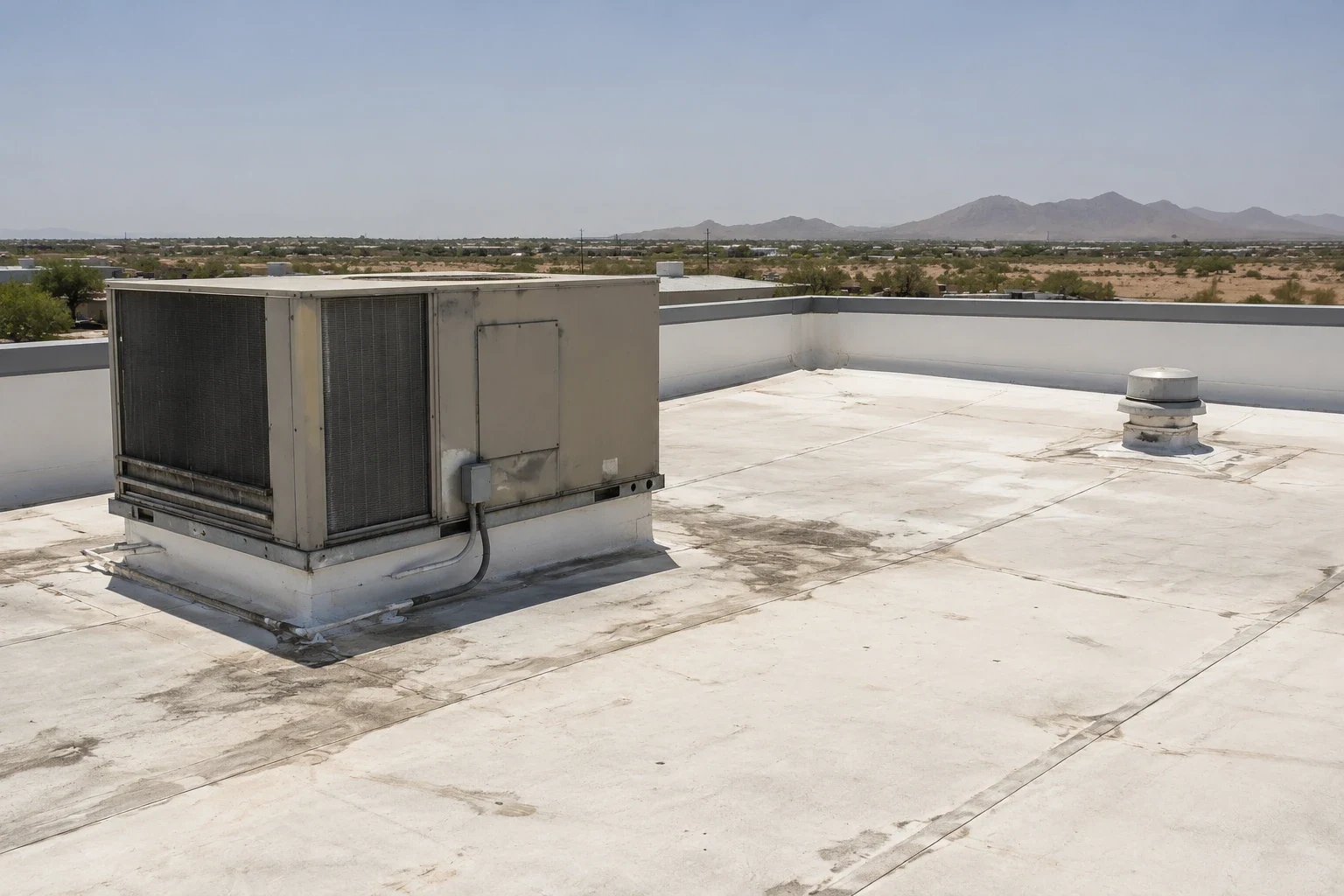
Flashings and penetrations, as on most single-ply roofs. Pipe boots crack, curb flashings pull away, termination bars loosen and sealants dry out. Rooftop equipment concentrates these details in one place. We check every curb, every boot and every edge, and we photograph each with a reference mark. A ground-floor shop roof gets the same walk as a large industrial field, whether it stands on St. George Boulevard or River Road, and it gets its own page in the report. A rooftop equipment curb and support that has been moved or added without rebuilding the flashing is a common leak.
Field seams on a welded membrane can open at cross seams where three layers meet. On adhesive-seamed EPDM, the seam edge can lift as the adhesive ages. We probe every seam we can reach and mark what we find on the roof plan. A commercial roof leak repair follows the water path, then repairs the specific detail, not the nearest bare spot.
Edge metal needs the same attention. Coping and drip edge take wind and sun, and a loose piece can peel the membrane back with it. We check fasteners, joints and the sealant under the metal, and we reset or replace sections that have moved. The membrane may be sound across the field while the edge is the part that lets water in, so the edge goes on the inspection list every time.
Walkways matter too. Foot traffic to rooftop units wears lanes into the membrane, and heat softens them further. We map worn paths and recommend protective pads where traffic is regular. A pad is a small cost against the repair of a membrane that has been ground thin beside a unit, and the pad list goes into the report with its location.
Every boot and corner we rebuild is photographed before it is covered.
How do local buildings and code affect the plan?
Much of the city's commercial and residential stock dates from 1980 forward, according to its consolidated plan, while the armory plan places Fort Pierce Industrial Park in mostly M-1 ground, home to warehousing, light manufacturing and fabrication. That variety means a Carlisle roof may sit beside a different system on the next building. We assess each roof on its own evidence.
Utah layers two rule sets on a reroof: its amended construction code, based on the 2024 IBC, and a commercial energy path of 2024 IECC with ASHRAE 90.1-2022 that turns mandatory on July 1, 2026. A replacement may need insulation or documentation that a patch does not. The edition in force on the permit date is confirmed with the City of St. George, then set against the manufacturer's installation requirements. For buildings in Fort Pierce Industrial Park, we also confirm access rules before scheduling a lift.
Commercial Roofing Questions
Is Sure-Weld the same as TPO?
Sure-Weld is Carlisle's TPO line. TPO is the material category, and Sure-Weld is the product name. Both describe a heat-welded thermoplastic sheet.
Which membrane lasts longest in desert heat?
It depends on the specific product, the thickness, the installation and the maintenance. We compare condition on the roof, not generic claims. A well-kept membrane of any type can outlast a neglected one.
Can an EPDM roof be patched in summer?
Yes, in the morning, with the surface clean and dry and the adhesive within its working range. We stop when the surface gets too hot. A rushed patch fails sooner.
What does ponding water do to a TPO roof?
It collects dirt, hides small damage and stresses seams, though the membrane may tolerate it. We measure, trace the cause and fix the drainage.
Will repairs affect a manufacturer warranty?
They can. The warranty terms control. We read them first, plan the repair against them and document the work. Only the manufacturer decides coverage.