
Versico Roofing Systems in St. George, UT
Versico Roofing Systems Overview
Added rooftop equipment is the usual way a Versico roof in St. George, UT gets its first leak. A tenant installs a new unit, a technician cuts a penetration, and the flashing around it never gets the care the original details had. Because the station's July highs average 101.9°F and its August highs 99.9°F, roof visits start early and every new curb is read as a detail under heat stress. The decision for the asset manager is which penetrations are original, which were added and which are failing.
Versico makes single-ply roofing, including TPO, EPDM and PVC membranes with the adhesives, fasteners and flashings used with them. We install, repair and maintain these system types. Our first step is to confirm the membrane, its attachment and the history of changes on the roof.
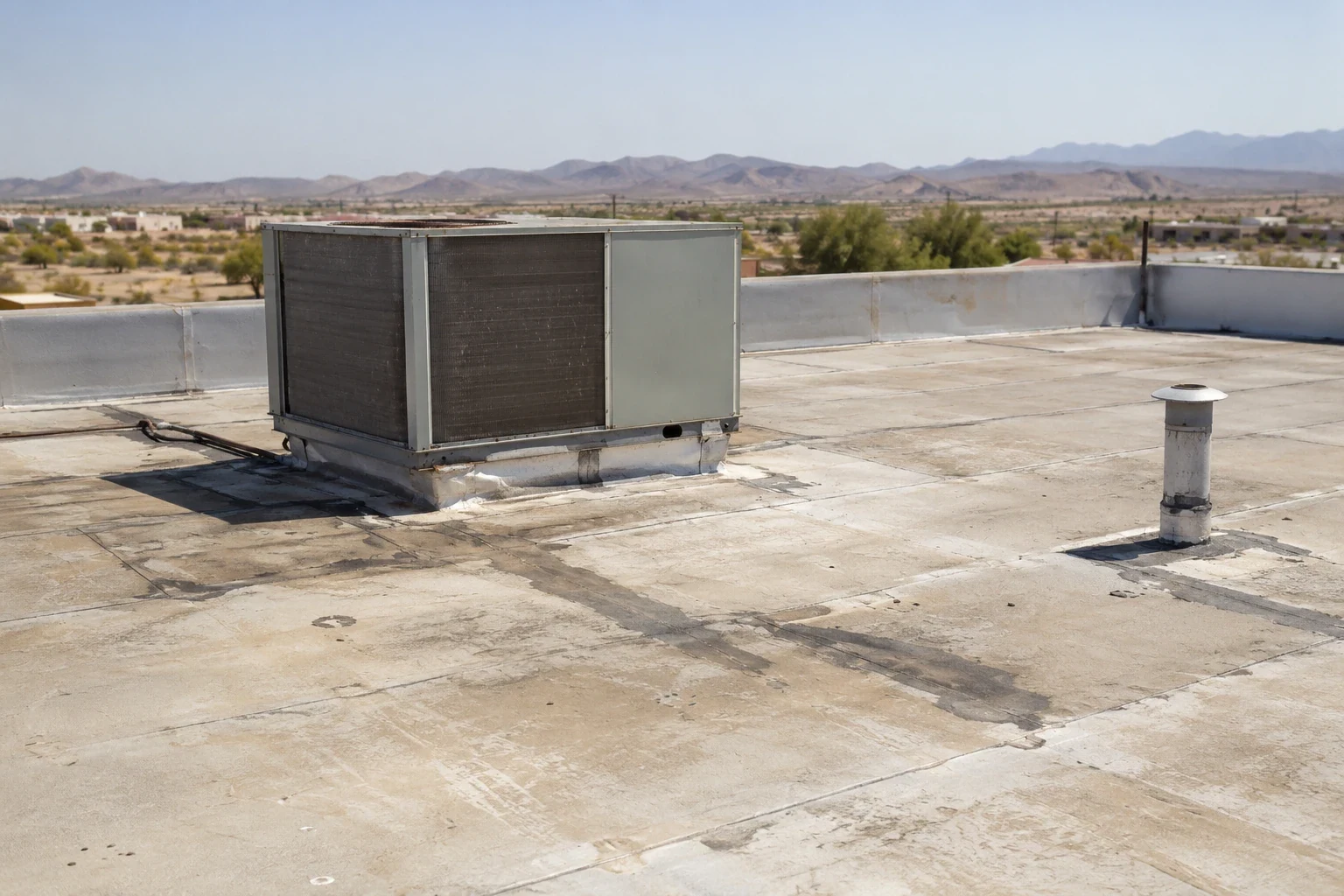
Which penetrations are original and which were added?
A roof plan from installation shows the original curbs, drains and pipes. A walk across the roof shows what is there now. The difference is the list of additions: new units, new conduit runs, new vents, antenna mounts and sign brackets. We mark each addition on the plan and photograph its flashing, because added penetrations are among the most common sources of leaks on any single-ply roof.
Questions follow each one. Was the membrane cut and flashed with a prefabricated boot or a field-made wrap? Is the curb tall enough to meet flashing height? Does the equipment sit on supports that rest on the membrane without protection? Are cables lying on the surface? We answer these by looking. The rooftop equipment curb and support review ends with a list of items to rebuild, items to monitor and items to remove.
Abandoned equipment is part of the same story. When a tenant leaves, its units are sometimes removed and the curbs are capped, or the units are left in place without service. A dead curb with a tired seal leaks as freely as a working one. We recommend removing what is no longer used and patching the opening, since the patch is a small cost against the interior damage that follows a slow drip.
How is the Versico membrane attached?
Single-ply membranes can be fully adhered, mechanically attached or ballasted. Each fails in its own way. A fully adhered sheet can lose bond at seams or edges. A mechanically attached sheet can flutter in wind and pull at plates along its fastener lines. A ballasted sheet can shift its stone and expose edges. We identify the method from the roof and from the edge details before choosing a repair.
Repair methods follow. For TPO and PVC, we weld compatible patches after cleaning and testing. For EPDM, we use adhesive or tape systems matched to the existing seams. We avoid mixing products when we cannot confirm compatibility, because a patch that fails can damage the original sheet. A commercial roof leak repair starts with the water path, and the choice of method comes after the path is known.
Temperature and cleanliness decide whether a patch will hold. We work in the morning, clean the area, check that the surface is dry and within the product's range, and make the repair with the right materials for the membrane. If a roof surface climbs past the working range, the crew stops, dries the open area in and returns the next morning. A good patch made a day later is better than a poor one made on schedule.
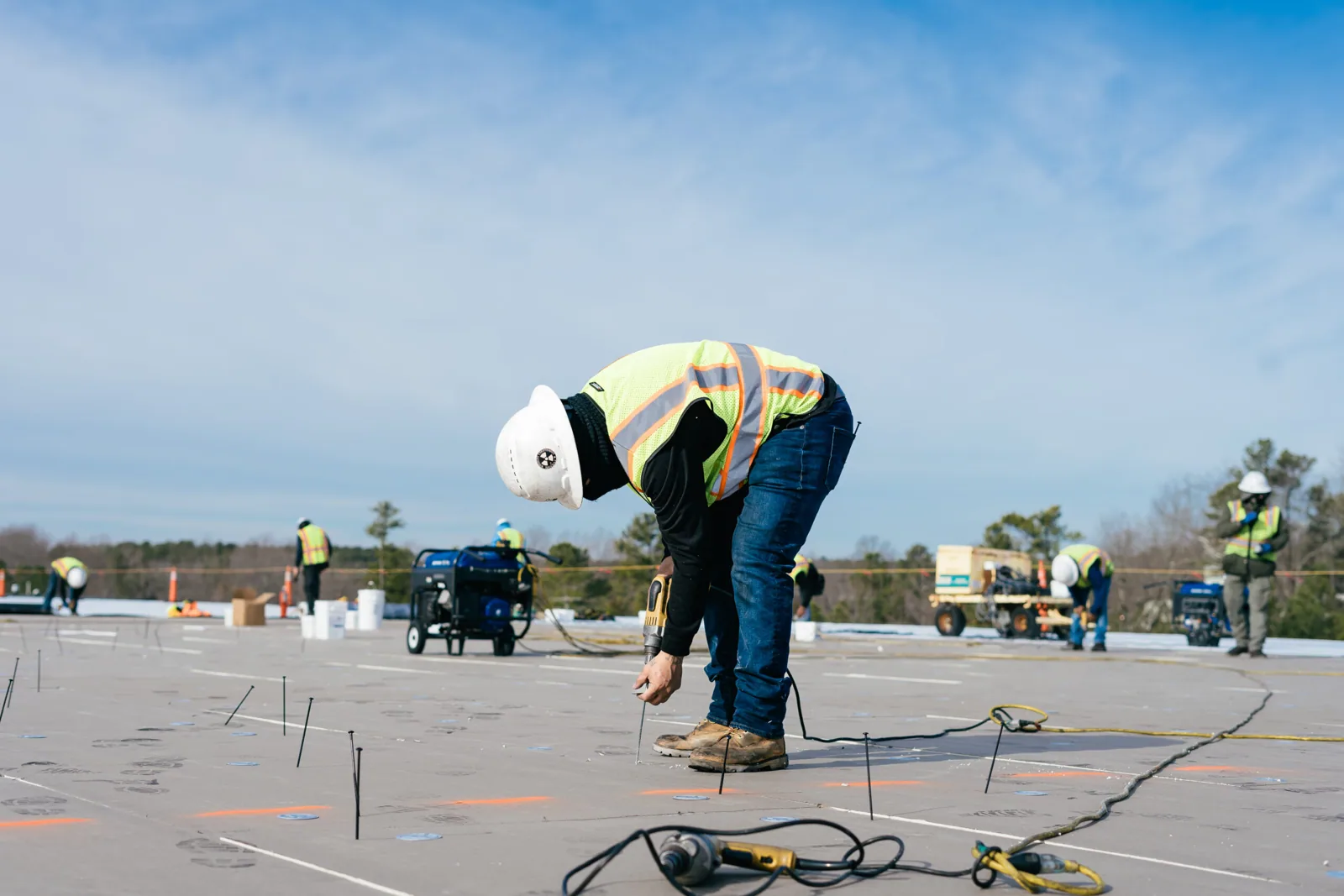
Where does water go on a flat single-ply roof?
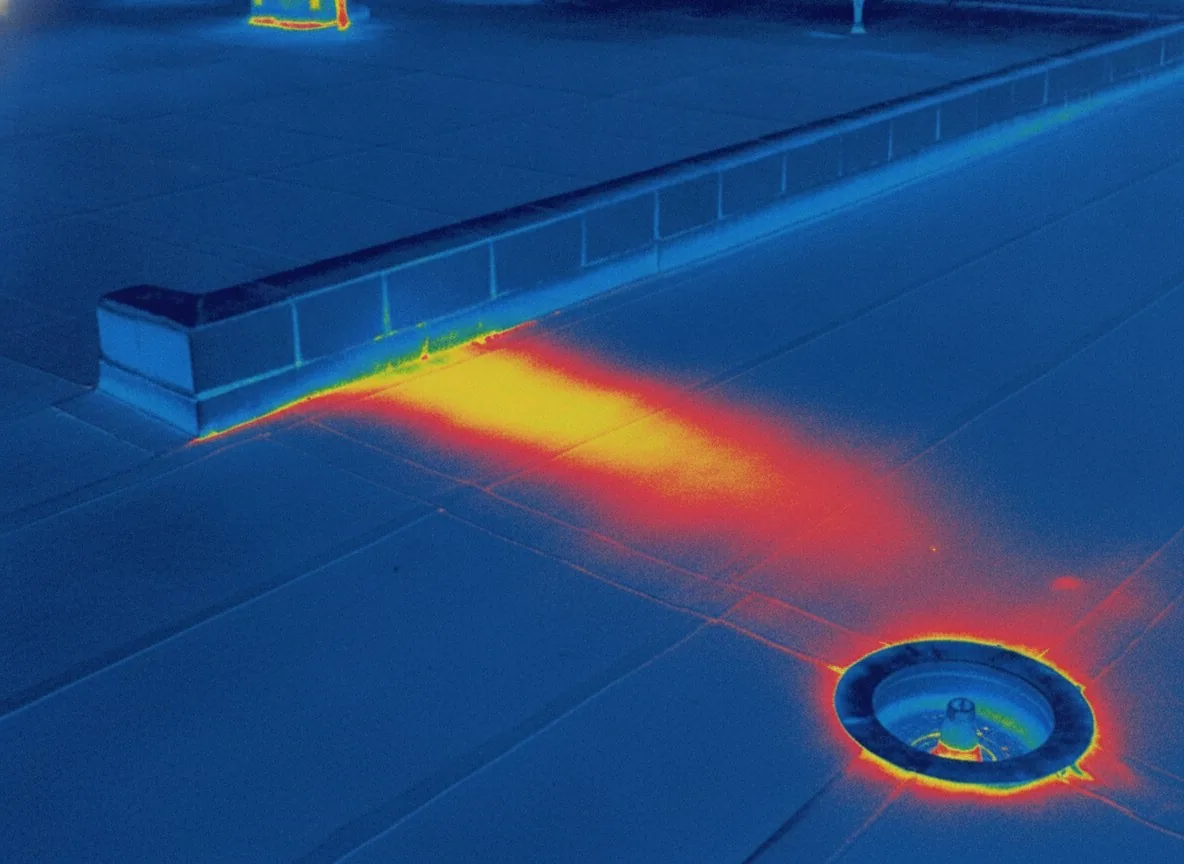
A normal year brings 9.31 inches of precipitation, with 1.38 inches in February and 0.16 in June. When rain does come, it runs to the drains, and a flat roof asks those drains to move all of it. A strainer packed with dust and leaves slows the flow, and water ponds on the membrane. Ponding hides small defects and adds load.
We trace water paths from the interior to the roof, then walk the roof with the drainage in mind. Low areas, sagging insulation and drains set above the surrounding membrane all hold water. The fix may be clearing, adding a drain, or tapering insulation. A ponding water repair that addresses the cause lasts longer than a patch over the damage, and the report states which approach the roof calls for.
What does age look like on each membrane?
EPDM ages by drying and cracking, especially at folds and seams, and by shrinkage that pulls at flashings. TPO ages by surface wear and, in some cases, seam weakness. PVC ages by stiffening as plasticizers migrate. In each, the first signs are at details: boots, corners, terminations and laps. We press and probe these places and photograph what we find.
The city's consolidated plan says much of its building stock was built since 1980, so roofs here vary widely in age. A Versico roof may be new, middle-aged or near the end of its life, and the visit tells. Condition reports record the signs, estimate remaining life and set up the next decision. Where the field is sound and the details are failing, rebuilding details often buys years. Where the field itself has failed, replacement comes into the plan.
Fasteners are the quiet indicator on a mechanically attached roof. Along each line, plates and screws hold the sheet to the deck, and when a few back out the sheet begins to move, wearing itself at the plates. We sample the lines, count loose fasteners and mark the area for re-securing. A roof with widespread pull-out may need more than re-securing, and the report says so with the count beside it.
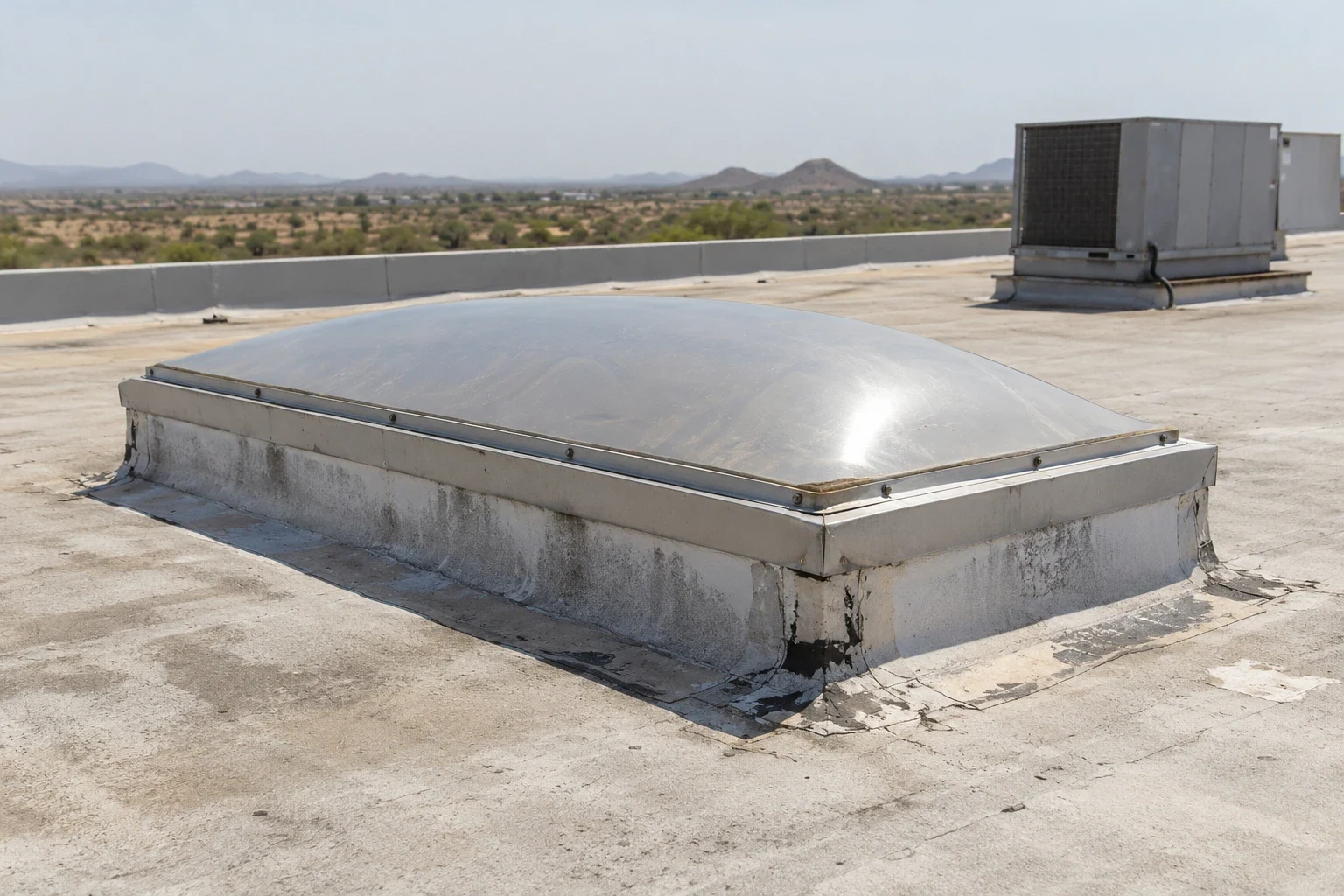
How do local routes and code affect the work?
The county's maps show Interstate 15 and the city's main arterials, with SR-18, SR-9 and Telegraph added on the general-plan map. We use those routes as dispatch references and confirm exact property access on site. A roof in Tech Ridge or along River Road may call for different access planning from one in an industrial park.
The state construction code takes the 2024 International Building Code as its base with amendments, and the energy listing, naming the 2024 IECC and ASHRAE 90.1-2022, becomes mandatory statewide on July 1, 2026. A replacement can bring insulation and paperwork duties that a repair does not. The City of St. George confirms the edition, and the manufacturer's installation requirements are checked against it before pricing. An owner weighing alternatives can compare the single-ply options from Carlisle SynTec and Holcim Elevate on the same roof evidence.
Commercial Roofing Questions
A tenant added a unit and now there is a leak. What happened?
Probably the new penetration or the curb flashing. We check boot, curb height, sealant and any cable crossing the membrane. If the curb was set without proper flashing, we rebuild it.
Can TPO be patched onto EPDM?
Not directly. They are different materials, and the bond does not hold. We use methods suited to the existing membrane and avoid mixing systems.
What does flutter on a mechanically attached roof mean?
The sheet is moving in wind, often because fasteners are loose or the attachment is thin. We check plates and seams, and re-secure or add attachment where needed.
How can I tell if ponding is a problem?
If water stays more than a day or two after rain, it is. We measure depth and trace the cause. Standing water adds weight and speeds wear.
Does a new unit need a roof review first?
Yes, ideally. A short review of structure, curb height, flashing and the walk path prevents a leak later. We can include it in the equipment installation schedule.