
Heat and UV Roof Damage Repair in St. George, UT
Heat and UV Roof Damage Repair Overview
By July in St. George, UT the roof is working harder than the building under it. Station normals put July highs at 101.9 degrees and August just under 100, and a dark membrane in direct sun is hotter than the air, so surface heat sets the schedule for any inspection or repair and sets the pace of aging for the roof itself. We walk summer roofs early, read the surface before it is too hot to kneel on, and treat what we see as evidence of how many seasons of sun the material has had, not as a verdict on a single hot week.
Heat and ultraviolet damage rarely announce themselves with a leak. They show up as chalking, crazing, a stiff feel underfoot, shrinkage at the edges and sealants that have gone brittle. The asset manager gets the findings sorted by whether water can enter today, within a year, or not yet, and a clear list of what we could not test.
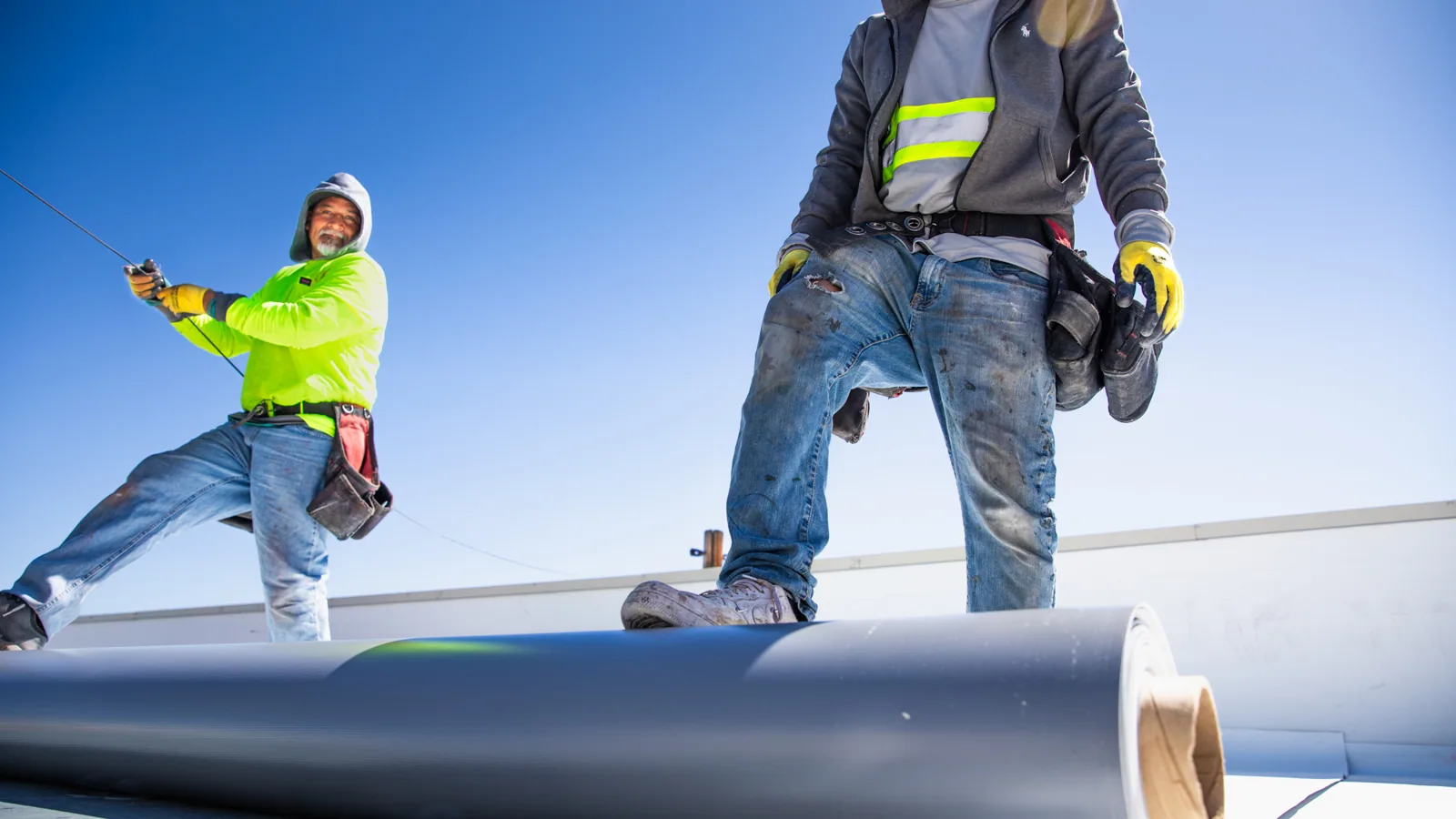
What does sun damage look like on each roof surface?
Single-ply membranes chalk as their surface layer breaks down, and the powder rubs off on a hand or a glove. A thermoplastic sheet can lose flexibility and develop fine cracks around fasteners and at fixed points. EPDM can become hard and shrink, pulling at flashings and seams. Modified bitumen and built-up surfaces lose granules and expose the asphalt, which then oxidizes and cracks. Foam roofs rely on their coating, and when the coating thins or erodes the foam beneath is exposed to sunlight.
Metal roofs show it differently: coatings fade and chalk, sealant at laps and fasteners dries out, and fasteners back out as the panels expand and contract. In every case, we photograph the same features year after year, so a gradual change is visible. A roof that appears whole from the lot may be thin at the surface, and a hand test or a small sample tells us more than a glance.
How do you decide whether wear has become damage?
Wear is cosmetic until it reaches function. A chalked surface that is still flexible and watertight is wear; cracks that pass through the membrane are damage. We test flexibility at seams and edges, probe seam lines, check fastener heads and sealants, and look for shrinkage at walls and curbs, where a shrinking sheet pulls free. Moisture evidence matters: a surface that is aged but dry below is a very different case from one with wet insulation.
Where the surface raises a question, an infrared moisture survey checks for hidden water, and a sample may be taken to see how much thickness remains. A commercial roof inspection records these findings by area, so shaded sections, sections near equipment exhaust and sections that get reflected heat from nearby metal or glass can be compared with the rest. The comparison often explains why one corner of a roof has aged faster than another, and it points the repair at the right place instead of the whole roof.
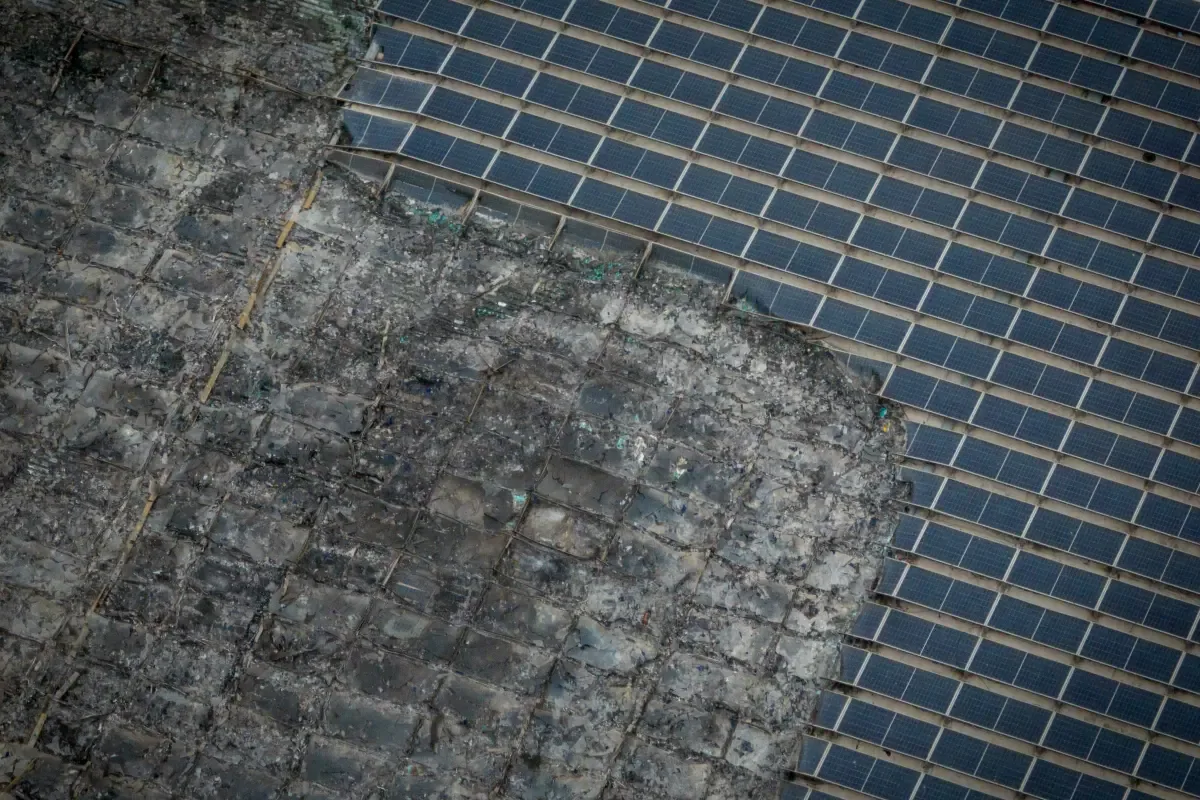
Why does the repair schedule follow the heat?
Materials have working ranges. Coatings, adhesives and sealants applied to a very hot surface may skin over or bubble, and a weld made on a hot sheet can look right but cool unevenly. In summer, we start work early, stage materials in shade and finish temperature-sensitive steps before the surface climbs. Some coatings also need a dry period after application, and the precipitation record, with February the wettest month and June nearly dry in the station normals, shapes when such work is attempted.
People on the roof need protection too. Water, shade breaks and shorter shifts are part of the plan, and a repair that could be done in an hour at 7 a.m. may take longer after noon. We tell the owner when a task will be scheduled for a cooler stretch, and why the wait is shorter than the damage the wrong conditions would cause. An early start also keeps the noisiest steps ahead of the hours when tenants are on site.
What can be repaired and what needs restoration?
Local damage is repaired: cracked sealant is renewed, a split at a fastener is patched, a lifted edge is re-adhered. If the damage is widespread but the sheet is still sound and dry, restoration may extend its service. Roof coating restoration renews the surface and can improve reflectivity, but it relies on a sound substrate and on repairs made first. A coating over wet insulation or an open seam does not cure either problem.
Coating choice follows the roof. Silicone roof coatings and acrylic roof coatings behave differently with ponding, dirt and surface preparation, and the existing membrane can limit the options. If the sheet is brittle across the field, a coating may hide the problem for a short time without stopping it. We say so, and we price the alternative.
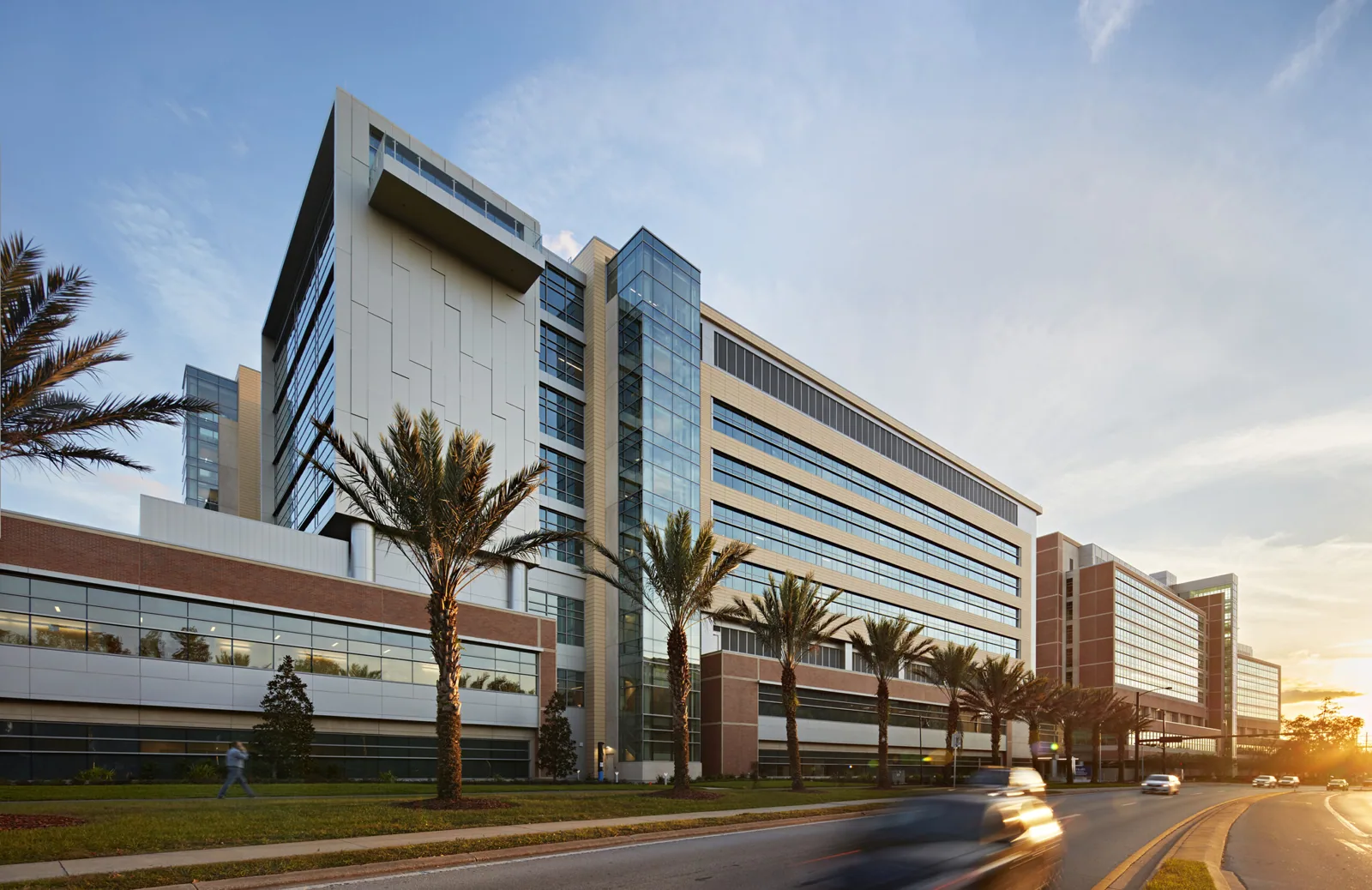
When is a heat-aged roof near the end of its service?
Signs of the end are consistent: cracks at many places, shrinkage that has pulled flashings loose, a surface that no longer takes a patch, repeated leaks at seams or fasteners and insulation that holds moisture. At that stage the cost of repeated repairs builds toward the cost of replacement, and a planned reroof is better than emergency work during a storm. A cool roof installation in the replacement reduces heat load on the roof and can lower the surface temperature, which slows aging in the new system.
Code enters at the permit date. Permit-date rules apply to the new roof: the state builds on the 2024 International Building Code, and mandatory statewide energy-code enforcement begins July 1, 2026, which can mean more insulation than the roof being replaced. Cost drivers include tear-off, insulation depth, reflective membrane choice and equipment lifts. A roof capital plan places the date range for action beside the budget.
What should the owner send first?
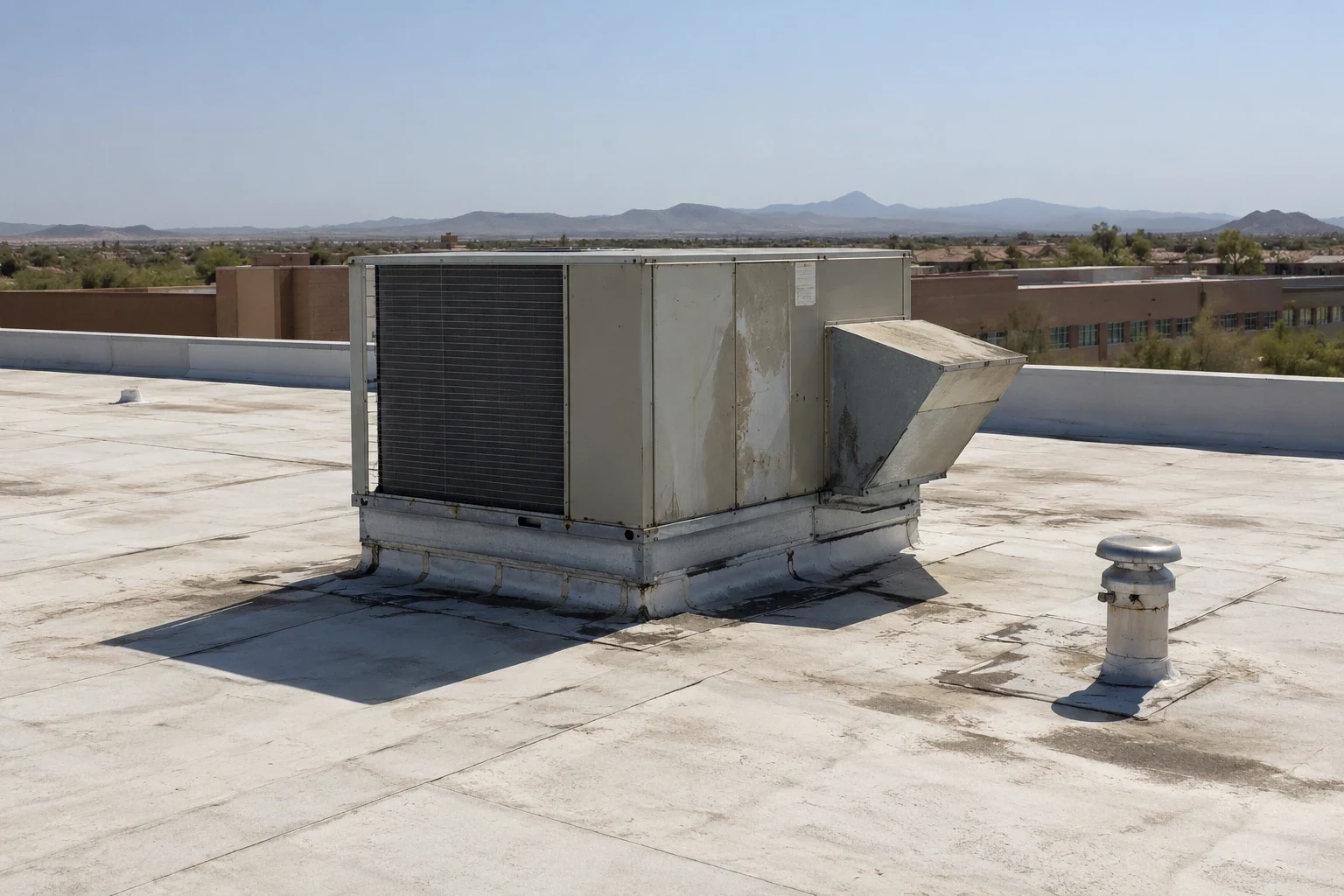
Send the age of the roof if known, the membrane type, any coating history, past repair records, leak dates and photographs of cracks or chalking. If a building has rooftop equipment that discharges heat, such as exhaust fans or condensers, mark their locations.
The city's features map names Green Valley, Bloomington and Little Valley as places we can route to, and a property in Hurricane or Washington City first needs a local licensing check. We return a surface condition record, a repair scope and a restoration or replacement option side by side. The seam failure list and the ponding locations are added to the record so the owner sees how heat wear interacts with water.
Commercial Roofing Questions
Is chalking a sign the roof is failing?
Not by itself. Chalking shows the surface layer is wearing, but the roof may still be flexible and watertight. We test flexibility and seams before judging.
How often should a sun-exposed roof be inspected?
Before the summer heat and before the wetter months is a practical rhythm. Photographs taken at the same spots each time make small changes visible.
Can a reflective coating lower the building's cooling load?
It can reduce heat gain at the roof, but the effect depends on the building, insulation and equipment. We do not promise a specific saving.
Why do some seams fail on hot days?
Heat expands the sheet and pulls on fixed points. A seam that was marginal when installed opens first, which is why we probe seams in summer.
Does heat damage affect a manufacturer warranty?
Warranty terms vary, and many exclude normal weathering. We read the documents you give us and flag any terms about maintenance or notice.