
Commercial Roofing in River Road Corridor, St. George, UT
River Road Corridor Overview
Along the River Road Corridor, the first decision on any commercial roof is how early the crew has to start. The NOAA station in St. George averages a daily high of 101.9 degrees in July, so a walk that begins after mid-morning may leave a membrane too hot to probe, press or weld without damaging it. Washington County's arterial map labels River Road as a named route in the regional network, which gives us a clean dispatch reference. The city's Consolidated Plan adds that a large share of St. George's commercial buildings date from 1980 or later, so many roofs in the area have had time to collect patches, overlays and worn flashing. A commercial roof inspection sorts those layers into confirmed condition and open questions before anyone commits to a repair scope.
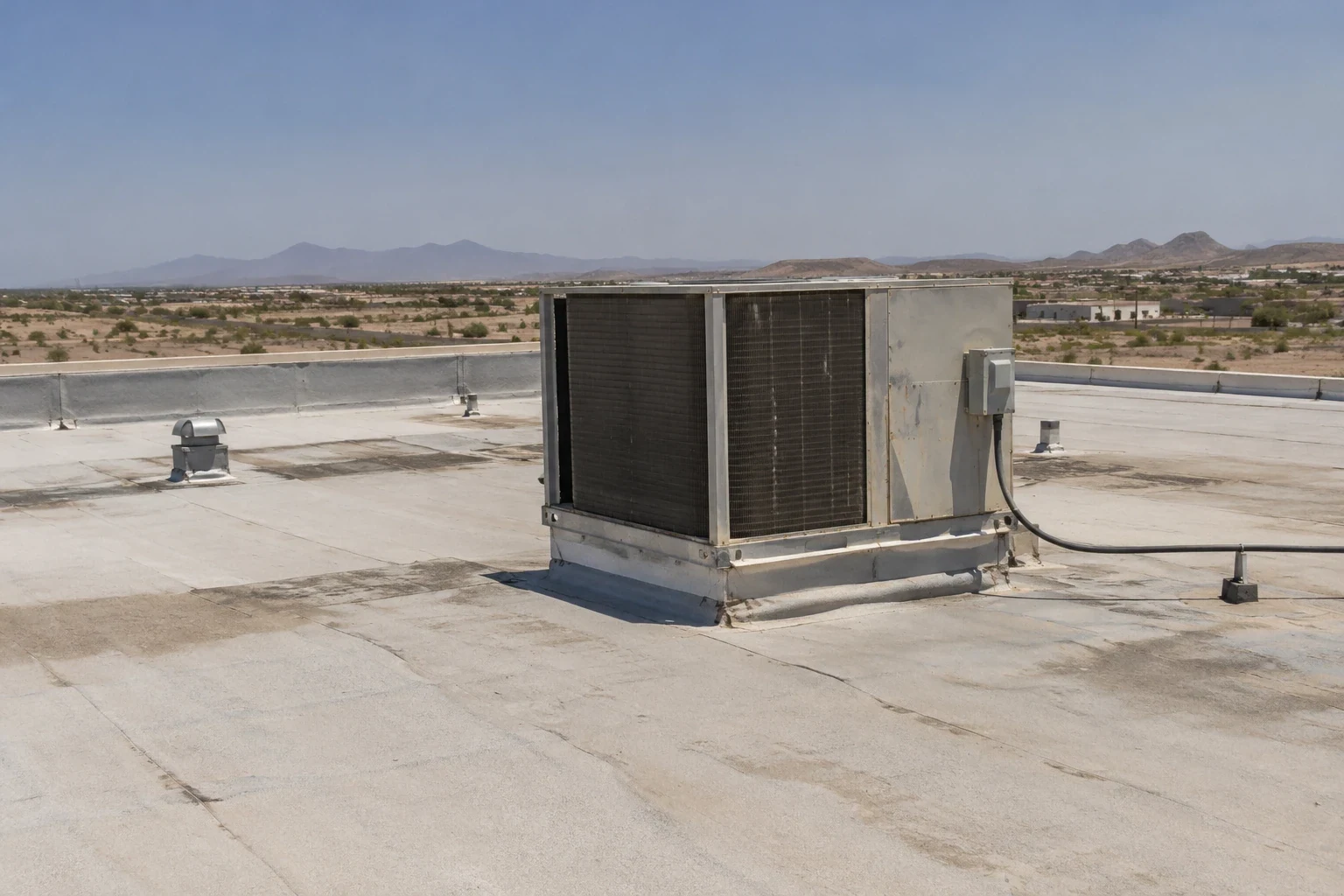
What does a roof from the last four decades need checked first?
A building that dates from the 1980s or later can carry several generations of roofing work on one deck. The first generation may be a built-up or modified bitumen roof, a later one a single-ply overlay, and the newest a coating over whatever was already there. Roof age, assembly and overlay history all need confirmation at the building, because a corridor name tells us nothing about what sits under the surface. We look for the lap lines of earlier repairs, blisters that mark trapped moisture, and edges where old metal was left in place under new membrane.
Those findings decide the repair boundary. A roof with one wet corner behaves differently from a roof whose insulation has absorbed water across several bays. We separate the two on paper, with photographs, so the next decision rests on moisture evidence rather than on how worn the surface looks from the parking lot.
What happens on the first roof walk?
We open with roof access and safe access, because a ladder, hatch or fixed stair that has not been checked can end the visit before it starts. Once on the roof we follow the drain route from the highest point to each outlet. Debris at a scupper, a sagging strainer or a low spot that holds water after a rain all show up in that pass. Curb details and pipe penetrations come next, since sealant and flashing at those points age faster than the field of the roof.
Edge metal and coping get the same attention. Summer heat expands and contracts metal daily, and fasteners at a loose coping joint can back out until wind lifts the edge. We note each item as a patch, a fix or a watch item, so an written roof condition report reads as a list of decisions and not a list of worries.
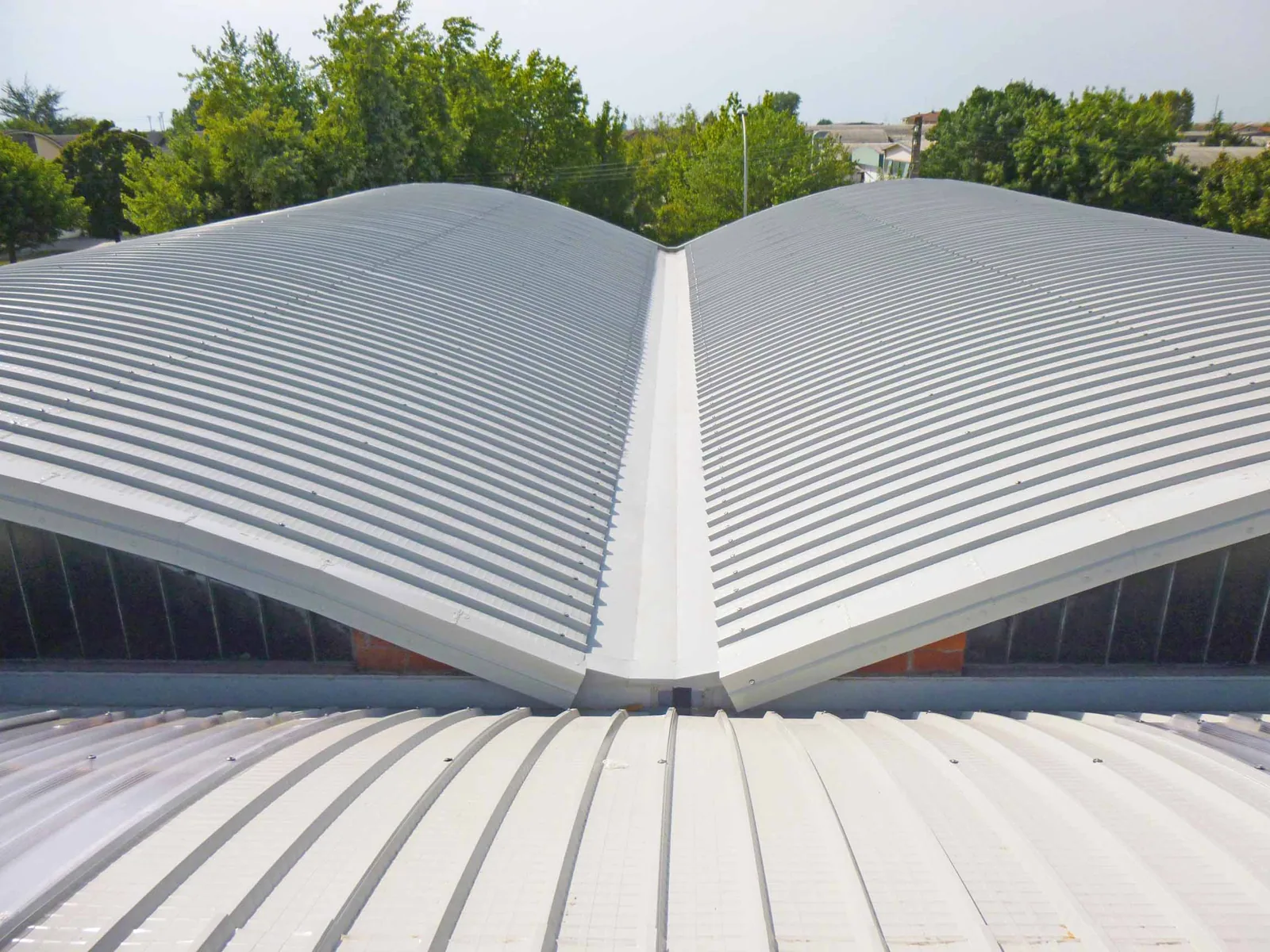
Can an older roof be recovered, or does it need to come off?
A recover keeps the existing layers and adds a new membrane over them, which saves tear-off time and keeps the building quieter for tenants. It works only when the layers underneath are dry and attached. For that reason we pair the walk with an infrared moisture survey when the roof history is unclear. Wet insulation shows as a thermal pattern at dusk, and core samples or probe checks confirm what the camera suggests.
If moisture is limited, we can often cut out the wet sections and still recover the rest. If it is widespread, the recover and overlay option loses its advantage and a full replacement protects the owner's capital better. On the energy side, the 2024 IECC with ASHRAE 90.1-2022 turns mandatory across the state on July 1, 2026, so the insulation value of the finished roof is checked against the pathway that applies before the scope is fixed.
How does the work fit around tenants and traffic?
A corridor reference like River Road tells dispatch where to send a truck, but it does not tell us where the crane sets up or where tenants park. The county's own note says exact property access should be confirmed onsite, and we treat it that way. Before mobilizing we ask for the operating schedule, loading hours, the quietest days for each tenant and any rooftop equipment that must stay running.
In a St. George summer, the best work window is early. Tear-off, adhesive work and seam welding go in the cooler morning hours, and the crew stages material in shade where it can be found. The same planning applies on the neighboring routes the county map labels, such as the St. George Boulevard corridor and the Bluff Street corridor. An owner with buildings on more than one of those routes can sequence them under one roof plan.
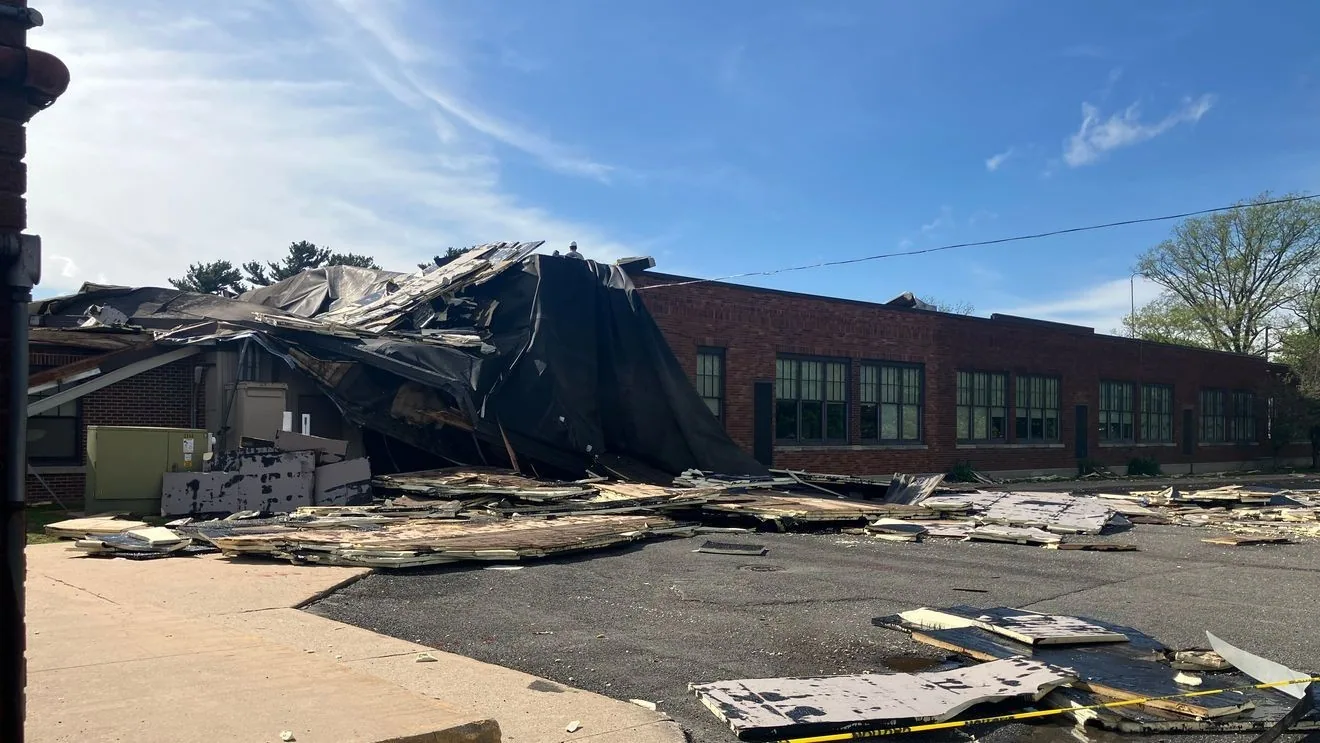
How do we turn findings into a capital decision?
Most asset managers on a corridor like this need three numbers from us in words, not dollars: what must be fixed now, what can wait a season, and what the roof will need within the planning period. The report separates a repair scope from a capital item, and it states which items depend on information we do not yet have, such as the deck type under a concealed overlay or the permit path for a tear-off.
That open-question list is the part owners find most useful, because it names the next decision. For a roof with a clean membrane and a few failed details, the answer may be a targeted repair and a calendar date to inspect again. For a roof near the end of its service, it may be a phased replacement tied to the budget. Either way, the roof capital planning work starts from what we saw on the surface, in the seams and at the drains.

Commercial Roofing Questions
Does River Road have its own roofing requirements?
The corridor name does not change what a roof needs; the building does. What changes the work is the permit path. Utah builds on the 2024 International Building Code and layers state and local amendments over it, so we confirm the edition tied to the permit date and the City of St. George requirements for the specific project before pricing a tear-off or a recover.
When is the right time of year to repair a roof near River Road?
Spring and fall give the widest work window, though repairs go in year-round with an early start. The June normal at the St. George station is only 0.16 inches of rain, while February carries the highest monthly normal at 1.38 inches. A February leak is therefore the one worth documenting, and a dry summer is the time to schedule the fix.
Can you tell roof age from the ground?
Not reliably. A bright surface can hide an old membrane, and a stained one can be fairly new. We confirm age through records, visible lap lines, core samples where the owner allows them, and the shape of the flashing. If no records exist, we say so in the report and list age as an open question.
What should a property manager send before a visit?
Send the address, any past roof reports or warranty paperwork, the roof access method and the hours when the building is quiet. Photos of leak locations inside help us pick where to start. If keys, lift access or fall protection tie-off points are needed, tell us in advance so the visit does not stall at the hatch.
Is emergency service available for a leak along the corridor?
Yes. Our emergency crews respond at any hour, on weekends and on holidays. For an active leak we first stop the water entering the building, usually with a temporary patch or tarp, then return with the moisture evidence needed to plan the permanent repair. Photos from the first visit go into the file for any insurance conversation.