
Commercial Roofing in I-15 and Buena Vista Corridor, Washington City, UT
I-15 and Buena Vista Corridor Overview
A restaurant, a clinic, an office suite and a hotel within a few blocks keep four different clocks, and the one that most limits a roof crew is usually the lunch rush. Washington City reported that Buena Vista Boulevard was widened to five lanes between Main Street and Green Spring Drive, and it describes a mix of retail, food service, medical, professional-office and lodging uses along that stretch. A planned trail segment between I-15 and Buena Vista Boulevard, from Main Street to Mill Creek, adds a public connection parallel to the road.
A corridor visit begins with the building's operating schedule and the route a lift will take, then moves to what separates a leak from a nuisance: drains, curbs, seams and flashings. In July the NOAA mean daily high is 101.9 degrees, so the work starts at dawn.
What do five kinds of use ask of the roof above them?
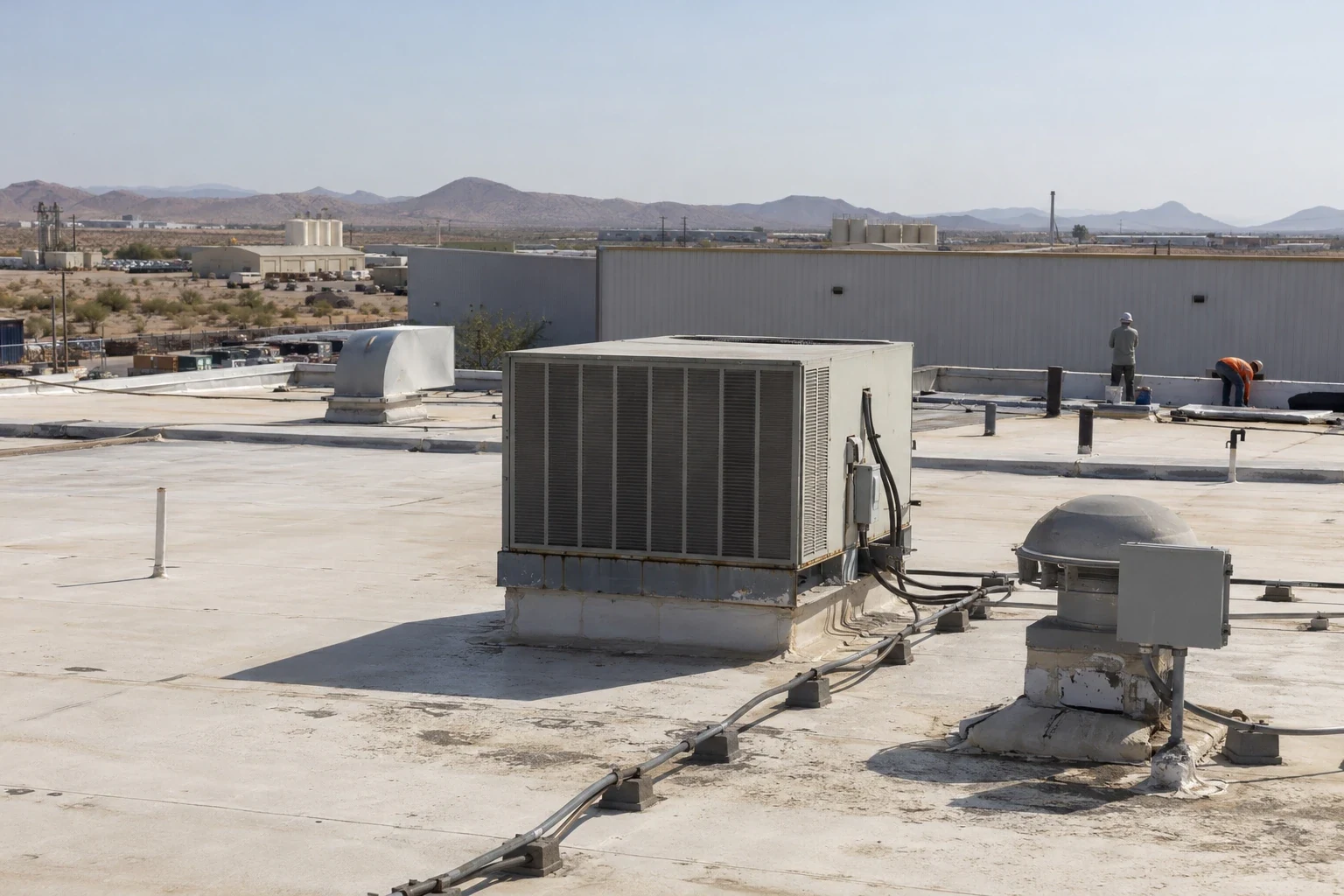
Something different each. Retail roofs carry rooftop units and signs, with canopies and parapets at the front. A restaurant sends grease, heat and steam through exhaust fans, and the membrane near the hood wears faster than the rest. Medical and professional offices carry more air handling, and a leak over an exam room or a records room costs more. Lodging has many small exhausts, one per bathroom, with sleepers underneath.
Because the mix differs by block, one owner's experience does not carry to the next. The roof file is organized by use, one plan and photo set per building, so a manager who holds a shop, a clinic and a hotel along the road can set them side by side. The next decision differs for each, and the record shows why.
Grease deserves a note of its own. A restaurant exhaust hood throws a fine film across the sheet downwind of the fan, and a patch laid over that film will not bond. The surface is cleaned first, a tray at the fan outlet slows the next round, and for a food-service roof the choice of membrane near the hood is weighed against the oils it will see. A hotel roof, by contrast, is a field of small vents and a laundry exhaust, and the question there is which rooms sit under which stretch of membrane.
How do the road, the trail and the hours set the day?
The widened five-lane boulevard moves a lot of vehicles, and a roofing delivery needs a place to stop that does not block a driveway. We ask about loading zones, parking and the neighboring entrances before choosing a lift position, and we bring materials in small loads at quiet hours.
Each building keeps its own rush. A restaurant is avoided at lunch and dinner, a clinic at appointment hours and a hotel at check-in and checkout, and the plan lists those windows for each address. The planned trail adds one more item: a public path between I-15 and Buena Vista will put walkers and cyclists beside buildings that now have only vehicles around them. When it is built, staging, lift reach and fall-zone fencing must account for it. Until then we keep staging on the private side, and a note on the roof plan marks which edges face the alignment so their perimeter metal gets a closer look at every visit, since a loose piece there falls toward the public.
Which details fail first in a retail and service corridor?
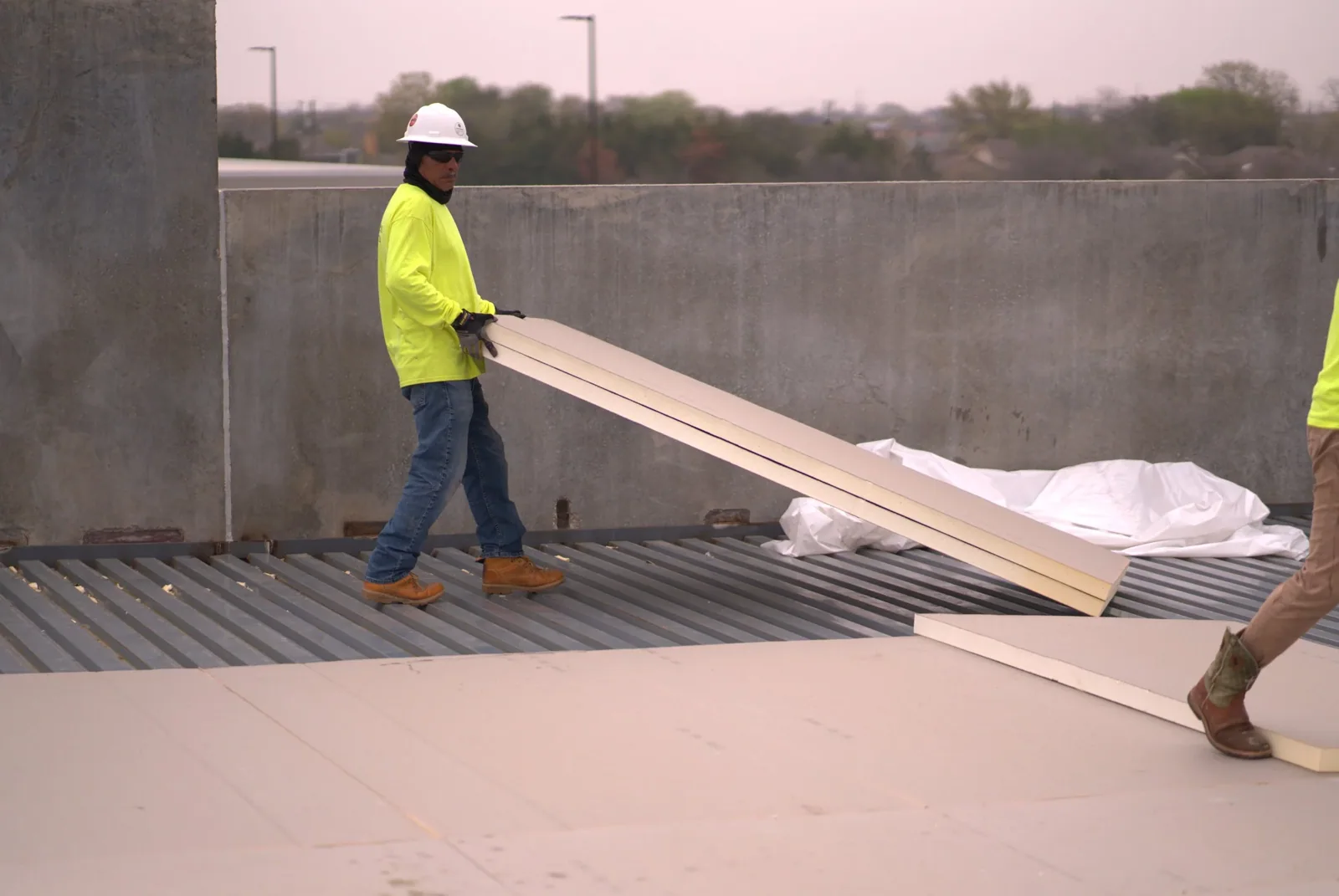
The ones tenants and trades have touched. Unit and exhaust curbs, plumbing vents, conduit supports and sign mounts each cut the membrane. Canopies attach to walls and can open a path behind the flashing. Drains and scuppers collect dust in a dry climate and block at the first storm.
- Rooftop unit and exhaust curbs, with the membrane turn-up at each
- Canopy and sign attachments at parapets and walls
- Drains, scuppers and the path to the outlet
- Vent boots, conduit supports and walk paths
- Seams, laps and prior repairs near walls
A penetration flashing repair rebuilds a failed curb detail, and edge metal and coping work secures a parapet cap.
What does the moisture evidence tell an owner?
Whether a leak is local or wide. With 9.31 inches of precipitation in a year at the station, a roof can look sound for months and show its first leak after one heavy storm, so we ask for stain dates and compare them with the weather. Each stain is traced upslope, doubtful areas are tested and an infrared moisture survey maps wet insulation across a larger roof.
At a restaurant, the membrane near the exhaust is compared with clean sheet elsewhere on the roof, since grease changes the surface. At a hotel or clinic the wet areas are tied to the rooms below. The record lists confirmed findings first and open questions second, an order that lets a manager quote the first to an owner or lender and attach the test that would close each of the second.
Moisture readings are taken at the same spots on repeat visits, so a drying roof and a spreading one can be told apart.
How far does each repair extend?
To sound, dry material. Each defect gets its own limit here: a patch for a puncture, the last good inch of bond for a seam and the first sound corner for a curb. Saturated insulation pushes the line out to the wet edge. Because a hot membrane can resist a clean bond, we test adhesion before committing to a large repair.
The statewide energy path begins on July 1, 2026, so the City is asked which code edition the permit date triggers before a reroof is priced, because insulation can change the cost. Neighbors in the corridor span restaurant roofs, medical offices and hotels, each adding use-specific checks to the same method.
What should the owner decide next?
On a busy corridor the decision is mostly about timing: whether repairs keep the roof sound until the next lease event or a project belongs on the calendar now. The timing question usually turns on the lease calendar. Repairs made ahead of a lease renewal disturb a tenant less than an emergency during one, and a dated record of what was inspected and fixed helps when the building is sold or refinanced. We price a repair, a coating restoration and a replacement from the same findings so the comparison is fair.
An owner with other properties can read them in the same record, such as in the Historic Downtown along Telegraph Road or at the Santa Clara Gateway. Send the address, the roof papers, the access rules and the busy hours, and the first visit is aimed at one repair or capital question.
Photographs of the work area, the staging spot and the restored driveway go into the file at closeout, so a tenant on the corridor can see what changed.
Commercial Roofing Questions
Can a restaurant roof be repaired during service?
Usually, with noisy steps outside the rush and the exhaust fan left running. Lifts of exhaust units wait for a closed period.
Why do corridor roofs differ so much?
Each use loads the roof differently: grease, air handling, signs or many small vents. We inspect for the use below.
How are deliveries handled on a busy road?
We stage materials away from driveways and bring small loads at quiet times.
Does the widened road change the work?
It changes access. Lift positions and delivery times are chosen to keep driveways and turn lanes clear.
How does the permit date affect a corridor reroof?
It fixes the code edition and the energy pathway. The City confirms both, and we price after.