
Rooftop Equipment Curbs and Supports in St. George, UT
Rooftop Equipment Curbs and Supports Overview
A rooftop unit does not sit still. It vibrates, it cycles on and off through the day, and in a St. George July it works against a NOAA mean high of 101.9 degrees while the membrane around its base bakes. All of that movement lands on one strip of flashing, which is why a curb is the first place we look on most rooftop leak calls. The visit starts at the curb, the membrane turn-up and the clearance around the equipment.
A loose base, a split corner or a blocked service path can change the repair scope, so we separate the curb repair from questions about the field membrane before anything is priced. Share the roof plan and the access rules, and a commercial roof inspection documents that boundary first.
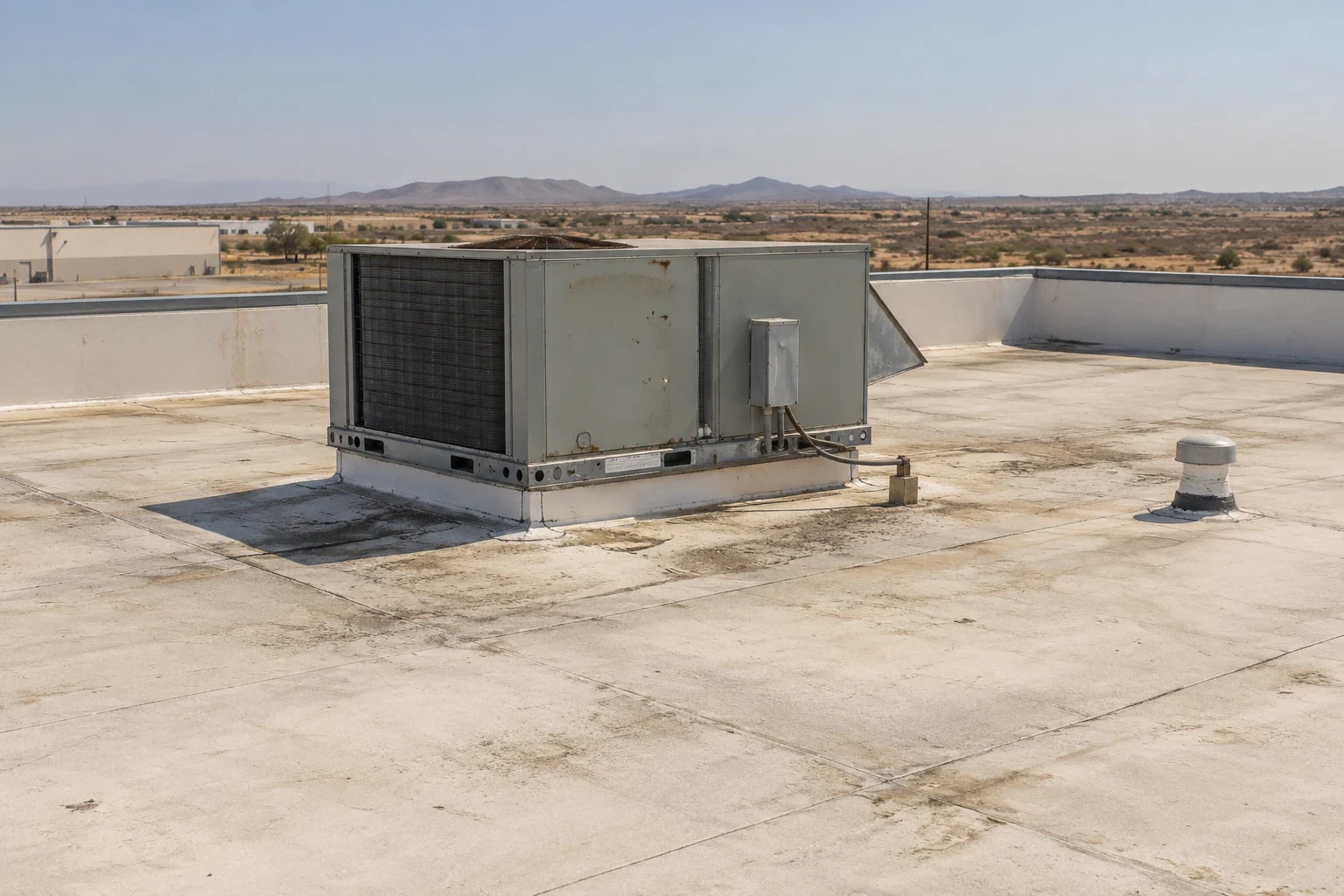
What is moving at the curb?
The unit, the curb and the roof, each at its own pace. A rooftop unit transfers weight and vibration through its base. The curb has to stay stable, sit high enough above the roof surface and meet the roof without leaving a path for water. We check the corners, the fasteners, the counterflashing, the membrane termination and the seams close by. If the unit has shifted, we look for strain where flashing meets the sheet.
A water stain below is a clue, not a map of the opening. We follow the water uphill, and an infrared moisture survey can mark the wet area when the assembly suits the method. We record what is visible, what needs a closer look and whether the equipment contractor must act before roofing begins. That order keeps a small flashing repair from turning into a guess about the whole roof.
How does a support meet the roof?
Differently for each machine. Support details vary with the equipment, the curb height, the roof slope and the membrane. A pipe stand with an improvised base can puncture the sheet, and a low curb can hold water against a vulnerable edge. We identify the membrane and the existing flashing first, then decide whether the repair can be made at the transition or whether the unit has to be lifted and reset.
Mechanical trades may need to disconnect, brace or move equipment, and that work is arranged before the roof opening is exposed. TPO and EPDM use different seam and flashing methods, so the detail follows the installed system and never a generic patch. The decision is simple: stabilize the support, restore the membrane transition and keep the work inside the approved scope.

When should the crew be on the roof?
While the surface is still manageable. Heat changes how long people can safely work at a detail and how materials behave in the hand, and the July and August normals are reason enough to book an early window. The station figure is a planning input, not a reading at your property, so we check the surface at the start of the shift. Access, equipment status, shade and the facility schedule are confirmed before a start time is chosen.
In Fort Pierce Industrial Park, where M-1 zoning allows fabrication, a unit may crowd its roof with exhaust and makeup air, and a building in St. George Industrial Park needs its own look. In both, the unit list and the access instructions come before the dispatch. Drain and scupper work joins the visit only when the curb repair has changed the water path.
What belongs in the repair scope?
One line per curb or stand, naming the membrane transition, the equipment coordination and the limits of the repair. Photographs show the starting condition and the finished flashing. Open questions are marked: concealed moisture, a corroded support, a unit that cannot move during the approved window. Each of those can change labor and access, so each is settled before the work expands.
When several curbs sit close together, every penetration is checked individually, because a sound flashing at one base says nothing about the next. A roof condition report keeps those observations for a maintenance or capital decision, and if the roof is beyond curb repair, replacement becomes a separate option with its own sequence.
Where a curb sits in a low spot, the scope adds a small cricket or a drain nearby so water does not stand against the new flashing, and that item is priced as its own line.
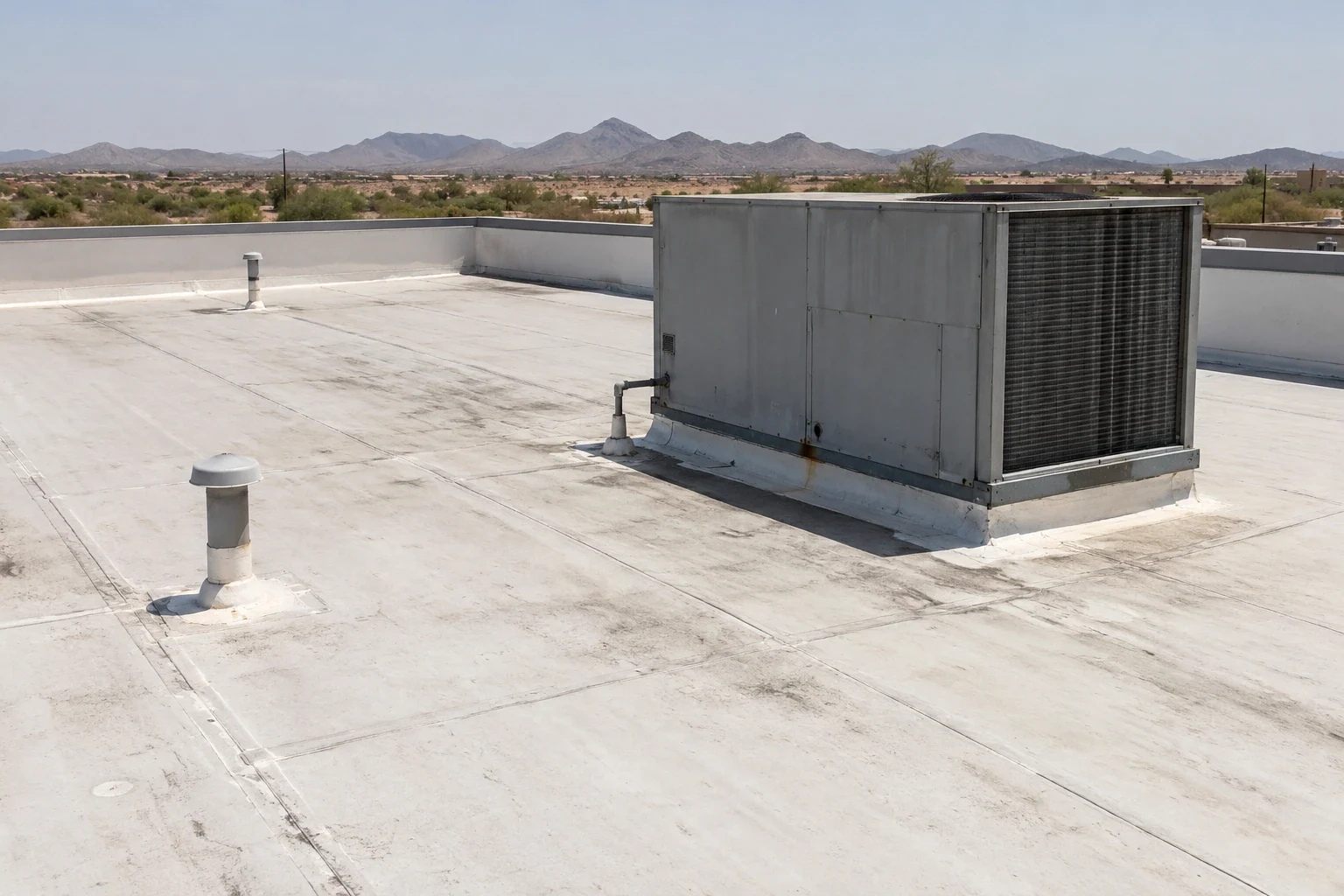
Which conditions change the price?
The detail that has to be restored. A curb with an open flashing edge takes less labor than one crowded by piping, conduit or a neighboring unit. A support that must be reset adds lifting and mechanical coordination, and concealed moisture can call for a separate allowance once the assembly is open. We name these differences before the estimate, so the owner can compare a defined repair with a wider replacement.
The estimate states the unit count, the repair limits, which trade handles which step and the work hours assumed. If access is restricted, the steps for getting people and material to the work area are included. Those details make a price usable for approval and keep the scope from being decided in the field.
How do we close the work area?
With a check at every repaired transition: secure flashing, sealed edges and no loose material. Photographs show the curb before work, the exposed detail where it was opened and the finished tie-in. If a unit was moved, the equipment trade confirms its position and operation before the area goes back into service, and the finished detail is compared with the scope.
The closeout lists anything that remains outside the scope, so the property record shows which base was repaired and which was not. A clear record helps maintenance staff route the next concern to the right place and keeps every curb from being treated as one system. For an active leak, call, and we confirm availability and the first safe step.
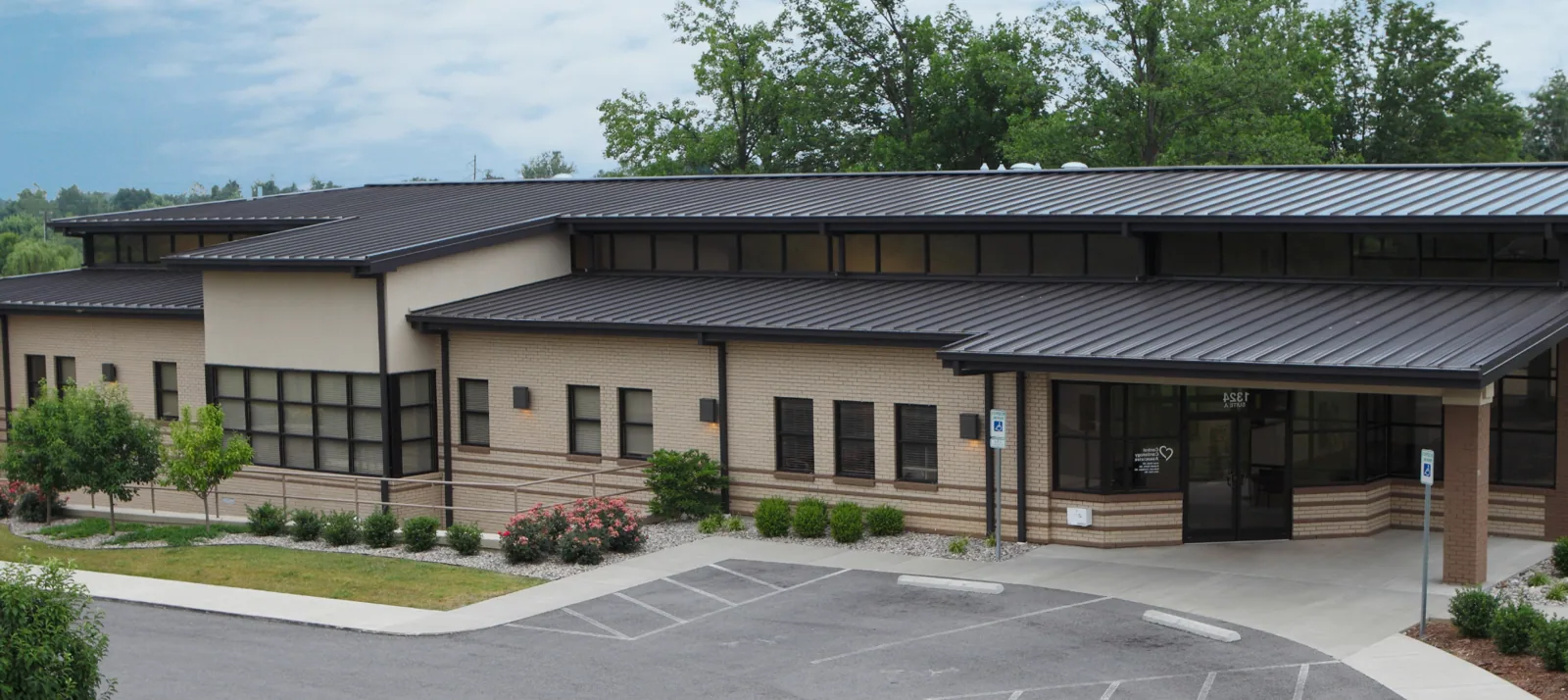
What should the asset manager send?
The unit list, the roof plan, the available access window and recent service notes, plus which trade controls disconnects and lifting and whether any equipment must stay live. For a roof with several sections, mark each curb and name the membrane where it is known. Much of the city's stock postdates 1980, yet that tells us nothing about one curb, so photographs of the existing base help. We plan a visit that checks the visible detail without promising access to concealed areas or equipment controls.
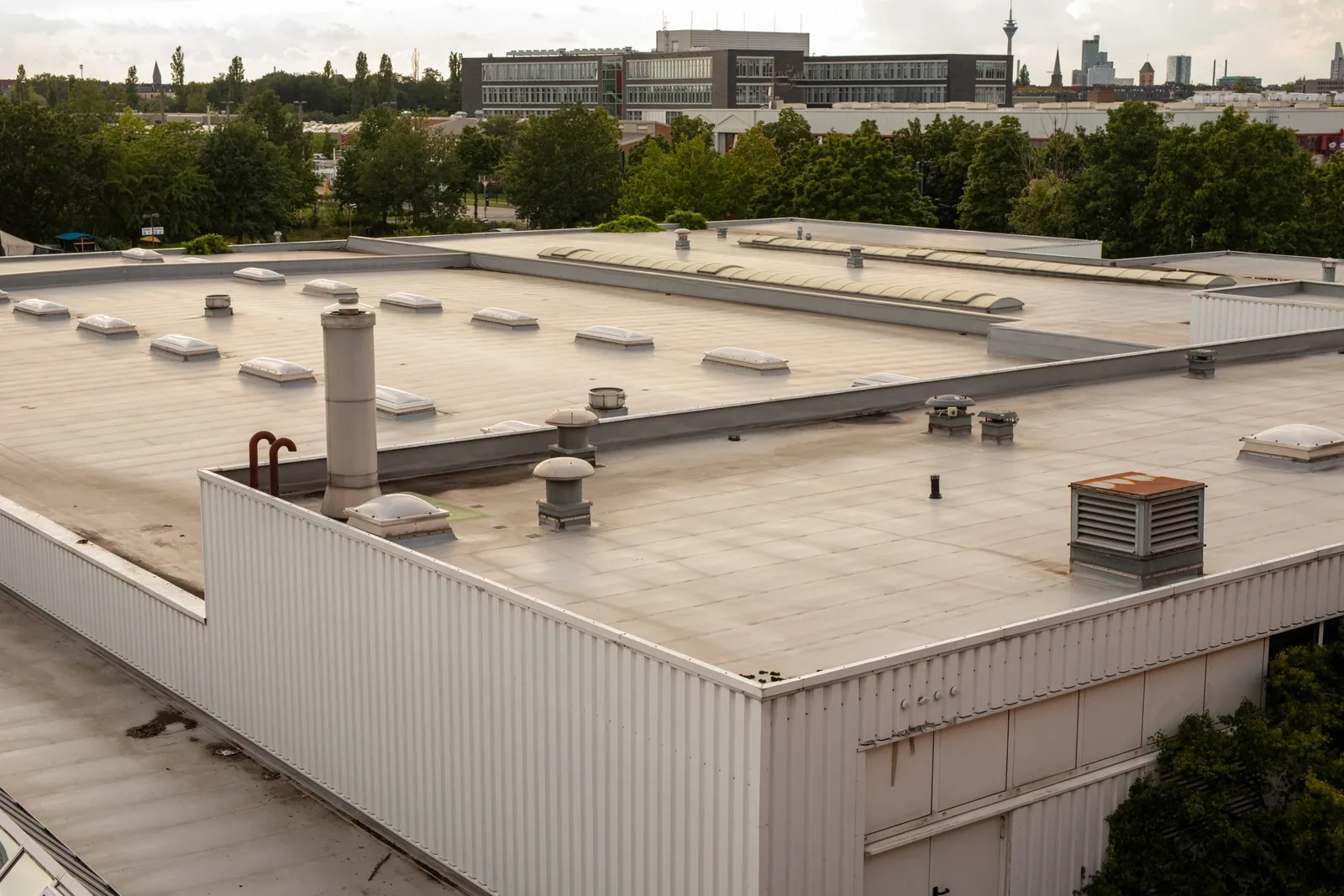
Commercial Roofing Questions
Can a leaking curb be repaired with the unit running?
Possibly. We check whether the curb and membrane can be reached safely while the unit operates. A lift or a disconnect sets the window with the equipment trade first.
Does a new curb solve ponding around the unit?
Not by itself. Curb height protects the penetration, while drainage depends on slope, drains and the surrounding roof. We record both and separate them.
What if a pipe support punctured the membrane?
We locate the support base and the opening, then check for wet areas and seam damage nearby. The repair follows the installed system and whether the stand can be reset.
Can several supports be priced together?
Yes, when each is visible and the limits are clear. A list and a roof plan let us group similar details while keeping a repair allowance for each.
Will the visit tell us whether the equipment is failing?
No. The roofing visit judges the roof interface and the support condition. Mechanical performance belongs to the equipment specialist.