
Spray Polyurethane Foam Roofing in St. George, UT
Spray Polyurethane Foam Roofing Overview
A sprayed foam roof has no seams to open, which moves the failure points to the coating, the drains and the details. Foam and its protective coating work as one assembly: the foam shapes the surface, adds insulation and bonds to the substrate, and the coating shields it from sunlight and water. In St. George, where the NOAA station's July and August daily highs run near 100 degrees, the coating takes the sun every hour, and a worn coating is the first sign the foam is losing its cover.
We read the roof in that order: coating, foam, then the drain route and penetrations. The asset manager receives a documented condition, a repair, restoration or replacement choice and the open questions behind it. A commercial roof inspection starts the record.
What does the foam surface tell us?
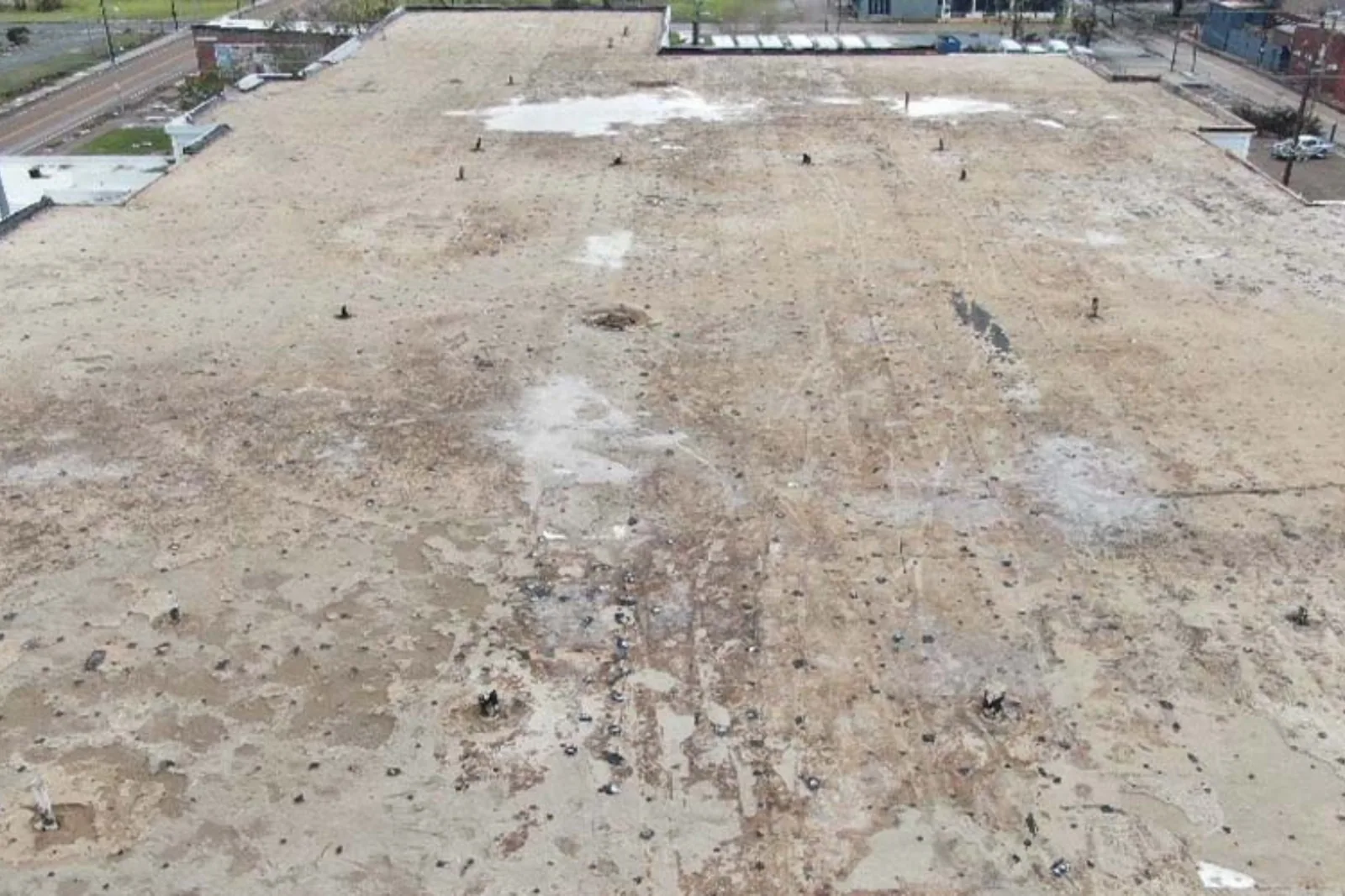
Cracks, exposed foam, blisters, soft spots, punctures and changes in slope. Exposed foam turns from white or tan to orange and then to powder under ultraviolet light, so any place where coating has worn through gets repaired first. Foam is also soft enough that a dropped tool, a heavy boot or a bird's beak can open it, and a small opening that is not coated lets water into the foam.
We check whether the foam is still bonded to the substrate, whether water has entered through a breach and whether the coating is worn through or merely discolored. At curbs and pipes, small changes in profile can steer water toward a detail, so we inspect the coating transition and the reinforcing fabric. Service paths matter too: foam tolerates light foot traffic, but a route walked every week wears the coating first, and walkway pads laid along it cost far less than recoating. Where wet foam is suspected beyond what the surface shows, an infrared moisture survey picks the areas for small test openings; the scan does not replace opening the assembly.
Does the foam still send water to the drains?
Foam can be sprayed to make slope, so the profile and the drain locations have to be compared. Settled areas, ponds, debris at the strainers or a coating that has split at a low point all say water no longer follows the intended route. A new coat does not create missing slope; the scope has to say whether the repair is local, adds new foam or changes a drain or edge detail.
Rainfall at the station totals 9.31 inches a year, and the monthly extremes are 1.38 inches in February and 0.16 in June. A dry-month visit may not expose a restriction, so we check the bowl, scupper and flow path for signs of retention. A confirmed outlet problem goes into drain and scupper service, and perimeter metal and gutters are matched to the foam height so water leaves the assembly cleanly.
Can the existing foam be restored?
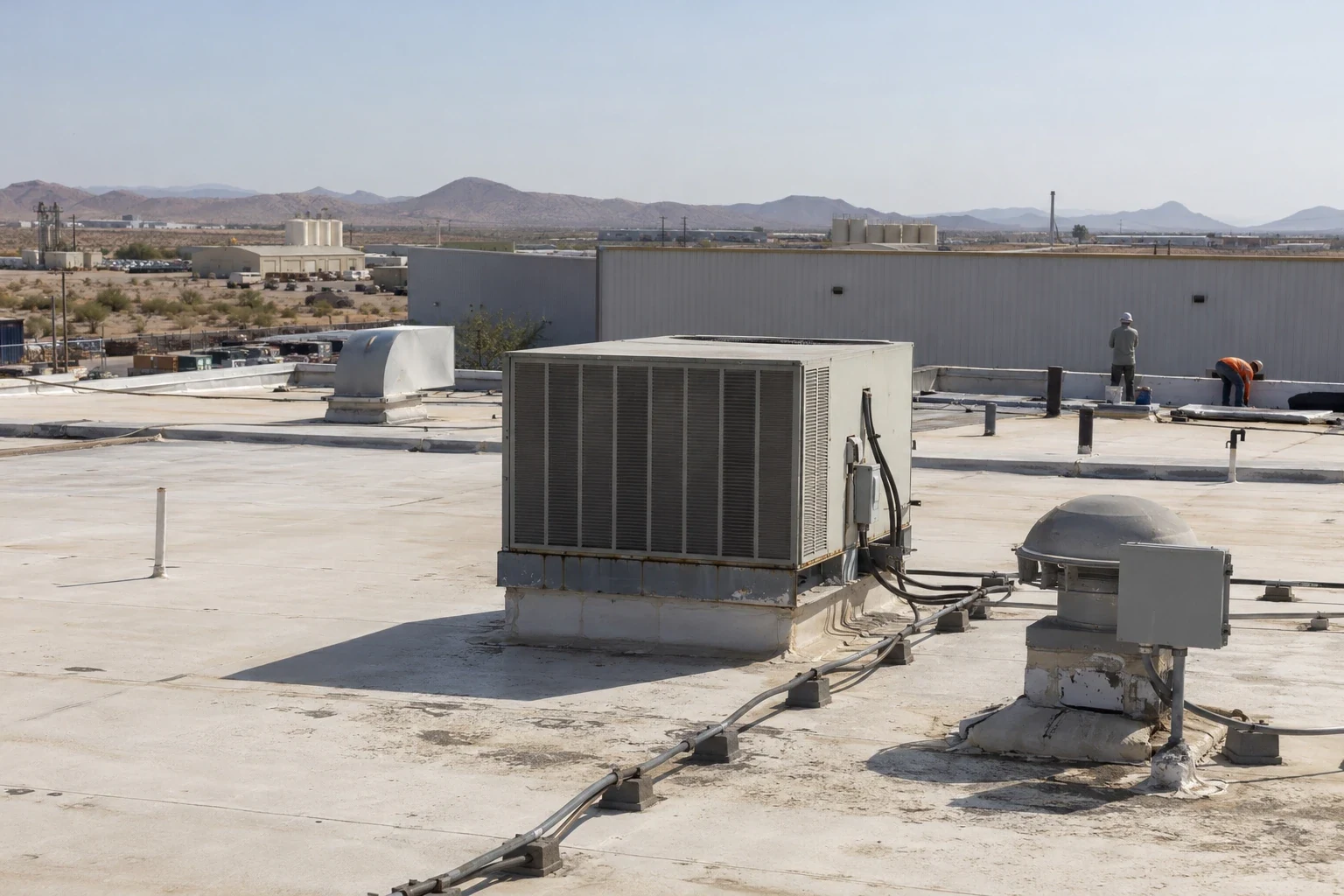
When the foam is bonded and dry, the profile still drains and the coating can be prepared for another layer. We map exposed areas, test adhesion where needed, cut out unsound foam and rebuild the details before coating. A coating cannot fix a saturated substrate, loose foam or a curb that keeps taking water. Those conditions get repaired or removed before a restoration is priced.
We identify the existing coating and choose a compatible system rather than assume any elastomeric product will bond. The owner compares a silicone coating and an acrylic coating on roof condition, water exposure, product requirements and maintenance plan. They are not interchangeable just because both are liquid-applied, and a coating restoration review records the adhesion and preparation each one needs.
Thickness is part of the specification. A coating goes on at a stated film thickness that is checked with a gauge while it is wet, and a restoration that stacks coats over a chalky, unprimed surface can peel. The scope sets the primer, the number of coats and the cure time, and it keeps the crew off the surface until it can carry foot traffic.
What has to be ready for foam application?
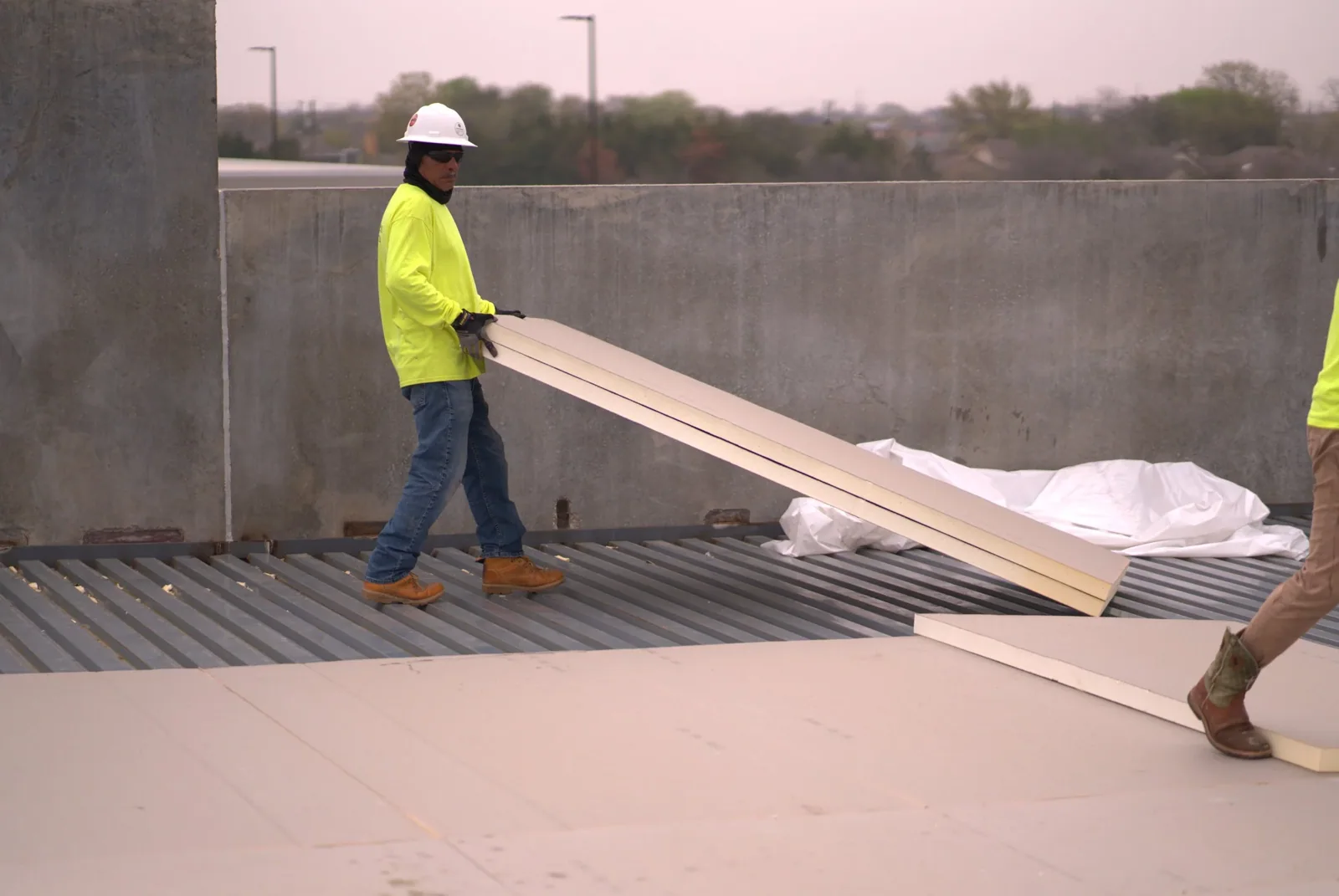
A clean, dry substrate, controlled overspray, suitable air and surface temperature and wind that will not carry mist onto cars, glass or neighbors. We protect adjacent equipment and entries, stage the components so the crew can build an even surface, and cover or relocate anything the overspray could reach. Foam goes down in lifts, so each pass is checked for thickness before the next.
Summer heat shortens the handling window, and a roof surface that is too hot or too cool changes the foam's rise. Planning follows the product's limits and the conditions on the day, not the calendar alone. Fort Pierce Industrial Park is largely M-1 land with warehousing, fabrication and similar uses, so delivery and operating hours are confirmed with each property team before the rig arrives. The same check applies in St. George Industrial Park, where the roof plan, not the park name, decides the spray window and where overspray could land.
When is a patch enough?
A puncture or small coating breach can be repaired when the foam below is dry, bonded and shaped correctly. We cut back to sound foam, rebuild the profile if needed and restore the coating with reinforcement across the repair. If cracks keep returning along a seam, a drain stays wet or broad coating loss exposes the foam, a patch leaves the cause untouched, and the report shows the limits of both choices. Where a patch is enough, we say how long we expect it to serve and mark the area for the next walk.
Cost and timing move with preparation, foam replacement, coating compatibility, edge metal, penetrations, access and weather. A repair scope sits beside a replacement plan when the foam is broadly deteriorated. Utah's State Construction Code takes in the 2024 International Building Code with amendments, and the City names the edition tied to the permit date before we price.
What should the foam roof file capture?
A roof plan marked with repairs, drains and penetrations, plus photographs of the foam profile, coating and detail work. We record where the substrate was opened, what came out and any condition still under watch, so facilities staff can tell a repaired breach from a new leak path. A planned maintenance program tracks coating wear and drains before a small opening spreads, and the file tells the next inspector exactly where to start.
Send the roof records, service access and operating hours. We will document whether the foam can be restored, needs repair or has reached a replacement decision.

Commercial Roofing Questions
Can a damaged foam roof be patched in one area?
Yes, if the foam around the damage is dry and bonded. We cut back to sound material, rebuild the surface and recoat with reinforcement.
How do we know the foam is wet below the coating?
Soft or distorted areas, coating openings and staining around drains point to it. A moisture survey picks test openings, and the openings confirm.
Does a new coating fix low spots?
No. A coating restores the protective surface and does not create slope. Settlement and blocked drains are corrected first.
Can foam be sprayed in St. George summer heat?
Yes, within the product's limits. The crew starts early, checks surface temperature and wind and sprays only what can be coated that day.
When should an SPF roof be replaced instead of recoated?
When the foam is broadly wet, loose, badly sloped or too degraded to take a compatible coating. We map the area and test the substrate before pricing.