
Ponding Water Roof Repair in St. George, UT
Ponding Water Roof Repair Overview
Water that is still on a flat roof a day or two after the last rain is a condition of the roof, not of the weather. In St. George, UT, the station's yearly precipitation normal is only 9.31 inches, so a pond on a roof here often comes from something other than rain: condensate lines from rooftop units, a wash-down, a blocked drain that fills during one heavy storm, or a low spot that has sat unnoticed through dry months. The summer sun then bakes the standing water and the dirt it leaves behind, which makes the ring around a pond a useful marker on a walk.
Our first visit measures where the water sits and why. A low area over a drain that works is a different problem from a pond in the middle of a span, and the repair for each is different. The asset manager gets the observation, the likely cause and the choices, with the open questions stated.
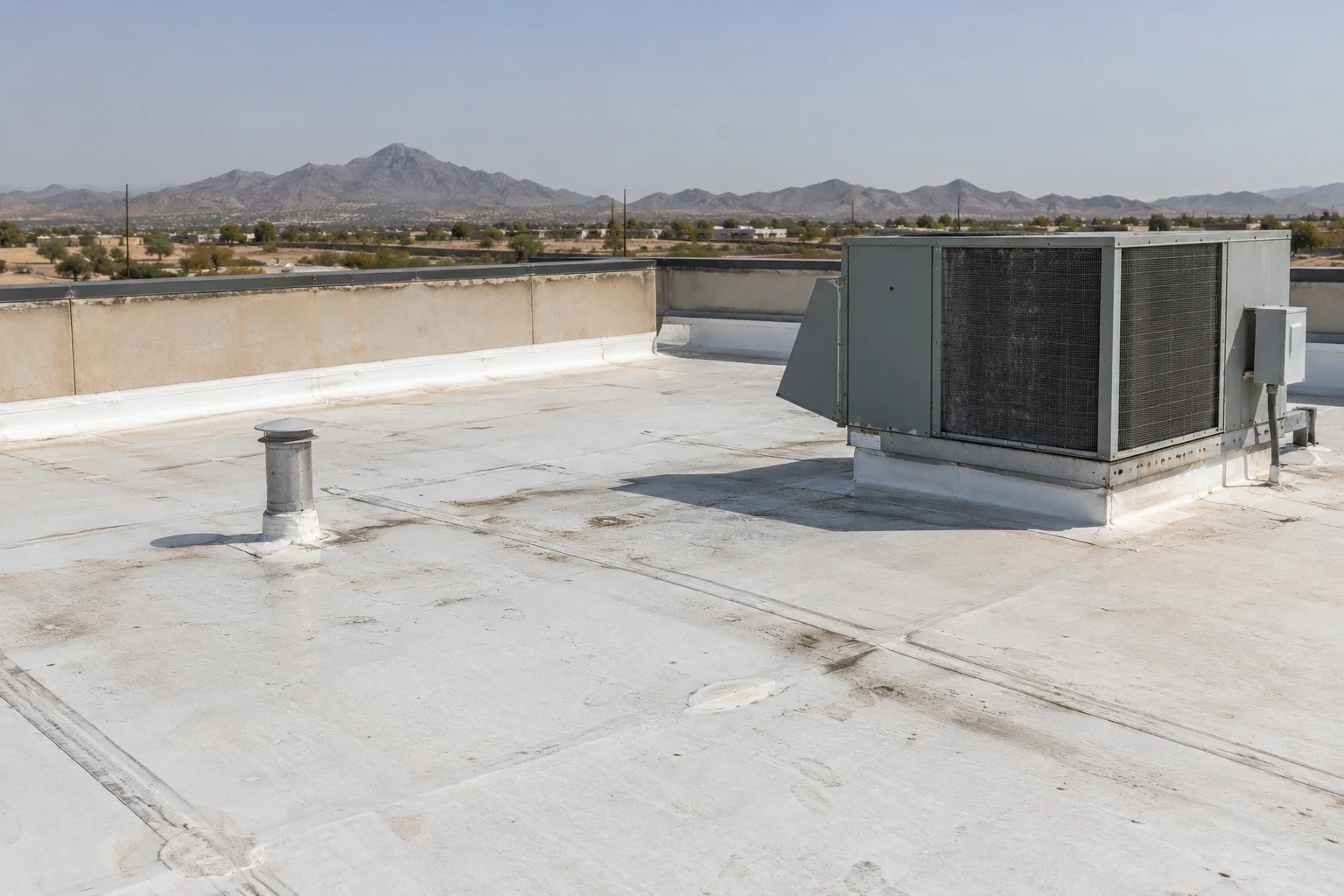
What does a pond tell you about the roof?
The shape of the stain says a lot. A pond with a clean ring and a smooth outline suggests a slow depression in the deck or insulation; a pond with debris and a dark line often points to a drain that is partly blocked; a long, narrow pond along a seam may follow a structural line. We measure the depth, mark the extent on a sketch and photograph the roof from a few places. When the surface is dry, the dirt line, algae trace or stained seam lets us see where the water usually sits.
Where the membrane has been under water for long periods, seams, flashing and sealants are checked more carefully, since standing water stresses every joint it touches. The seam failure pattern at a pond edge is a common finding, and we record it with the pond and not as a separate problem.
Where does the water go, and is it getting in?
A ponded roof may or may not leak. Water can sit on a sound membrane for years with no sign below, while a small defect under the pond can wet insulation for months before a stain shows. We look at the membrane under the pond for blisters, splits, softened laps and punctures, and we compare it with the surrounding field. An infrared moisture survey can show wet insulation under a ponded area without opening the roof, and a core can confirm what the scan suggests.
Any area that has not been tested stays an open question in the record. We do not describe a ponded area as dry or sound because no leak has been reported. Interior reports, ceiling stains and the age of the stain on the roof are all collected and compared before a repair is proposed.

Is the drain doing its job?
Many ponds trace to the outlet. A strainer clogged with leaves and grit, a drain bowl set slightly high, a scupper whose opening is too small or a downspout that backs up can hold water on a roof that is otherwise flat and sound. Heavy rain arrives rarely here, and the station's monthly normals show February as the wettest month and June nearly dry, so a clogged outlet can go undiscovered until a single storm finds it.
Heat adds a second effect. Water held on a membrane that reaches the surface temperatures of a St. George summer cycles between hot and cool each day, and the repeated swing can speed the heat and UV wear that already affects the surface. Mineral deposits and algae left as the water evaporates also hide the condition of the membrane beneath, so we clean the pond area before judging it.
We clean and test roof drains and scuppers, check the slope toward each outlet and look at the pipe below when access allows. If an outlet is set too high relative to the membrane, resetting the drain bowl or adding a sump may drain the pond. A warehouse roof often has a wide span between drains, so a small settlement can hold a lot of water.
Can the pond be fixed without replacing the roof?
Sometimes. A shallow pond over sound insulation can be corrected with tapered insulation or built-up crickets in the low area, which direct water to the drain without lifting the whole roof. A pond caused by a clogged or poorly set drain is corrected at the drain. Where the deck has deflected, a structural opinion may be needed before the surface is built up, because adding material to a deck that is still moving does not solve the cause.
The existing membrane influences what is possible. Heat-welded single-ply membranes are usually repaired locally, while older assemblies may need a different approach. Roof insulation and cover board decisions determine the slope that can be added, and the finished height must still clear curbs, doors and parapets. We lay out these constraints before the owner chooses.
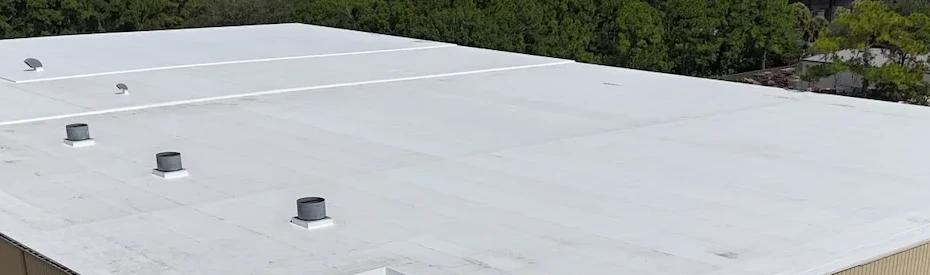
When does ponding become a capital question?
If the water is widespread, the insulation is wet or the deck has moved, a repair stops being the right tool. A tear-off with new tapered insulation then corrects the slope across the roof and renews the membrane at the same time. A roof recover over an existing sheet is possible only if the old roof is dry and well attached, and adding another layer over wet material traps the water.
Code and energy requirements enter at the permit date. The statewide energy-code start of July 1, 2026 affects insulation values when a roof is replaced. Cost drivers include the number of layers removed, the amount of tapered insulation, the number of drains and the equipment that must be lifted. Preventive roof maintenance that includes drain cleaning before the wetter months can keep a smaller ponding problem from growing.
What should the owner send first?
Send the roof plans if they exist, the location of known ponds, interior stain reports with dates, drain maintenance records and any prior repairs. Tell us where rooftop equipment drains onto the roof, since condensate is a frequent source that has nothing to do with rain.
For buildings in the Riverside Business Park or elsewhere in St. George, we sketch each pond, record the drain connections and return a repair scope next to a capital option. A property in Washington City or Hurricane first needs a local licensing check, which we complete before dispatching a crew. We close each visit with a photograph set and a list of areas still unconfirmed.
Commercial Roofing Questions
How long can water stand on a roof?
A day or two after rain is common on flat roofs. Longer than that suggests low spots or blocked outlets, and the membrane at that spot should be checked.
Will ponding void a roof warranty?
Some manufacturer warranties limit coverage for standing water. We read the terms you provide and tell you what they say about ponding before any repair is made.
Can you add drains?
Often, if the structure and plumbing allow. A new drain or scupper needs a path out and may need design review, so we flag the structural and plumbing questions first.
Does ponding always mean replacement?
No. Many ponds trace to a clogged outlet or a small low spot, and those can be corrected locally. Widespread ponding with wet insulation points toward replacement.
What should I check after the next storm?
Look at the roof once the rain stops and again a day later. Photograph any water that remains and mark its location, then send the photographs to us.