
Preventive Roof Maintenance in St. George, UT
Preventive Roof Maintenance Overview
A maintenance crew that reaches a roof at noon in July is working against a surface that may be too hot to kneel on, and the work suffers for it. In St. George, UT, the NOAA normals for the station list a July mean high of 101.9 degrees and an August mean of 99.9, so we start summer visits early and keep the heaviest tasks for the cooler hours. That is a station record, not a reading at your building. The roof still sets the plan: a drain, a curb or an exposed edge tells us where to look first.
Preventive maintenance is a set of small, scheduled checks that catch a problem while it is still a repair. We clear drains, look at seams and flashing, record the condition of the surface and mark anything that has changed since the last visit. The asset manager gets a short list of open questions and the next decision, not a guess about condition. A first commercial roof inspection sets the baseline the later visits compare against.
How often does a St. George roof need a visit?
Two visits a year suit many low-slope roofs: one before the summer heat and one after it. The spring visit finds damage from the winter and clears the drains before the hottest months, when the membrane is stretched and expanded and any weak seam is under the most stress. We tie the visit dates to the facility calendar so they do not collide with inventory counts, tenant events or other trades on the roof. The autumn visit looks for heat damage, checks sealant and flashing that have baked for months and clears debris before the wetter season.
Annual precipitation at the St. George station is 9.31 inches, wettest in February (1.38 inches) and nearly dry in June (0.16). Little rain does not mean little risk. A roof that gets few storms may still pond water for days after one, and a clogged drain turns a rare rain into a leak. We set the visit schedule from the building's operating calendar, its roof access rules and what the last record showed.
What does a maintenance visit actually cover?
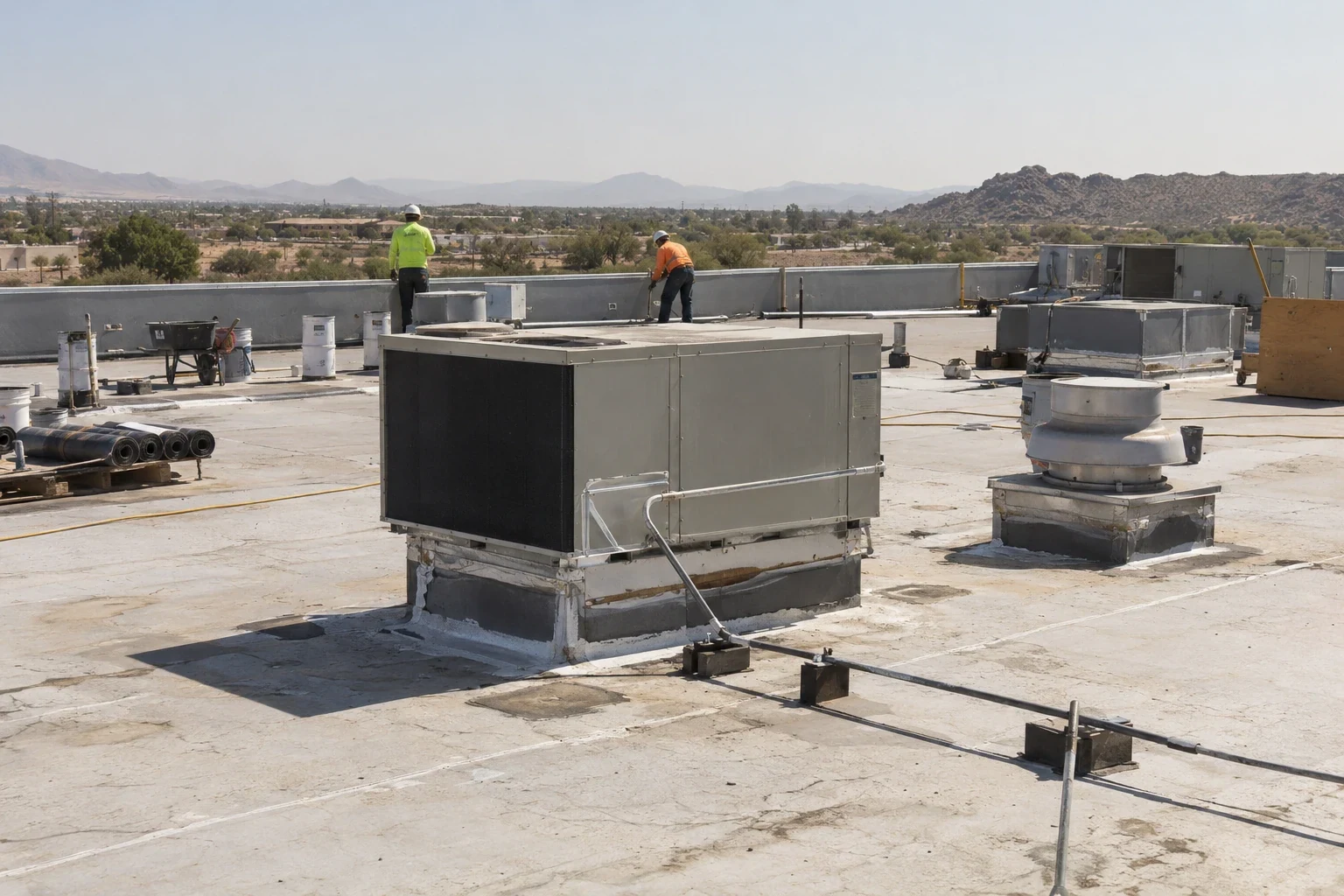
The walk follows the water. We start at the drains and scuppers, then check the seams and laps that cross the drain route, the flashing at curbs and walls, the edge metal, and every penetration. On a metal roof we check fasteners and sealant at panel ends. On a membrane roof we look for blisters, splits, punctures from foot traffic and surface wear.
We also look at what other trades leave behind. Service technicians for rooftop units can leave open panels, loose cables or dropped fasteners, and a technician stepping off a walkway can puncture a membrane without knowing. Small repairs made during the visit, such as resealing a boot or patching a puncture, are listed with their location. Larger issues go on the open-question list, each with a photograph, a location and a note on what would settle it. That list is what the asset manager takes into the next budget conversation, so it has to be specific enough to price. Our drain and scupper work and penetration flashing repair handle the items that exceed a routine visit.

Does the facility type change the plan?
It does. The city's land-use plan separates Commercial, Industrial and Industrial/Commercial parcels, and an environmental plan for the St. George Armory describes Fort Pierce Industrial Park as largely M-1 land. Those uses point to varied roof footprints, and the assembly of a given building is read on its roof.
A warehouse roof with few penetrations needs a different walk than a service building with exhaust fans, rooftop units and skylights. A retail roof may have a customer-facing schedule that limits access to early mornings. In an industrial park, a roof over a production floor can mean a word with the shift supervisor before the crew steps onto the membrane. We confirm the facility's operating schedule, safe access and any restricted areas, then fit the visit to them. If a roof hatch is locked, a ladder is shared or a lift has to be booked, that goes on the access sheet before the first visit, so the crew is not waiting at the door while the work window closes. For multi-building owners, a multi-site roof program keeps the cadence consistent.
What evidence do you leave after the visit?
We leave a roof record: dated photographs tied to locations, a list of what was cleared or repaired, the condition of drains and flashing, and a marked plan of any area that could not be reached. When the surface shows wear, the record notes it, so a pattern can be seen over several visits. Moisture evidence is separate; if we suspect trapped water, we recommend an infrared moisture survey instead of guessing.
The record also supports budget planning. A future reroof or alteration will need to account for the energy path Utah lists for commercial work, which becomes mandatory statewide on July 1, 2026. The permit-date edition and city requirements are confirmed before work starts. A maintenance history helps an owner see when a roof is nearing a replacement decision and plan for it.
When does maintenance stop being the right answer?
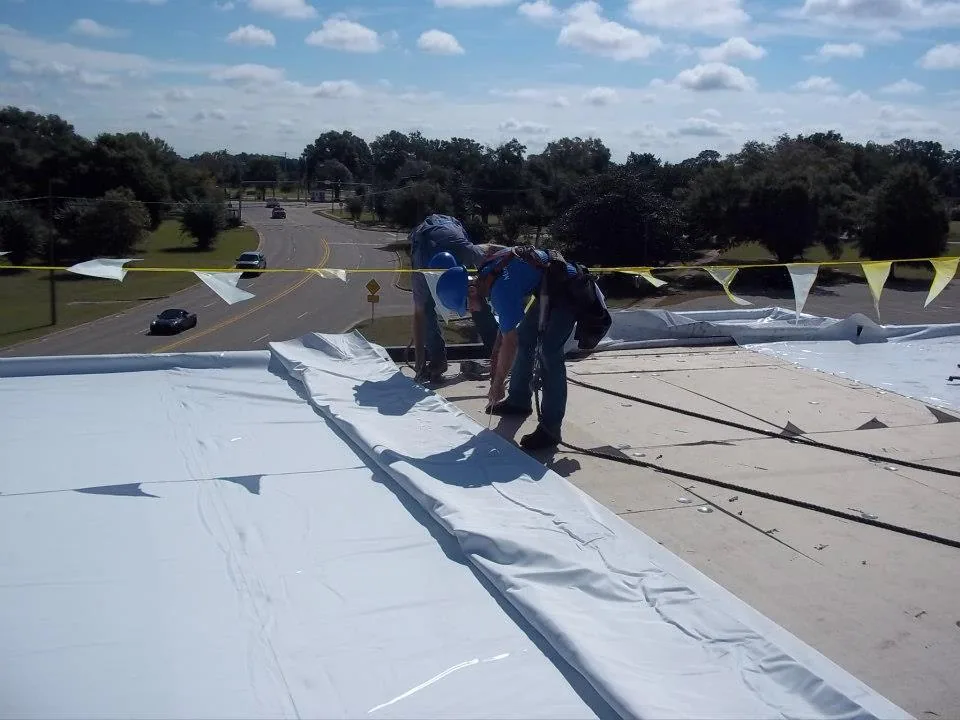
When repairs repeat in the same area, when insulation tests wet or when seams are opening across the field, maintenance has done what it can. Much of the city's building stock dates from 1980 or later by its Consolidated Plan, yet roof age and assembly are confirmed one parcel at a time. A roof of any age can reach the point where a coating restoration or replacement makes more sense than another patch.
We lay out the options with what each leaves in place and what it asks of the owner. Where the budget cannot cover a full project, we propose a staged scope with the most exposed areas first. The next decision is the owner's, and the record gives it a factual base. Nothing in the proposal is presented as certain until the evidence on the roof supports it.
Commercial Roofing Questions
How many visits a year should we schedule?
Two is a sound starting point: one before the summer heat and one after. Roofs with heavy debris, many penetrations or a history of leaks may need a third. We set the plan from the first inspection and adjust it after each record.
Do you work in July and August?
Yes, with an early start. Station normals show mean highs near 102 degrees in July and 100 in August, so crews arrive at first light and finish heat-sensitive tasks before the surface warms. We also plan breaks and shade for safety.
What if you find a leak during a visit?
We stop the water first with a temporary or permanent repair, depending on the condition. Then we trace the source, mark the affected area and add it to the record. If the leak points to wet insulation, we propose a moisture survey.
Does maintenance affect a manufacturer warranty?
It can. Many warranties expect routine care, and a written record shows the roof was looked after. Send us the warranty terms and we will match the visit checklist to them. We do not alter any roof system without the owner's approval.
Can maintenance be done on an occupied building?
Yes. Most tasks happen on the roof and do not disturb the interior. We confirm access, restricted rooms and the best hours with the facility manager, and we tell the front desk when the crew arrives and leaves.