
Seam Failure Repair for Commercial Roofs in St. George, UT
Seam Failure Repair for Commercial Roofs Overview
A seam that opens on a hot afternoon may have been marginal on the day it was made. The roof surface in St. George, UT cycles through a wide daily temperature swing, and the station's normals reach nearly 102 degrees for July highs, so every joint in a membrane is pulled and released many times a season. Seams that were clean and well bonded ride through it. Seams made over dust, moisture or a thin bond line open at the edges first, and a probe along the lap often finds the weak ones before water does.
On the first visit we separate open seams from tight ones, map the open ones on a roof sketch and record what sits near each: a drain, a curb, a pond, a foot path. The asset manager gets a repair list that is sorted by the likelihood of water entry and a plain statement of which seams were not reachable or not tested.
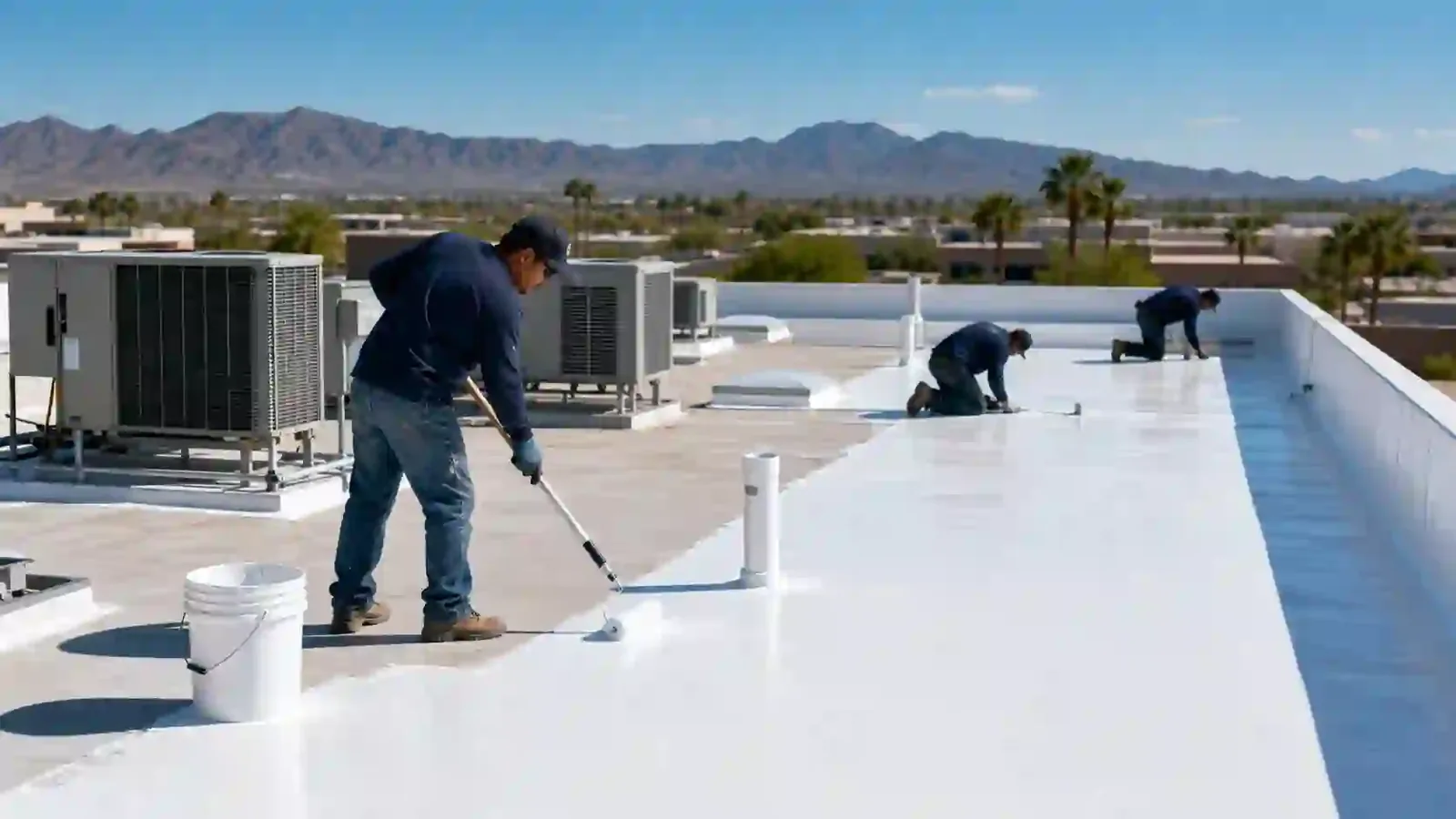
What does a failed seam look like on each system?
On a heat-welded single-ply roof, an open seam shows as a lifted edge, a gap along the lap or a bead of material that never fused. Adhered EPDM seams use tape or adhesive, and failure appears as a peeled edge, dirt trapped in the joint or a bubble in the splice. Modified bitumen laps open as the asphalt oxidizes and the lap edge pulls away. Metal roofs fail at the seam differently: a standing seam can release under movement, and a lapped panel can loosen at its fasteners.
Because the repair differs, we confirm the system before we choose a material. TPO roofing, EPDM roofing and modified bitumen all use different joining methods, and a repair that works on one can fail on another. If the sheet is old, we test whether the material can still be welded or bonded before we commit.
How do you find seams that have not leaked yet?
We walk the seam lines with a probe and check each lap edge by hand and by eye. A probe slid along a clean weld stops at the end of the bond; one that slides under the sheet means the joint is open. We pay attention to seams near walls, along fastener rows and at T-joints, where three layers of membrane overlap, since these concentrate stress. A commercial roof inspection that includes seam probing produces a numbered list of locations, photographed, with the probe result recorded.
Moisture follows open seams. When insulation below may be wet, an infrared moisture survey can map the area. We do not call a seam sound because it has not leaked. A joint that is open but not yet wet is marked as a repair, since the next rain, or the next storm after a dry stretch, will find it.
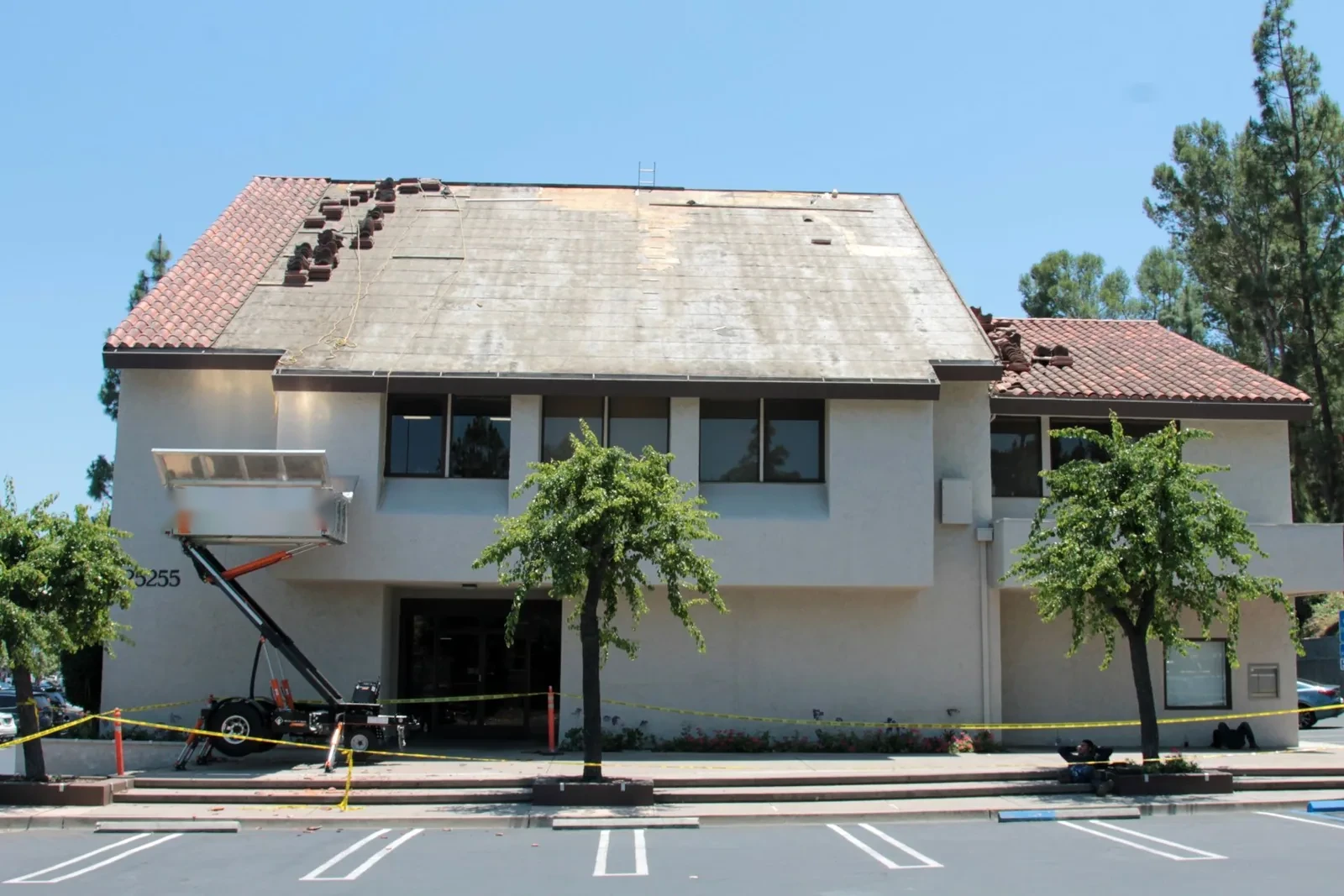
How are open seams repaired?
Method follows the material. On a thermoplastic sheet, a technician cleans the surfaces, welds the lap with hot air and often caps the repaired joint with a cover strip. On EPDM, the old splice is cleaned back, primed and re-bonded with the matching tape or adhesive. On modified bitumen, the lap is heated or bonded with compatible adhesive and finished with a sealing course. A metal panel seam may be re-locked, re-clipped or covered with a sealed cap, depending on the profile.
The repair runs the full length of the open joint plus a margin of sound seam on each end, because a weld that stops exactly at the visible gap leaves the next stretch under the same stress. We do not seal over contamination. Surfaces are cleaned and, where the manufacturer requires it, prepared with a primer. Every repaired seam is probed afterward, and the photograph records the strip, the weld and the date. Where the pattern repeats, the ponding or foot traffic that stresses the joint is addressed as well.
What conditions does a seam repair need?
Dry, clean surfaces and a temperature range that suits the material. Hot-air welding works best when the sheet is dry and the wind is calm. Adhesives and tapes cure on their own schedule, and a bond made at the hottest hour can skin over before it grips. In a St. George summer we place seam work in the early morning, then return to probe the repairs after they have cooled.
Building operations matter less for seam repair than for a reroof, but access still counts. Rooftop equipment, solar racks and conduit can block a seam line. Where a lap runs under a pipe support or an array, the owner decides whether to move the item or accept the limit on the repair. For leak reports, commercial roof leak repair starts with the seams nearest the stain and works outward.
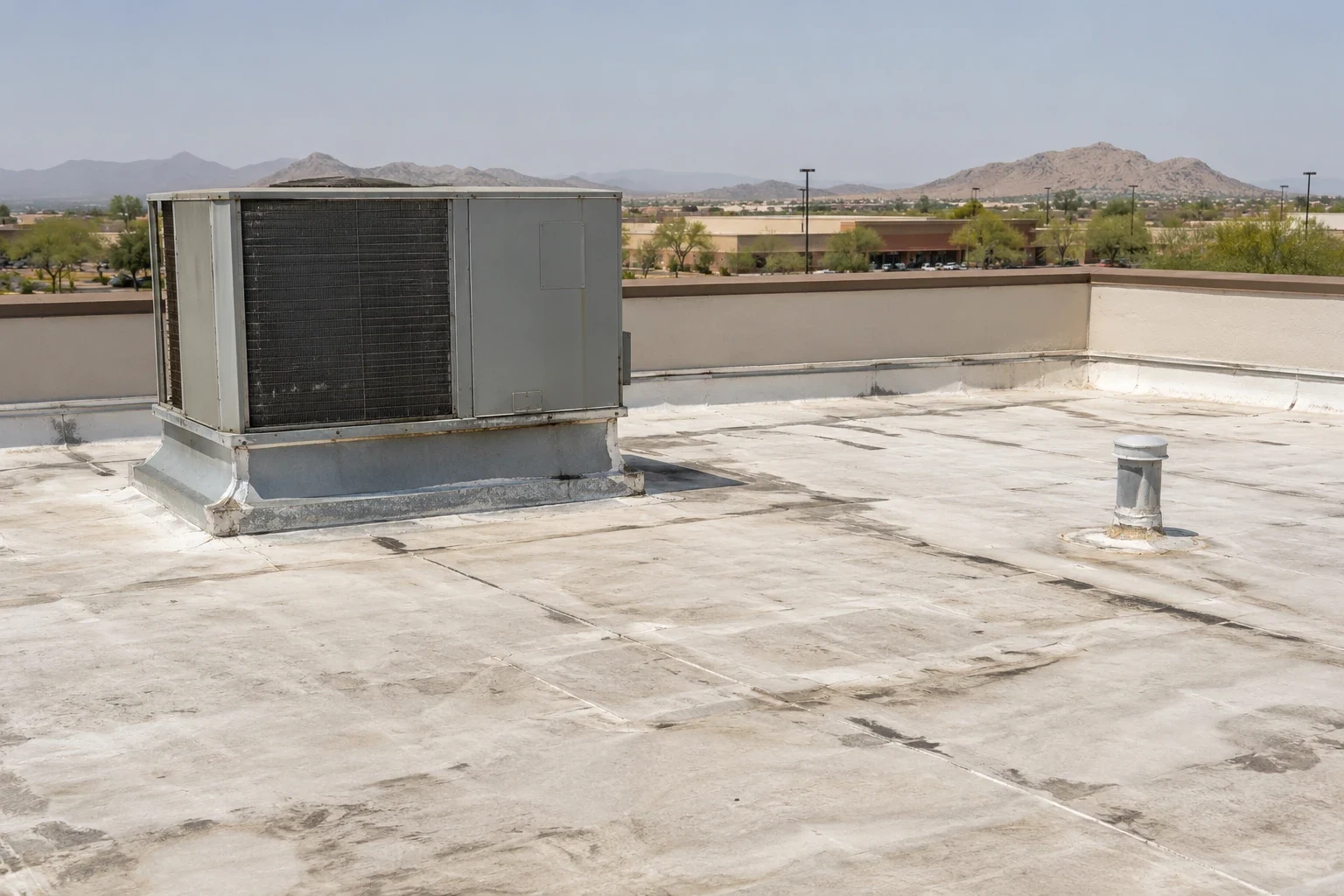
When are failing seams a sign of an aging membrane?
If seams open at scattered points and the sheet is otherwise flexible, repair is a sensible choice. If the sheet has hardened, shrunk or lost its weldable surface, seam after seam will fail as soon as the last one is fixed. Repeated seam failures across the roof, especially on an older sheet, point toward a larger decision about restoration or replacement.
A sound membrane with tired seams and a dry substrate may suit roof coating restoration, which can seal minor seam weakness once repairs are made. A membrane with wet insulation or widespread shrinkage does not. Cost drivers are the length of seam, the number of T-joints, access limits, and whether the insulation needs replacement. We present the repair and the capital option as separate prices so the owner can compare them.
What should the owner send first?
Send the roof address, any records of the membrane type and installation date, warranty documents, leak reports with dates, and photographs of open seams if you have them. Tell us about rooftop work by other trades, since foot traffic often explains where seams fail, and mention any area where equipment sits on the seam line so we plan for the move or the limit.
For a building in the St. George Industrial Park or in Hurricane, a seam map helps the maintenance team see where to look each season, and a Hurricane site gets its local licensing check before we schedule a crew. We return the map, the repair scope and the open items. If the leak follows a wind event, the seam record goes into the damage file as well.

Commercial Roofing Questions
How long do seam repairs last?
A clean repair on a sound sheet can last for years, but the answer depends on the sheet's condition and what stresses the joint. We probe repaired seams after cooling and again at the next inspection.
Can a seam be repaired on a wet roof?
No. Moisture prevents a proper bond, so we dry the surface or wait. A temporary seal can stop an active leak until a permanent repair is possible.
What is a cover strip?
It is a narrow strip of compatible membrane welded or bonded over a repaired seam to reinforce it. We use one when the manufacturer's method or the seam condition calls for it.
Why did my seams open when the roof was fairly new?
Common causes are dust or moisture at installation, a thin weld, and movement at a fixed point. The record of where they opened helps identify which applies.
Will a coating fix open seams?
Not by itself. Open seams are repaired first, then a coating can protect and seal the surface if the roof is a suitable candidate.