
Roof Insurance Claim Assistance in St. George, UT
Roof Insurance Claim Assistance Overview
A claim file is only as good as what the roof looked like before anyone touched it. Photographs taken the day of a storm, a dated condition report from the last maintenance visit and a clear record of temporary repairs carry more weight than a description written weeks later. In St. George, UT, where the NOAA station normals show only 9.31 inches of precipitation a year, an owner may not have tested the roof against a heavy storm in a long time, and the first claim question is often what the roof's condition was before it.
We help asset managers assemble that evidence. We do not adjust claims, set coverage or promise an outcome. What we do is document the roof as it stands, separate storm damage from wear, price the repair scope and be present when the adjuster walks the roof. The owner and the carrier make the coverage decision. Our storm damage repair work produces the field record that a claim file needs.

What should be in the claim file?
The file starts with the date and time of the event and the first sign of damage, followed by dated photographs of the roof and the interior. It adds the roof's age if known, past repair records, maintenance reports and warranty terms. Temporary protection receipts belong there too, because the policy usually asks the owner to prevent further damage.
Our part is the roof section: a written condition report with photographs tied to locations, a marked plan showing damaged and undamaged areas, moisture findings where relevant and a repair scope with line items. We keep the language factual. A report that says a seam has opened, lists its length and shows the edges is more useful than one that says the roof is failed. If we cannot tell the cause of a condition, the report says what we saw and leaves the cause open. Open questions are listed with what would settle each one, such as a moisture test, a look at the original installation drawings or an approved cut at the deck, so the owner can decide which are worth pursuing before the claim closes.
Where does storm damage end and wear begin?
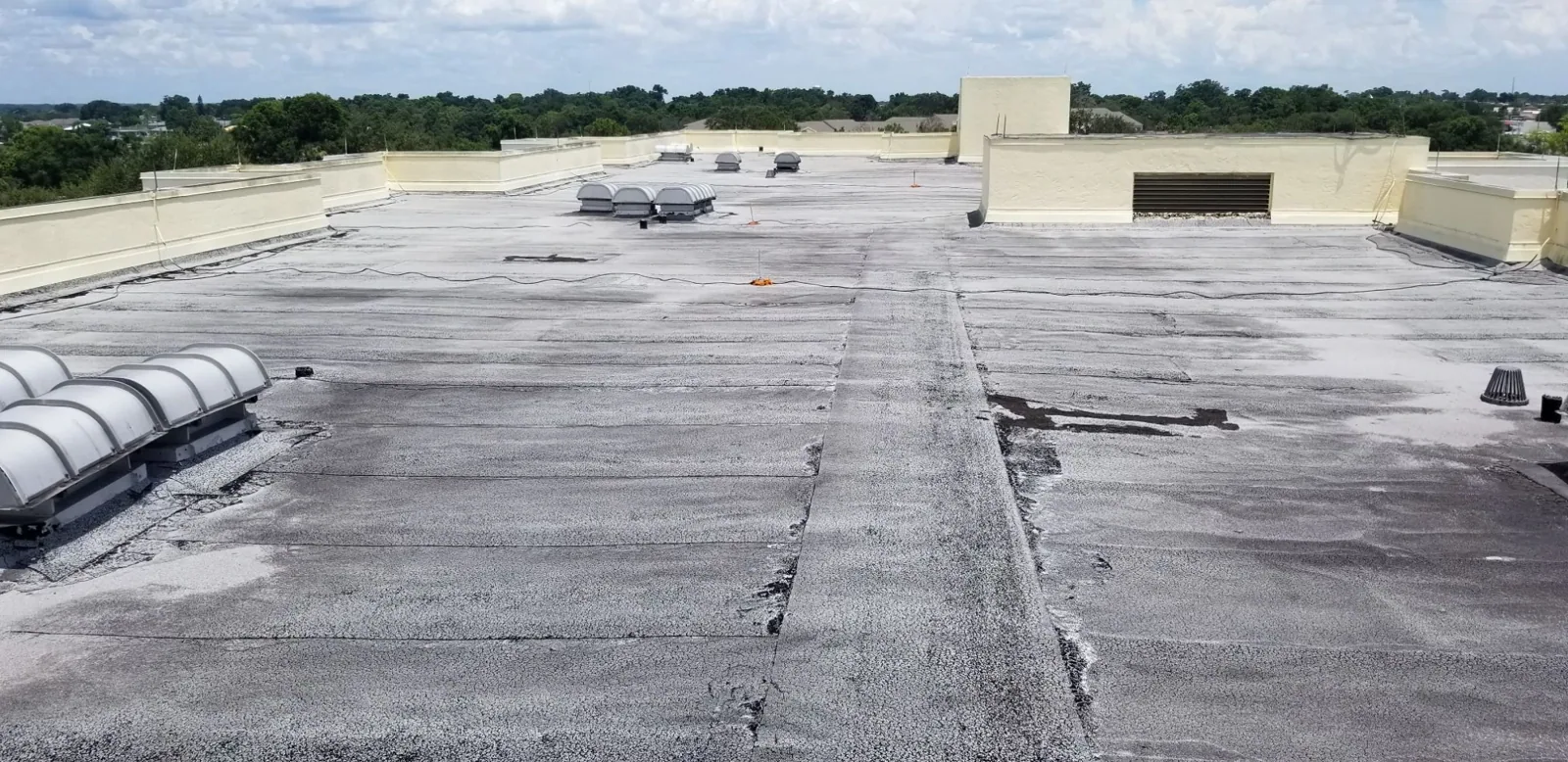
A carrier will ask this when a roof claim arrives, and the owner should ask it first. A roof that has seen years of surface heat will show wear at seams, edges and flashing regardless of storms. The St. George station puts July at 101.9 degrees and August at 99.9 for the mean daily high. That is a station figure, not a reading at any one building, but it explains why membranes here age at the surface.
We separate the two in the report. Fresh tears, displaced edge metal, debris strikes and lifted sections that match the event go in one list. Aged sealant, chalked surfaces, shrunken flashing and repeated patch areas go in another. The owner can then see what the claim may cover and what remains a maintenance item, and a preventive maintenance record from before the event helps show the roof's baseline.
What happens when the adjuster visits?
We arrange access, a safe route to the roof and an escort if the carrier wants one. We bring the condition report, the photographs and the marked plan so the visit starts with a shared picture. If the adjuster asks to see a particular area, we open it safely and close it again.
We do not argue coverage on the roof, and we do not coach the adjuster or the owner on what to say. We point out conditions, answer questions about the assembly and how the repair would be built, and note where the adjuster and the report differ. If a difference stays open, the owner has the evidence to raise it. For wet insulation, an infrared moisture survey gives a map of affected areas that is easier to discuss than a stain on a ceiling.
How is the repair scope priced?
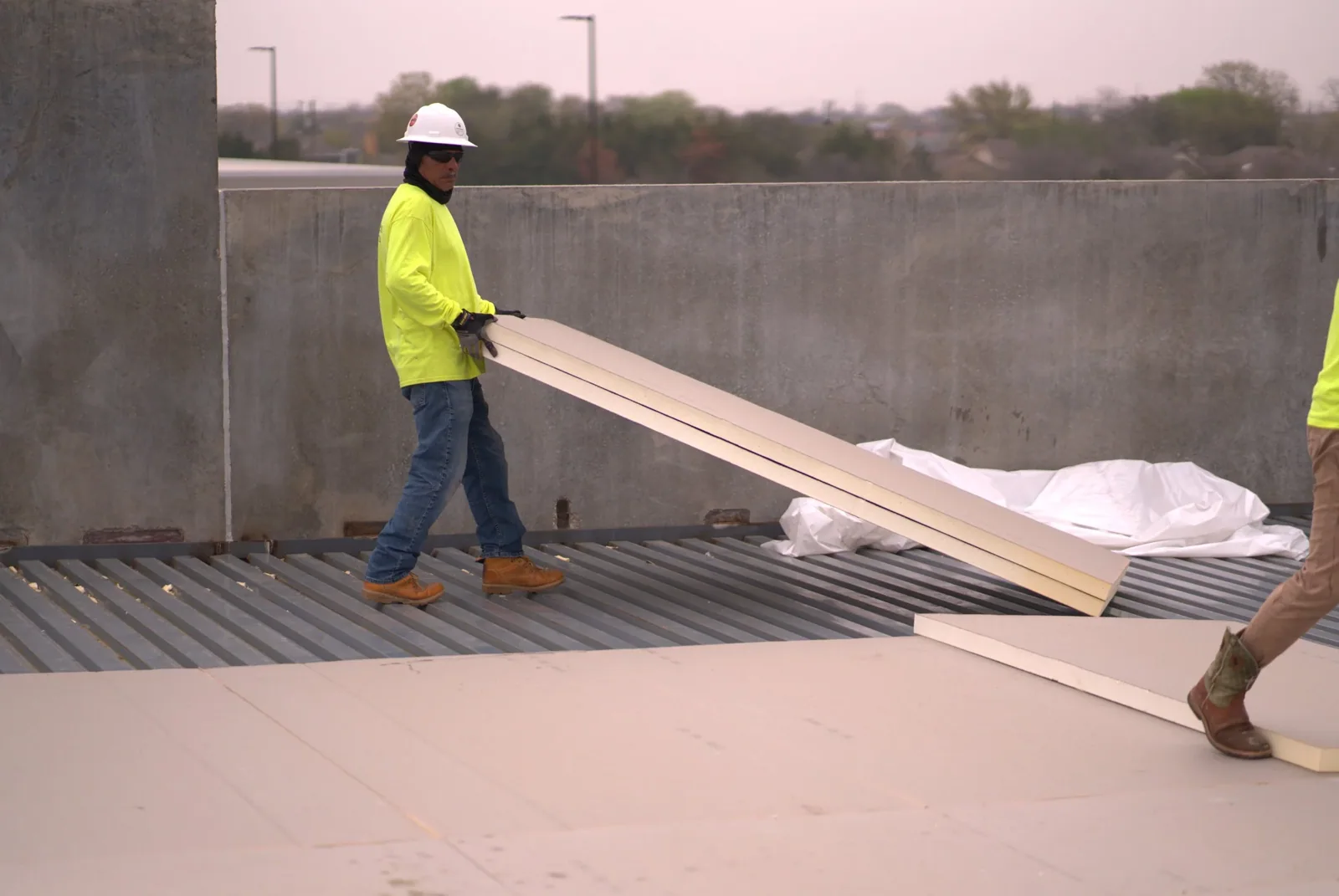
We write a scope with line items for tear-off, insulation, membrane, flashing, edge metal, drains and cleanup, with quantities and locations. Each item can be compared to the carrier's estimate, and differences can be traced to a reason, such as a requirement in the building code. Code is one place the two estimates can differ. Utah's base code is the 2024 International Building Code as amended, and the commercial energy pairing of the 2024 IECC and ASHRAE 90.1-2022 is enforced statewide from July 1, 2026, which can add insulation to a replacement that an older permit would not have required. The City of St. George tells us which edition the permit date triggers.
When the claim is for a section of the roof, we price matching and transitions where they apply and tell the owner where a partial repair stops. Where a commercial roof replacement is the sounder answer, we show why with the evidence.
Does the building type change the claim?
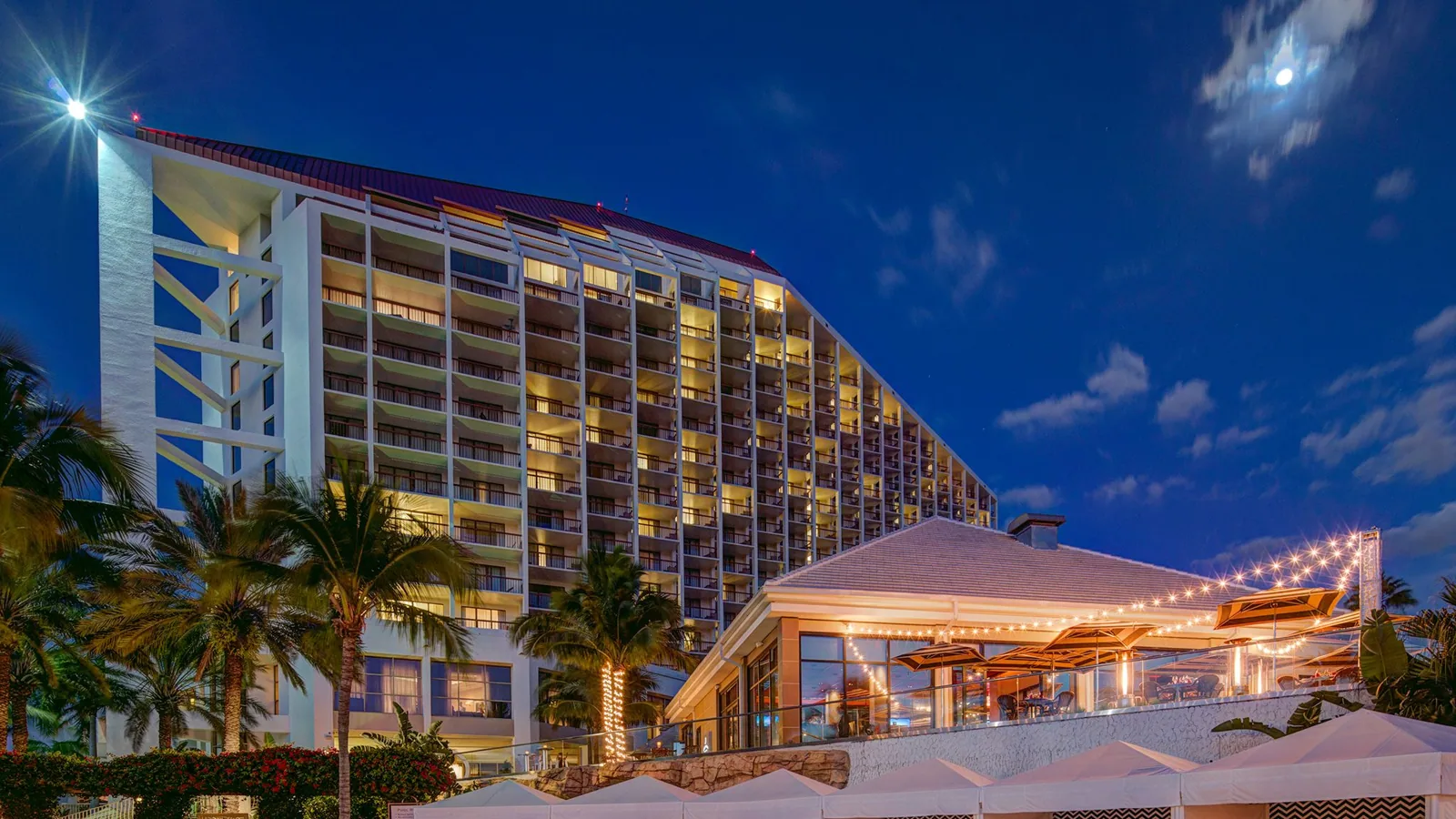
It changes what is at risk and how fast the owner needs a repair. A warehouse in Fort Pierce Industrial Park may have stock to protect, while an office or retail roof near the St. George Boulevard corridor has tenants and customers to consider. The land-use plan draws separate lines for Commercial, Industrial and Industrial/Commercial designations, and each hosts a range of roof types. A zoning label does not tell us how a roof was built, so we confirm the system on site.
For owners with several properties, a roof condition report for each building before any event gives the strongest baseline. The report is also a useful capital planning document, so the cost of preparing it does more than support a claim.
Property managers who work with carriers and restoration firms will recognize the pattern from insurance restoration projects: a clear scope, a dated record and a single point of contact keep the process moving. We reach properties along Interstate 15, Sunset Boulevard and River Road, which the county's arterial map labels among the regional roads, and we confirm exact access on site with the building contact before a crew or an adjuster is scheduled. Where a building has more than one entrance, a gated yard or a controlled roof hatch, that detail goes on the access sheet in the claim file so no one waits at a locked door on the day of the visit.
Commercial Roofing Questions
Do you file the claim for us?
No. The owner or the owner's representative files with the carrier. We supply the roof documentation, the repair scope and on-site support for the adjuster visit.
Can you tell us whether the policy will cover the damage?
Coverage rests on the policy and the carrier's review, so that call is not ours. We describe what the roof shows and what a repair requires, and the owner takes that to the carrier.
What if the adjuster's estimate is lower than yours?
We compare line items and find where the two differ. Often the gap is quantity, a code requirement or a hidden condition such as wet insulation. We supply photographs and measurements that support the line items, and the owner decides how to respond.
Should we repair before the adjuster visits?
Make the roof safe and stop active leaks, but keep damaged material and record everything first. Permanent work waits until the adjuster has seen the roof or has given written approval to proceed.
What records help most?
Dated photographs from before and after the event, prior inspection and maintenance reports, repair invoices and warranty terms. Send what you have and we will tell you what is missing.