
Roof Condition Reports in St. George, UT
Roof Condition Reports Overview
Midday on a St. George, UT roof is the wrong time to take photographs. The NOAA station's July daily-high normal is 101.9°F, and surface heat distorts membranes, softens sealants and makes crews hurry. A condition report that begins before sunrise captures the roof as it is, with shadows long enough to show ridges and ponding. That early start is the first of many small choices that decide whether a report can be trusted a year later.
We write the report for the person who must decide: the asset manager, the owner or the lender. It names what was observed, what was measured, what remains unknown and what decision follows. Every finding has a photograph and a location on the roof plan, and the plan itself is part of the deliverable, so a second contractor or an engineer can find the same spot without a phone call.
What does a report show that a walk-through does not?
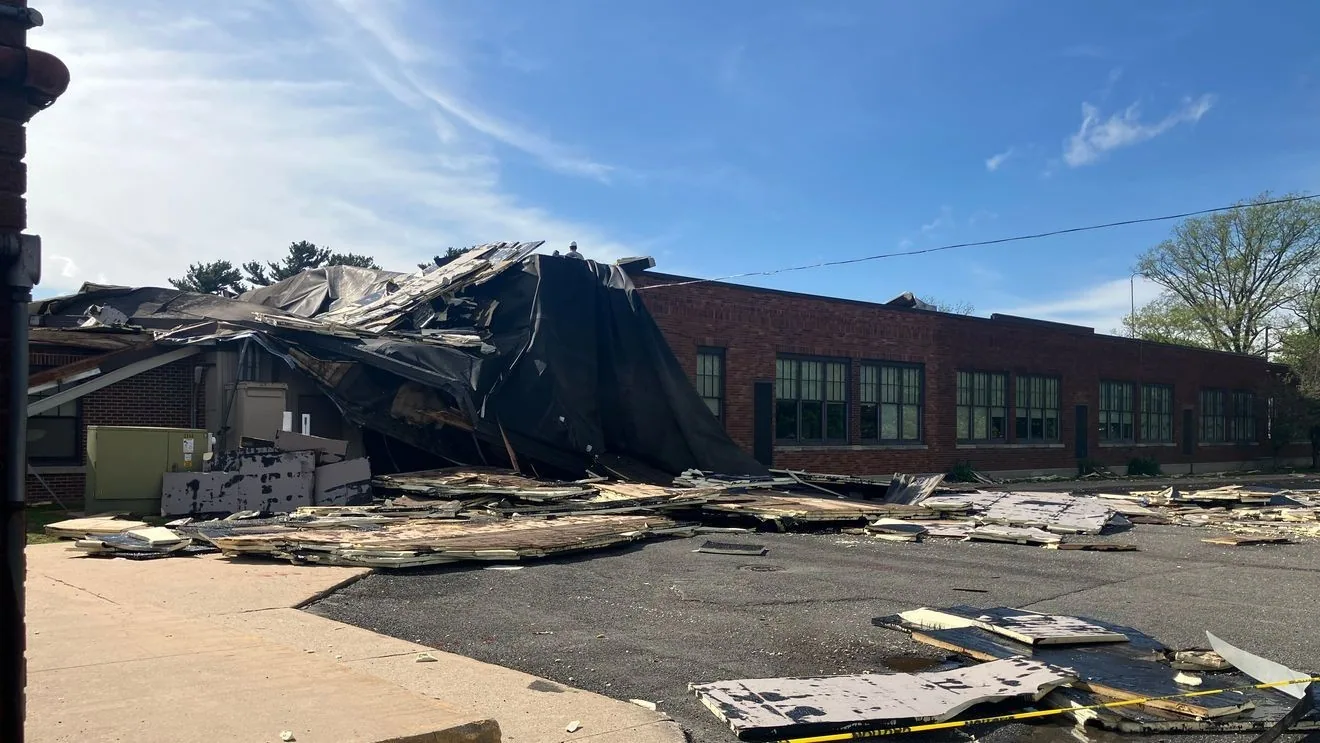
A walk-through leaves an impression. A report leaves evidence. Each roof area gets a number, and each finding under that number gets a photograph, a date and a description of the condition in plain terms: lifted lap, open seam, ponding after rain, loose coping, failed sealant, split boot. Conditions seen only from a distance are marked as such.
The report also records what the roof was not tested for. If infrared testing covered one wing and not another, the page says so. If an area was inaccessible, it is listed with the reason. Stating the gaps gives the next decision a sound base. The reader can see which areas are confirmed and which still need work, and nobody has to guess what the phrase "overall good condition" was meant to cover.
Access and safety observations go in as well. A roof without guardrails near its edge, a hatch that sticks or a skylight without a screen are not roofing defects, yet they change how a crew can work and how maintenance staff should approach the roof. We note them with a photograph, because the person who reads the report may be the one who signs off on the next visit.
How is each finding documented?
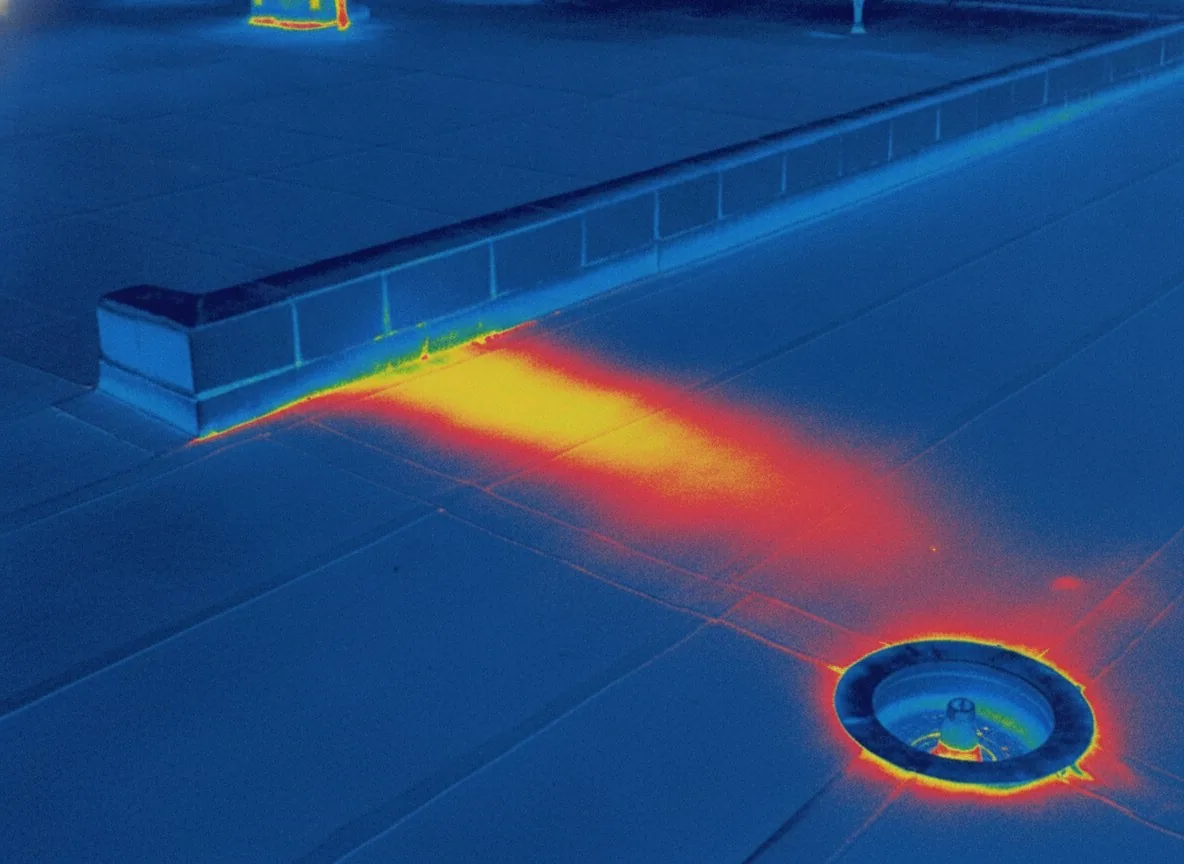
We photograph from two distances: wide enough to place the finding on the roof, close enough to see the defect. A reference mark or tape shows scale. Where a finding connects to an interior stain, the interior photograph sits beside the roof photograph. For hidden conditions, such as wet insulation, the report includes the moisture reading, the method and the map of the affected area.
Methods are named. A moisture survey finds temperature patterns that suggest water, and a test opening or core confirms them. A drone pass helps with large or hard-to-reach roofs, and the hands-on walk confirms what the images suggest. The report lists which method produced each finding, so a reader can judge how firm it is.
Measurements stay with their findings. A pond is described by its approximate depth after a dry period and its location relative to the nearest drain. A seam is described by its length and the width of the opening. A fastener finding states how many were checked and how many were loose. These small details make the second report comparable to the first, and they let an owner see whether a condition is stable or moving.
What do heat and rain leave on the roof?
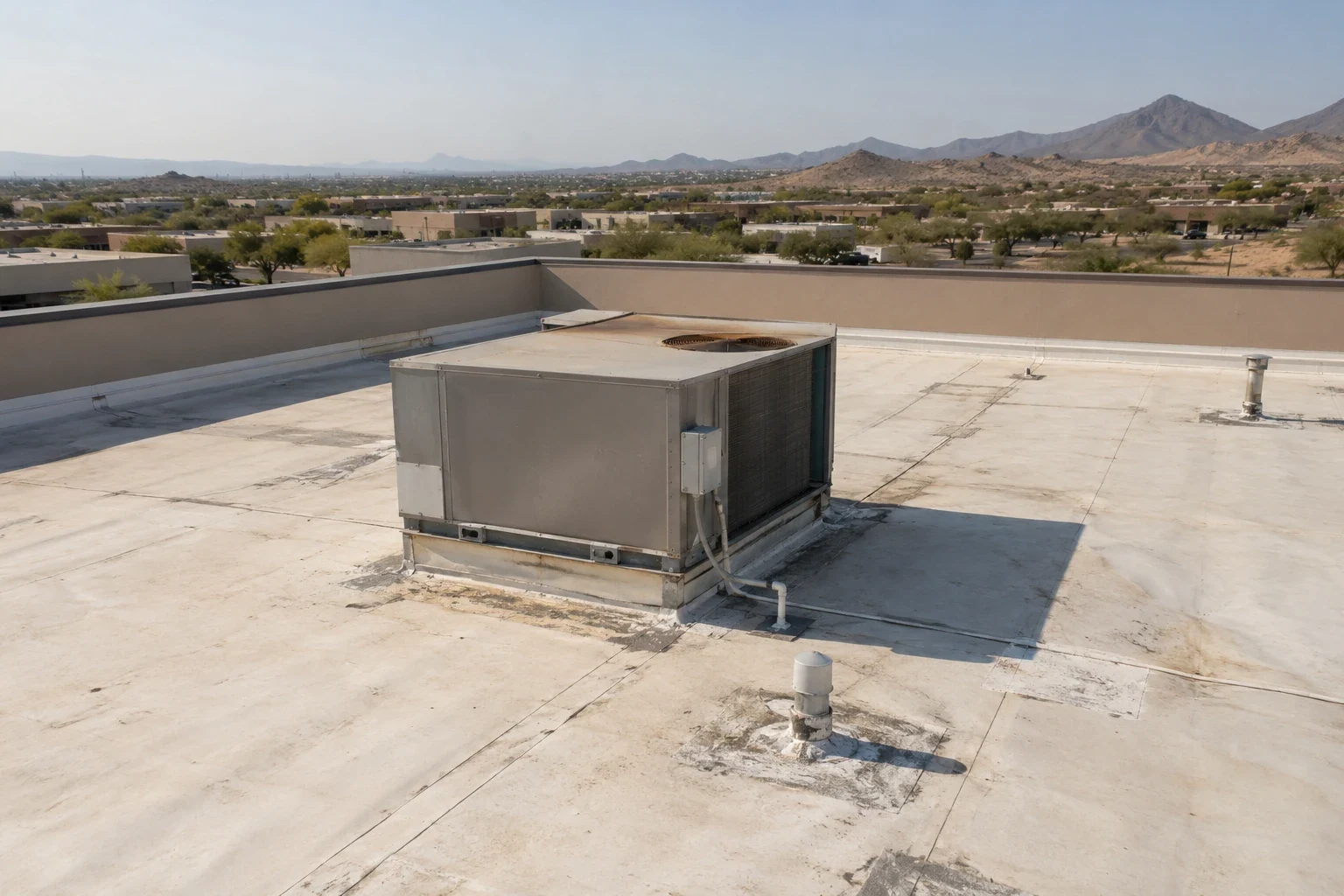
Annual snowfall at the station is only 1.2 inches and annual precipitation is 9.31 inches, with February the wettest month at 1.38. Snow load is not the defining stress here; surface heat and ultraviolet exposure are. The report therefore looks closely at the signs those leave: chalking, shrinkage at edges, brittle sealant, loose fasteners and wear at walk paths.
It also records where water goes when it does fall. Low areas, blocked scuppers and drains with debris in the strainer show up after the first rain of a season. Because rain is uneven, we recommend a drain check before late winter, and the report notes the date of the last one. A drain and scupper inspection costs little compared with the interior damage of a long-standing pond.
The report also notes the time and surface condition at each observation. A roof photographed in cool morning light shows laps and wrinkles differently from the same roof at noon, and a wet surface hides small cracks. Recording the conditions lets the next visit match them where possible, which keeps a change in light from looking like a change in the roof.
How do owners, lenders and tenants use it?
Different readers want different pages. A property manager reads the repair list. A lender reads the remaining-life estimate and the capital items. A tenant reads the section that touches its space. We organize the report in layers so each reader can find the page that answers a question without reading the rest.
Warehouse, light-industrial and service buildings in areas such as Fort Pierce Industrial Park, where the armory plan describes largely M-1 use with warehousing, light manufacturing, fabrication and services, may have very different roofs under one zoning label. Tech Ridge adds a planned office, retail and residential mix on its mesa. The report treats each building by what is on its roof, not by what the district suggests. Buildings along corridors the county maps show, including Interstate 15, St. George Boulevard and River Road, get the same method, and the property manager receives a consistent set of pages across the group.
What happens after the report is delivered?
The report ends with a decision list. Each item is labeled as a repair now, a repair soon, a monitored condition or a capital item. Each has a scope range and the reason for the label. The asset manager chooses what to authorize, and we schedule the work around the operating window.
The report then joins the roof's file. The asset record carries it forward, and the next visit compares new photographs against these. Over time, the series shows rates of change, such as how fast a seam is opening or how much a pond has grown. A due diligence survey uses the same format when a building is bought or refinanced, so documents from different events read alike. If a claim, a sale and a budget review all draw on the same report, the numbers agree, and the owner does not have to explain why three documents describe one roof three ways.
Commercial Roofing Questions
How long does a typical report take to produce?
The field work is usually a day or less for one building. The written report follows after we review photographs and any test results. We give the delivery date before the visit.
Does the report include prices?
It includes scope ranges for each recommended item. Firm pricing follows once you choose what to authorize and we confirm access and schedule.
What if part of the roof cannot be reached?
We list it as unobserved and explain why. If a lift or a different time of day would give access, we say so. The report never fills a gap with an assumption.
Can an insurer rely on the report?
It documents condition and cause as observed, with photographs and dates. That is the record an insurer usually asks for. The insurer decides what to accept.
Is the report useful if the roof is in good shape?
Yes. It sets a baseline for later comparison and shows when the next review is due. A clean report also supports a lease or a sale.