
Duro-Last Roofing Systems in St. George, UT
Duro-Last Roofing Systems Overview
A prefabricated roof starts with a tape measure, and the measurements decide whether the sheet fits. Duro-Last is known for PVC membranes that are cut and welded to the dimensions of each roof before they reach the job site, with corners, pipe boots and other accessories made the same way. On a St. George building that approach pays off in a short field schedule, which matters when July highs at the station average 101.9°F and August highs 99.9°F. The risks sit elsewhere: a wrong measurement, a changed penetration or an old seam that no longer matches the sheet.
We install, repair and maintain prefabricated PVC systems of this type. The asset manager's decision is whether the roof as measured still matches the roof as it stands, and what service the system needs.
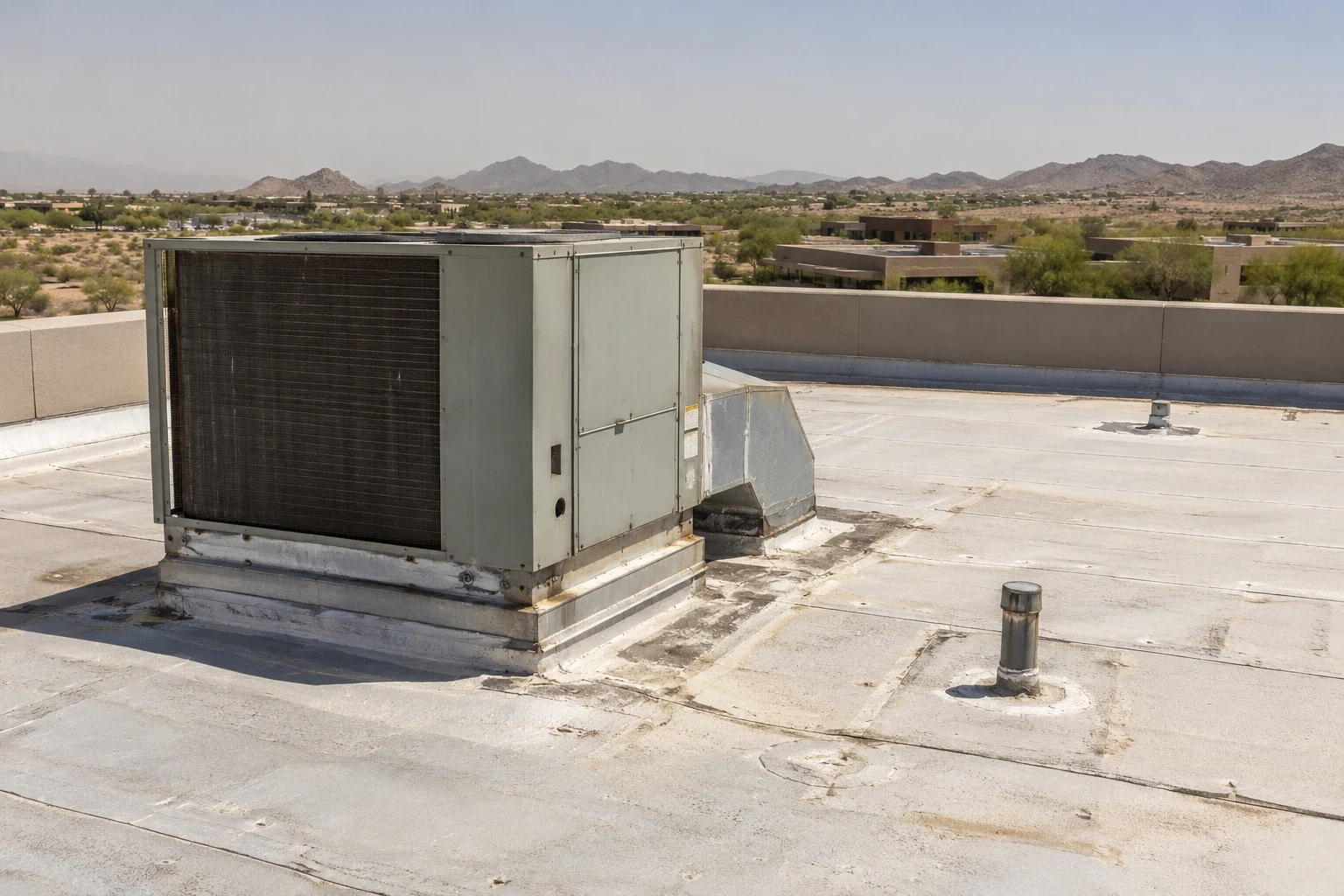
What does prefabrication change on the roof?
Most of the seams are welded under controlled conditions before the sheet is rolled up and delivered. In the field, the crew unrolls the sheet, positions it, welds the remaining seams and attaches it. Fewer field seams means fewer places where weather or workmanship can interrupt a bond. Prefabricated boots and corners keep the details uniform.
The system depends on accurate measurement. The roof is measured, details are noted and the sheets are made to fit. If equipment has moved or a parapet has changed between measurement and installation, the sheet may need field modification. We verify measurements before ordering, photograph every penetration and curb and confirm the existing roof's condition so the sheet lands on a sound base. That upfront work shortens the day on the roof.
Measurement is a field task, not a desk task. A crew member walks the roof with a plan, records every dimension and notes each drain, curb, vent and edge, then photographs them. Changes since the last drawing are common: a unit moved, a skylight capped, a parapet raised. We compare what we see with what the file says and correct the plan before the order is placed. A sheet made to a wrong plan costs time and money that a careful walk would have saved.
What happens in the field in desert heat?
The crew starts early. A PVC sheet laid on a very hot surface expands and can be hard to position, and field welds depend on clean surfaces and correct temperature. Where the surface passes the working range, the crew pauses and returns the next morning. We treat the station figure as a scheduling guide. The roof itself, measured with our own instruments, is the guide for the day.
Fasteners and plates hold the sheet to the deck, so deck condition matters. A soft or corroded deck, or one with moisture damage, must be repaired before the sheet goes down. We probe the deck at test openings and mark any area that needs work. For an occupied building reroof, the plan shows the sequence by section, the protected routes and the hours of noisy work, so the business keeps operating. Staging for a prefabricated system differs from staging for rolled goods: the sheets arrive folded and heavy, and a lift or crane must set them where they can be unrolled. We plan the lift position, the drop zone and the traffic route ahead of time, and we confirm that streets such as St. George Boulevard or Bluff Street, both labeled on the county's arterial map, allow the delivery truck to reach the site.
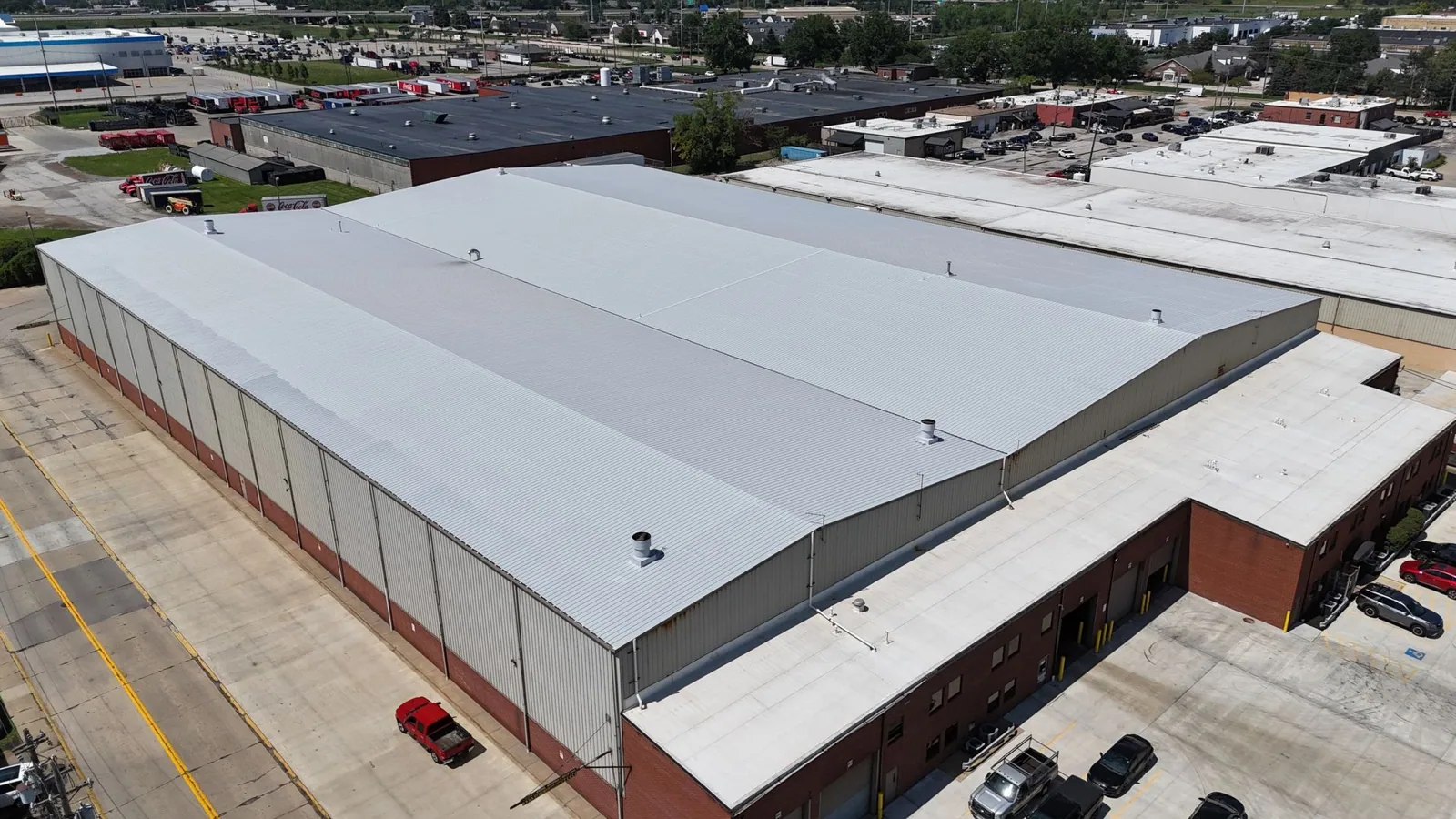
Can it go over an existing roof?
Prefabricated PVC is often installed over an existing roof where conditions allow. The existing assembly must be dry, flat enough, structurally capable of the added weight and compatible with the attachment method. A recover over the existing roof saves tear-off and disposal, and it keeps the building in use during the work.
We test before agreeing. Infrared scanning and cores locate wet insulation, which rules out a recover. A count of layers and a check of drainage determine whether the additional height is workable at curbs, edges and drains. If the existing roof fails, we say so, and the plan shifts to a tear-off. The decision rests on the roof, not on a preference for a method.
When a recover is chosen, we pay special attention to the perimeter. Edge metal may need to be raised, base flashings extended and drains fitted with extensions so the added thickness does not trap water. Those details add cost, and they are listed as separate lines so the owner sees what the extra height requires. If the added thickness leaves a curb too short, we rebuild it rather than flashing over a defect.
How is a prefabricated roof maintained and repaired?
Repairs follow the same principles as other welded PVC. We clean the area, check weldability, weld a compatible patch or flashing and probe the finished seam. The membrane is thick and often reinforced, so cuts and punctures may need a patch with generous overlap. Added penetrations, such as a new unit or a conduit run, are handled with compatible boots and welded flashings, not with caulk.
Maintenance mirrors the schedule for any commercial roof. We clear drains before the wetter months, inspect seams and flashings after the first heavy rain and photograph the roof twice a year. With 9.31 inches of precipitation in a year, February at 1.38 and June at 0.16, the first storm after a dry spell is the real test of the drains. A preventive maintenance visit keeps small defects from turning into wet insulation.
Records tie the whole system together. The original measurement plan, the sheet layout and the list of prefabricated accessories form a map of the roof. When a repair is needed years later, the map shows where seams run and where accessories sit, which speeds diagnosis and prevents a patch from landing on a weld line. We add each visit's photographs and findings to the same file.
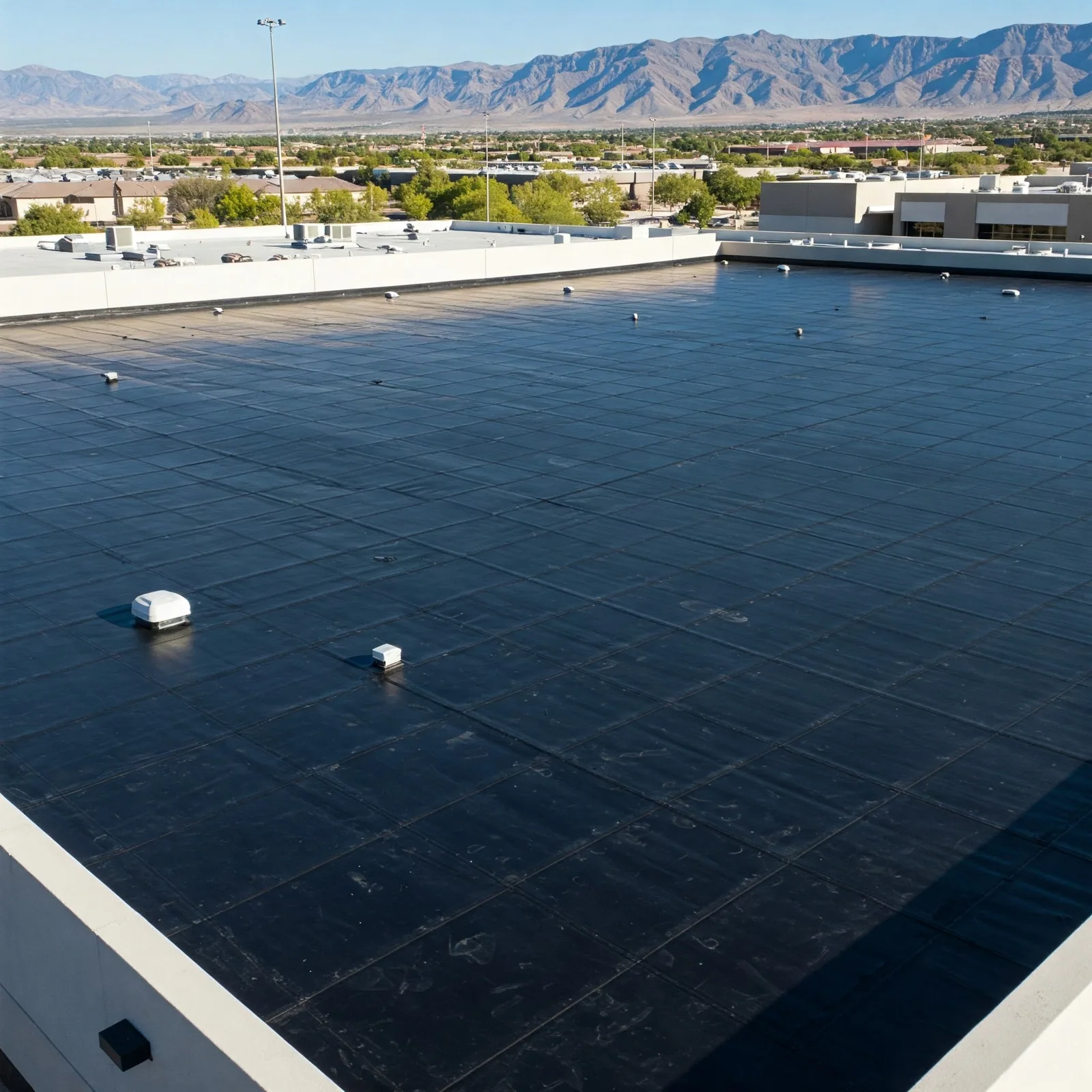
Where does it fit locally, and what does code require?
The armory plan sets Fort Pierce Industrial Park largely in M-1, with warehouses, light manufacturing, fabricators, wholesalers and service uses, while the consolidated plan dates much of the building stock to 1980 or later. Buildings with many penetrations, such as service shops and light-industrial units, benefit from uniform prefabricated details. We still confirm the existing roof before recommending any system.
On code, Utah adopts the 2024 International Building Code with amendments; for energy, it lists the 2024 IECC and ASHRAE 90.1-2022 and applies them statewide from July 1, 2026. A replacement may need insulation levels and paperwork that a repair does not, so the permit date matters. The City of St. George confirms the edition on the permit, and we compare it with the manufacturer's installation requirements. Owners in Fort Pierce Industrial Park and nearby areas can compare PVC options with Sika Sarnafil and Versico.
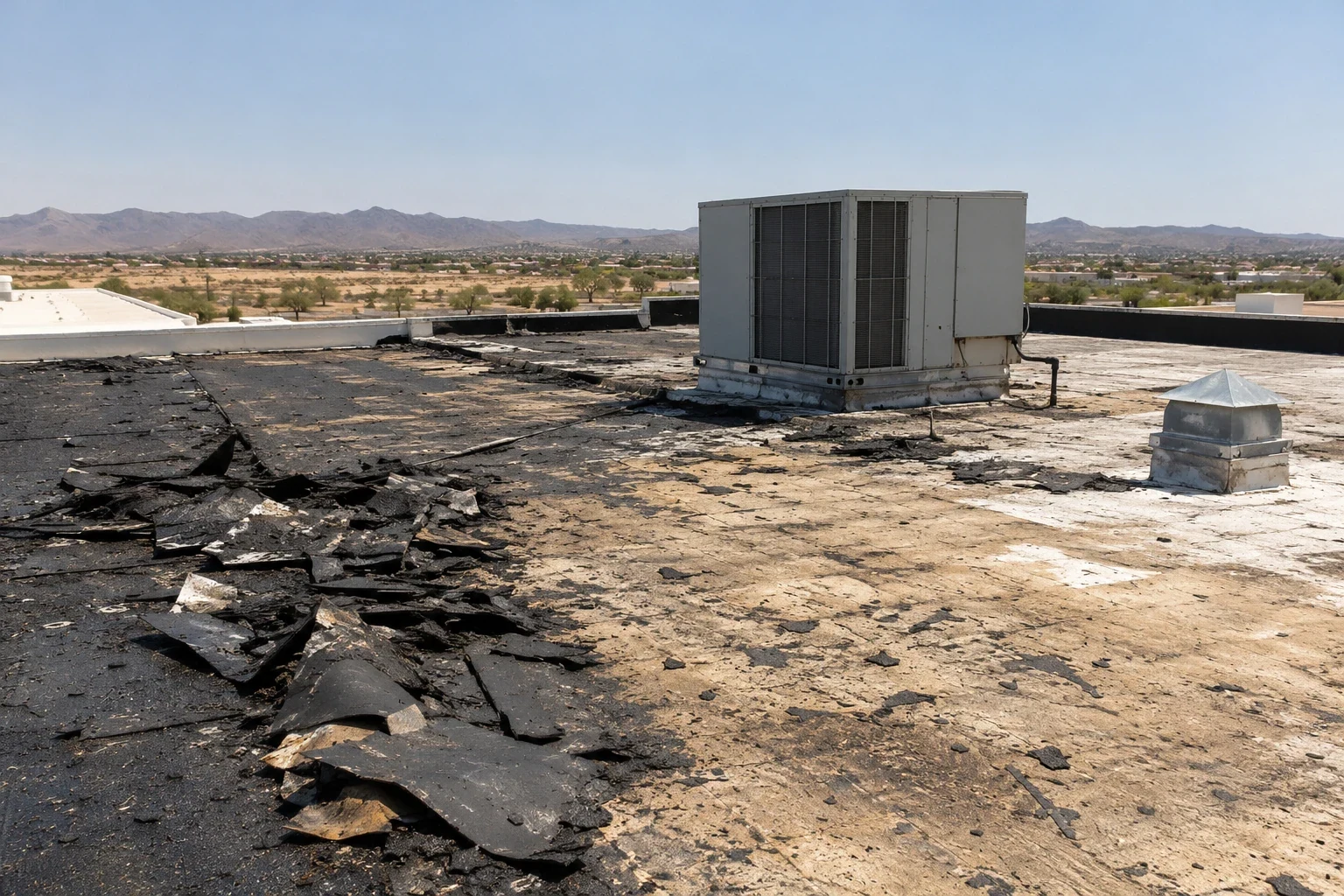
Commercial Roofing Questions
What if the roof changes between measurement and installation?
The sheet may need field modification, or a new one may be ordered. We recheck measurements before ordering and again before installation to catch changes.
Does prefabrication mean no field seams?
No. Some seams are welded in the field where sheets meet. They are fewer, but each is probed and recorded.
Can a prefabricated PVC roof be repaired?
Yes. Cleaning, a weldable patch and a probed seam do the work. We avoid caulk-only fixes.
What if the deck is damaged?
It is repaired before the sheet goes down. We probe the deck at test openings and mark areas needing work, with the cost listed separately.
Will a recover affect drains and curbs?
It raises the roof surface. We check curb heights, edge metal and drain connections first, and adjust them where the added height requires.