
Sika Sarnafil Roofing Systems in St. George, UT
Sika Sarnafil Roofing Systems Overview
A welded seam is only as good as the surface it was welded on, and in St. George, UT that surface is hot for months. At the St. George NOAA station, July's average daily high is 101.9°F and August's is 99.9°F. That is a station record, not a reading for each roof, but it tells us to start thermoplastic repairs early, check surface temperature and clean the area before any weld. The asset manager's question on a Sika Sarnafil roof is whether the seams and flashings still hold and what the membrane has been exposed to.
Sika Sarnafil is known for reinforced thermoplastic membranes, principally PVC, joined by hot-air welding, with flashings, accessories and liquid-applied products from the wider Sika line. We install, repair and maintain these system types. We begin by confirming what is on the roof and how it has aged.
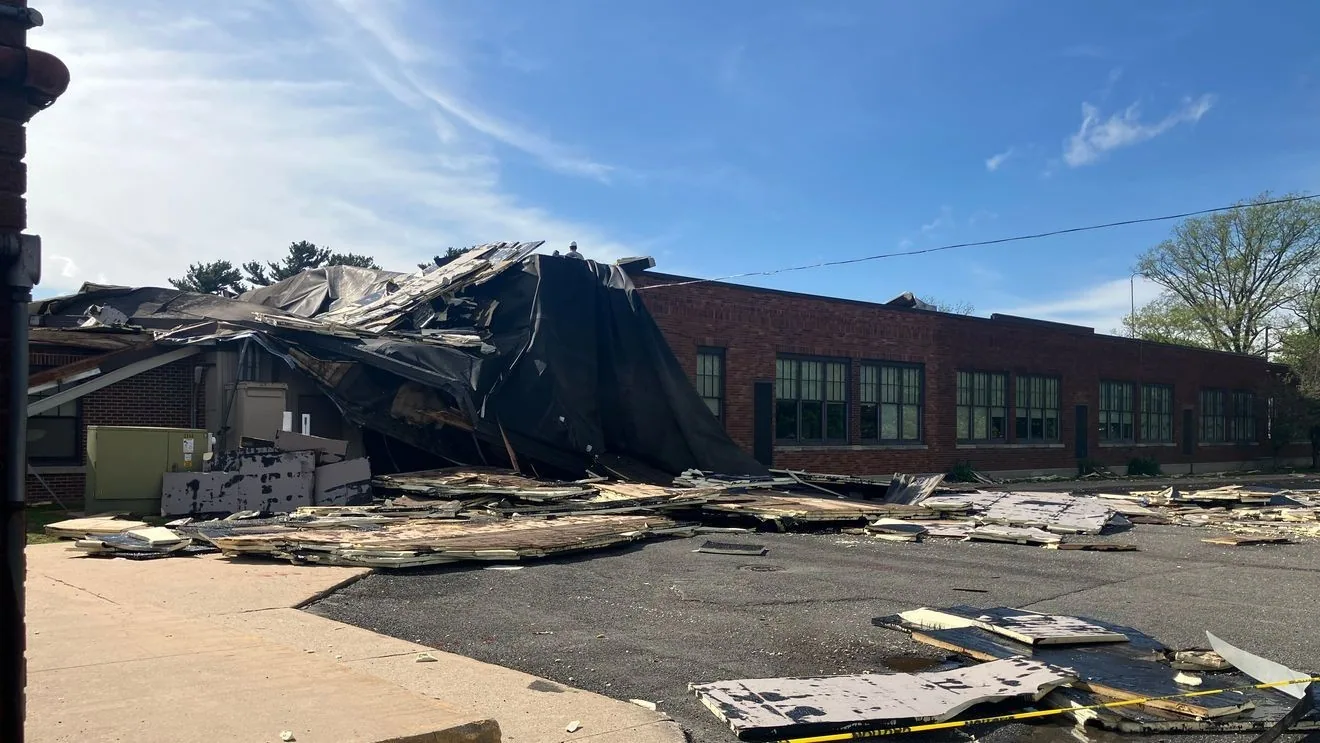
What makes a welded PVC roof different?
A thermoplastic sheet softens under heat and fuses to itself when welded. The seam becomes part of the sheet, not a glued joint. Reinforcement inside the membrane adds strength, and the top layer carries stabilizers against sun and weather. Prefabricated corners, pipe boots and curb flashings are welded into the field sheet, so details are continuous with the roof.
That continuity is the strength and the limit. A well-made weld resists water and wind. A weld made on a dirty, damp or cold surface can look closed and release later. When we repair, we clean the area, weld with the right temperature and speed and test the finished seam with a probe. Weld settings are not guessed: the crew runs a test strip on scrap or an unused corner, checks the bond by peeling it, and adjusts temperature and speed before touching the roof field. On the PVC roof in front of us, the work is to read the welds, flashings and edges as they are today and repair what has moved.
What do rooftop exhaust and cooking oils do to the membrane?
PVC resists many oils and fats better than some other single-ply membranes, which is why it often covers food-service buildings. It is not immune. Some chemicals and solvents attack it, and long exposure to hot exhaust can discolor and stiffen the surface near a vent. We check the membrane around exhaust fans, kitchen vents and process stacks, looking for softening, staining, cracking or loss of flexibility.
Tech Ridge is planned as an office, retail and residential district on its mesa, and the city's land-use plan keeps commercial, industrial and mixed parcels apart. A retail or service building in a mixed district may carry a food-service or process exhaust that an office does not. We find what is on the roof, ask what it vents and choose repairs that tolerate it. A restaurant roof gets extra attention at its exhaust for that reason.
Cleaning belongs in the plan. Grease that settles on the surface holds dirt, softens some patch materials and hides cracks beneath it. A periodic wash with a cleaner suited to the membrane keeps the surface readable, and the cleaning date goes in the file so the next inspector knows what the roof looked like before and after.
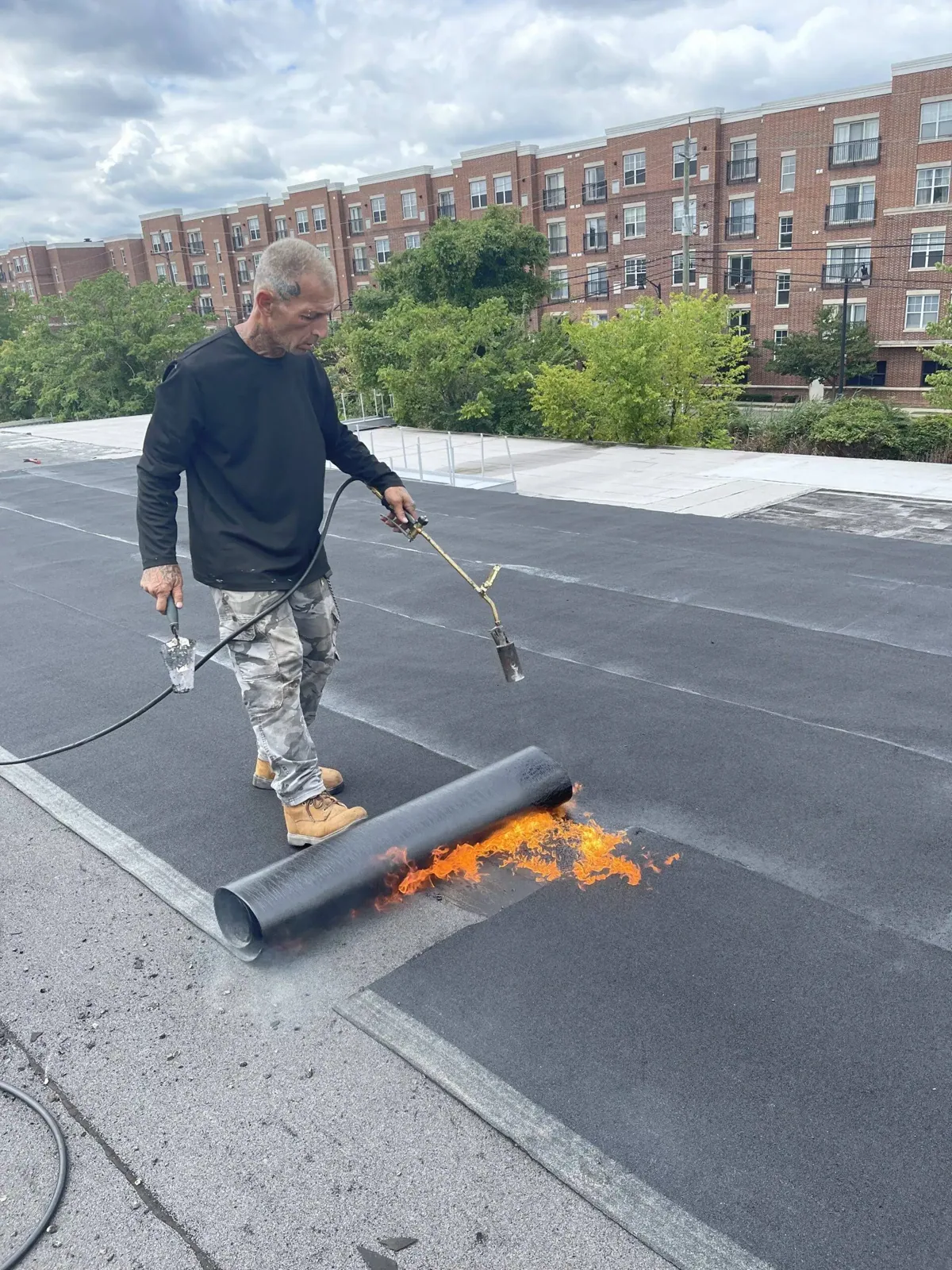
How does heat age thermoplastic membranes?
Over years of sun, a thermoplastic can lose surface plasticizer, stiffen and shrink slightly at edges and flashings. The first signs are small: cracking at a pipe boot, a gap along a termination bar, wrinkles that pull at a corner. Left alone, the shrinkage opens seams at laps and details. We check every flashing, probe every seam we can reach and press on terminations to feel for movement.
Rain at the station totals 9.31 inches in a normal year and is lopsided, with February the wettest month at 1.38 inches. After dry months, the first storm finds each small opening. We inspect ahead of the wetter season and after the first heavy rain, comparing photographs. A series of such visits shows whether a condition is stable or advancing, and it tells the owner whether a preventive maintenance plan is enough or a larger scope is coming.
Foot traffic and mechanical equipment speed that aging. Technicians who service rooftop units cross the membrane on the same paths, and heat softens the surface under their boots. Worn paths go on the roof plan, with walk pads recommended where traffic is steady. Pads protect the weld lines near curbs, where a scuffed membrane tends to fail first.
How are Sarnafil repairs made so they last?
Preparation is most of the repair. We remove dirt and chalking, clean the weld zone and check the existing membrane for weldability. A heavily aged membrane may not weld well, and a test weld tells us before we commit. When welding is not suitable, a compatible liquid-applied flashing or a mechanically fastened termination can bridge the problem, and we explain the reason and the expected life.
Crew timing matters. Morning work keeps the surface within range, and we stop when it climbs past what the weld needs. Each repair is photographed, marked on the roof plan and tested. A skylight and penetration flashing repair on a welded roof may mean replacing a prefabricated boot or rebuilding a curb wrap, and we state which. The record names the method, the weather and the test result.
When a repair is not enough, we say so with evidence. Repeated seam failures across a field, a membrane that no longer welds and insulation that is wet over a broad area all point toward replacement. We show the photographs, the weld tests and the moisture map, and we price the repair path beside the replacement path so the owner can compare them over the years that remain.
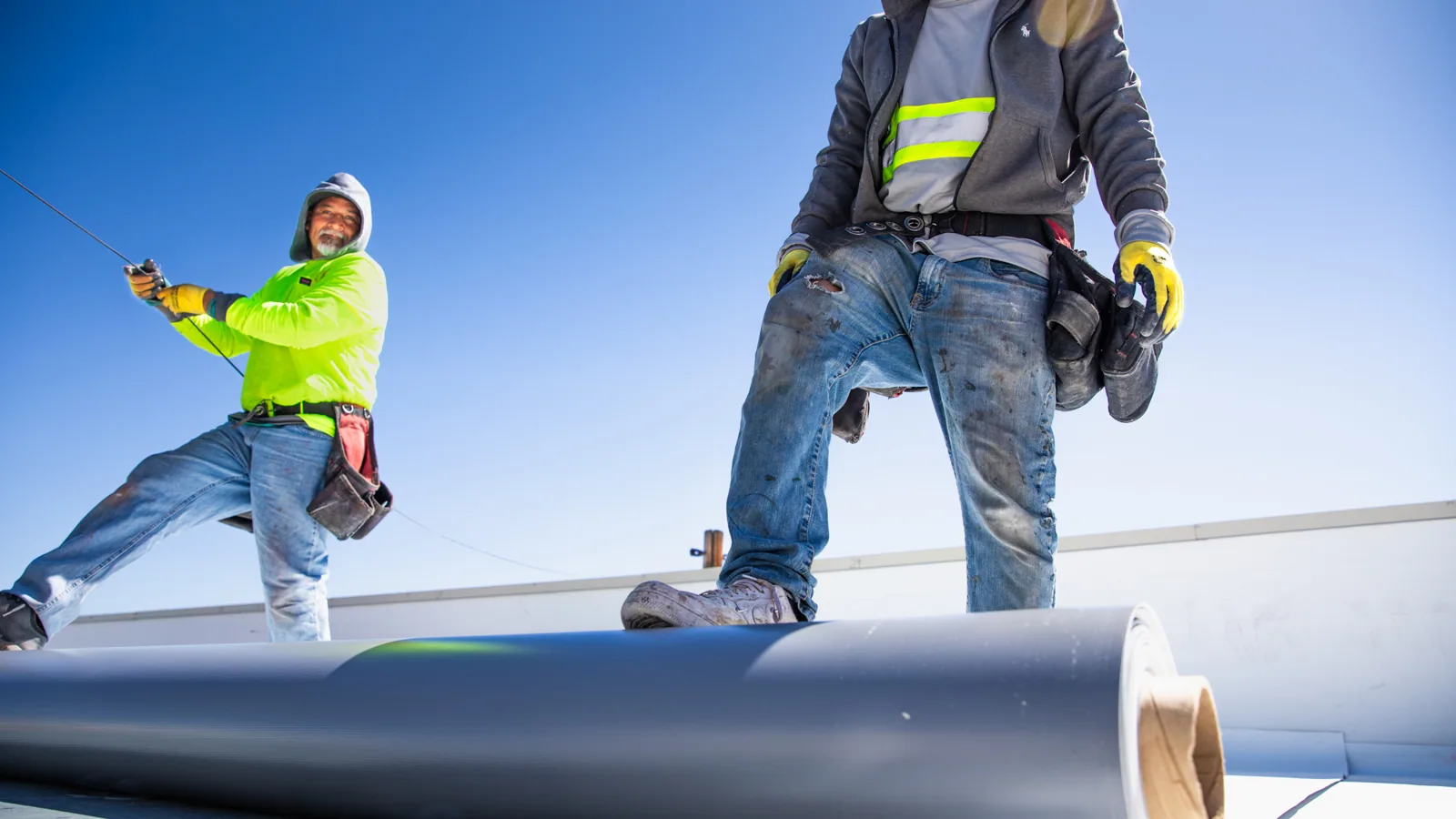
How do local buildings and code shape the plan?
The armory plan zones Fort Pierce Industrial Park largely M-1, a fit for warehouses, light manufacturers, fabricators, wholesalers and service businesses. Those uses suggest varied roof footprints, and we confirm the actual system on each building. Utah's building rules start from the 2024 International Building Code with amendments, and its energy rules from the 2024 IECC and ASHRAE 90.1-2022, which become mandatory statewide on July 1, 2026.
A replacement or alteration can bring insulation and documentation duties that a patch does not, and the permit date settles which edition applies. The City of St. George tells us which edition the permit follows, and we lay it beside the manufacturer's installation requirements. For buildings along St. George Boulevard, the same discipline applies. Owners comparing systems may also review Duro-Last, which approaches PVC through prefabricated sheets, and Carlisle SynTec, which offers PVC alongside other membranes.
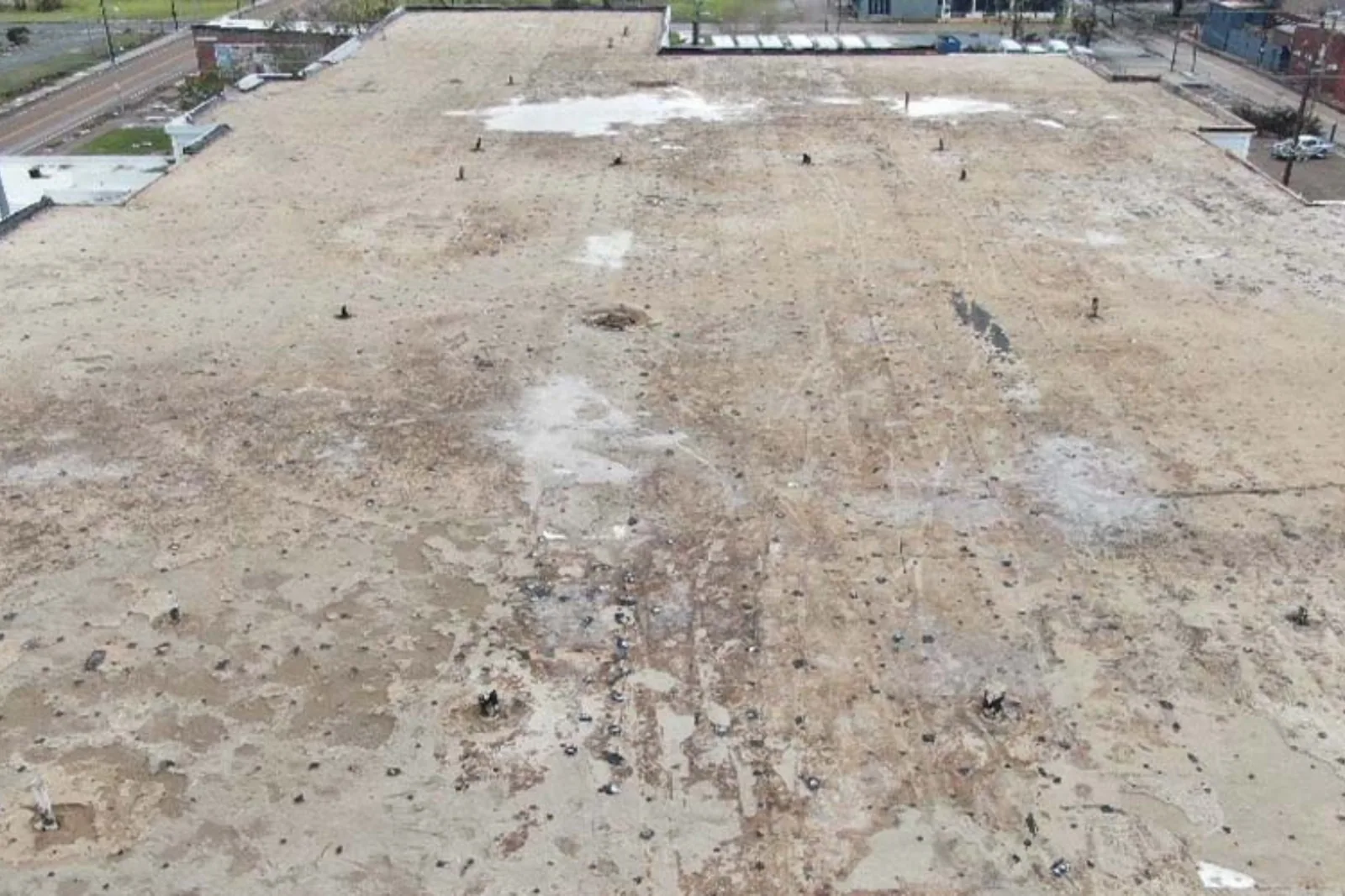
Commercial Roofing Questions
Can an old PVC roof be welded for repair?
Often, if the surface cleans and the membrane remains weldable. We run a test weld first. If the sheet is too aged, we use a compatible detail or recommend larger work.
What does grease do to a PVC membrane?
PVC tolerates many fats, but long exposure and heat can discolor and stiffen it. We inspect near exhaust and clean the surface on a schedule.
How do you check a welded seam?
By probing the edge with a blunt tool and looking for voids or unwelded gaps. Where the system allows, we test a section. The result goes in the record.
Is a liquid-applied flashing a permanent fix?
It can be, when the substrate is sound and the product suits it. We state the expected life and the check interval. Weld-compatible details are preferred where they work.
When should a PVC roof be replaced?
When seams fail in several places, the membrane is brittle or the insulation is wet over a broad area. The report shows the evidence and the cost of repair against replacement.