
Soprema Roofing Systems in St. George, UT
Soprema Roofing Systems Overview
The detail nobody wants to flash is usually the one where a liquid-applied resin earns its place. A cluster of pipes, a curved curb or a rooftop frame leaves little room for a prefabricated boot, and on a Soprema roof in St. George, UT the answer is often a resin that flows around the shape and cures in place. July highs averaging 101.9°F and August highs averaging 99.9°F at the St. George station set how early we apply it and how long it needs to cure before weather arrives. The asset manager's decision is whether the details justify a membrane-wide scope or a targeted repair.
Soprema makes modified bitumen membranes, liquid-applied waterproofing and flashing resins such as Alsan, and insulation as well. We install, repair and maintain the types of system Soprema supplies. We identify what is on the roof before choosing a method.
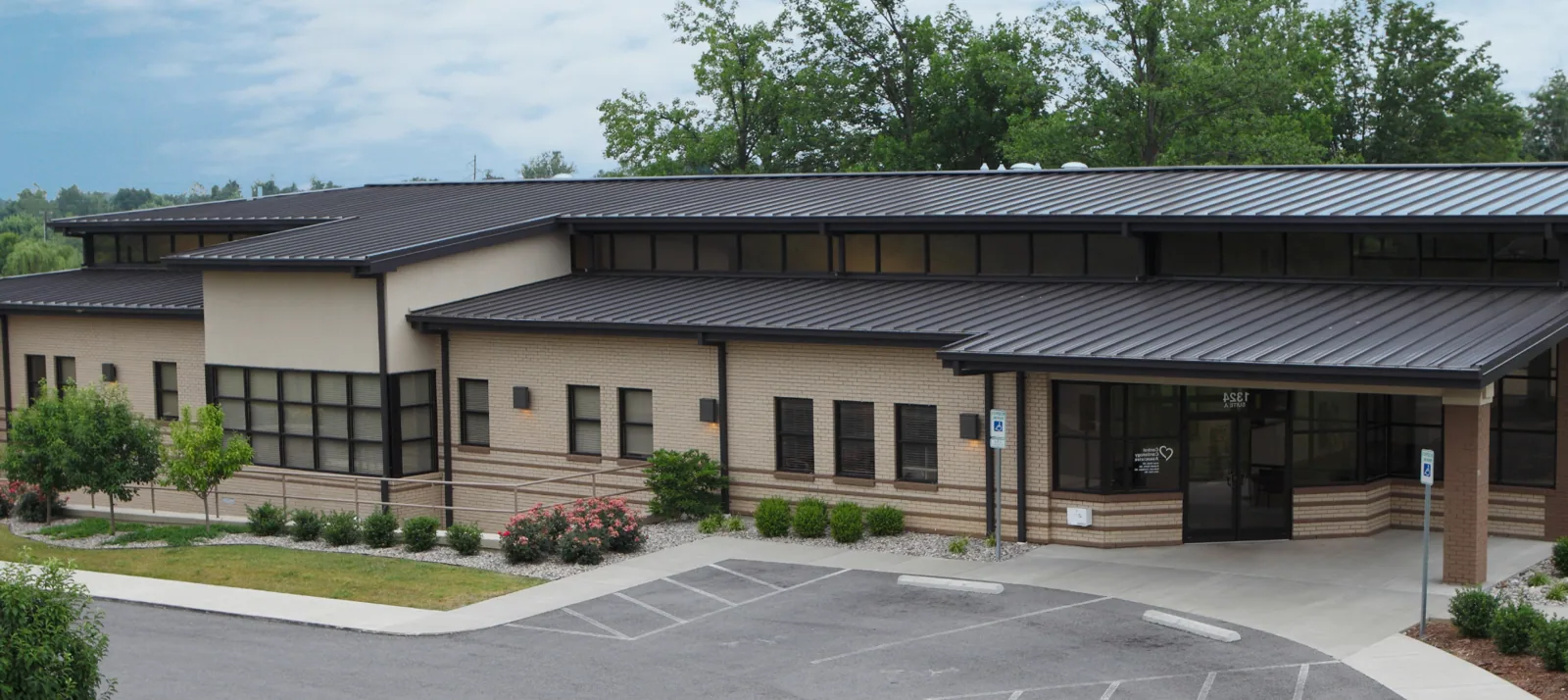
What does a modified bitumen roof look like in service?
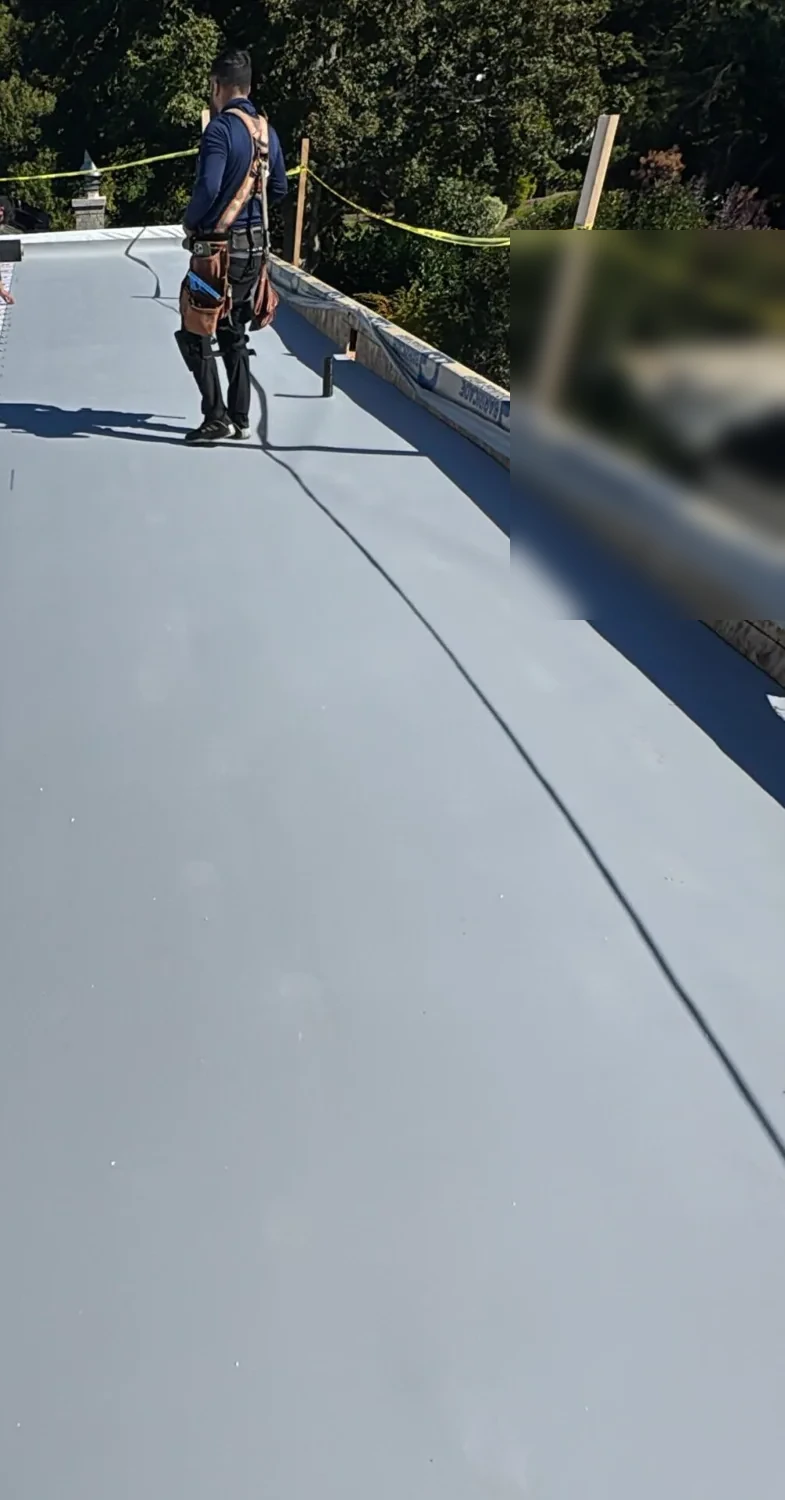
Modified bitumen is an asphalt sheet reinforced with polyester or glass and modified with polymers for flexibility. It is installed in layers, with a base sheet and a cap sheet, and its laps are heat-welded, set in adhesive or self-adhered, depending on the system. The cap sheet carries a granule or coated surface for sun protection. In service, the surface wears, granules loosen and small cracks open at laps and flashings.
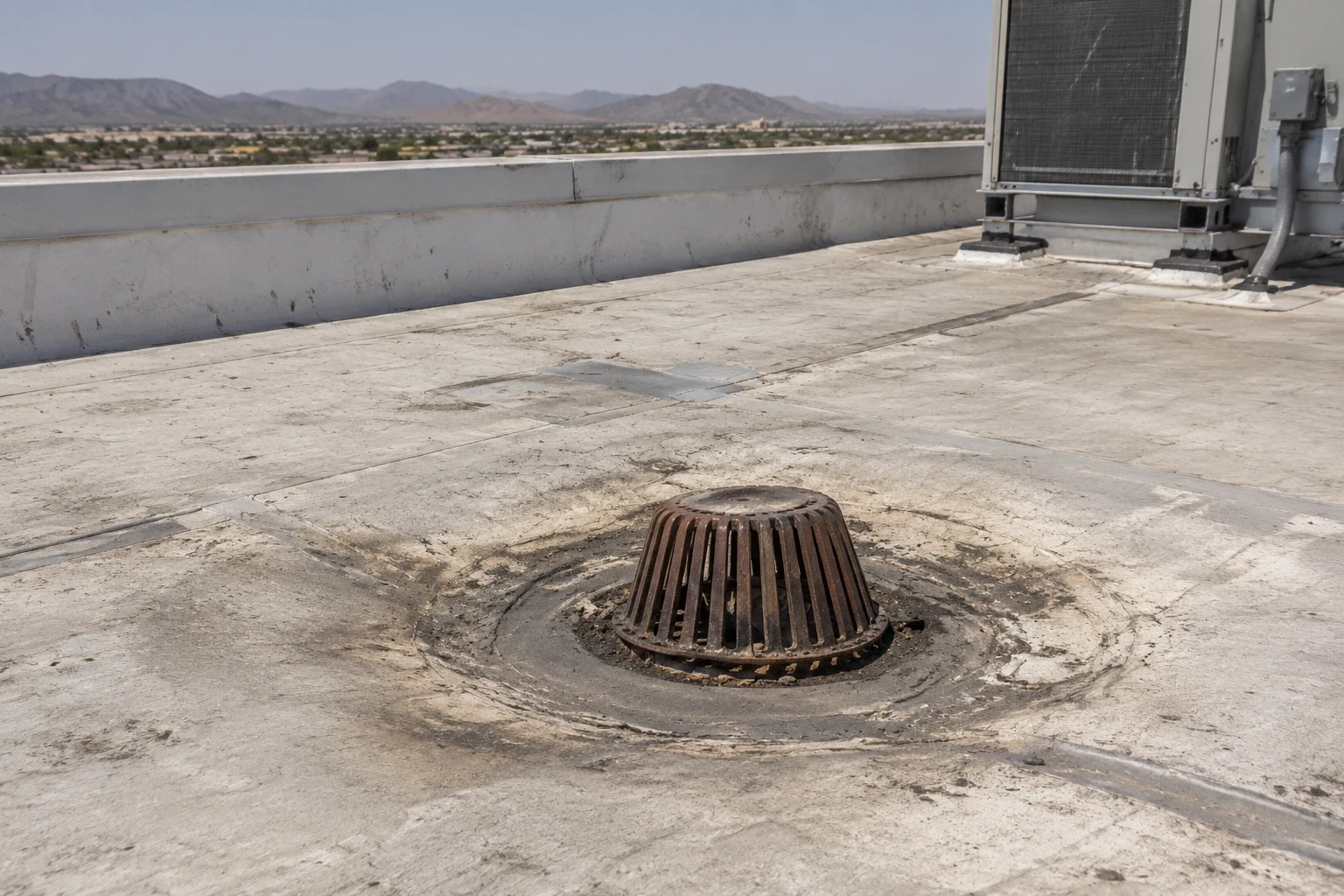
We look at laps, flashing terminations, granule loss and any blistering. Heat softens the surface and foot traffic can scuff it, so walk paths near equipment often show wear first. We probe laps, check the base flashings at walls and curbs, and photograph each condition. A modified bitumen roof that is dry beneath and sound in the field may last many years with targeted repairs. One with trapped moisture does not, and the core tells us which case applies.
When does a liquid-applied resin make sense?
Liquid-applied flashing resins are used where shapes are irregular. They bond to many substrates, cure into a continuous layer without laps and can be reinforced with fabric at stress points. Typical uses include penetrations, curb corners, drains, parapet transitions and repairs where a sheet would be hard to form. Their limits are surface preparation and cure conditions.
A resin repair also changes later maintenance. The cured layer becomes part of the roof, and future repairs have to bond to it or cut it out cleanly. We record each resin area on the roof plan with the product name, the layers and the date. When a later inspection finds a crack or a lifted edge, the record shows what was there and how it was made, and the second repair does not begin with a guess.
We use them when the substrate is sound, clean and dry, and when the weather lets the product cure. Rain before cure can spoil the work, and moisture in the substrate can cause blisters later. A normal year at the station delivers 9.31 inches, of which the February normal is 1.38 inches and June's is 0.16. We watch the forecast and schedule resin work for a dry stretch. A skylight and penetration flashing repair is a typical use, and the record states the product, the layers and the cure time.
How do we work with heat?
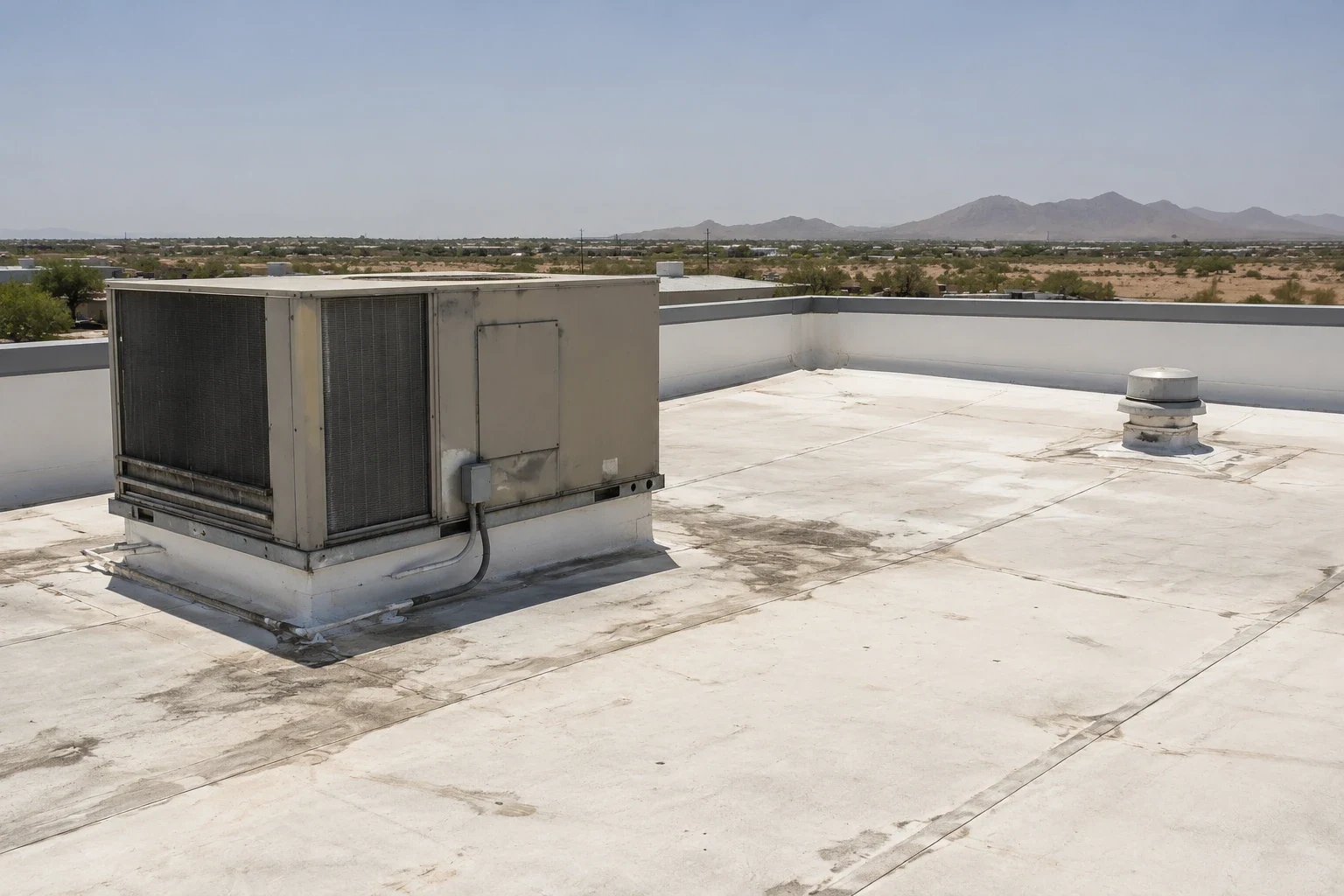
Asphalt-based surfaces get soft in sun, and fresh work needs protection from traffic until it sets. Torch-applied methods add fire risk and are not suited to every roof, so we discuss the application method with the owner, check building and insurance rules and use self-adhered or cold-applied methods where torch work is restricted. Adhesive working ranges apply to cold-applied products. The crew starts early, checks substrate temperature and stops when the surface passes the product's range.
Station figures are a scheduling guide and not a reading for each roof. We confirm conditions at the roof with our own measurements. Between visits, surfaces left unprotected wear faster, and a repair that was made at the edge of a hot day shows its weakness first at the laps. A reflective coating over a sound cap sheet can slow that wear and ease surface heat, and a coating restoration scope names the preparation steps and the conditions that make it suitable.
Where do these systems appear locally?
The consolidated plan dates much of the commercial and residential stock to 1980 or later, and the land-use plan keeps Commercial, Industrial and Industrial/Commercial parcels apart. Fort Pierce Industrial Park falls largely in M-1 zoning, according to the armory plan, which allows warehousing, light manufacturing, fabrication, wholesaling and services. Those uses suggest buildings with many rooftop penetrations, and penetrations are where resin work is most often needed. The label does not tell us the system on a given roof.
For a building in Fort Pierce Industrial Park or along Bluff Street or Sunset Boulevard, both labeled on the county's arterial map, we begin with the same walk: drains, field, laps, flashings, penetrations and edges. The report separates what we confirmed from what remains open. Owners can then decide whether the details alone need work or the membrane is nearing replacement.
Edge metal and coping deserve a mention on a bitumen roof. Heat drives expansion at metal joints, and the sealant under the metal dries and splits. Water then enters at the edge, where it can soak insulation unseen. We check the fasteners, joints and sealant at every edge and reset or replace the sections that have moved, because a sound field with a failing edge still leaks.
What do code and warranty add?
Permits follow Utah's amended version of the 2024 International Building Code, and from July 1, 2026 the state enforces the 2024 IECC and ASHRAE 90.1-2022 for energy. A replacement may call for insulation levels and paperwork beyond a repair's, and the permit date settles the edition. We ask the City of St. George which edition applies and compare it with the manufacturer's assembly requirements.
Manufacturer warranties carry conditions on installation, repairs and maintenance. We read the terms, plan the work against them and keep the records, and the manufacturer decides what a warranty covers. Owners comparing bitumen with single-ply can also look at Johns Manville, which supplies both families, or at GAF for a similar mix.
Commercial Roofing Questions
Does Alsan replace a boot?
In some details, yes. A resin can seal an irregular shape where a prefabricated boot will not fit. In others, a boot is better, because it is factory-made, uniform and quick to set. We choose based on the shape, the substrate and the time the building can give us.
Can modified bitumen be repaired without a torch?
Yes. Self-adhered and cold-applied methods exist for many repairs. We check the system and the building rules before choosing.
What kills a resin repair?
Moisture in the substrate, dirt and rain before cure. Preparation and weather control matter more than the material. We clean to a defined standard, check moisture, prime where the product calls for it and photograph the substrate before the resin goes on.
How long must a repair cure before it is exposed?
It depends on the product and the temperature. We state the cure time in the record and schedule around a dry window.
Is granule loss serious?
Some loss is normal. Bare patches expose the asphalt to sun, which speeds aging. We note the pattern and recommend protection if it spreads, either a reflective coating over a sound cap sheet or a replacement of the worn section.