
Hospital Roofing in St. George, UT
Hospital Roofing Overview
On a hospital roof, the air intakes matter as much as the membrane. A hot-asphalt fume, a cloud of grit or a diesel exhaust from a lift pulled into an air handler can reach an operating suite or a patient room, and the rooftop equipment that serves those spaces sits a few feet from where a crew would work. In St. George, summer work also means hot surfaces, heavy mechanical loads and a window that narrows by midmorning, with the NOAA July mean high at 101.9 degrees.
We coordinate roof entry, equipment clearance, loading and interior protection with the facility contact before setting the inspection window. A commercial roof inspection maps the drains, seams, curbs and perimeter details without assuming that a ceiling mark shows where water got in.
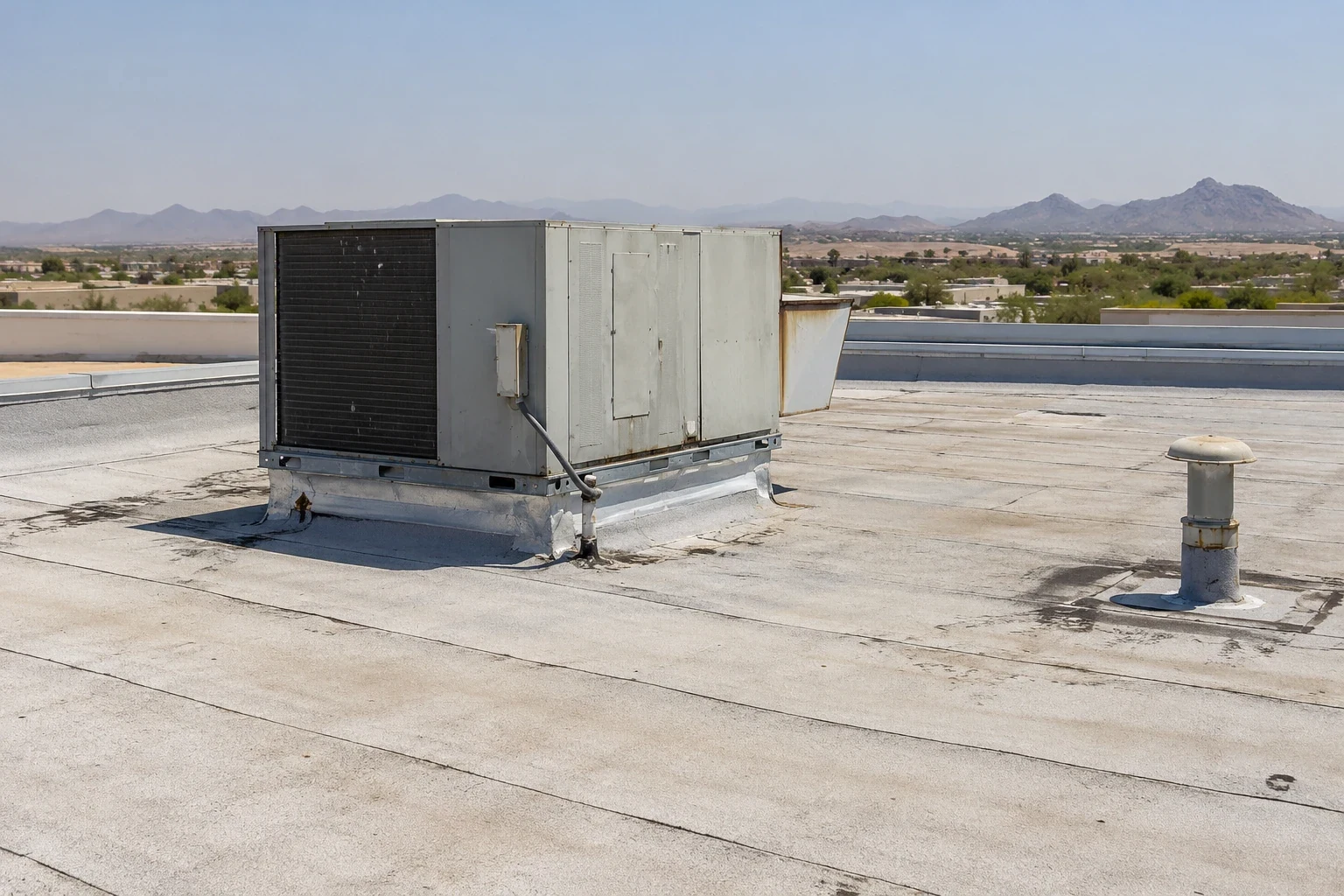
What must be agreed before anyone goes on the roof?
Credentials, escort rules, approved routes, photo limits and the name of the person who can change the work area. We identify where tools can be staged and whether a lift or an opening needs further review. An inspection may be noninvasive, yet the route can cross sensitive equipment or service zones, and the facility lead sets those limits so the crew does not improvise at the roof hatch.
Any task that adds noise, heat, dust or temporary exposure gets a sequence reviewed with the responsible staff. A larger scope can be split by roof section, each phase stating how the area is protected and closed. Occupied-building reroofing methods cover barriers, staging and work windows before a tear-off begins, and a concealed condition that changes the sequence waits for the owner's approval before the opening grows.
How is the work kept from reaching patient areas?
By treating the air and the dust as part of the scope. Hospitals follow infection-control risk assessments for construction, and the roof work feeds into them: which intakes are close, which pressure relationships matter, which floors sit directly below. We ask for that assessment before the crew mobilizes. Intakes near the work zone are covered or shut down by the facility, hot-work fumes and cutting dust are controlled at the source and debris leaves the roof by chute or hoist, not by drop.
Odors from adhesives, cleaners and primers are a patient-care issue, not a nuisance. Cold-applied systems, low-odor products and off-peak scheduling go into the plan where the roof sits above sensitive units. Noise and vibration from tear-off are scheduled away from procedures, and the building's engineers hold the stop authority.
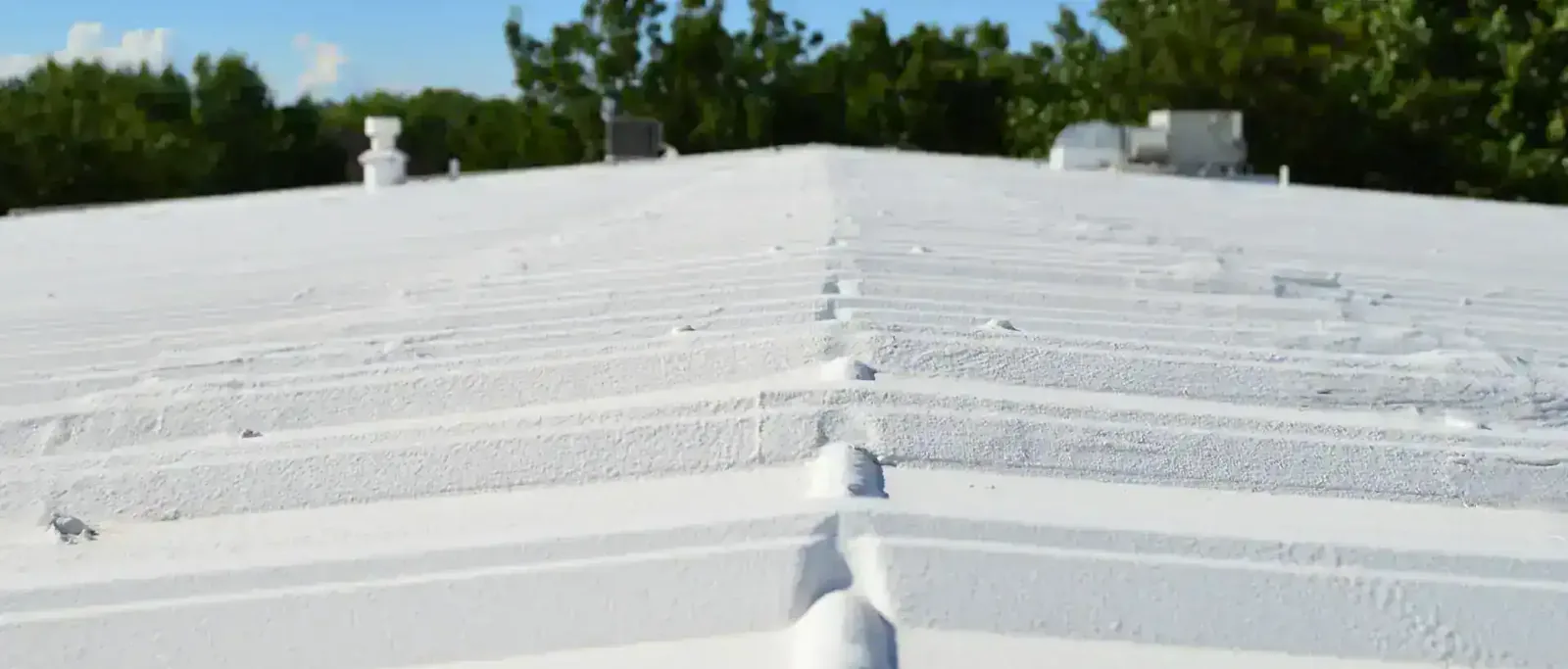
How do we trace water away from a reported room?
From the ceiling back up the slope. Water can run under a membrane or along an insulation joint before it appears inside, so we compare the report with slope, seams, penetrations, drain bowls and wall transitions. The station normals total 9.31 inches of rain, February wettest and June driest, and a summer inspection that finds no ponding says little about how drains will behave in the first winter storm.
We document strainers, scuppers, low areas, debris and soft insulation separately. A drain defect may hold water on the roof while a seam or curb is the real entry. Drain and scupper repairs go together with membrane work when the outlet connection is part of the path. The report separates what we observed from what would need a test or an opening to confirm.
Which rooftop equipment details need coordination?
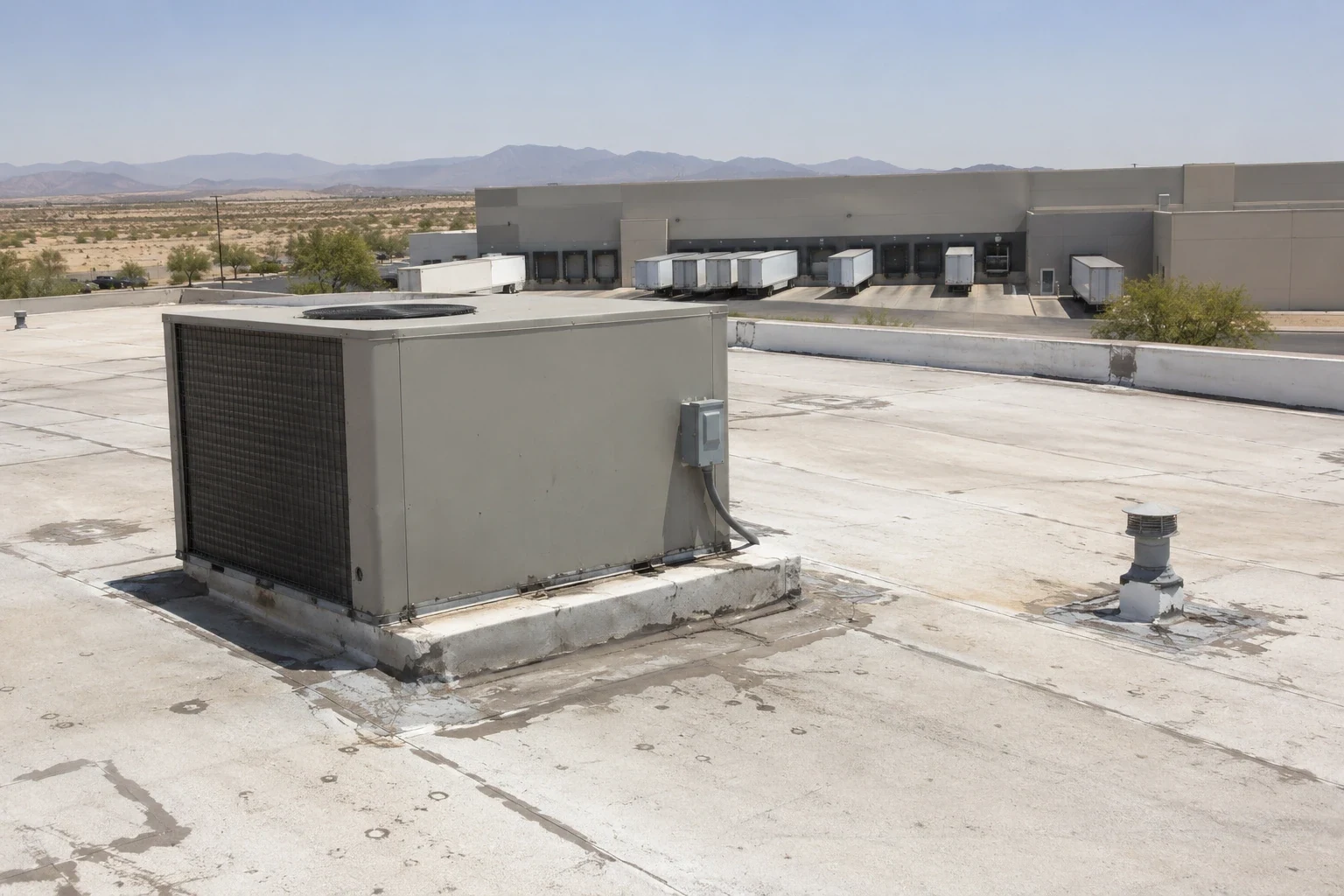
Air handlers, exhausts, conduit, medical-gas lines and service platforms all create membrane transitions. We inspect curb corners, counterflashing, pitch pans and terminations for movement or open edges, and the roof scope names who restores each transition after mechanical or electrical work. The relevant trade is coordinated, and we inspect the finished detail before recording it as closed.
The installed membrane controls the repair material. TPO and PVC use product-specific seam details, while other assemblies need their own preparation. Product records, markings and field conditions establish the system, and if a later coating or patch hides the original surface we say what remains uncertain and choose a test only when it could change the scope.
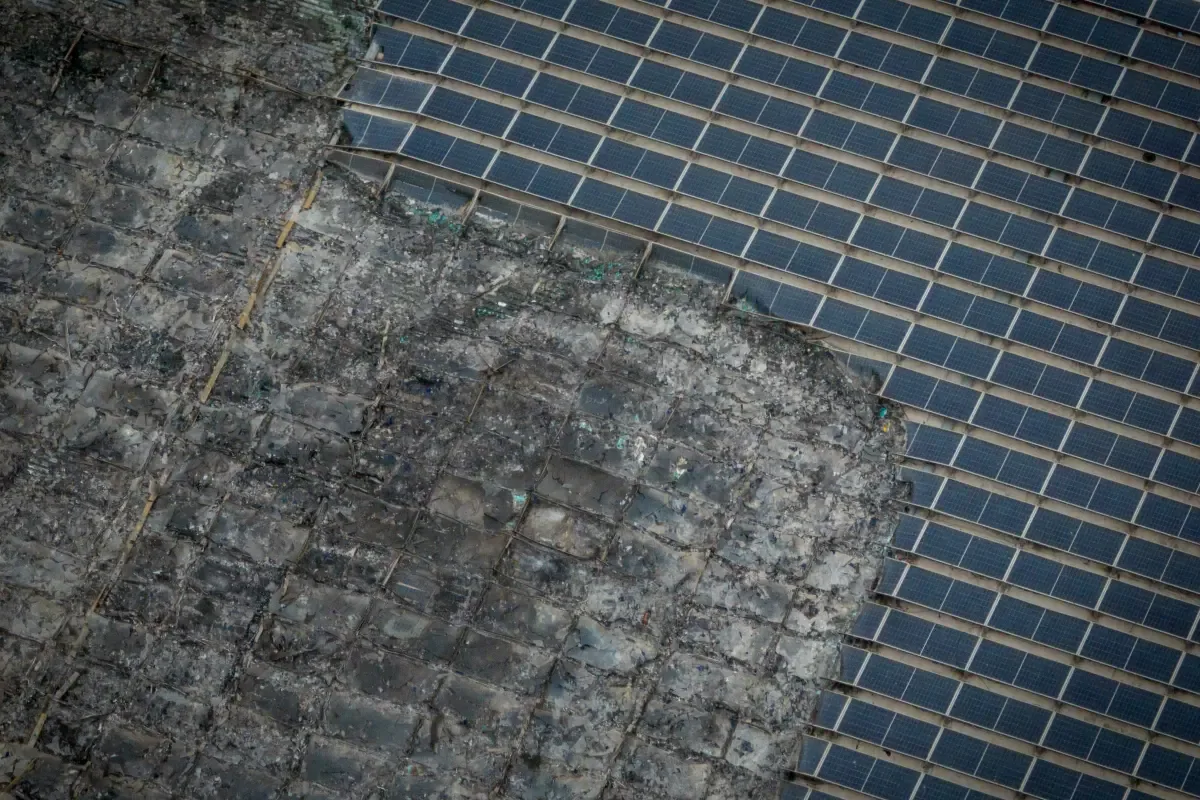
When does a repair grow into a capital review?
When the defect is no longer bounded. A limited repair fits when nearby membrane, insulation and attachment remain serviceable. Repeated leaks in separate zones, broad moisture or a deck concern shift the decision. We map the findings and name any selective opening needed to answer a specific question; an untested area is not called dry or failed, it stays an open item until evidence resolves it.
The Consolidated Plan places much of the city's commercial stock after 1980, which does not give a hospital roof's age, layers or repairs, so we read those at the property. A recover review weighs attachment, moisture, edge height and drainage before another system is added. The outpatient VA clinic in the River Road area, handled under VA clinic roofing, and a medical office bring related coordination questions at a smaller scale.
How is roof work divided into phases?
Immediate leak response first, scheduled repairs next, replacement last, with each roof area carrying its own access, staging, affected equipment, interior protection and approver for a changed condition. A repair above a nonclinical support room may run on a different clock than work near an active service area. The facility sets operating limits; the inspection sets the observed condition.
Utah's code and energy path depend on the permit date, amendments and scope. If the work changes insulation, drainage, edge height or mechanical curbs, we flag those interfaces for design and permit review, and roof capital planning keeps the schedule and open design questions beside the condition record. The roofing contractor's boundary is stated separately from work assigned to another vendor, so a proposal is never mistaken for an interior restoration scope, and the condition that could trigger an added opening is named in advance.
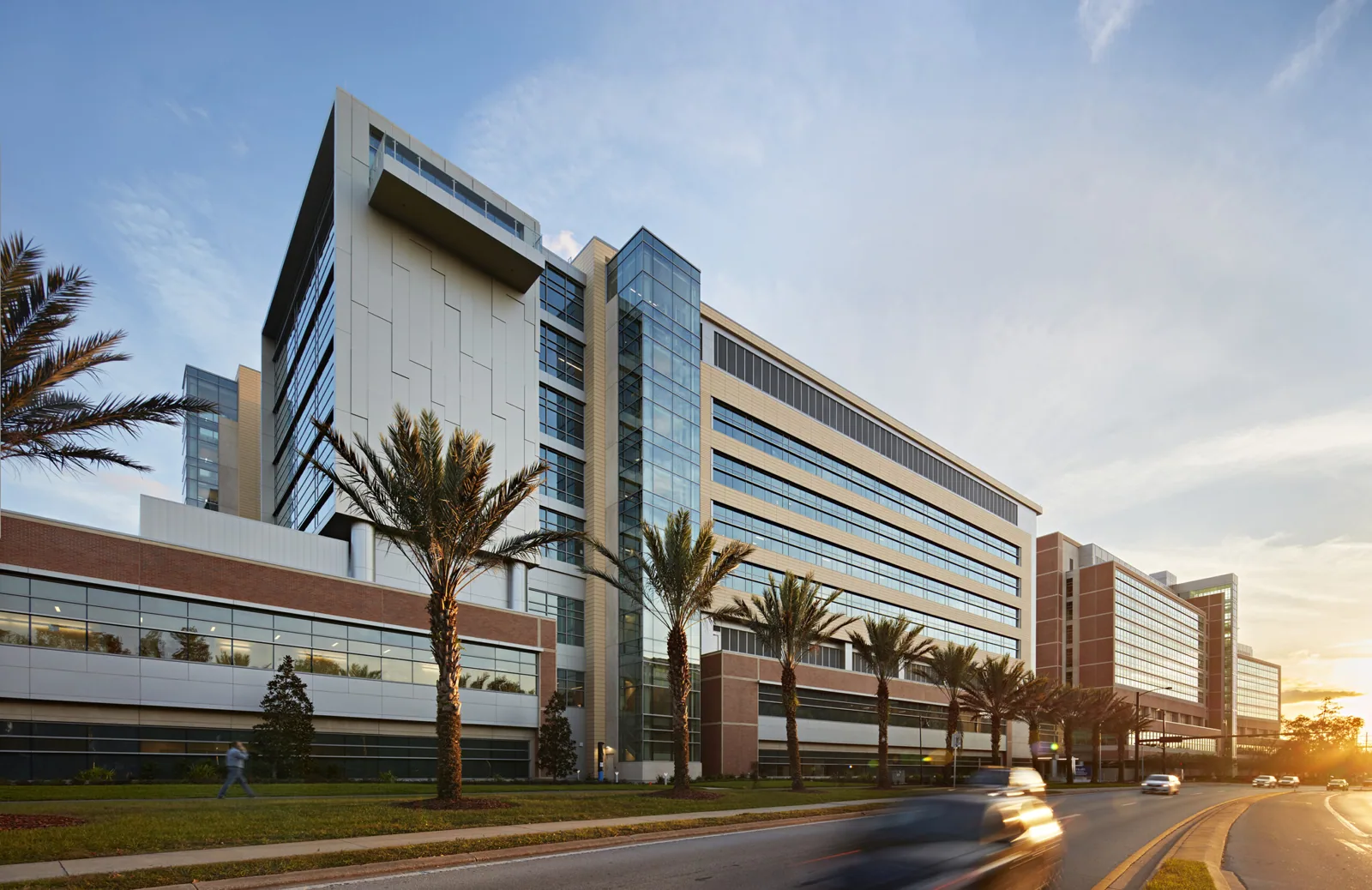
What should the facility keep afterward?
Roof plans, earlier repairs, leak reports, access instructions and photographs in one place, each image marked by roof section and detail with the material used and any follow-up. If a test opening was made, the record includes its approved purpose, findings and closure method. A later visit can then tell completed work from an unresolved condition without reopening an area on assumption.
Send the roof and equipment plans, access rules and work-window limits. We will document the zones and leave the manager with the completed scope, the conditions that need review and the next decision, in a record the facility can use. Medical uses are part of the mix the city describes along Buena Vista Boulevard in Washington City's I-15 corridor, and work there follows the same steps.
Commercial Roofing Questions
Can roof work happen without entering patient-care areas?
A roof survey often needs no interior access. If a leak trace or test needs a room, the facility approves the area and the time first.
What if a leak appears away from the roof defect?
We compare the reported location with slope, drains, seams and penetrations. Water moves inside the assembly, so the entry point needs evidence.
How do you coordinate a rooftop unit replacement?
The work plan names who restores the curb and the membrane around it. Once the trade finishes, we walk the detail and log it closed.
Can a hospital reroof stay open in sections?
The method, access, protection and facility rules decide whether phasing is practical. We identify each zone and review the sequence with the owner.
What do we confirm before a recover?
Moisture, attachment, existing layers, drain connections, edge height and deck support. Any concealed condition that could change the scope stays open for review.