
Restaurant Roofing in St. George, UT
Restaurant Roofing Overview
A restaurant roof gets hit by heat from two directions. The sun bakes it, and the kitchen exhaust throws hot, oily air across it all day. At the St. George station, the July normal high is 101.9 degrees, and a membrane that is already soft in July does not shrug off a film of cooking oil. For a restaurant owner in St. George, UT, the first practical question is how the roof is holding up around the fans, because that is where the damage starts.
We read the roof from the exhaust outward, with the kitchen schedule and the dining room's ceiling plan in hand.
What does grease do to a roof membrane?
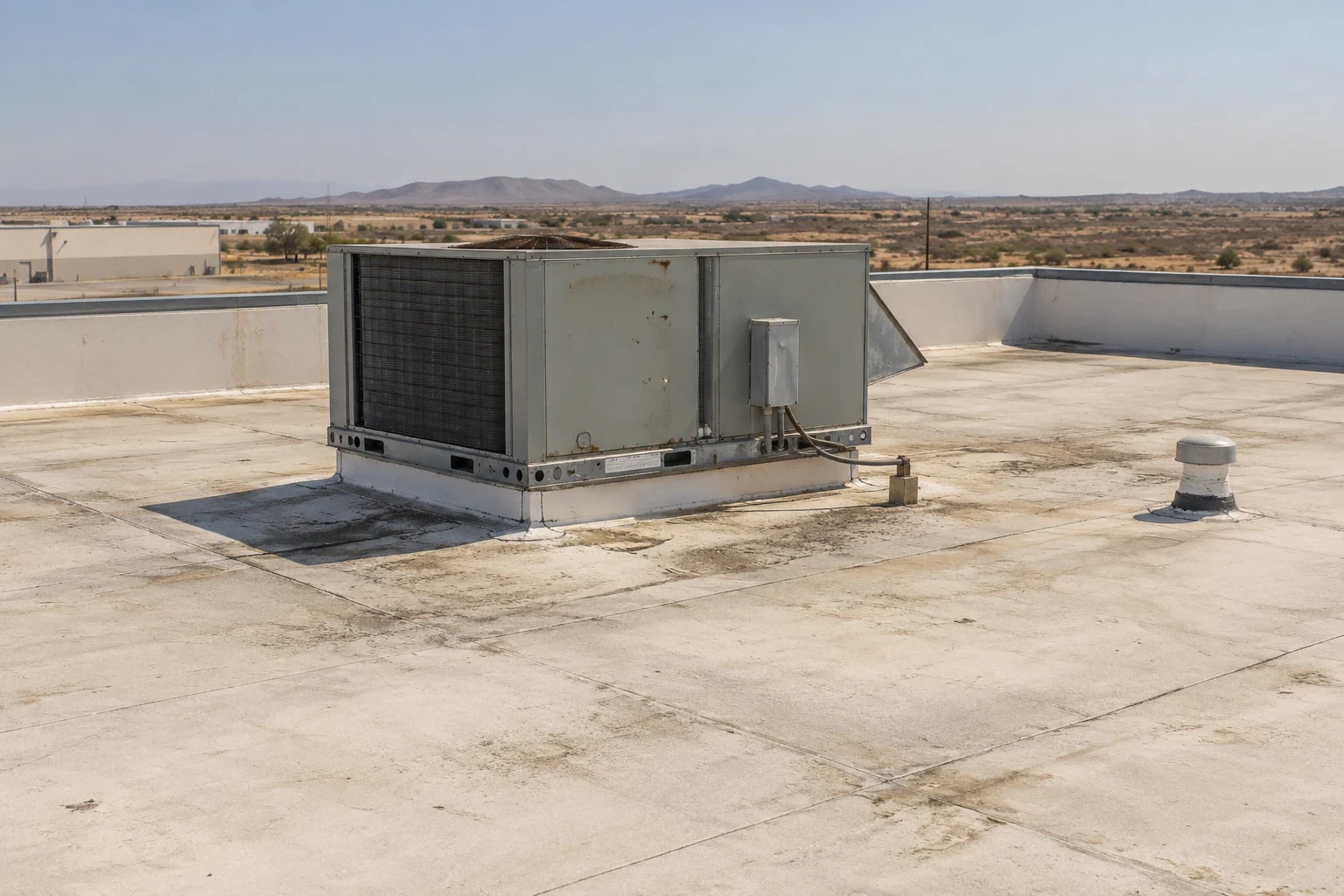
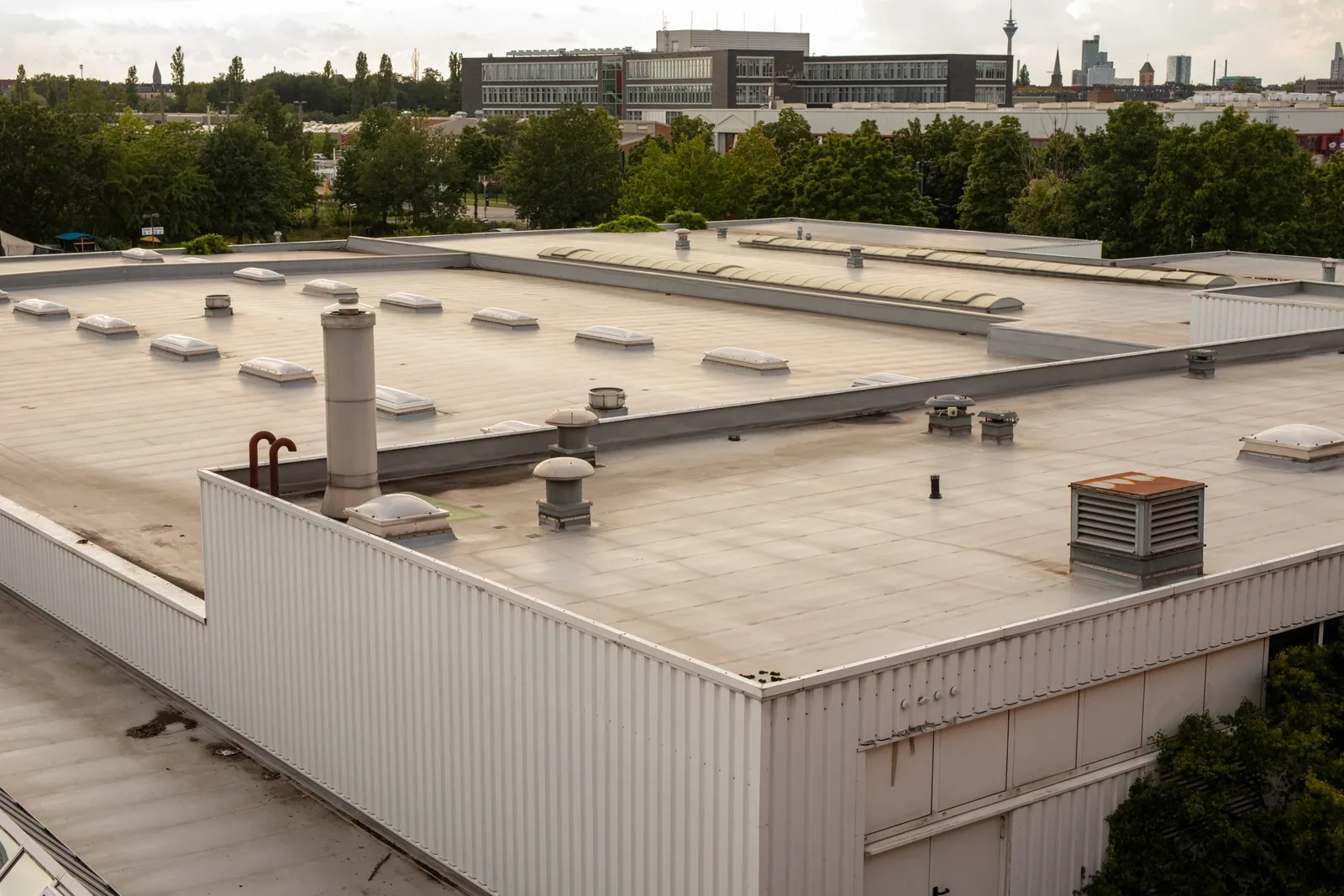
Exhaust fans push a fine mist of cooking oil up and out of the building. Some of it lands on the roof around the fan. Over months, the film softens certain adhesives, stains the surface, collects dirt and can attack some membrane materials. A patch laid over a greasy surface will not bond, and a seam that touches grease can lift at the edge long before the rest of the seam shows age.
We look for staining, softness and loose edges near each fan, then clean the area with a degreaser matched to the membrane before any repair. Where the fan discharges onto the roof, a containment tray or a grease-resistant patch under the discharge slows the next round of damage. Hinged fan bases and curbs get a sealant check, since heat and vibration work at them every day.
Outdoor dining adds equipment too. Patio heaters, misters and string-light poles sometimes mount to the roof or parapet, and each mount is a penetration. We list them on the roof plan and check the sealant at every base, because a mount that moves in the wind opens its own flashing.
Where does a roof leak reach the dining room?
A leak in the kitchen is a nuisance. A leak over a table or the bar costs the evening. The dining room often has a suspended ceiling and light fixtures, so water entering at a wall flashing or a vent boot can follow a wire or a pipe a long way before it shows.
We trace the water path from the interior stain back toward the roof, checking parapet flashing, skylights, rooftop heaters, pipe boots and drains along the line. Photographs mark each suspect spot with a distance from a fixed point. In a dry climate, a stain after a rare rain can also come from an old, dried-out sealant that has not been tested by water in months, so we probe sealants even where the roof looks dry.
Skylights over a dining room are a frequent source. Glazing seals age in the sun, and curbs move with the heat. We check the seals, the curb flashing and the drain path below the skylight, and we write down whether the skylight is the leak or just the nearest object to it.
Why does one rare rain find every weak spot?
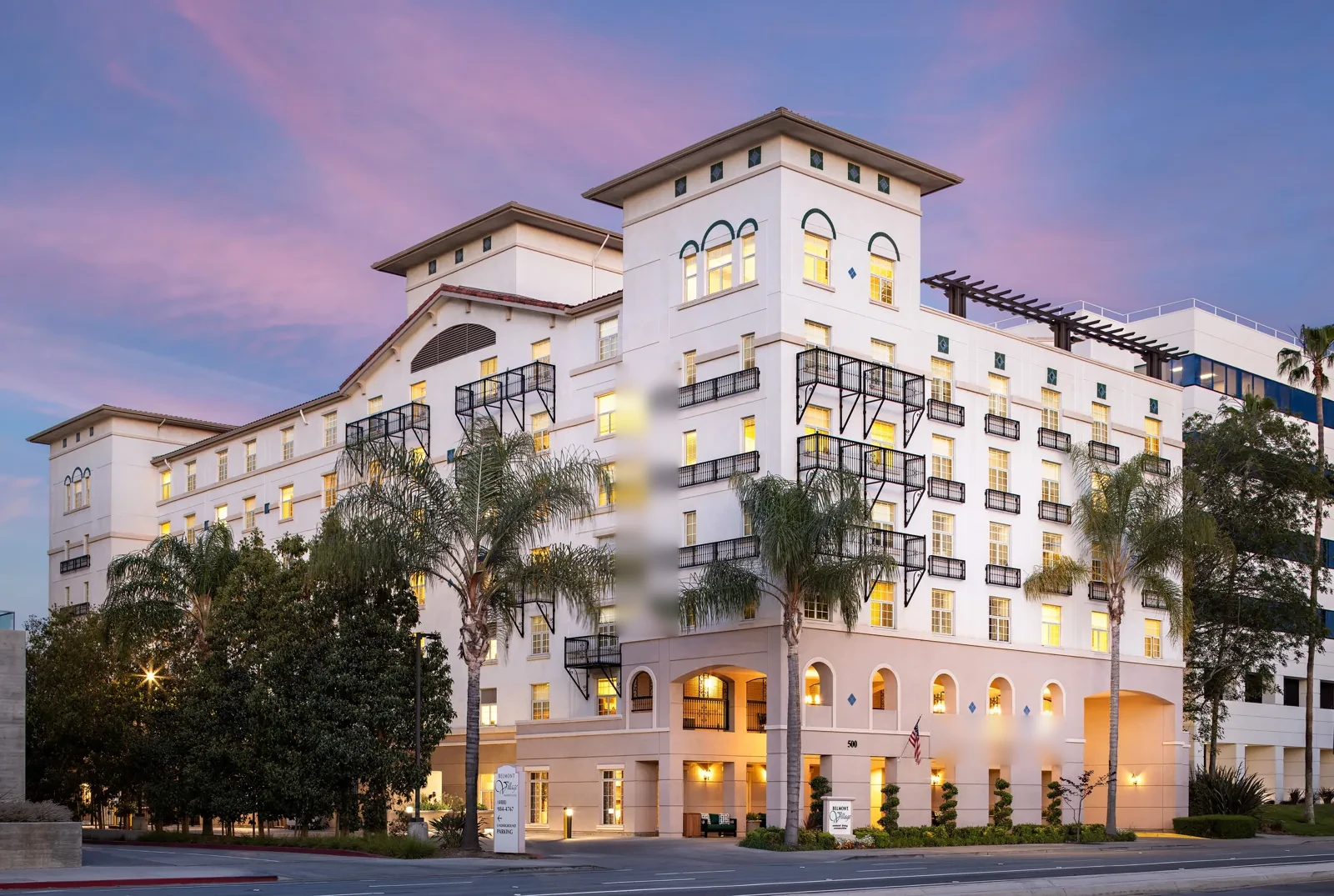
Station normals show about 9.3 inches of precipitation in a year, most of it in February and almost none in June. Long dry spells dry out sealants and fill drain bowls with grit. A restaurant on a pad site often has a small roof with a parapet on three sides, so a single blocked scupper can hold a pond against the wall.
Before the wetter months, we clear strainers and scuppers, check the slope toward them and look for low areas near the parapet. On a small roof, debris from a nearby lot builds fast, so we suggest a clearing schedule that fits the season.
How is the work planned around prep and service?
Restaurants cannot close for a long roof project. We plan for the quiet part of the day, usually morning before prep begins, and stage material away from the front door and the delivery entrance. Fresh-air intakes and exhaust are protected from dust and fumes, and hot work is kept away from kitchen make-up air.
For a replacement, we split the roof into sections that close before the evening service, and we coordinate with the kitchen manager about the hours the exhaust must stay running. Hoods and fire suppression stay in service. Early starts also dodge the worst surface heat. A kitchen that must close for a day gets the date early enough to order food accordingly.
Deliveries and trash pickup continue during the project. The crew's hoist and bins stay away from the delivery door and the dumpster enclosure, and the sweep at the end of each shift covers the lot and the patio. Any grease we remove from the roof is bagged and taken off site, not rinsed into a lot drain.
What changes for a restaurant downtown or at Tech Ridge?
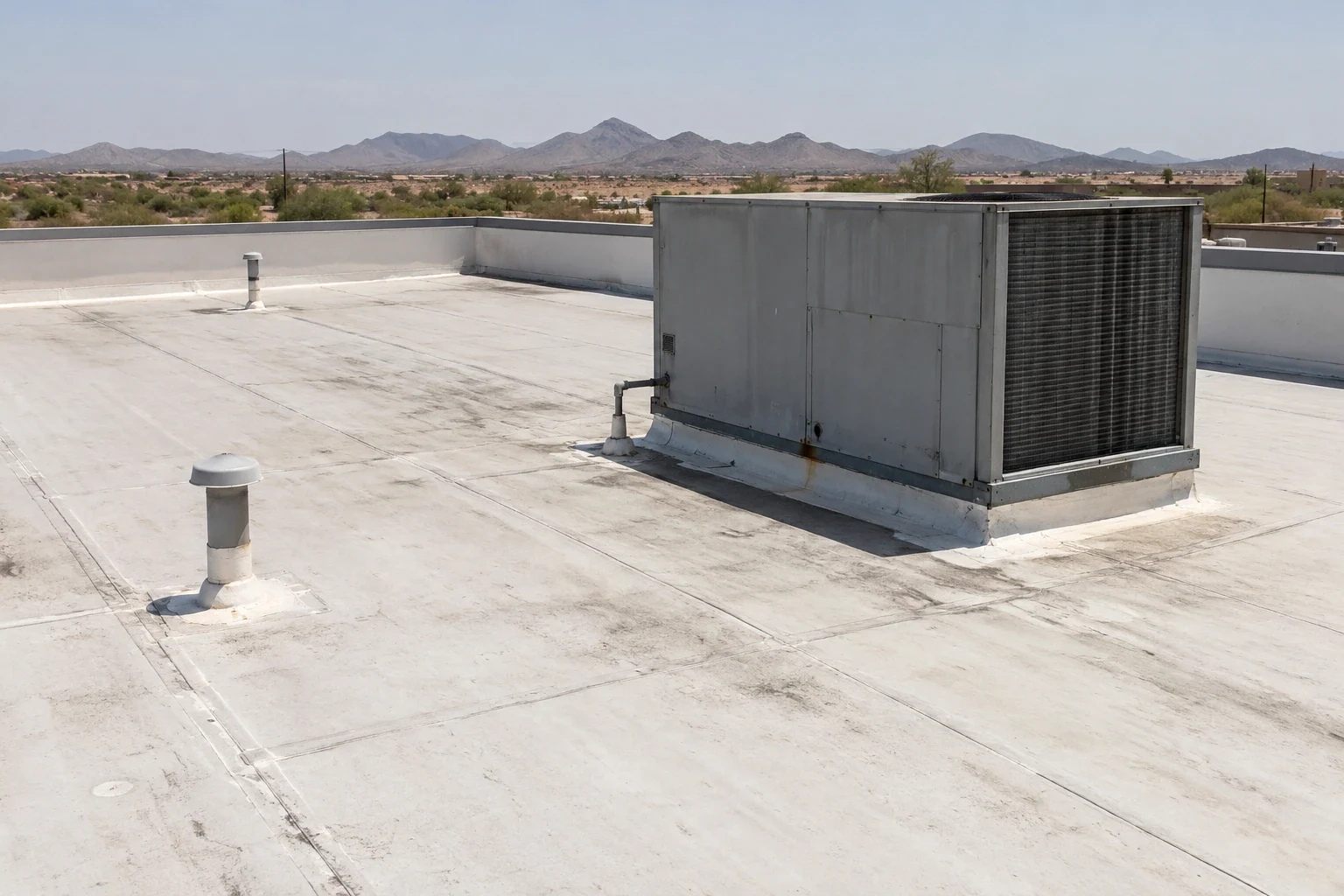
The city's land-use plan separates Lively Downtown, the Downtown Connected Corridor and the Downtown Traditional Neighborhood as distinct planning areas, and Tech Ridge describes a planned mix of office, retail and residential. Restaurants in settings like these often share walls, lots and sometimes a roof with other tenants.
Where a restaurant sits inside a larger building, the lease decides who pays for what, and the roof report gives both sides the same facts. In a shopping center, each finding is tied to a bay. A restaurant inside a hotel gets the same kitchen-exhaust care, with room blocks added to the plan. Work in Lively Downtown or at Tech Ridge includes a staging plan for shared drives.
Repair, restore or replace?
Restaurant roofs are usually small enough that replacement can be broken into short sections, which makes the decision more about condition than disruption. If the membrane is sound but stained, a coating restoration can add life once the surface is cleaned. If a moisture reading shows wet insulation, replacing the wet areas costs less than repeated patches. A repair suits an isolated failed detail.
Each path is priced on surface area, insulation depth, openings to flash and the route the crew takes to the roof. A replacement has to meet the building and energy editions in force on the permit date, and the statewide energy standard becomes mandatory in July 2026. We confirm which apply, and the city's own rules, before a number is quoted.
Timing follows the restaurant calendar. Ordering happens ahead of the quiet season, because product lead times stretch for weeks. Dry, warm weather helps adhesives and coatings cure, and early starts keep heat off the crew. The written scope states the section order and allows for weather holds.
What does the owner keep afterward?
A new manager inherits a clear picture. We note every fan, curb and vent, its condition and the date of the last repair, and the file lists photos by roof section. If a lease or lender needs roof documentation, the same file serves. Next year's walk starts from the repair lines already marked on the plan.
Commercial Roofing Questions
Why do patches near an exhaust fan keep failing?
Grease on the surface keeps adhesive from bonding. We clean first and add containment at the discharge.
Can the restaurant stay open during roof work?
Often, in sections and in the quiet hours. Hoods stay running and intakes are protected.
The stain is over a table. What do you check first?
The flashing, boots and drains along the line back toward the roof from the stain.
Does a restaurant roof need a special membrane?
Some handle oils better than others. The choice depends on fan discharge, traffic and budget.
What if the landlord owns the roof?
We work with whoever holds responsibility under the lease. A written report with photos helps both sides.