
Shopping Center Roofing in St. George, UT
Shopping Center Roofing Overview
A strip center's busiest hours and its hottest hours overlap, and the roof crew has to pick which one to work around. In August the St. George station averages a daily high of 99.9 degrees, while customers start arriving by mid-morning. A roof project on a shopping center in St. George, UT, therefore starts before the stores open, stages in the shade and finishes the heavy tie-ins before the afternoon sun softens the membrane.
Before that, the useful question is where the water goes and who sits under each stretch of roof. The answer to that decides the repair scope, the notice plan and the order of work.
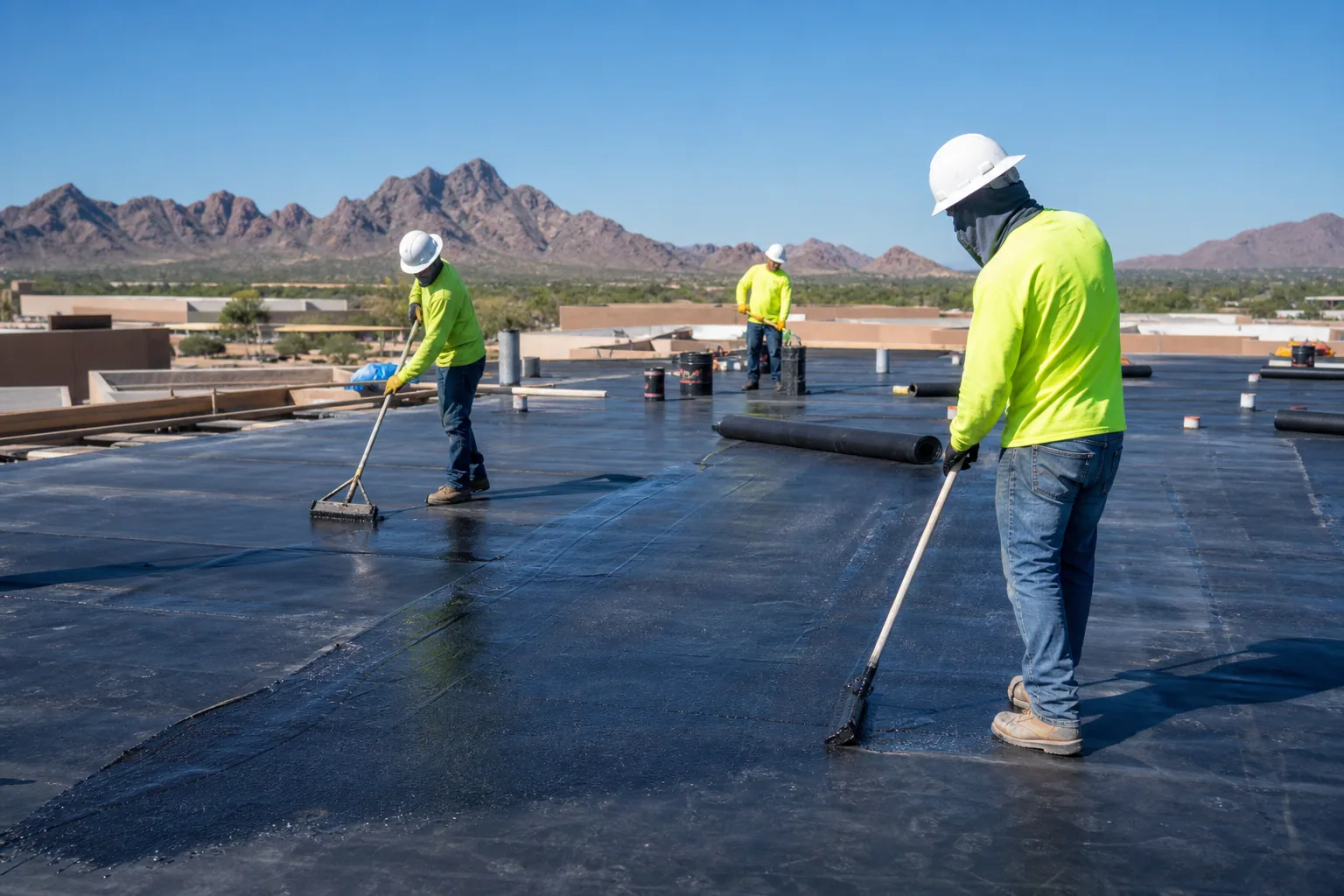
Who is under each stretch of roof?
Most strip retail is one roof over many leases. Demising walls divide the tenant spaces below, but the membrane runs across them. A leak that appears in one unit may start over its neighbor, because water travels along the deck and through shared walls before it drops.
We lay the unit list over the roof plan and trace each reported stain upward. Photographs carry the bay number and a distance from a drain or a rooftop unit. That makes a tenant's call about a drip traceable to a roof location in minutes. It also gives the landlord a clear record when a lease dispute turns on who is responsible for which opening.
How old are these roofs, and does it matter?
The city's own plan puts much of its commercial and residential stock at 1980 or newer. That is a broad statement. It says nothing about the age or roof type at any one center. Some have been recovered. Some carry two layers. Some have patches from several different trades.
We confirm the assembly on the roof, not from a listing. A test opening shows the layers. A moisture reading shows whether insulation is dry. The report states what we confirmed and what we did not open. Along corridors such as River Road, the county's road map labels the route, which helps with dispatch but says nothing about a roof.
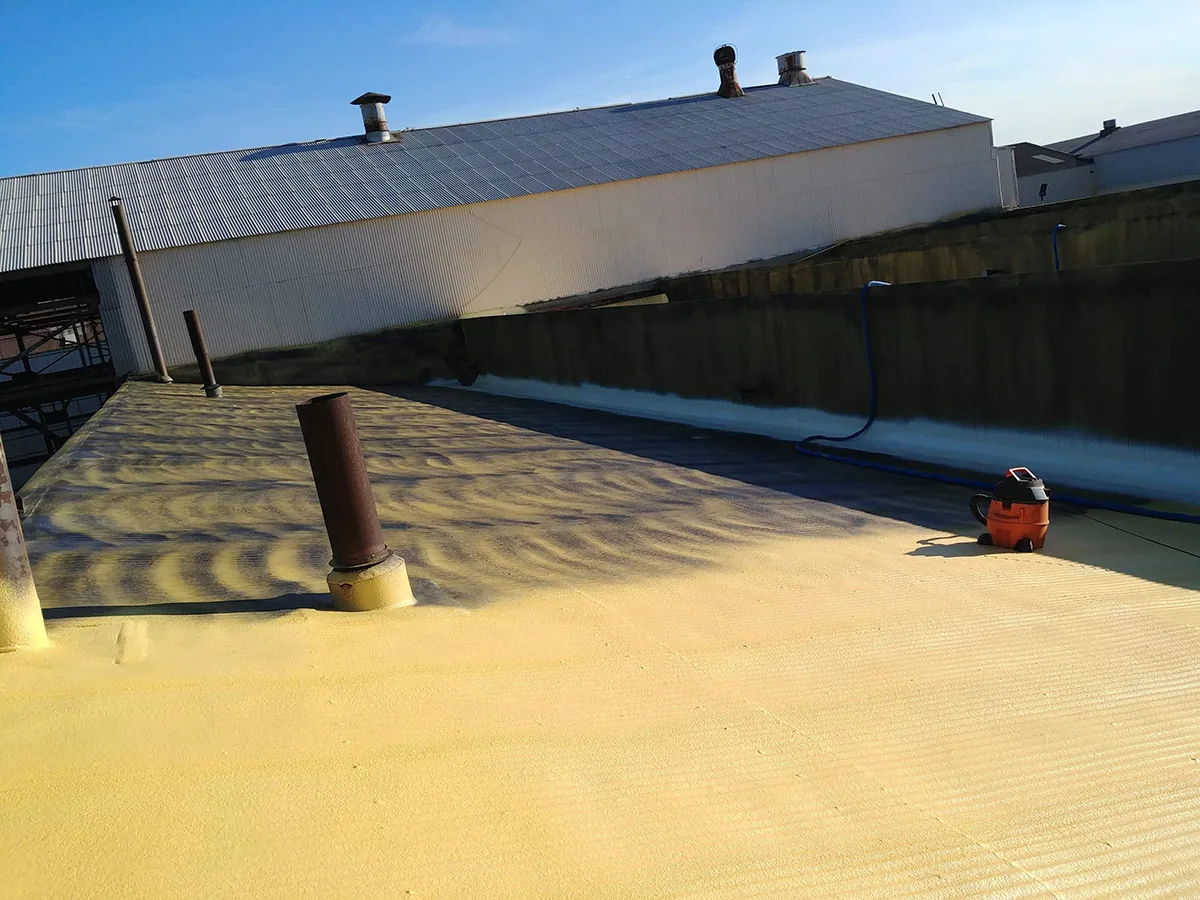
What do summer heat and rare storms do to a retail roof?
Dark membranes on large flat roofs run far hotter than the air. Seams relax. Sealants harden and crack. Flashing shrinks away from parapets. Adhesives flash off too fast, which makes patching in the afternoon unreliable.
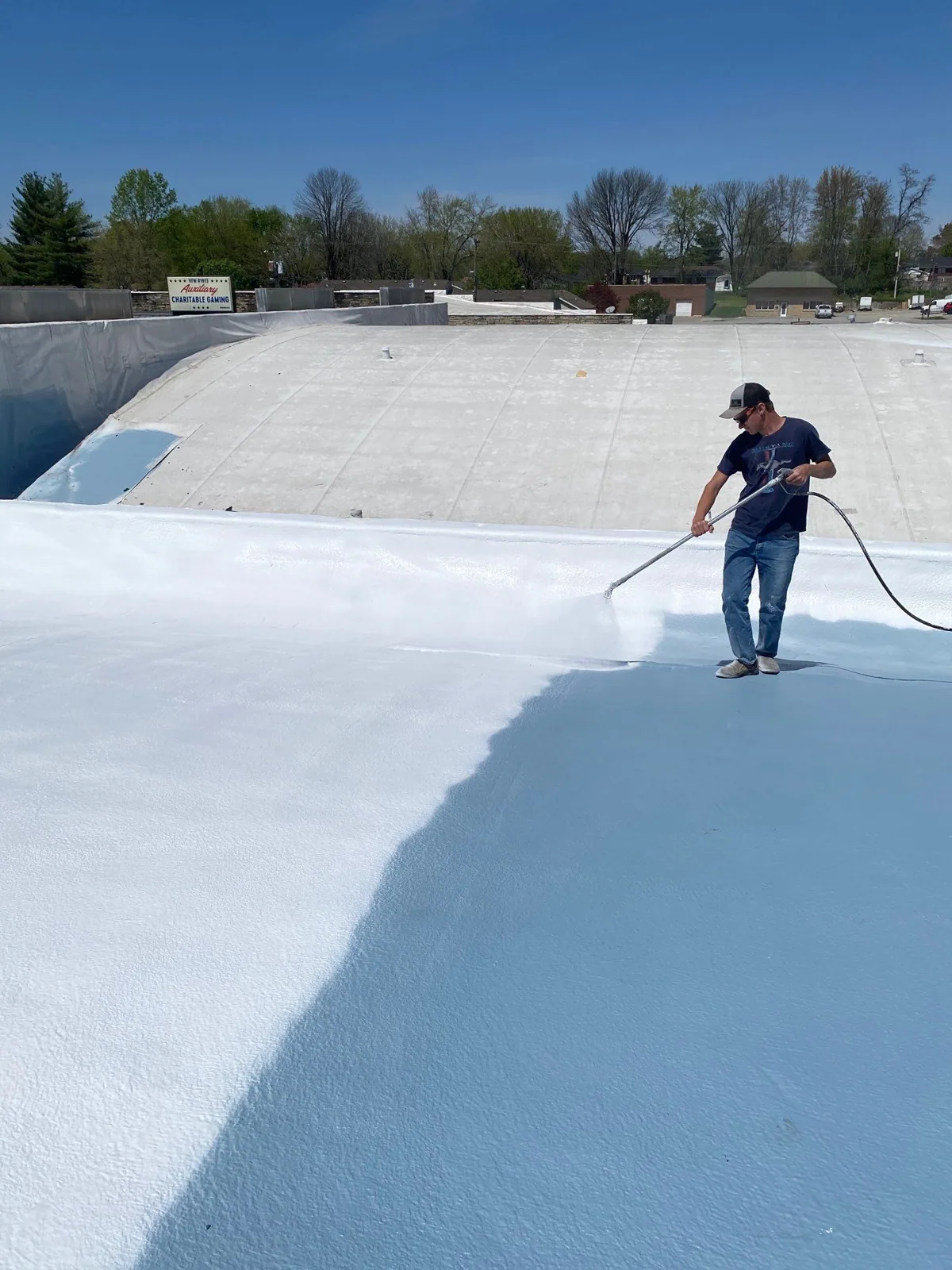
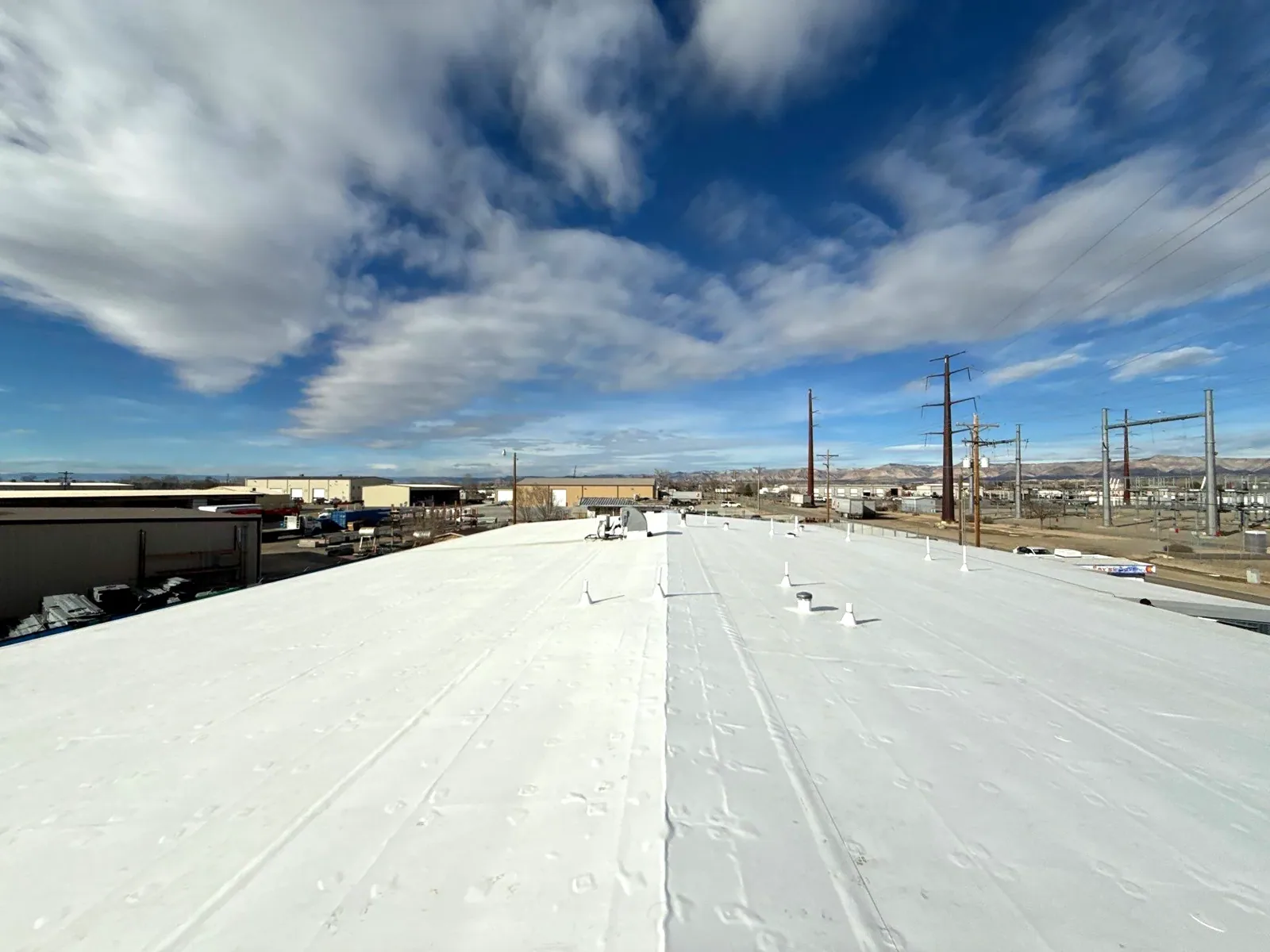
We start early, keep material in shade and press along seam edges and wall terminations on the walk. Findings are logged by roof zone with a photo and a next step. Where the base is dry and the surface is weathered, a coating restoration can add life. A reflective surface may also cut the surface heat that retail rooftop units work against.
Rain totals only about 9.3 inches a year at the station, most in February and least in June. A long retail roof drains toward the front or the back through scuppers and downspouts, with only a few internal drains. After a dry spell, those outlets are packed with grit and leaves. A hard storm then finds them half closed, and water backs across the membrane.
We clear scuppers, strainers and downspouts at the start of every visit and check the slope toward each outlet. Standing water that remains a day after a storm is measured and logged. A pond beside a curb says something different from a pond at a drain, and the repair for each is different too. Tapered insulation or an added drain can be priced into a recover when a roof ponds in the same place every time.
Which tenant changes left marks on the roof?
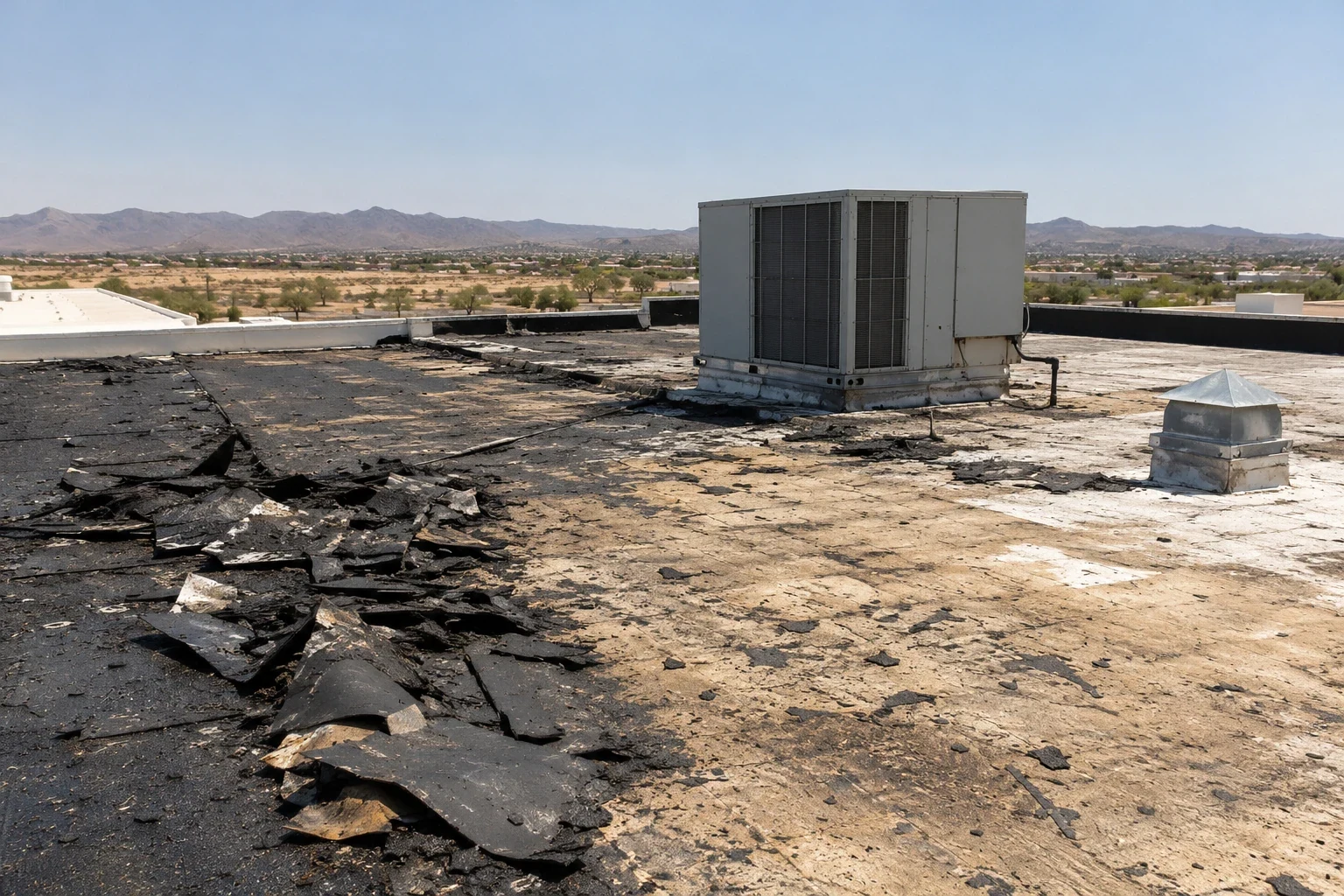
Restaurants add exhaust. Fitness tenants add larger air handlers. Wireless stores add antennas and conduit. Each tenant change can mean a new penetration, cut by whoever was available that month. After a few leases, a roof collects curbs, capped pipes and conduit supports no one can explain.
We build a rooftop inventory on the first walk. Active penetrations get a flashing check. Abandoned ones go on a removal list. The inventory shows which opening belongs to which lease. It is a practical tool in a lease conversation, and it shortens the next leak search.
Signs and satellite dishes are penetrations too. A sign pole base that moves in the wind opens its flashing. A dish mount with four lag screws has four holes. We check each base and tighten or reseal what has worked loose, and we photograph the result next to the unit number or bay.
Can the center stay open during the work?
Yes, in phases. We keep the main entrance and the largest tenant's entrance open, stage material away from fire lanes and docks and schedule noisy tear-off before opening hours where leases allow. Sidewalk covers go up where hoisting happens above a walkway.
Each tenant gets written notice naming the day, the roof area and the noise window. Restaurants and food sellers get extra care, since grease must be cleaned from the roof surface before new membrane goes down. Work in Lively Downtown, where sidewalks are public, gets a fenced walkway and a named spotter.
Delivery trucks share the lot with customers. We agree on windows that avoid the lunch rush and the weekend peak, pallets stage off the fire lane and the crew sweeps the lot, walks and gutters at the end of each shift. Rooftop equipment that must be shut down is named by unit and by hour, and the restart is noted before the crew leaves the roof.
What should the landlord file afterward?
A landlord should be able to open one folder and find the roof plans, the lease exhibits that assign roof responsibility, leak logs by bay, repair invoices, equipment changes and dated photos. Ours arrives that way. Repairs are tied to a drain or a unit by distance, and moisture readings beside each one show the insulation was dry when it closed.
A restaurant roof inside the same center has extra entries for exhaust and grease, and a grocery store roof adds condenser lines. When a buyer or lender asks for the roof history, that single file answers. Warranty notice dates go in the same folder, and any deferred repair stays listed with its location and a date to revisit.
Repair, recover or replace?
One failed detail on a sound roof calls for a contained repair. Dry insulation under a worn membrane supports a recover. A replacement fits wet insulation across several bays. The cost drivers are roof area, insulation depth, penetrations, access and phasing around open stores.
Replacement specifications are written to the code editions the permit date calls for, and the statewide energy rule begins in July 2026. We settle that with the city before a specification is final. A big-box retail roof attached to the same center may follow a separate schedule.
Commercial Roofing Questions
Why does the stain appear in a different unit?
Water travels along the deck and through shared walls. We trace the stain upward to the nearest drain, seam or curb.
When is the best time to work on a retail roof here?
Early morning, before stores open and before surface heat builds. Heavy tie-ins finish before the afternoon.
What happens to old rooftop curbs?
We check active ones and list abandoned ones for removal, with the membrane patched over the opening.
How do you protect customers during hoisting?
With fenced staging, sidewalk covers and a spotter. Deliveries come outside peak hours.
What does the landlord receive afterward?
A report with photographs labeled by bay, repairs placed by distance from a drain or unit, moisture readings and a rooftop inventory by lease.