
Hotel Roofing in St. George, UT
Hotel Roofing Overview
A hotel's busiest roof season is its hottest. July highs at the St. George station average 101.9 degrees and August averages 99.9, and the pool deck, the laundry exhaust and the rooftop units are all running hard under that sun. The rooms below the membrane are sold nightly, and a room taken out of service is revenue that does not come back. An owner or asset manager in St. George, UT, needs a roof plan that starts from the room list and the occupancy calendar, not from the roof alone.
We map the rooms to the roof, then ask which stains are really the roof and which are the building breathing.
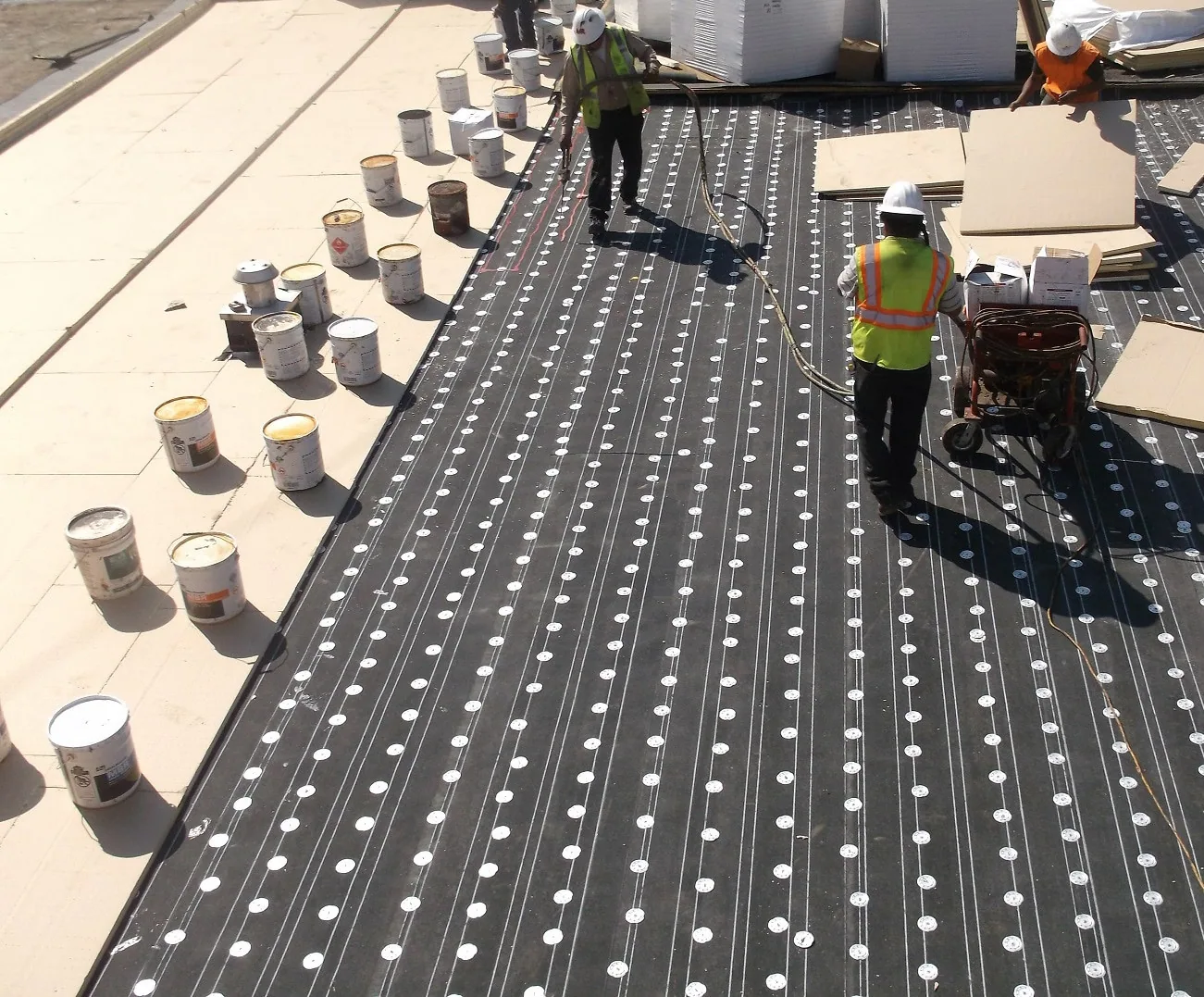
Which rooms sit under which part of the roof?
A hotel with a flat or low-slope roof over the top floor usually has a mix of stair towers, lift-shaft housings, mechanical rooms and a pool or laundry wing. Each projection creates a wall flashing, a curb or a termination, and each is a place for water to enter. Water that gets in above a corridor ceiling can travel along a wall and drop into a guest room two doors away.
We number the rooms on the interior plan and match them to the roof plan, then probe each flashing and seam in line with a reported stain. If housekeeping or engineering keeps a log of wet-ceiling reports, we ask for it. Dates often line up with the rare storms. The roof report ties every finding to the room numbers affected, which helps the general manager decide which rooms to hold from sale.
Rooftop terraces and pool decks sometimes sit over occupied space. They carry pavers, drains and waterproofing of their own, and a failure there looks like a roof leak from below. We lift a few pavers, check the surface beneath and map any wet area. Drains under pavers get a separate check because a clogged one is hard to see.
Is that stain a leak or moisture from the building itself?
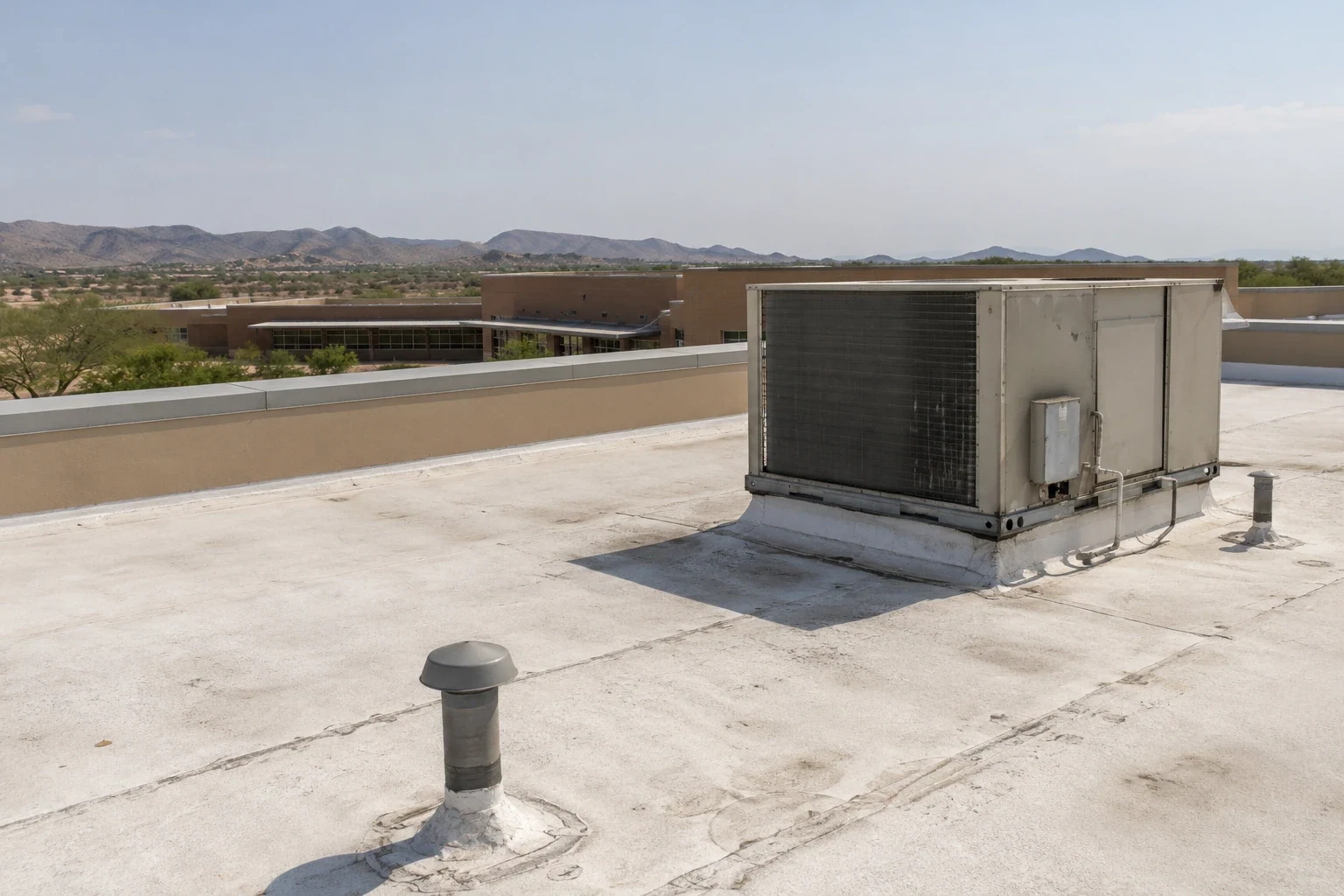
Pool halls, laundries and bathroom exhaust push warm, humid air toward the roof. Where insulation or a vapor barrier is thin, moisture condenses on the underside of the deck and can wet the insulation from below. The stain looks like a leak. The membrane may be sound.
We compare the stain pattern with the weather, check the roof for open seams and flashing and use a meter or an infrared scan to see where the insulation is wet. If the cause is condensation, we say so and point to the ventilation or insulation detail that needs correction. If it is a roof opening, we trace it. Treating one as the other wastes money and leaves the real problem in place.
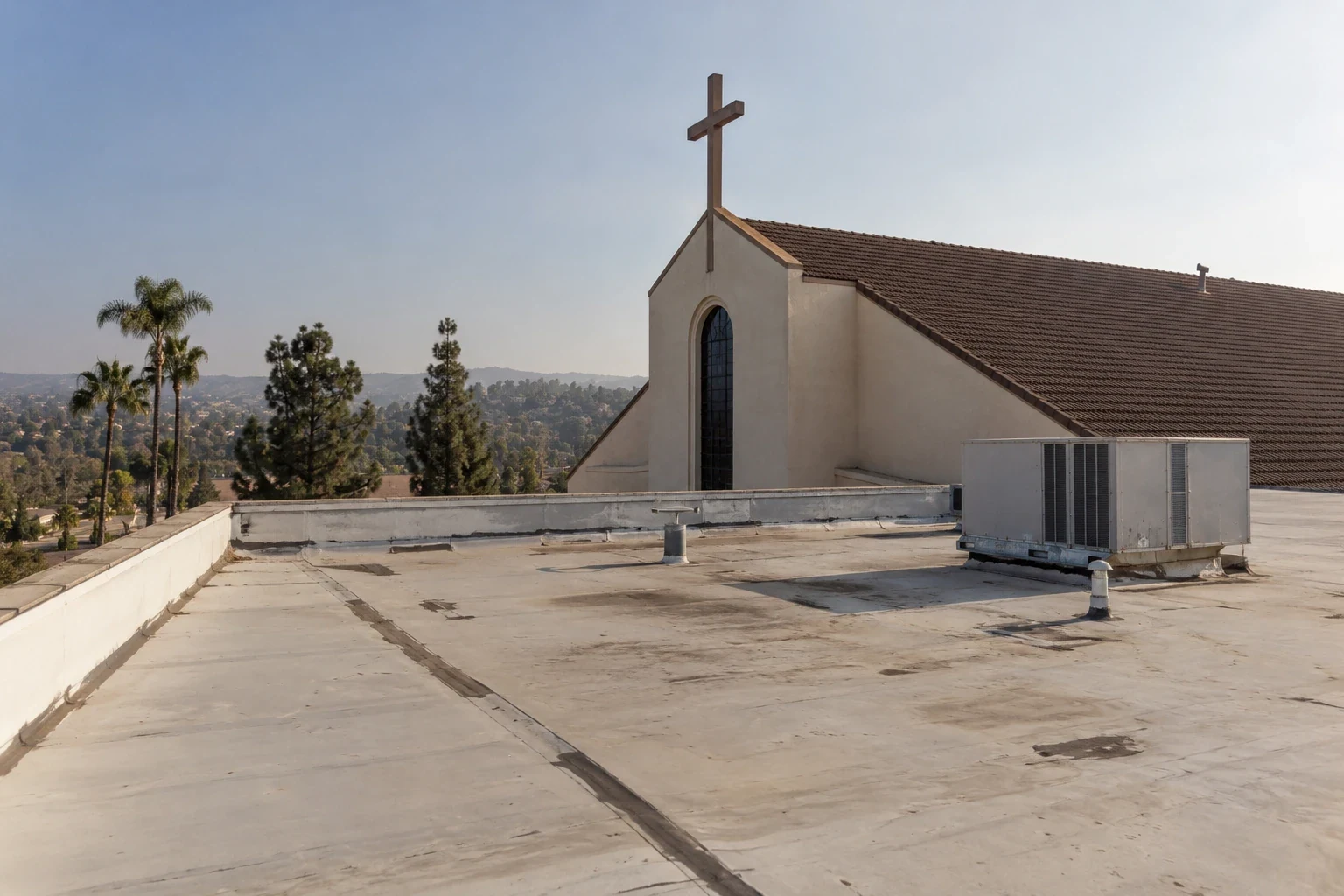
How does desert heat shape the work window?
Surface heat limits the day. Adhesives flash off. Material gets too hot to handle. Crews need shade and water. The crew starts at first light, keeps material in shade and finishes any heat-sensitive tie-in before the sun is high. The station figure is a regional reference, not a reading on any hotel roof, but it is a good guide to when a crew should be working.
Quiet matters as much as heat. Roof noise is a guest-comfort issue, and no manager wants a tear-off above a full top floor at seven in the morning. We schedule the loudest tasks for late morning and early afternoon, when most guests are out, and keep staging away from the entrance, the pool deck and the loading area. Hoists sit where debris cannot reach a walkway, and fall-zone fencing protects the paths guests use.
What does the first storm after a dry spell expose?
Rain is a rare event here, about 9.3 inches a year in the station normals and barely any in June. Drains collect grit and leaves for months. A porte-cochere or entry canopy often has its own small roof and drain, and these are easy to forget. A canopy that ponds above a guest entrance drips onto the walkway.
We clear drains, scuppers and canopy outlets and check the edge metal and coping before the wetter months. Pool and laundry exhaust discharge points get a close look for staining, softened adhesive and failed sealant. Where the roof carries heavy equipment, we add walkway pads along service routes.
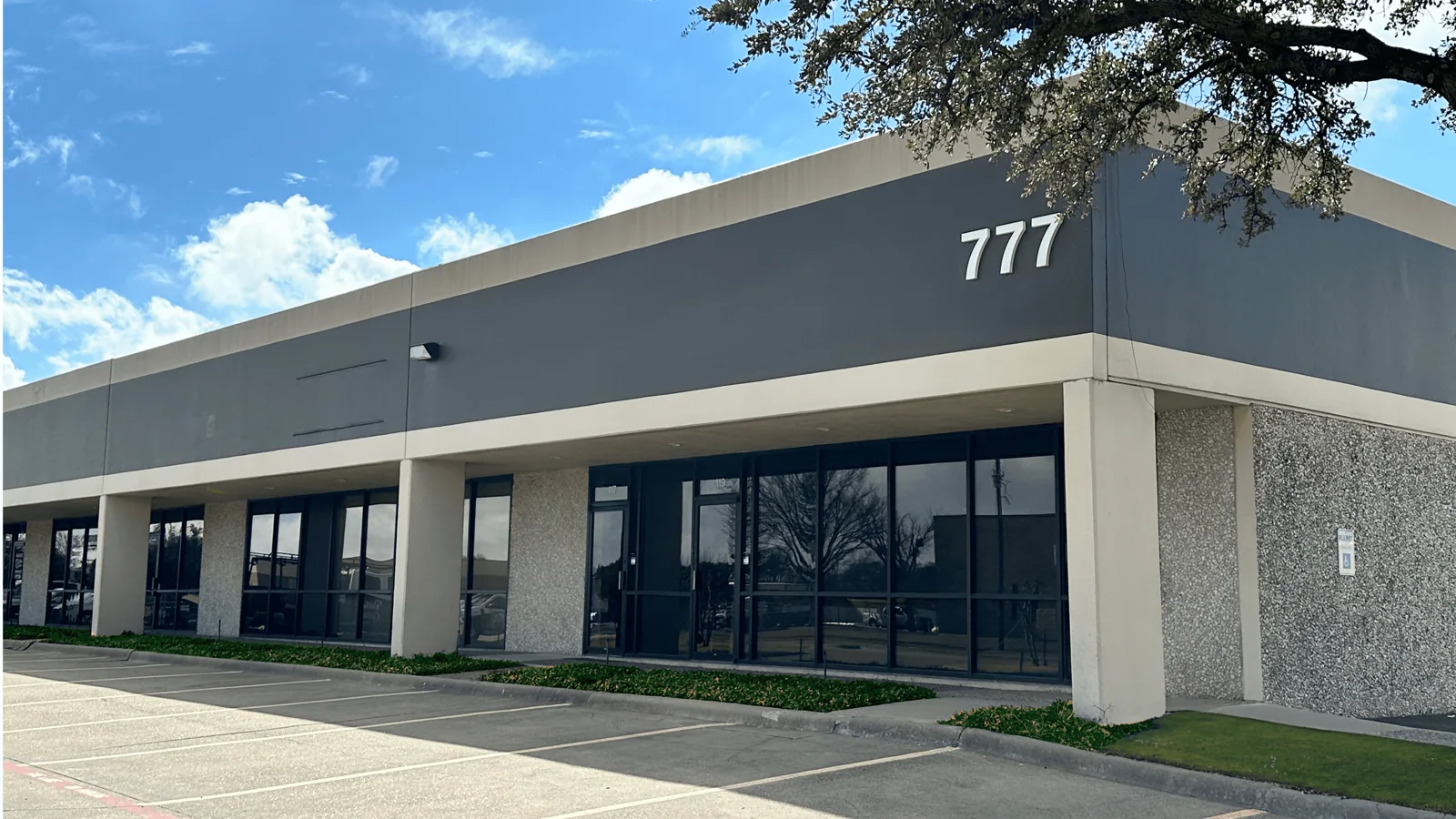
Can the hotel stay open during a reroof?
In sections, yes. We split the work by wing or by stair tower, so the top floor of one section can stay in service while another is covered. The crew has a single contact at the front desk and a short list of rooms to avoid. Weather holds are agreed in advance, so a crew does not leave a section open when a storm is forecast.
A hotel with a ground-floor kitchen also needs the grease-aware care described for a restaurant roof. A hotel in Lively Downtown or along St. George Boulevard shares streets and lots with neighbors, so crane placement and neighbor notice get their own line in the plan. A city analysis of 2012 to 2016 data lists accommodation and food services among the larger employment sectors, a dated baseline rather than a current ranking.
I-15 and River Road both show on the county's regional road map, which helps with dispatch and deliveries. It does not tell us how a particular roof is built, so the walk still starts from the rooms and the plan. Lifts and cranes need a legal place to stand, and we name it before the schedule is set.
Repair, recover or replace, and what rules apply?
A hotel roof that leaks in several rooms at once is usually reporting on the whole assembly. A moisture survey charts where the insulation is wet. When the insulation is dry, a recover adds a new membrane with less noise and debris than a tear-off. When wet areas spread, replacement is the better value.
Whichever building and energy editions apply on the permit date govern a hotel reroof, and the state's 2024 energy standards become mandatory statewide in July 2026. We confirm that, and the city's requirements, before anything is priced. An apartment roof or a hotel roof both benefit from the same record: photos by room, repair locations from fixed points and moisture readings.
Timing for a hotel follows occupancy more than the calendar. The roofing materials need dry, moderate days, and the lodging calendar has its own slow weeks, so we ask the general manager for the dates when the fewest rooms are sold and plan the heaviest work for those. Material lead times are set against that window, and warranty paperwork is read before the first cut so notice requirements are met.
Commercial Roofing Questions
Which rooms should be held from sale during a repair?
Those under the work and under the hoist path. We match room numbers to the roof plan so the manager gets a short list.
A guest room smells damp but the ceiling looks dry. Is that the roof?
Possibly. Wet insulation can hold water for weeks. A moisture scan shows whether the source is overhead or in the ventilation.
Can the roof be worked on when the hotel is full?
In sections. Noisy tasks go in late morning, entrances and pool areas are protected and sections close before evening.
What does pool exhaust do to the roof?
Warm, humid air softens sealants and adhesives near the discharge. We check the roof there and recommend details that suit the exposure.
How do you choose between recover and replacement?
Moisture readings decide. Dry insulation supports a recover. Wet insulation across several areas points to replacing the wet sections.