
Commercial Roofing in Lively Downtown, St. George, UT
Lively Downtown Overview
Foot traffic is the first thing a roof crew has to respect downtown. The city's land-use plan labels this area Lively Downtown, and a name like that is reason enough to expect people walking under the lift, past the dumpster and beneath the edge of the roof. Before we plan the roof itself, we plan the ground: a protected route for pedestrians, a clear zone under any overhead pick and a spotter who watches the sidewalk.
We work from St. George, UT, and a walk of the roof comes before any quote. The designation does not tell us what material is overhead on any building, so we read the roof on site and then decide whether the right answer is a repair, a recover, a coating or a replacement.
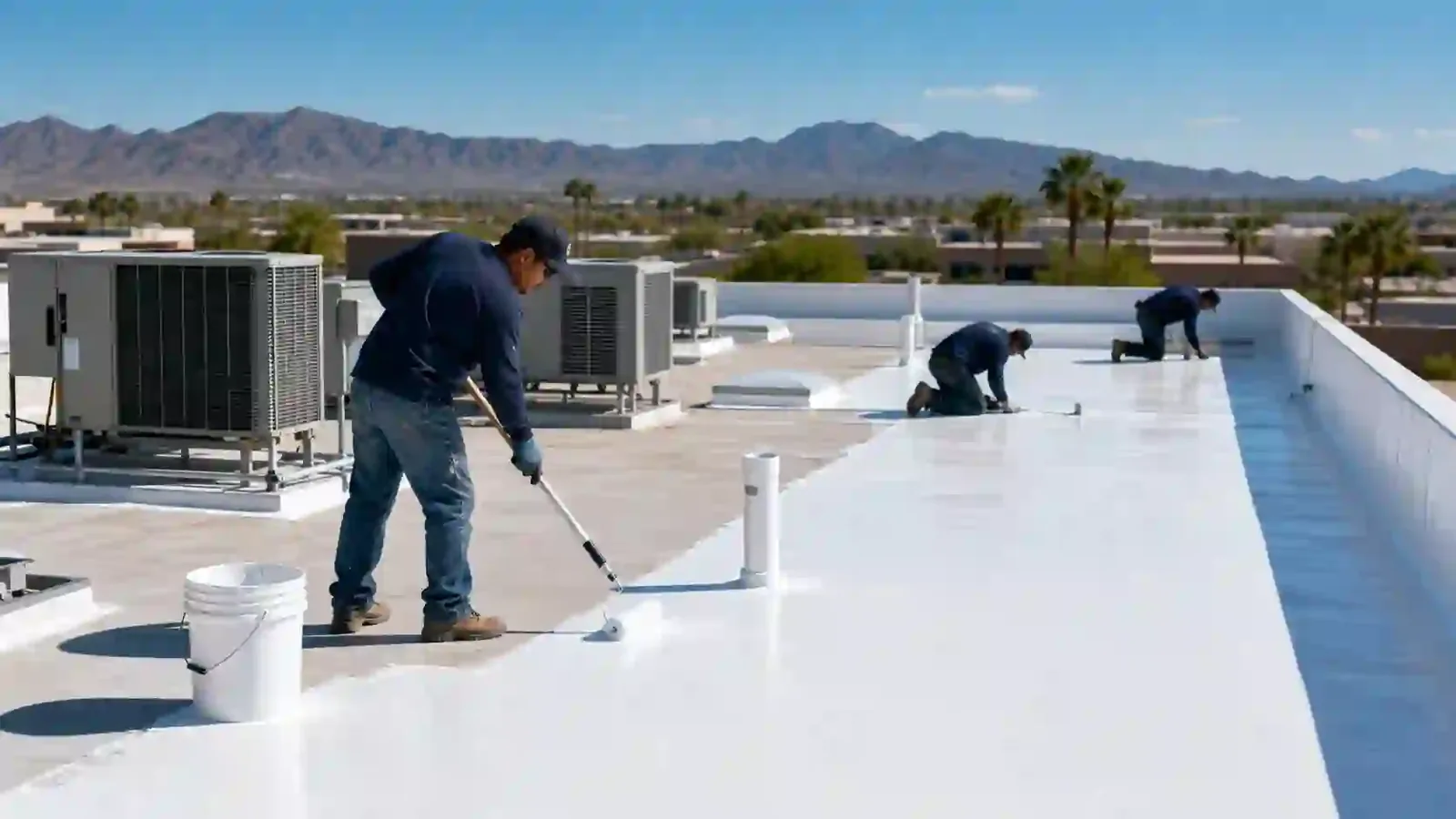
How does a crew protect people on the sidewalk below?
Overhead work needs a physical barrier, not just a sign. We set fencing or cones that keep the public out of the drop zone, cover material staging areas, and tie off every tool and bundle that leaves the roof. Debris chutes run into a closed container instead of open air. If the building's entry sits under the work, we agree with the owner on an alternate door and post the route before the first tear-off.
Timing helps as much as barriers. Heavy lifts go on the quiet hours, usually early in the morning, before shops open and before the heat builds on the roof surface. Loud or dusty tasks are moved away from lunch and dinner service. We keep the schedule in writing and send it to the property manager and neighboring owners, so surprises on the ground are rare.
Deliveries are a third factor. Shops on an active street receive goods at set times, and a roofing truck parked in the loading zone can stall a morning. We ask each tenant when deliveries arrive, then place the lift and dumpster where they will not block a truck. If the only space is a loading zone, we move our equipment out of it during the delivery window and back in afterward.
What do restaurants and shops ask of a roof?
A city analysis using older census data lists retail, accommodation and food service, and arts and recreation among St. George's largest employment sectors. That is a citywide baseline and not a list of the tenants in Lively Downtown, yet it explains why roof plans here keep returning to kitchens, shops and guest-facing spaces. Each of those puts a specific load on a roof.
Kitchen exhaust fans send grease onto the membrane, and grease degrades some single-ply materials, so the area around an exhaust curb needs frequent cleaning and a membrane that tolerates it. A restaurant roof also needs dependable flashing at the hood curbs, because a leak above a cooking line is a safety issue as well as a repair. For a hospitality use, the hotel roof question includes noise limits and guest hours, which we write into the schedule.
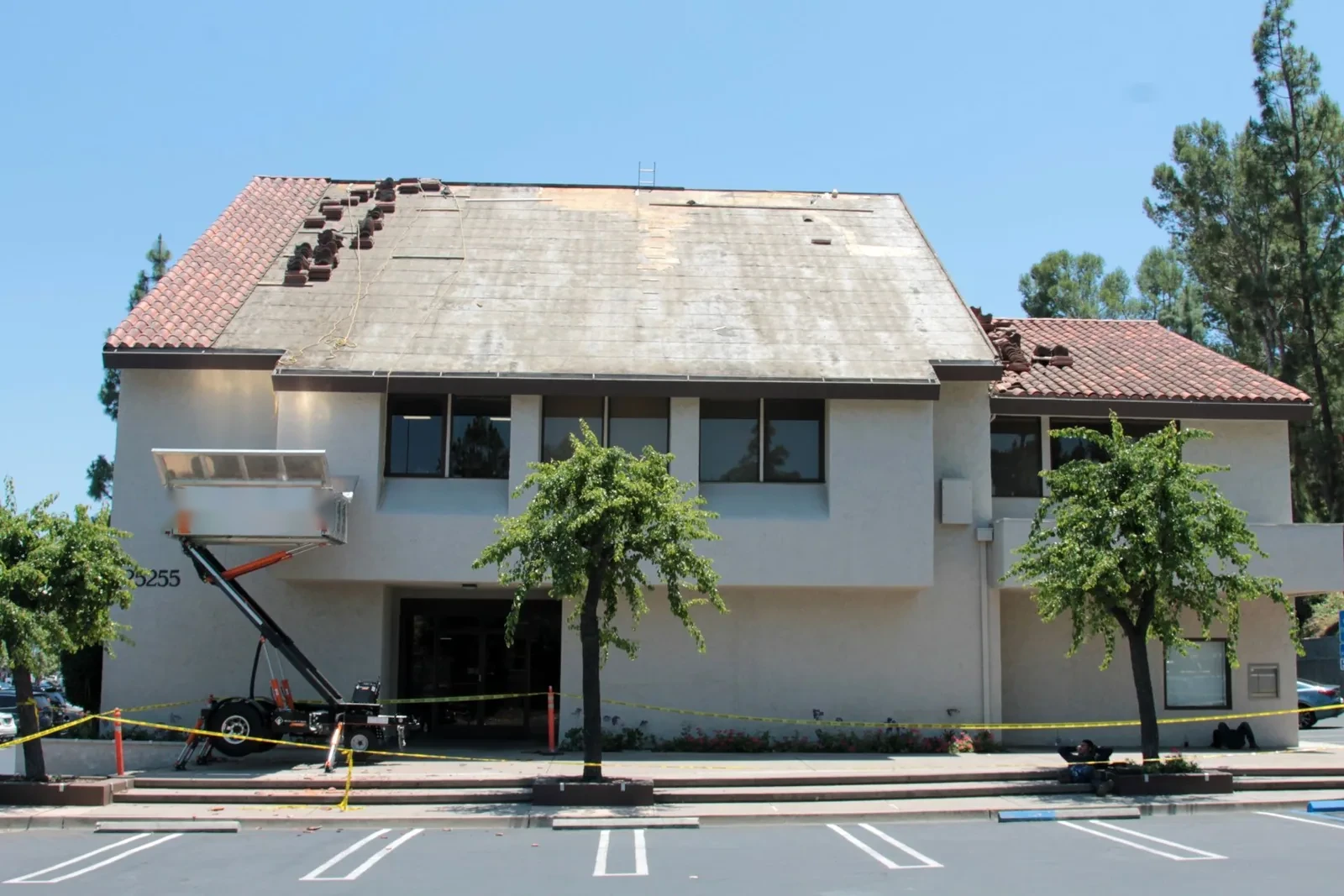
When is it too hot to work the roof?
July averages 101.9 degrees and August 99.9 degrees for St. George's daily highs. The roof surface itself usually runs hotter than the air. We schedule seam welding, adhesive application and tear-off for early hours, then use the afternoon for staging, cleanup and checks. Water, shade and rotation of crew members are part of the plan, not afterthoughts.
Heat damage shows on the roof as well. We look for chalked surfaces, shrunk membrane at corners, cracked sealant lines and loose edge metal. When heat and UV damage is limited, a repair of the affected details can hold. When it spreads across the field, a restoration coating or replacement may fit better, and the decision depends on what moisture evidence shows below the surface.
How do rare storms and older additions test a flat roof?
Annual precipitation of 9.31 inches at the St. George station, with February the wettest month at 1.38 inches, means a roof here can look dry for most of the calendar. That quiet is when a bad drain detail hides. Much of the city's building stock dates from 1980 or later in the consolidated plan, and over that span, a downtown building may have gained additions, new units and new tenants, each of which changed the roof. Overlay history and age have to be confirmed one building at a time.
We walk each roof section and look for the places where an old and a new part meet. Those transitions are common leak points because two assemblies, built at different times, are joined with a flashing that has to accommodate movement. A careful flashing failure repair at a transition often resolves a leak that earlier patching missed.
Rooftop equipment is the other thing we count. Every unit has a curb, a set of lines and a service path, and a new tenant can add a unit without anyone checking the roof. We mark the curbs on the sketch, check the sealant at each, and look for worn walkways where technicians have been stepping on bare membrane. Adding a walk pad costs little compared with a puncture repair.
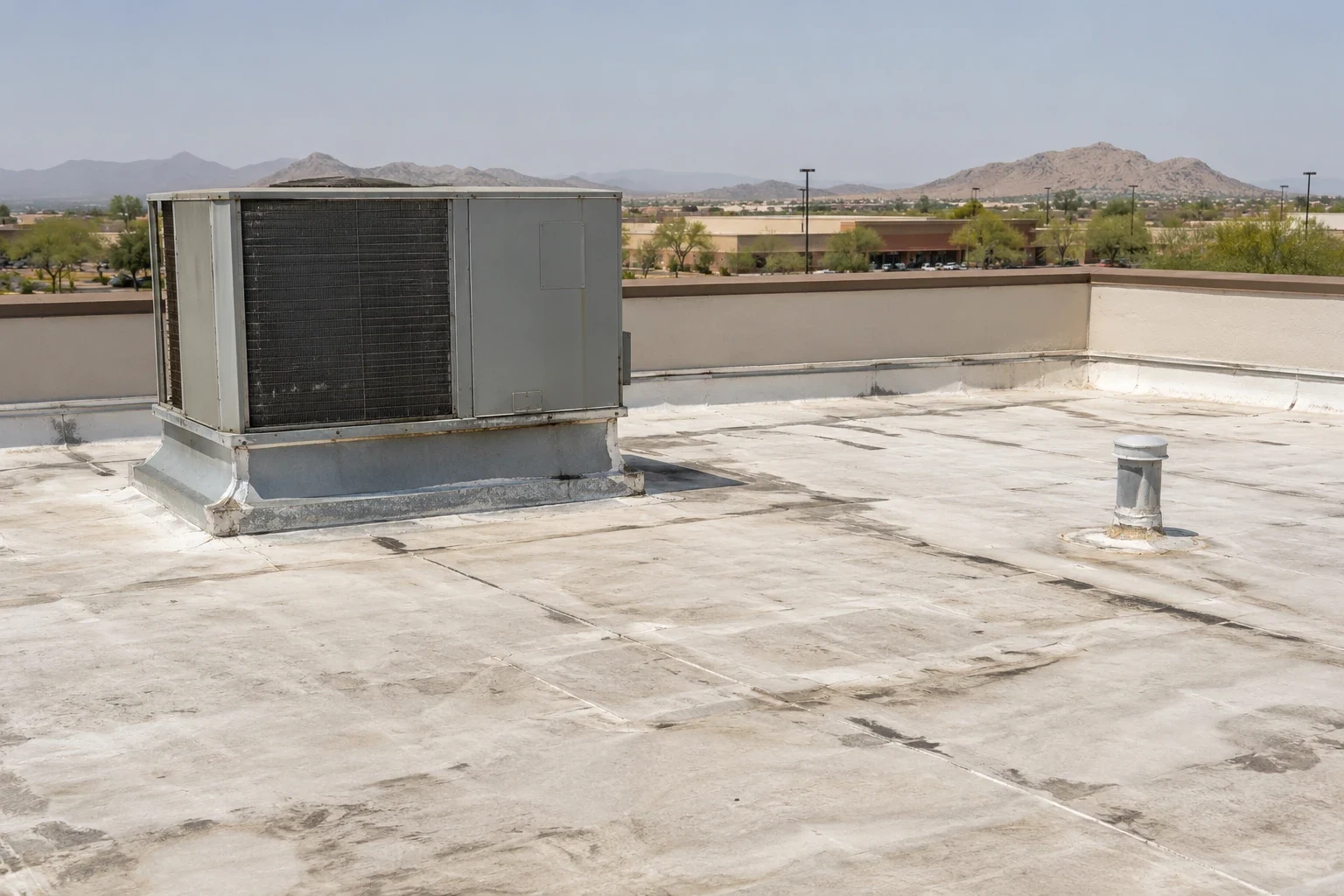
What does the owner receive after the walk?
The owner receives a photo report, a roof sketch with drains, curbs and edges marked, and a repair scope separated into fix now, fix soon and watch. If a roof is near the end of its useful life, we price replacement alongside repair so that the comparison is on one page. Before a reroof is bid, we confirm which version of the building code governs the permit date, since Utah's 2024 adoption carries amendments.
For owners with more than one property, a preventive roof maintenance visit before summer and another after the rainy months keeps drains clear and flashings sound. Neighboring planning areas such as the Downtown Traditional Neighborhood and the Downtown Connected Corridor are on the same service route, so one visit can cover several addresses.

Commercial Roofing Questions
Can the roof be replaced while shops stay open?
Usually yes, with a section-by-section plan. We close in each section by evening, keep an alternate entry open and place noisy work where it is least disruptive. Tenants receive the schedule ahead of time, along with a phone number for the crew lead, so a concern on the ground is answered the same hour.
What if a kitchen exhaust is dripping grease onto the roof?
Grease on a membrane needs cleaning and a collection tray under the fan. We check the membrane for softening or swelling near the curb and repair damaged areas, then set a cleaning interval.
How do you reach a roof without blocking the sidewalk?
We look for rear or side access first, then a protected pick zone. If the front sidewalk is the only route, we agree on short, timed closures and a covered walkway for people passing.
Will summer heat damage a new roof?
A properly installed system is designed for it, but the install itself is sensitive to heat. We time the work for cooler hours, and later reflective surfaces and good seams help the roof resist sun exposure.
What does emergency help look like downtown?
Call at any hour, holidays included. A crew makes the roof watertight first, often with a temporary cover, and the permanent fix follows when conditions and access allow. Photos taken during the dry-in become part of the claim record if insurance is involved. We note the time, the weather and the first signs of water entry, since those details help an adjuster understand what happened.