
School Roofing in St. George, UT
School Roofing Overview
The summer break is the one stretch of the year when a school roof can be opened without a classroom underneath it, and it is also the hottest. St. George's NOAA station shows a mean daily maximum of 101.9 degrees in July, so a project that waits for June to start has already given up its best working hours. A district or a charter operator in St. George, UT, needs a roof plan that fits the calendar before the bids are in, and a crew that begins at dawn, not at noon.
We begin with the roof, the schedule and the open questions, then sort what is confirmed from what still needs a test.

What does a school roof look like from above?
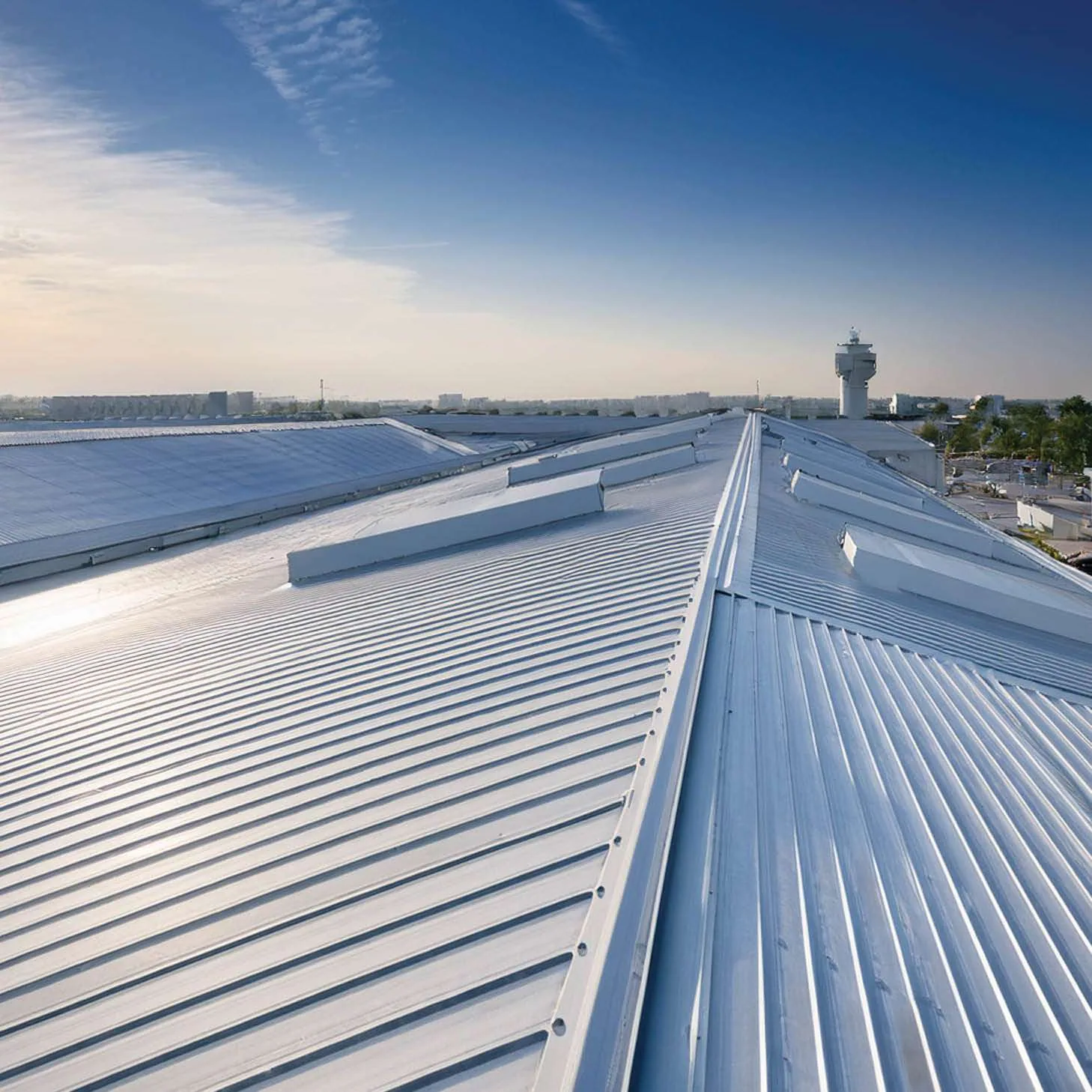
A school is several roofs wearing one name. A classroom wing, a gymnasium, a cafeteria, a library and a covered walkway can each have a different height, a different membrane and a different age. The places where they meet are where we look first: wall flashing, expansion joints and the transitions where a low roof sits under a high wall.
The city's housing and commercial plan notes that much of its stock dates from 1980 or later, yet a school's roof may have been replaced, recovered or patched several times since. We do not assume. A test opening or a plan review tells us what layers are actually there before a scope is written.
Portable classrooms add another layer. Their roofs are small, close to the ground and easy to forget, and the gaps between units collect debris and shed water onto neighbors. We include the row in the walk and note which units share a drain path.
How does surface heat change the work plan?
On a dark membrane in July, surface temperature runs well above the air. Adhesives flash off faster. Crews slow down. Material gets too hot to handle bare-handed. The station reading is not a measurement at any one campus, but it is a good reason to start work early, stage material in shade and plan for water and rest breaks on the roof.
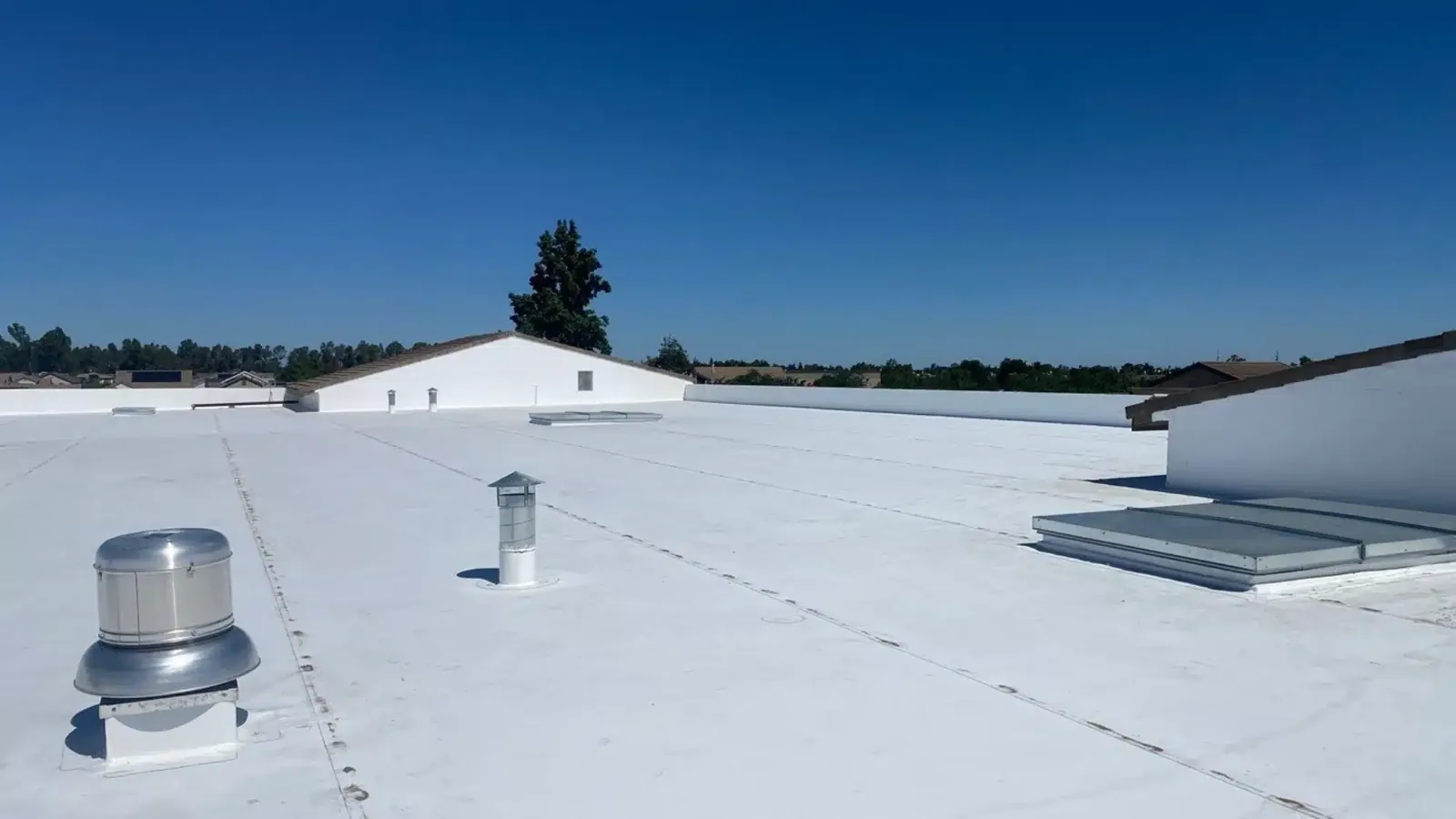
For inspections, the early hours also give a clearer read of the roof, because seams that open in afternoon heat are easier to see before the surface expands. We schedule the walk accordingly and note the time of day on every photo. A cool roof surface may be worth discussing for a gym or a portable classroom row that runs warm all summer.
Limited annual rainfall helps coatings and adhesives cure, but long dry spells also let dust and grit settle on the membrane and in the drains. We note dust and grit on every walk, because a dirty seam edge will not take a patch until it is cleaned.

Where does the water go on a dry-climate campus?
Annual rainfall at the station totals about 9.3 inches, and February is the wettest month in the normals. Rain is limited and uneven, so drains can sit untouched for months and then face a hard storm. Debris builds in the bowls. Walkway canopies and breezeways often have their own small drains and scuppers that no one has opened since the last storm.
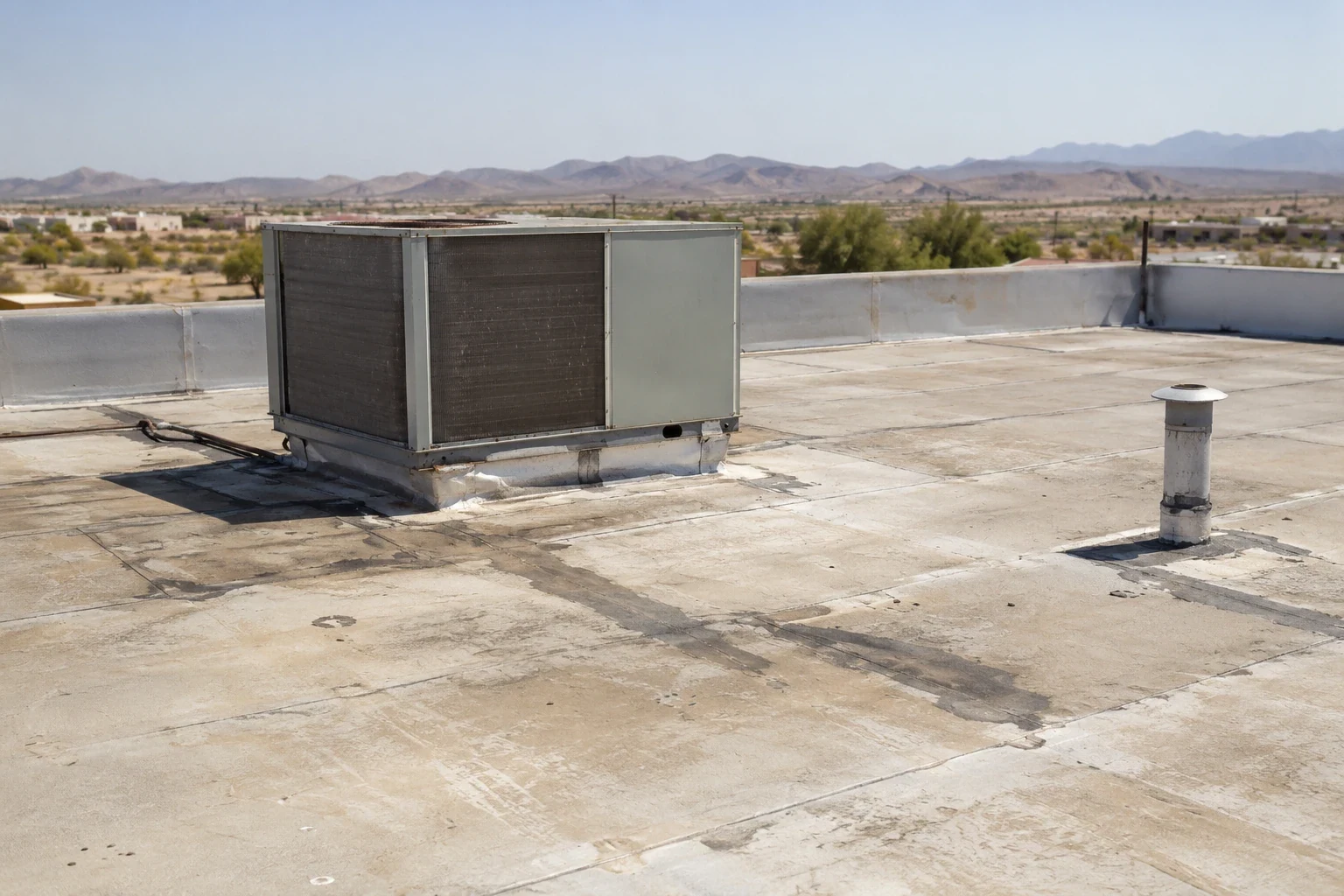
We clear strainers, check overflows and compare low spots with the leak history. A roof that ponds after a rare storm will pond again. If a gym roof holds water, a tapered insulation correction can be priced into a recover or a replacement.
Covered walkways deserve their own look. A canopy that ponds above an entrance drips on students at the worst hour. We check the fall, the fasteners and the downspout, and we note where a correction is needed before the next storm.
How is the crew kept apart from students?
During the school year, the roof schedule follows the bell schedule. Deliveries come before arrival or after dismissal. Hoisting stays away from bus lanes and pickup lines. The staging area is fenced and the crew uses a separate gate. Noisy work is kept to the hours the principal approves.
Roof access in a school is often through a custodial closet or a hatch in a gym. We name the person who opens it and the route that avoids classrooms in session. A written notice to staff states the days, the roof area and the noise to expect. A college campus uses the same gate-and-notice sequence.
When is a patch enough, and when is it not?
A patch is enough when the defect has a clear edge and the membrane around it is bonded, flexible and dry. Several leaks in the same wing, open laps in many places or a wet reading under the field point to a larger scope. We use a moisture survey where it can answer the question, and we keep untested areas separate from confirmed findings in the report.
Cost drivers are plain: roof area, insulation depth, number of curbs and penetrations, access, and how the work is phased around students. A district business office can carry the findings into a capital plan and rank buildings by urgency, which is how a school district with several campuses plans.
What should the facilities office keep afterward?
One file should hold the roof plans, repair invoices, leak logs, warranty papers and dated photos, with every photo marked by roof section. Our report adds the access route used, the repairs made and any concealed condition we left closed, so the next facilities manager is not guessing.
A school with a gym, a library and a classroom wing can end up with three roof records. We keep them separate by section but in the same format. That lets a business manager compare a ten-year-old gym roof with a thirty-year-old classroom wing and place the worst first. A public building roof report follows the same layout, which helps when a city and a district share a campus.
Where a warranty is in force, the notice dates go in the file. Work we deferred is listed with its place on the roof and a date to revisit.
Which code edition applies to a school reroof?
A school reroof is permitted under the state construction code's 2024 building edition, and the energy provisions that become mandatory statewide in July 2026 may reach the insulation. Because the permit date decides which edition applies, we confirm it, and the city's own requirements, before a specification is final.
Insulation thickness, wind uplift and attachment follow that answer. For work in Lively Downtown or along River Road, we check the permit path with the city before pricing.
Commercial Roofing Questions
When should school roof work be scheduled?
Large scopes fit the summer break, with materials ordered well ahead. Early-morning starts beat the heat. Smaller repairs can happen during the year in fenced areas.
Can a school stay open during roof work?
Usually, in sections. We keep staging away from bus lanes, use a separate crew gate and give staff written notice of the roof area and the noise window.
How do you find the source of a gym roof leak?
We follow the water path from the stain to the roof, checking drains, seams, curbs and wall flashing. A moisture reading confirms whether insulation is wet.
What records should a district keep?
Roof plans, repair invoices, leak logs, warranty papers and dated photos by roof section. We deliver ours in that format.
Does a cool roof make sense for a school?
Sometimes. It can reduce surface heat on a gym or portable row, but the base must be dry and sound. We compare it with a conventional surface on the findings sheet.