
Government Building Roofing in St. George, UT
Government Building Roofing Overview
A public building roof has to satisfy two readers. The first is the staff member who sits under it, and the second is the council, the commission or the auditor who funds it. In St. George, UT, July highs average 101.9 degrees at the NOAA station and annual precipitation totals 9.31 inches, so a roof is stressed more by sun than by rain, and a public facilities manager needs a record that explains that stress in terms a budget meeting will accept.
Our starting material is the roof plan, the access rules and the maintenance history. For each building, the written scope sets a repair option beside a capital option and names the cost drivers, so the choice can be defended in a public session.
What counts as a government building roof?
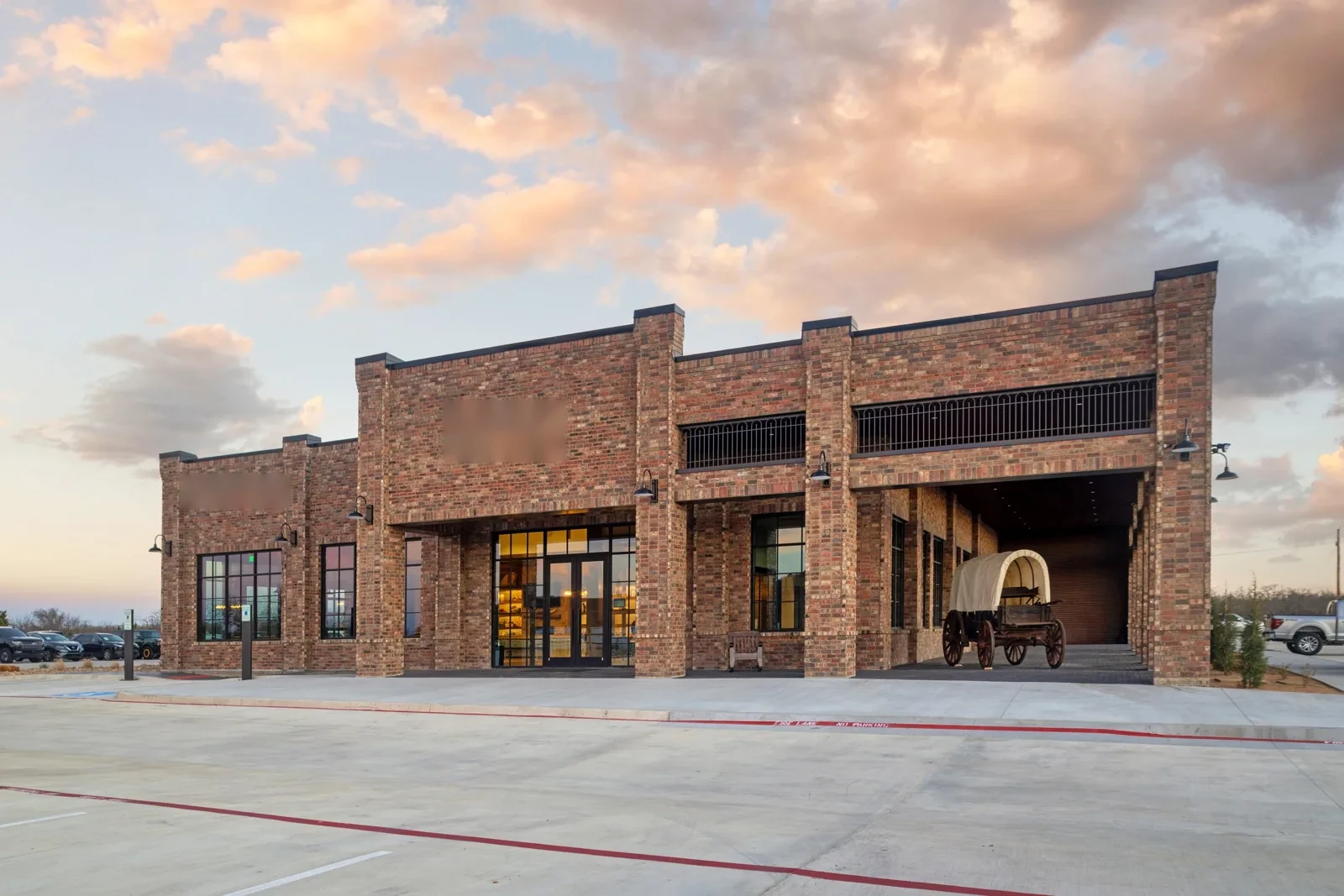
The category covers city halls, administrative offices, courts, libraries, public works yards, fire and police stations, recreation facilities and maintenance shops. Their roofs differ as much as the buildings do. A low-slope office roof with rooftop units shares little with a metal-framed public works shop or a library with skylights over reading rooms. We do not assume. A walk and a plan review show what each building has.
The city's consolidated plan notes that much of its housing and commercial building stock dates from 1980 or later. Public buildings often outlast the budget cycles that built them, and a roof may have been patched or recovered several times. A roof asset management record lists each building, each section, each layer and each repair so that no one has to rediscover them.
Occupancy type drives the roof questions. A fire station needs apparatus bay doors that open every hour of the day and a roof over bunk rooms that stays quiet. A public works shop has exhaust and heaters that load the roof. A library has skylights and a high-value collection beneath. We record the use of each building and the equipment on the roof, and we flag any section where a leak would damage records, vehicles or a service the public relies on.
How is work planned around public hours and security?
Public buildings combine open counters, secured areas and sensitive records. Roof access may require an escort, a badge, a sign-in log or a background check, and some roof hatches open into restricted rooms. We ask for these rules before scheduling and design the work plan to fit them, with one named supervisor and a daily list of who is on the roof.
Noise and dust follow the same discipline. Courtrooms, council chambers and call centers cannot tolerate tear-off overhead during sessions. We agree on quiet windows with the facility contact, protect interior spaces under open sections and dry in daily. Where a building must stay open, an occupied-building reroof is staged section by section, never in one open stretch.
Public parking and walkways stay open wherever possible. Barricades, signage and a spotter protect visitors when a lift or hoist must cross a pedestrian route.
A named supervisor and a daily crew list are standard on public work. If a department head asks who was on the roof on a given day, the answer is in the log, along with the sections opened and closed.
Why does summer heat matter for a public roof budget?
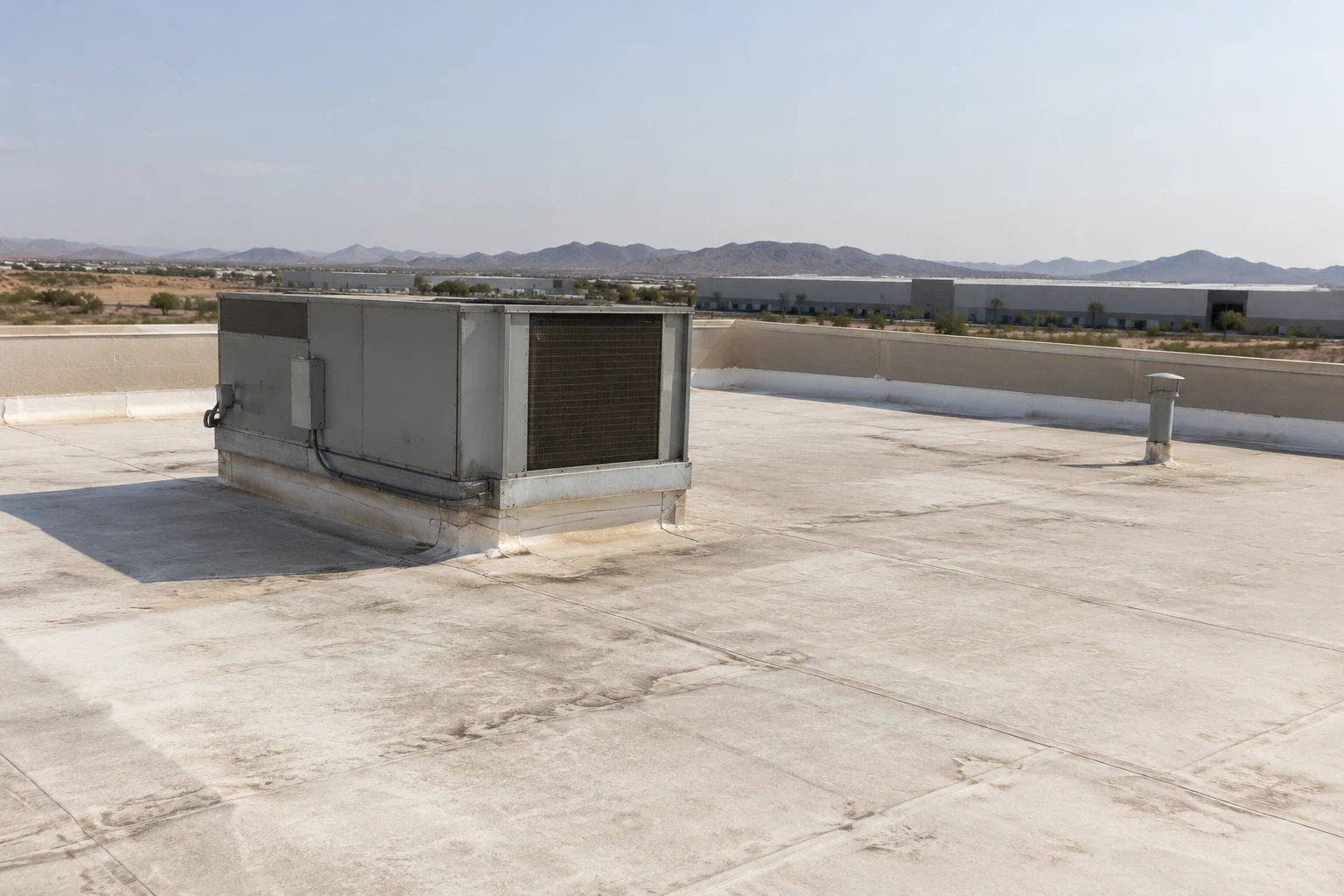
Heat is the largest steady stress here. NOAA's normals for St. George average 101.9 degrees for the July maximum and 99.9 for August, and dark membrane or metal can run far hotter than the air. Seams open, sealants dry and flashings pull at their fasteners. A planner can use those averages to pick crew hours and the details to examine first.
It also bears on operating costs. A cool roof surface can reduce the heat load on a building with large interior volumes, such as a recreation center or a maintenance bay. Energy rules come into it as well. Under the state's 2024 IECC and ASHRAE 90.1-2022 listing, mandatory from July 1, 2026 with amendments, a replacement scope has to say which insulation pathway it assumes.
Surface heat also limits how long crews can work each day. Public projects sometimes carry a hard completion date, so we plan shifts that start early, rotate crew on the roof, and keep material in shade so adhesives and sealants behave.
Where does water collect after a dry stretch?
Rainfall is scarce, with the station averaging 0.16 inches in June and 1.38 in February. Long dry spells let dust, leaves and windblown litter build up in drains, gutters and valleys. When storms arrive, a blocked outlet can send water against parapets and through any weak flashing within minutes.
We trace each drain route and photograph it with a date. At drains and scuppers, we also check overflow paths, because an overflow that discharges onto a walkway or a parking stall creates a safety question for the public. Findings are written in plain language that a department head can paste into a work order.
Where a roof shares a drainage system with an adjacent building, we document that as well, since a blocked leader on one structure can flood another.
What should a public owner ask for in a scope?
A good public scope names the roof sections, the existing layers, the work to be done, the exclusions and the unit prices for items that may change, such as wet insulation or deck repair. Utah's construction code is built on the 2024 International Building Code plus state and local amendments, and the edition in force at the permit date governs. Our scope states the assumption, and the City of St. George is asked to confirm it.
Written findings also separate what a maintenance crew can do from what a contractor should. Clearing a drain is a facilities task. Replacing a flashing or reseaming a membrane is a roofing task. Splitting the two keeps small items from growing and keeps larger items inside a bid.
How do regional boundaries change who handles the work?
Washington County Economic Development describes its role as supporting business attraction, retention and expansion with county and regional partners, and the Southern Utah Economic Alliance describes a five-county partnership. For a roofer, the lesson is simpler: permitting and licensing rules vary by municipality. A county building, a building in Hurricane and one in La Verkin may each follow a different path to a permit.
For a department that keeps buildings in several of these places, a multi-site roof program records each building on the same template. The council then sees comparable numbers, and the schedule can follow condition, not geography. A county school or a public hospital follows the same record-keeping and calls for a different access plan.
Commercial Roofing Questions
Can you work from a published specification?
Yes. We price to the stated assembly, note any conflicts with field conditions and list unit prices for hidden items such as wet insulation or deck repair.
What records support a council vote on roof funding?
Dated photographs, a plan of each roof section, a ranked repair list, an estimate of remaining service life and a cost range for repair and replacement. Findings are in plain language.
Does an escort slow the work?
It can, so we ask early. Escort hours, badge lead time and restricted rooms go into the schedule, and the supervisor carries the access list.
Which code edition governs a municipal reroof?
Whatever edition is in force at the permit date, with state and local amendments on top. The City of St. George confirms project requirements before work begins.
How soon should a leak in a records room be handled?
Immediately. We seal or tarp the opening first, protect the contents and document the source. A permanent repair follows once the area is dry.