
Self-Storage Roofing in St. George, UT
Self-Storage Roofing Overview
A self-storage property is a row of long, low roofs, and a leak in one of them lands on a stranger's belongings. The tenant who finds a wet box calls the manager, the manager calls us, and the question is how many other units sit under the same bad seam. In St. George, UT, where the NOAA station logs just 9.31 inches of rain in a year, many of those roofs go months with no water, so a failed fastener or open lap can sit unnoticed until a storm finds it.
The roof plan, the building layout and the claim history come first, and then each roof gets a walk in order. What the manager receives is a repair scope plus a list of confirmed items and open questions, each tied to a unit number.
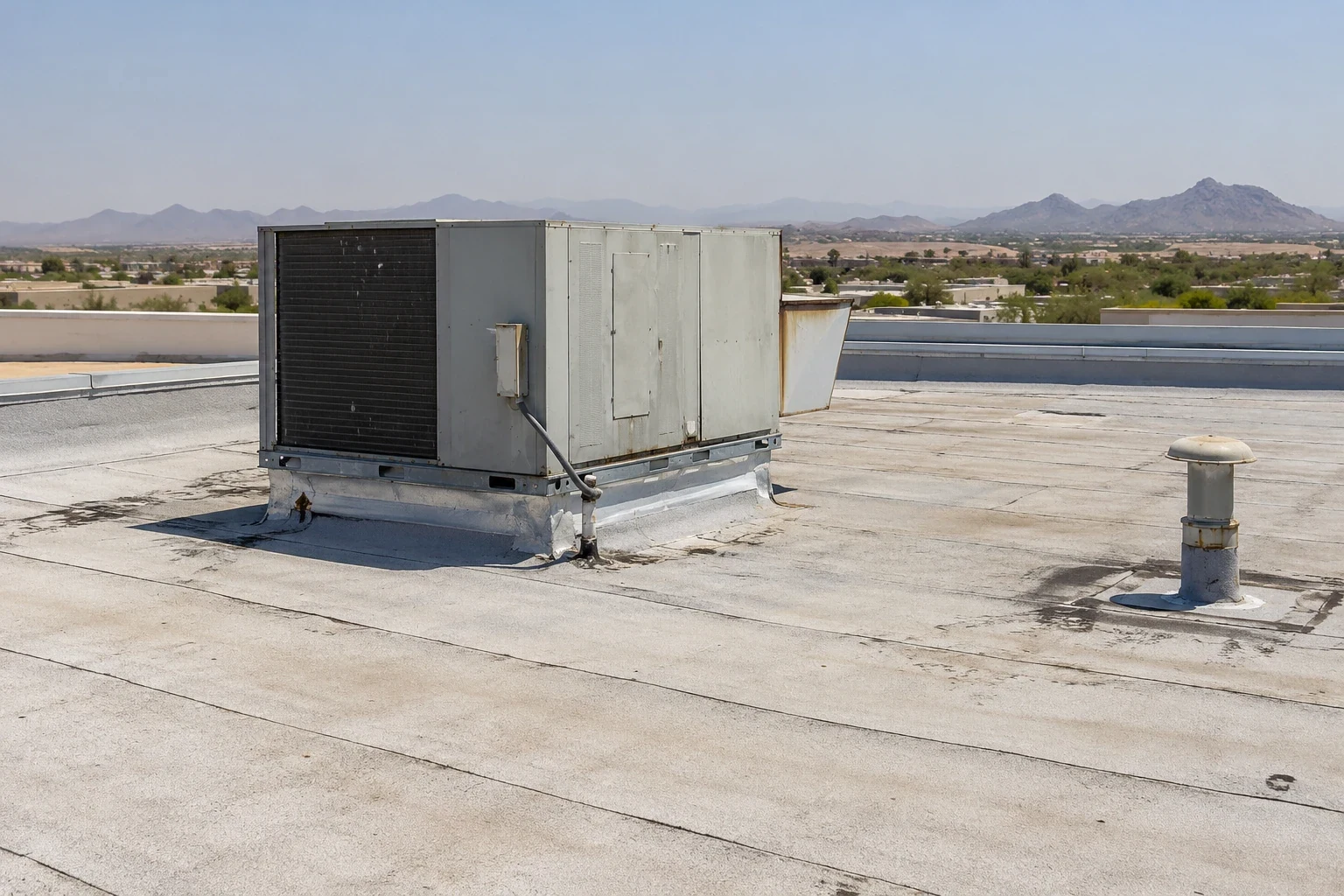
What do storage roofs look like from above?
Most storage properties use several buildings of the same type: long single-story rows with drive-up doors, a taller climate-controlled block and an office. Roofs are usually metal panels or low-slope membrane, with a few vents and a gutter or scupper line at the edge. We do not assume the system. Panels may be exposed-fastener, standing seam or a retrofit over an older deck, and each fails differently.
On exposed-fastener metal, screws back out as the panel expands and contracts, and rubber washers dry and crack. On standing seam, clips and seams move with temperature. On a low-slope membrane over a climate-controlled block, the units on the roof, the drains and the curb flashings are what we check. The city's plan says much of its stock dates from 1980 onward, so a property may combine original roofs with later additions.
Office buildings at the front of a property are a separate roof. A small low-slope office roof with a rooftop unit follows the practice for an office building roof, and its drains and curbs get the same check as the rows behind it.
Which details let water into a unit?
Water in a storage unit almost always entered at a detail. Look at the eave and ridge closures, the panel laps, the penetrations for vents and lights, the gutter at the low edge and the end-wall flashing. A panel with a split lap or a fastener that has backed out lets water run along the underside and drip several feet away, so the wet spot on the unit floor does not mark the opening above it.
We trace stains along the purlin or the underside of the panel back to the source, using moisture readings and visual checks. A seam failure repair or fastener replacement along a run is a short job when found early. Left alone, the same opening wets insulation on a climate-controlled block, and that is a larger repair.
Gutters deserve their own look on a long row. A gutter pulled loose by wind, packed with debris or sloped the wrong way sends water down the face of the door, onto the slab and against the threshold. We check hangers, end caps, downspout connections and the drip edge, and we note where the drainage reaches the ground.
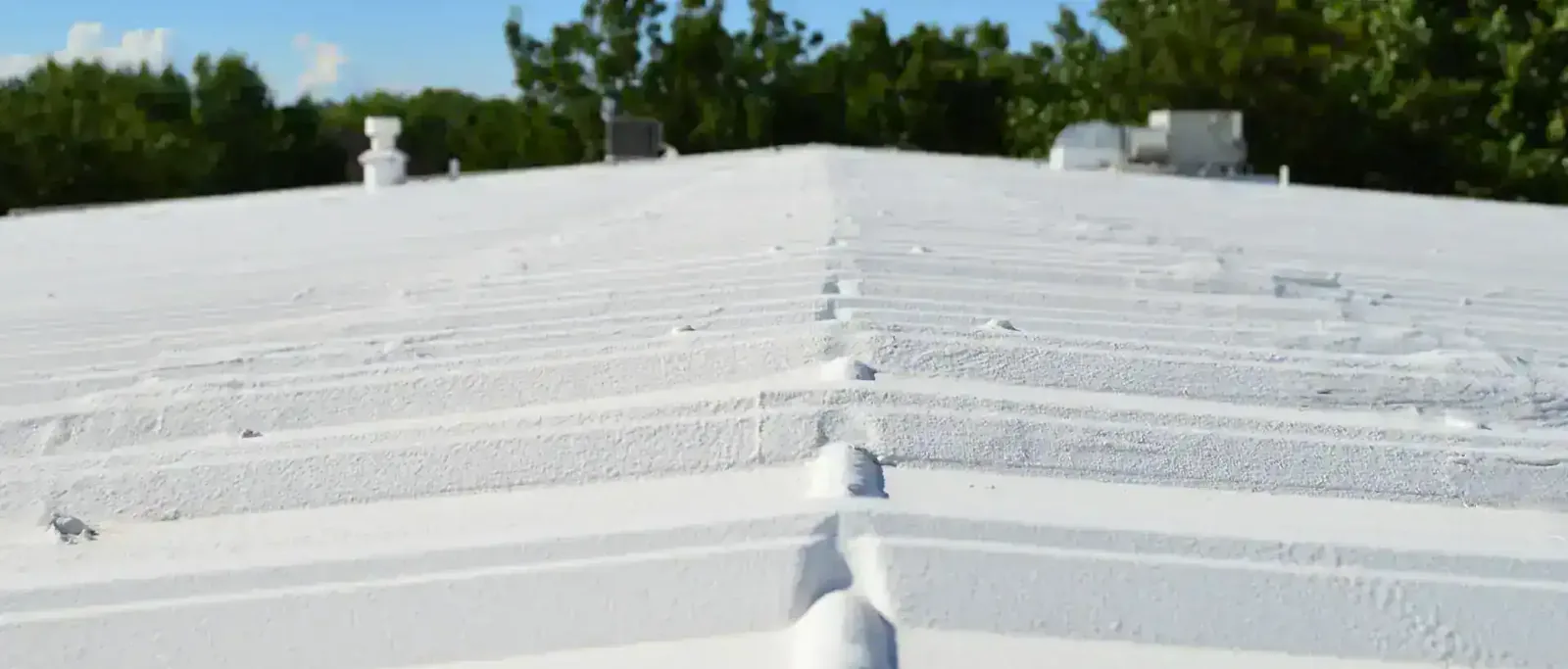
How does summer heat affect the roof and the units below?
Storage units under a metal roof can become very warm, and NOAA's normals put the typical July maximum in St. George at 101.9 degrees and August at 99.9. They describe the city, not a particular property, but they are why we start at first light and finish before the peak. It also explains why owners ask about reflective coatings or a cool roof finish on buildings that house heat-sensitive goods.
Heat works on the roof itself. Sealant dries, metal moves, and screws loosen. During inspection, we note the time of day on each photograph, since a lap that looks tight at dawn may be open by midafternoon. Where a coating is an option, a restoration coating over sound metal can extend service life, but fasteners and seams must be repaired first.
Can the roof be worked while tenants are using their units?
Yes, with a plan. Tenants load and unload at all hours, and a crew on a roof above a drive aisle needs barriers, signs and a spotter. We close off the aisle below the section being worked and keep neighboring aisles open. Gate access is coordinated with the manager so the crew can enter without disturbing the access system.
If a leak has already reached a unit, the manager can notify the tenant and we photograph the roof and the interior at the same visit. A written record of the cause helps with an insurance question or a tenant claim, and it shows what the repair addressed. Work is staged building by building, so the property keeps most of its units available throughout.
Security and insurance both matter to a storage operator. Ladders and tools are never left at the end of the row, and doors and gates are secured when the crew leaves. Photographs of every opened section go to the manager the same day.
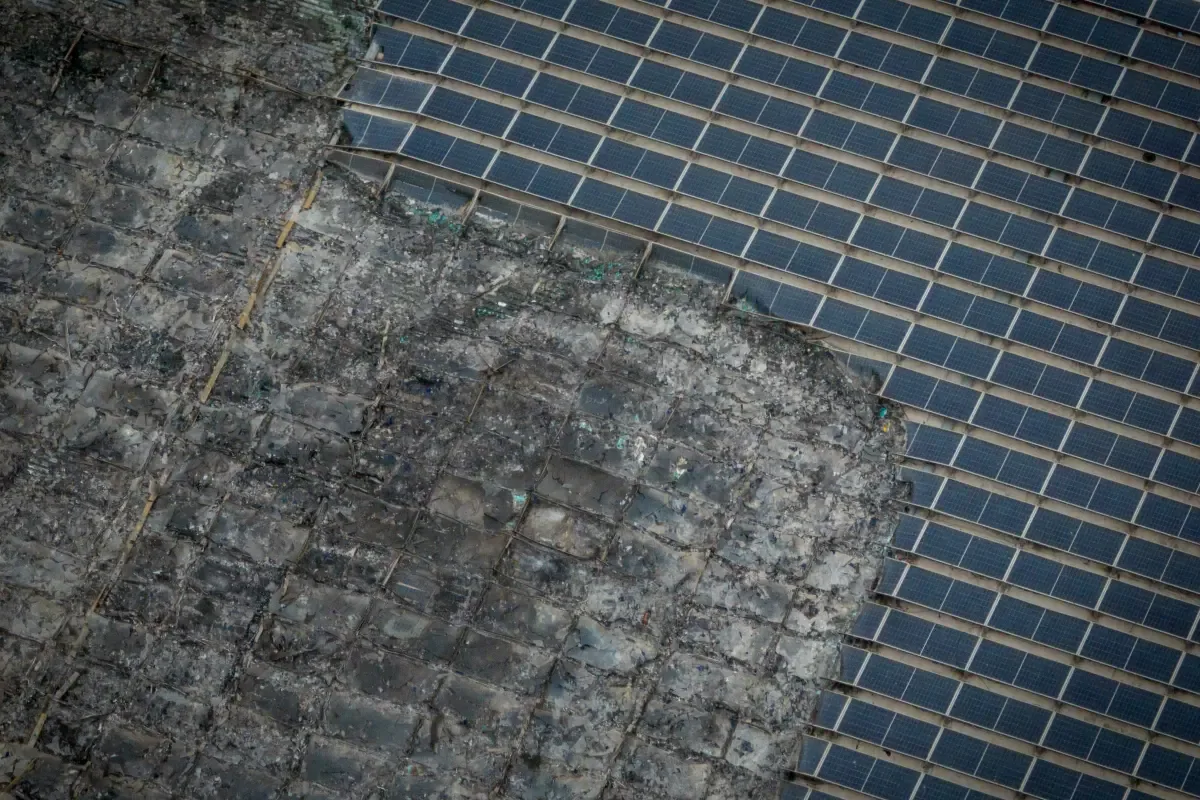
When is one building a repair and when is it a replacement?
If the panels are sound and the problem is fasteners, laps or flashing, repair holds. If panels are rusted through, bent or fatigued, or if the deck under a membrane is wet over a wide area, replacement or a retrofit is the better value. A metal roof retrofit can go over an existing metal roof in some cases, avoiding tear-off, if the structure can carry the added weight.
A climate-controlled block raises code questions that an open drive-up row does not. Utah adopted the 2024 edition of the building code, and its energy provisions (2024 IECC, ASHRAE 90.1-2022) take statewide effect in July 2026, so insulation may be in play. The scope records our assumptions for the City of St. George to confirm.
Written findings give a price range and a service-life estimate for each option, so the owner can compare spending on repair now against replacement later.
How should an owner plan across several buildings?
A storage owner with ten roofs does not need ten emergencies. We rank each building by condition and propose a sequence over several years. Properties near the Fort Pierce Industrial Park, the St. George Industrial Park or along I-15 may share a dispatch route, so we can group visits.
A multi-site roof program puts those buildings on one calendar with comparable reports. A warehouse roof shares the long spans and metal panels of many storage buildings, so the two can be inspected on one visit.
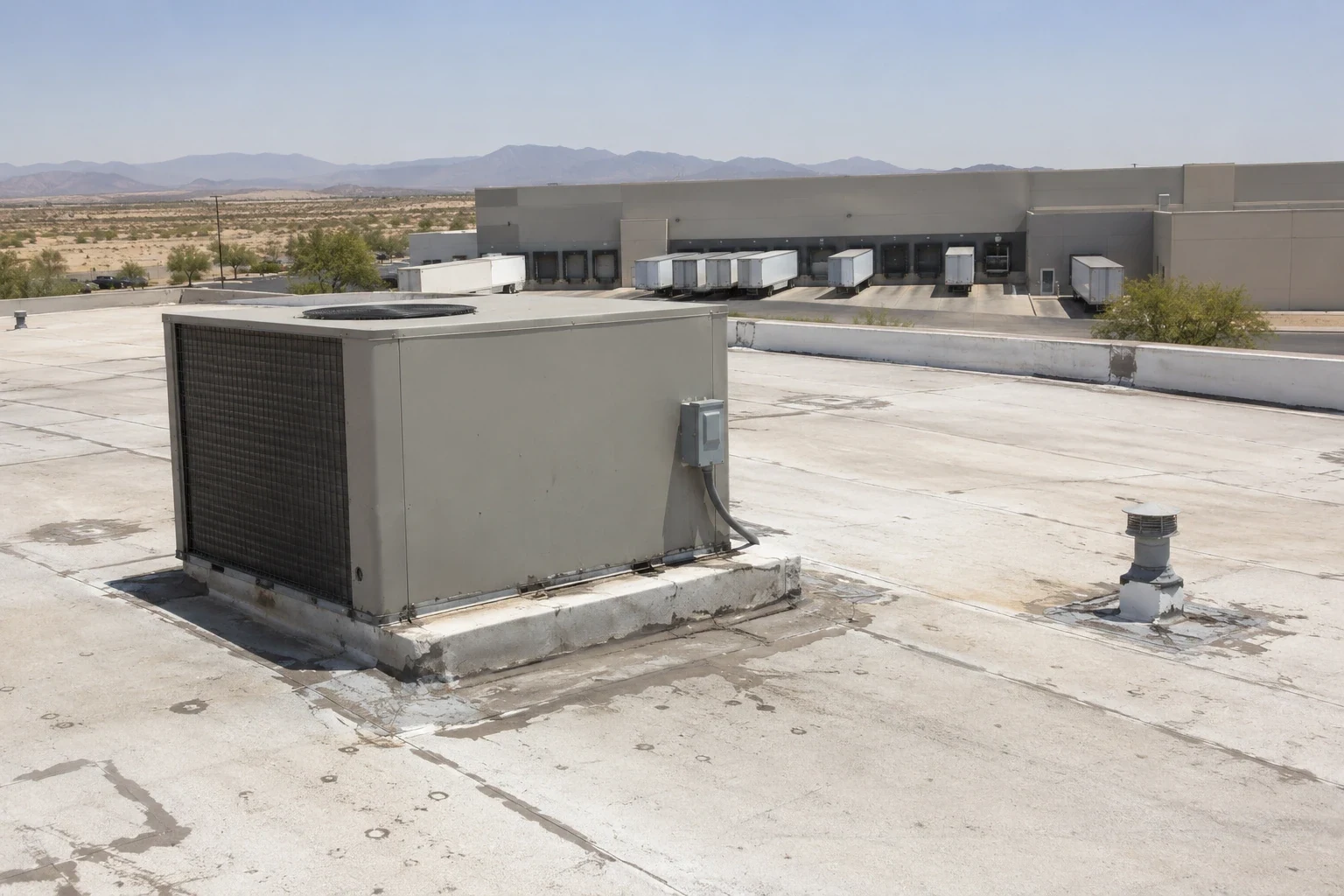
Commercial Roofing Questions
How do you find a leak that drips far from the opening?
We follow the stain along the purlin and panel underside, then probe laps, fasteners and flashing above. Moisture readings narrow the search before any sealant is applied.
Can a coating fix an old metal roof?
Sometimes. Panels must be sound and fasteners and seams repaired first. A coating over rusted or loose metal peels and traps moisture.
Do tenants have to empty units during repairs?
Usually not. We protect the work area and keep other aisles open. If water has already reached a unit, the manager decides on any notice to the tenant.
What does a roof report help prove?
The cause, location and date of a leak. That matters for tenant disputes and insurance questions, and it shows the owner which units sit under which defect.
Does the energy code affect a storage reroof?
It can, mostly for conditioned space. Utah's 2024 IECC and ASHRAE 90.1-2022 provisions become mandatory statewide in July 2026, and we confirm the pathway with the city.