
Commercial Roofing in Bloomington, St. George, UT
Bloomington Overview
A leak call is a routing problem before it is a roofing problem. The city's features map lists Bloomington as a named local place, and the county's transportation map shows I-15 and Washington Fields Road among the region's main routes. Those two names give us a way to think about response from our base in St. George, UT: which road the crew takes, where the lift can stand and how soon someone can be on the roof to stop water.
The place name says nothing about any one roof, and we do not guess from it. On arrival we find the entry point, make the area safe and dry, and then separate what we have confirmed from what still needs a closer look. That order keeps an emergency from turning into a bad capital decision.
What happens in the first hour of a roof leak call?
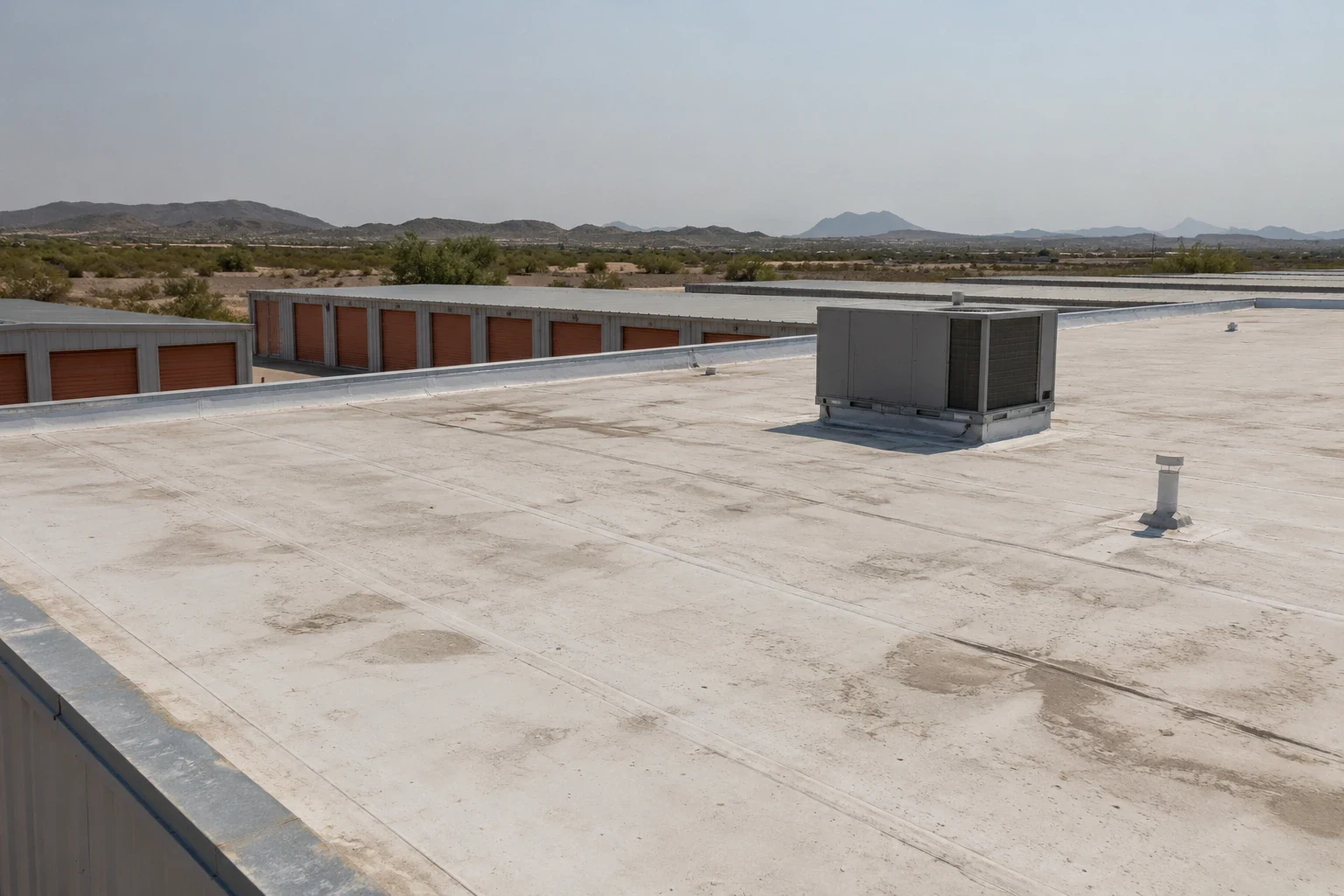
We start with questions about where the water is showing, which rooms or bays are affected and whether anything electrical or stored is at risk. If the building can be protected from inside, with tarps over inventory or buckets under a drip, we say so while the crew is on the way. On the roof, the first job is a temporary dry-in at the point of entry, using sealant, a patch or a tarp, depending on what is torn, split or open.
The temporary fix buys time but does not end the question. After the dry-in we photograph the damage, mark the area on a sketch and note drains, curbs and edges near it. If emergency roof repair was triggered by a storm, those photos also serve an insurance file, and the scope separates the storm damage from older wear that was already present.
Access is the other early question. We ask who holds the roof key, whether the hatch or ladder is clear and whether a lift can reach the roof edge. For buildings reached from a shared lot, we confirm where we may park and stage. A short call to the property manager on the way saves time on arrival and gets the crew onto the roof sooner.
Why is the leak not under the wet spot?
Water on a commercial roof travels. It runs along a membrane, drops through a seam, follows a deck flute or a pipe and shows up as a ceiling stain far from the hole. A stain in a corner can mean a drain problem at the other end of the roof. We trace the path by working upslope from the stain, checking seams, penetrations and flashing, and, when the path is unclear, by running a controlled water test on a small area.
An infrared scan, done at dusk when the roof gives back heat unevenly, can show wet insulation without opening anything. An infrared moisture survey shows the footprint of the wet zone, which sets the real repair boundary. A patch at the visible hole alone may miss most of the wet insulation, and the leak then returns.
Penetrations get the same scrutiny. Pipe boots, conduit supports, roof hatches and skylight curbs each rely on a sealed edge, and a joint that has opened only a hair will pass a quick look. We press each flashing, check fasteners and sealant, and note whether the base is still bonded. A repair that restores the whole detail beats a dab of sealant over a failing one.
How do hot afternoons change repair choices?
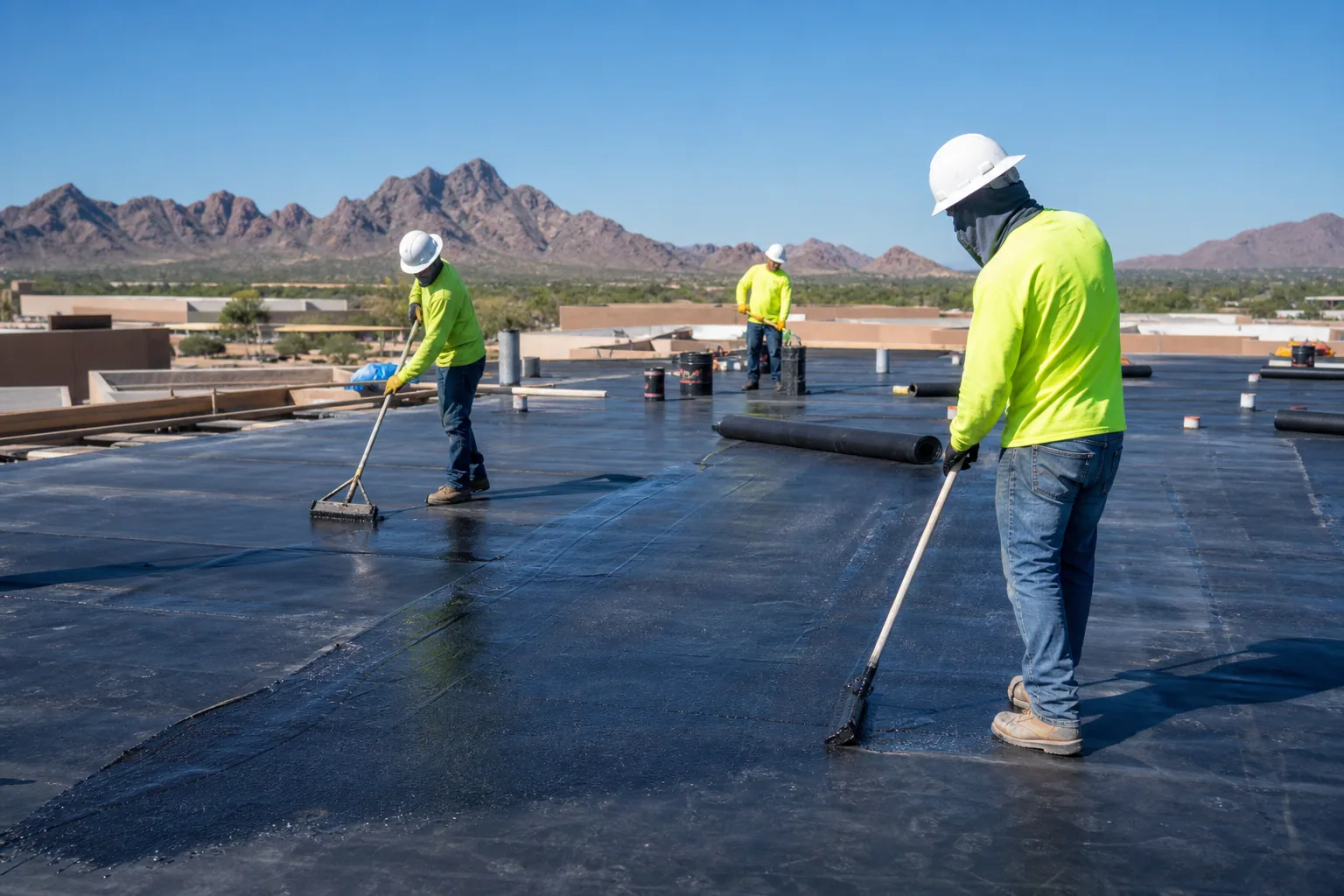
The NOAA station in St. George puts July near 102 degrees and August just under 100 for the average daily high. Roof surfaces run hotter than the air, and some repair materials will not cure or bond properly when the surface is too hot. We choose products and timing together: cold-applied patches in the early hours, welded repairs on a cooled membrane and primers applied when the surface can hold them.
Heat also ages the thing we are repairing. A tired sealant at a pipe boot, a cracked pitch pan or a membrane that has shrunk away from a wall are common summer findings. We bring a heat gun, primer and patch material in the truck, because a leak found at nine in the morning can be sealed correctly before the roof gets too hot to work. Where those items repeat across a roof, flashing failure repair across the whole building may serve the owner better than answering a call at every leak.
Why do leaks surface after long dry spells?
A year at the St. George station adds up to 9.31 inches of rain, February being the high at 1.38 inches and June the low near 0.16. Months can pass with no rain, and a flaw that has been there all that time does not show. When water finally comes, it finds every opening at once. That is why leak calls bunch up after the first big storm of a wet stretch, and why a roof that seemed fine in October can need help in February.
A short pre-season walk can catch what dry months hide: debris in drains, lifted seams, open sealant and loose metal. Owners who book this kind of visit through preventive roof maintenance see fewer emergency calls, because the weak points are fixed while the weather is calm and the roof is dry.
What comes after the dry-in?
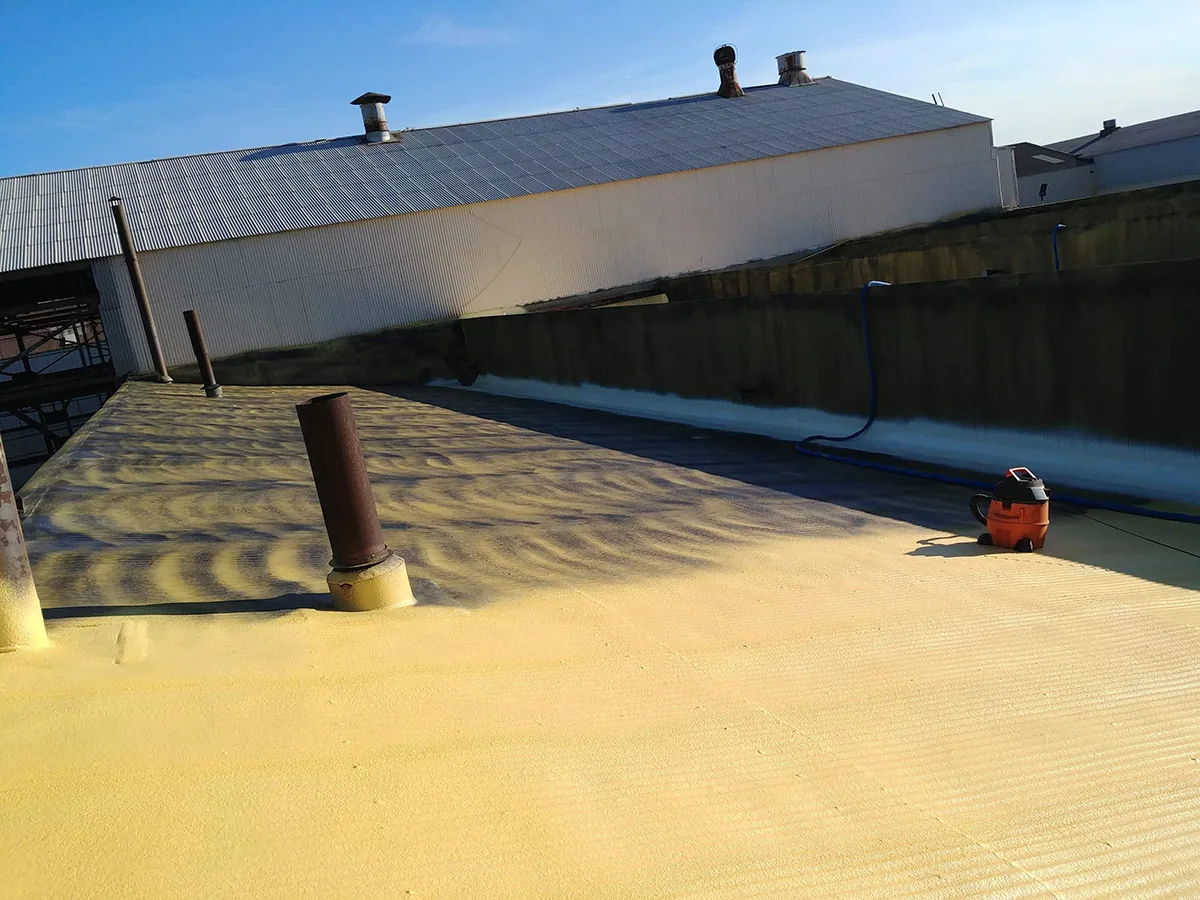
Once the building is dry, the owner has a decision: repair, restore or replace. Our report lays out each path with photographs and a written scope. A repair addresses the failed detail. A restoration coating may extend a sound membrane. A replacement removes the wet material and resets the system. Cost and timing follow the system, the insulation depth, the access and the number of penetrations.
A reroof here goes through permit review under the 2024 International Building Code as Utah amends it, and it may carry insulation requirements that a repair does not. Newer than 1980 describes much of the city's commercial building stock, according to its consolidated plan, which still leaves roof age and overlay history to be checked building by building. Owners with other properties in Little Valley or nearby Washington City can have those roofs reviewed in the same trip.
Commercial Roofing Questions
How fast can someone get to a leaking roof?
Our emergency line is answered at any hour, holidays included, and a crew is sent as soon as access and safety are settled. The first goal is a dry building. The repair scope comes after. Photos from the visit go to the owner the same day, so the insurer or the property manager can see the condition we found.
Will a patch hold through the next storm?
A patch holds if it covers the real entry point and the surrounding insulation is not saturated. We confirm both before calling the work done, and we mark any area that still needs monitoring.
Is a tarp ever the right answer?
As a short-term cover, yes. A tarp over a torn section keeps rain out until the permanent repair is scheduled. It is not meant to stay for months, since wind and sun wear it out.
How do I document a storm leak for insurance?
Take photos of the interior stain and the roof damage before cleanup, keep receipts for temporary measures and save the date and time. We add roof photos and a written description of the damage to the file.
Can a leak be fixed if the tenant needs the building open?
Most of the time. We work around the occupied space, protect inventory with covers and keep noise away from sensitive areas. The plan is agreed with the manager before we start, including where material will be staged and which door the crew will use.