
Commercial Roofing in Hurricane Downtown Plan Area, Hurricane, UT
Hurricane Downtown Plan Area Overview
A building on a state route has something a back-street building lacks: a stream of traffic past its front door, and a roof crew that must land a lift and a truck without disturbing it. Hurricane's Downtown Master Plan names 300 West and 100 East along State Street as the west and east bounds of its downtown study area. Utah Route 9 enters Hurricane Downtown as State Street before turning north toward La Verkin, which puts the plan area on a regional through-route, and the plan reports State Street traffic reaching up to 36,200 vehicles a day within the study area.
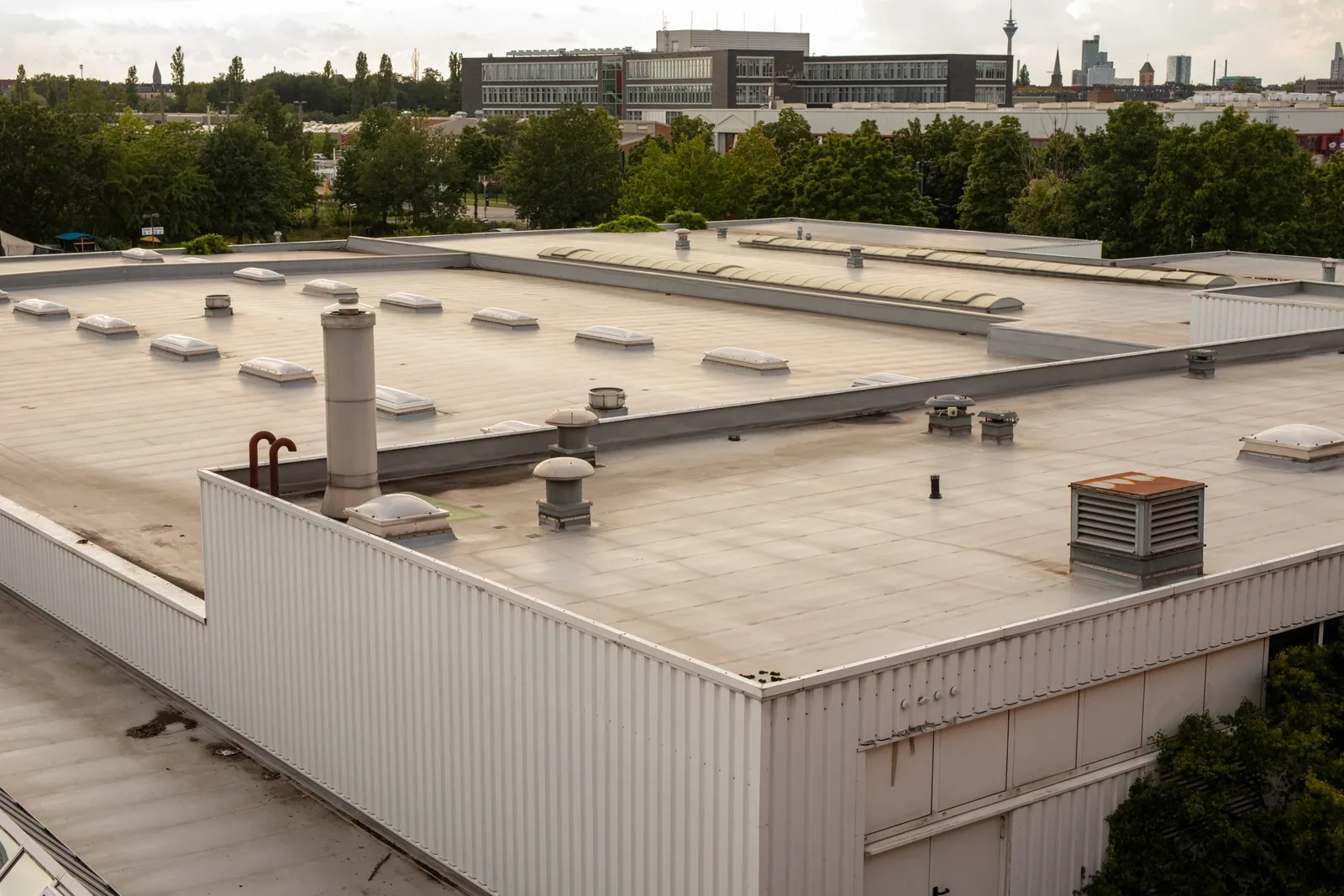
For an asset manager with a building in the plan area, the first roofing question is how the crew reaches the roof and where the lift stands. We settle that, then check what decides where water goes: drains, curbs, seams and flashings. The NOAA mean daily high of 101.9 degrees in July sets the summer hours.
How does a state route change the access plan?
It makes the access plan the first deliverable. State Street is a through-route, and its traffic is not ours to slow. We plan lifts and staging on private property where we can, and where the building fronts the street we agree with the owner and the city on any temporary use of right-of-way before the day. Deliveries come early, in small loads, and leave before the street fills.
The roof side of a downtown building often gives the best access, from an alley or a rear lot, so we ask the manager about gates and neighboring properties. Customers and staff still need their entrances, and we fence only what the work requires. A written access plan, agreed before mobilization, prevents the usual failure: a lift truck arriving at an address with nowhere to stand. The manager's choice is whether the crew works from the front or the rear, and we lay out the tradeoffs.
Crane and hoist choices follow the same logic. A crane needs a legal place to stand and a permit conversation, a hoist needs a rear wall and a clear fall zone, and hand carry through an alley works on a small roof. Each has a different cost and a different disturbance to the street, and the proposal names the one chosen and why. If the street side is the only way up, short timed closures with a covered walk for pedestrians are arranged with the city ahead of the date.
What protects the street below the work?
Barriers, a spotter and a rule about what stays on the roof. Where work sits above a sidewalk, an entrance or a parking row facing the street, fences go up and tools and debris stay off the street side of the roof. Tear-off material is bagged or lowered by chute or hoist on the rear, never dropped. With up to 36,200 vehicles a day reported on State Street, the cost of one falling piece is high and the precautions are cheap beside it. The record lists the protection used each day.
Edge metal faces the same test. A loose cap or coping on the street side is a safety item as well as a leak item, so edge metal and coping repair on that side comes first, and a penetration flashing repair settles a failed curb.
A daily sign-in at the fence line lets the building contact see who is on the roof.

What does a downtown study area tell us about its roofs?
Where the city is looking, and no more. A study-area boundary is a planning tool. It does not say what each building holds, how old it is or what its roof is made of. A stretch like this can hold small shops, offices, restaurants and mixed buildings, but the plan facts we have do not list them, and we do not assume.
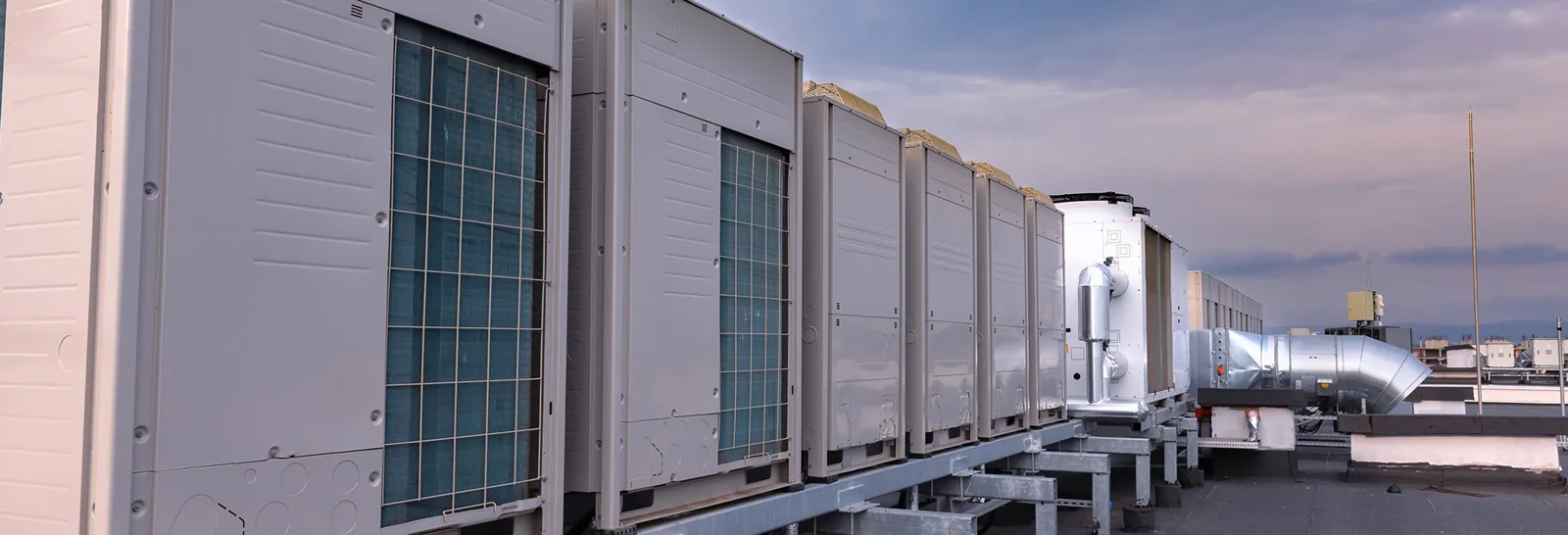
On the roof we confirm the system, the layers, the equipment, the drains and any earlier repairs. We ask for records, photograph what we see and mark the plan. The practical value of the plan facts is routing and access, since State Street and the cross streets at 300 West and 100 East are clear reference points, and the manager receives a roof record specific to the building. The record lists the system found, the drains and their condition, the equipment with its curbs, the edge metal run by run and the earlier repairs, each with a photograph and a location, so the next visit starts from facts and a later owner inherits a file.
What does the weather record say, and what does it leave out?
It gives a regional reference. The NOAA normals for the St. George station show 9.31 inches of annual precipitation, February at 1.38 and June at 0.16, plus about 1.2 inches of snow. That station sits at a low elevation and Hurricane is a different community, so the numbers guide scheduling and are not readings at a roof. We ask the owner what has been noticed, including when stains appear, in which season and after what kind of storm.
Doubtful areas are tested with moisture readings and, on bigger roofs, an infrared moisture survey. The record keeps observed conditions apart from tested ones and names the open questions.
If a storm is forecast for a day when a section is open, the crew's first job is to close it, and the building contact hears from us before the rain, not after it.
How far should a repair extend?
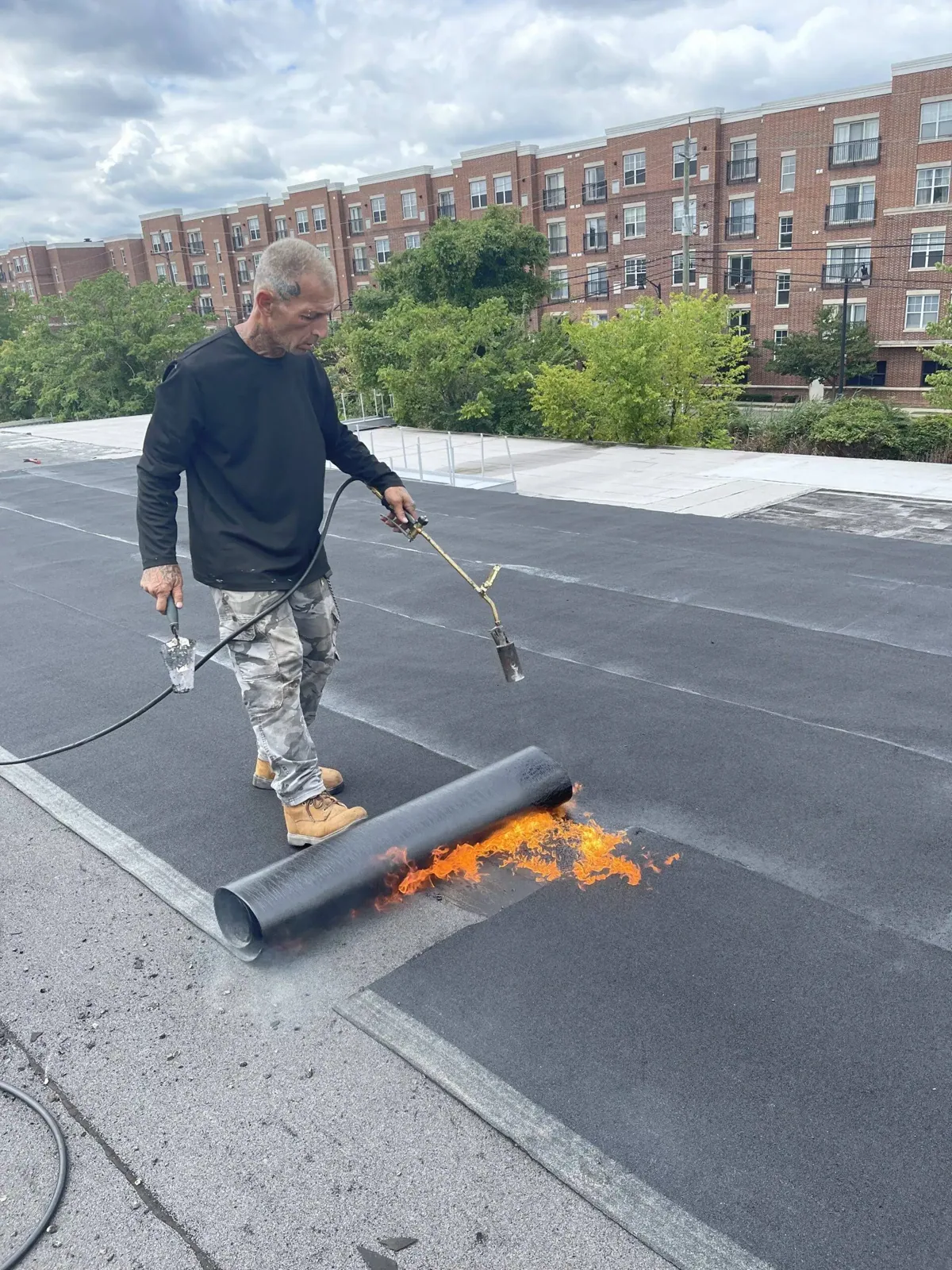
To sound, dry material. A small puncture closes within a patch, a failed seam ends where the bond is good and a leaking curb ends at the corner where the flashing holds. If insulation is wet the boundary runs to the wet edge. Heat limits the day, so adhesion is tested before a large repair.
When repairs recur, the owner compares a coating restoration with a replacement. Before a reroof is priced the city names the edition the permit date triggers, because the statewide energy rules arriving on July 1, 2026 can move both the insulation and the permit scope.
What should the owner decide next?
Whether to hold, restore or replace, and when. A building on a through-route usually has a long hold and steady use, which favors durable work. The record gives the condition, the moisture findings and the cost drivers for each path.
Owners with other buildings can add them to the same record, such as along the State Street and SR-9 corridor outside downtown or in the light industrial and business areas of Hurricane. Bring the address, roof records, access rules and operating hours, and the visit will answer one defined repair or capital question.
At closeout the street side is swept and the fencing is removed the same day, so the frontage is reopened before the next morning's traffic.
Commercial Roofing Questions
Can a lift stand on State Street?
Only with the owner's and the city's agreement. We plan private-property staging first and settle any right-of-way use before the day.
Does the plan tell you the roof type?
No. The plan marks a study area. We confirm the system, age and equipment at each building.
Why check street-side edge metal first?
A loose cap or coping there can fall toward the street, so it is a safety item as well as a leak item.
Do the St. George weather numbers apply in Hurricane?
As a regional scheduling reference only. We judge conditions on each roof and ask the owner what they have seen.
Who names the code edition in Hurricane?
The city does, from the permit date, before we price the work.